
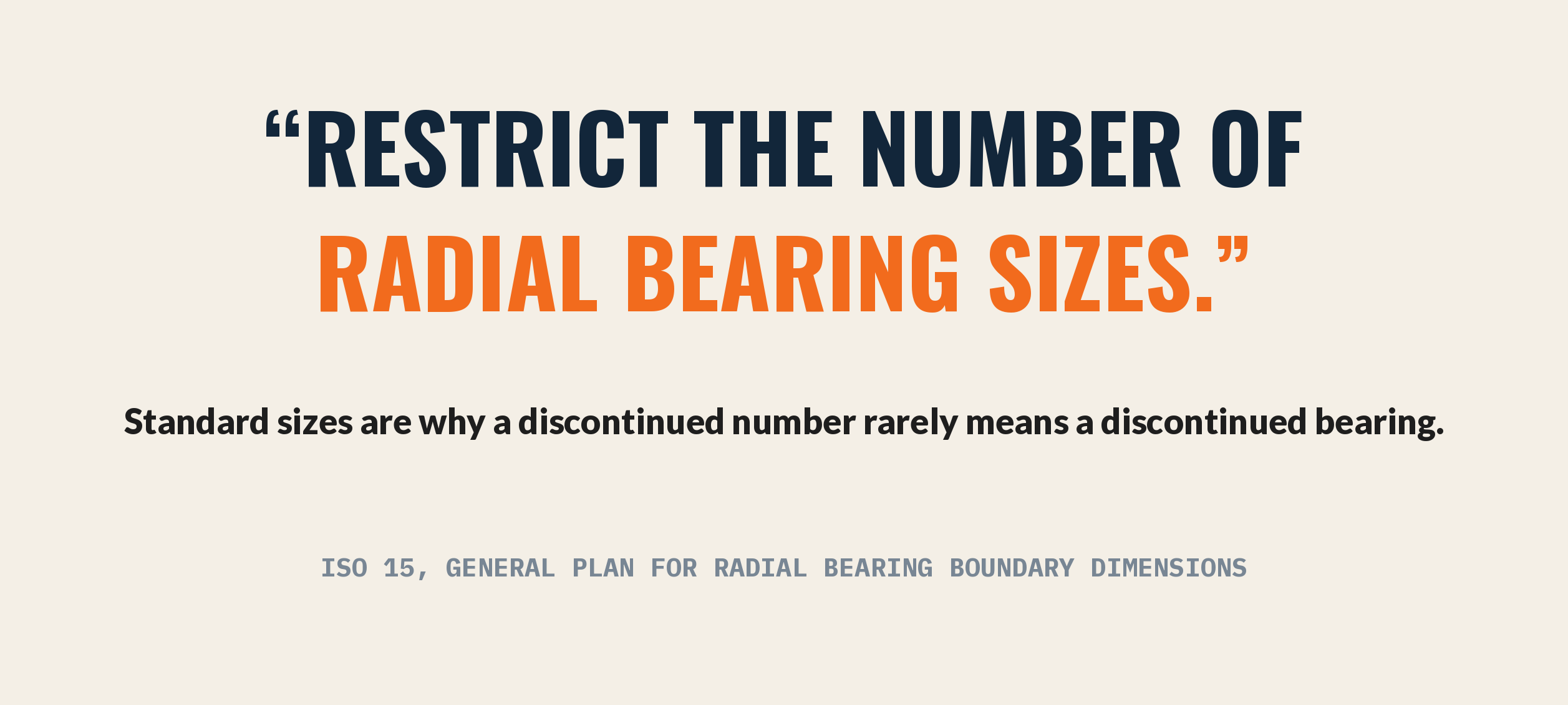
The international standard behind most of the bearings in your plant says it plainly. ISO 15, the general plan for radial bearing dimensions, exists to “restrict the number of radial bearing sizes enough to ensure economic production.” Translation: manufacturers agreed decades ago to build to a shared set of sizes.
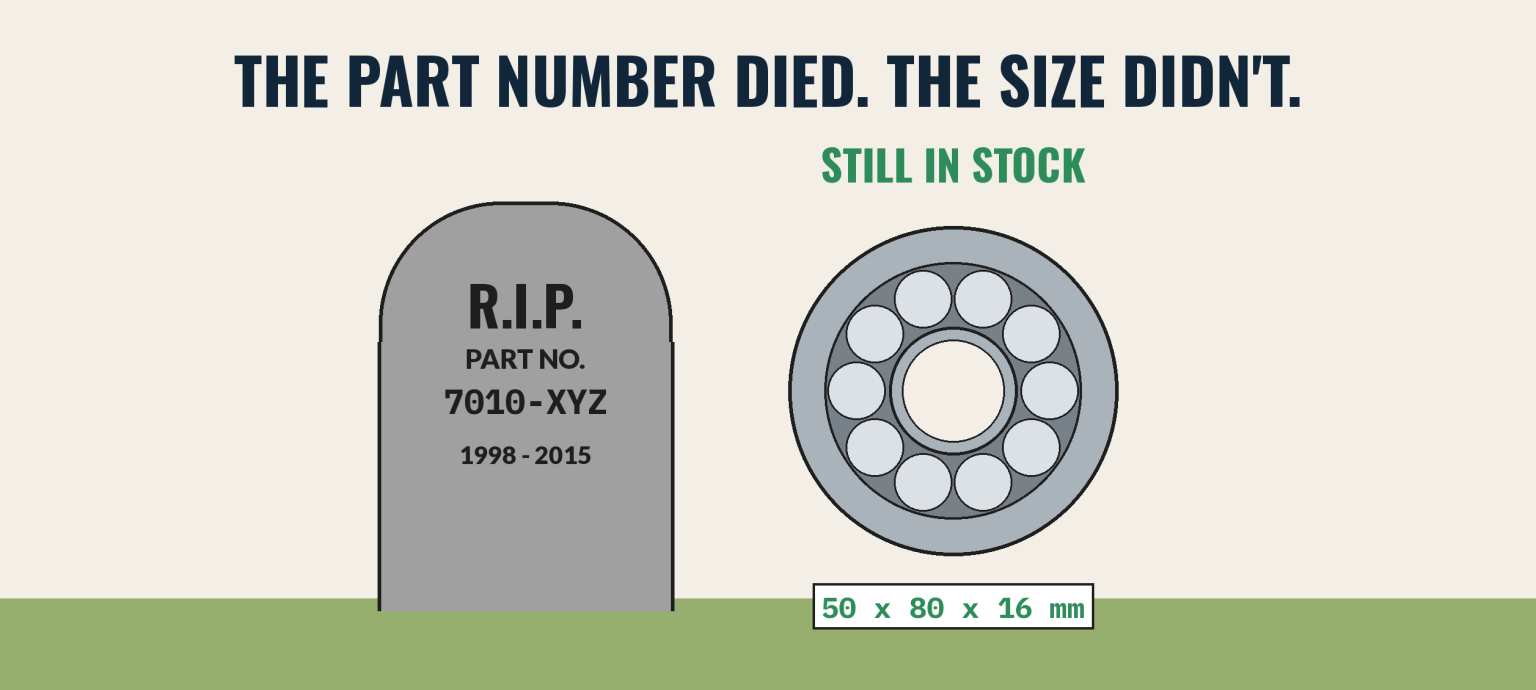
That’s the best news you’ll get today if a bearing number on your machine has gone obsolete. The part number died. The size almost certainly didn’t.
Bearing makers retire part numbers all the time. A brand gets acquired, a product line gets renamed, a suffix changes, a plant closes. The catalog number your maintenance records point to stops showing up anywhere. Your distributor says “discontinued.” Your OEM says “call us about a retrofit.”
But the steel in the machine still needs a bore, an outside diameter and a width, and those numbers were standardized long before the part number was printed. To replace a discontinued bearing, you’re usually not hunting for a ghost. You’re hunting for the same envelope with the right internals.
99% of bearings have a MPN to MPN interchange, cross-reference, substitute, equivalent, replacement or also-known-as.
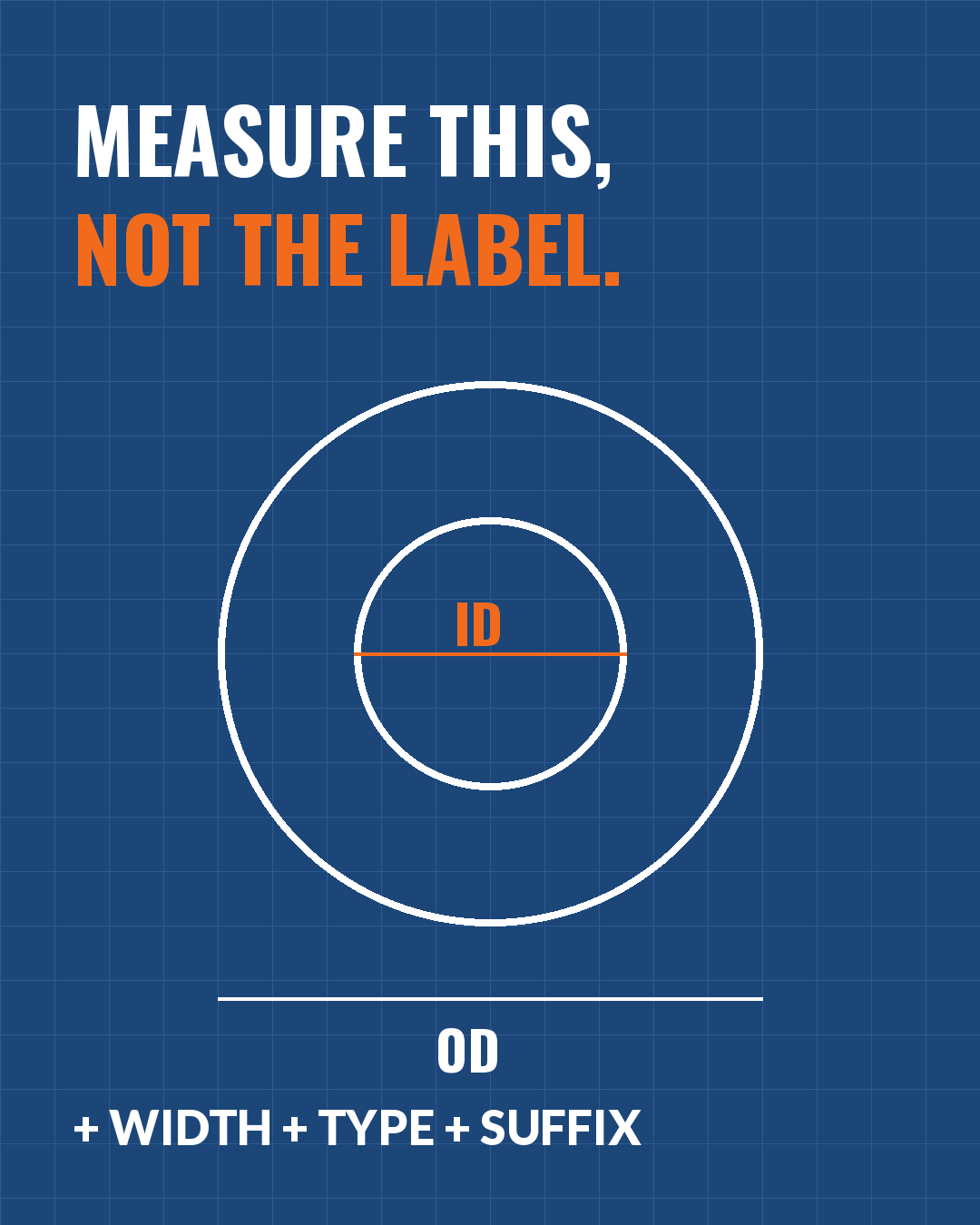
Measure, or pull from the old drawing:
Most failed swaps don’t come from the wrong size. They come from ignoring the suffix. If you’ve never had to, learning how to read bearing numbers takes about ten minutes and saves weeks.
When you replace a discontinued bearing, check these against the original before you order:
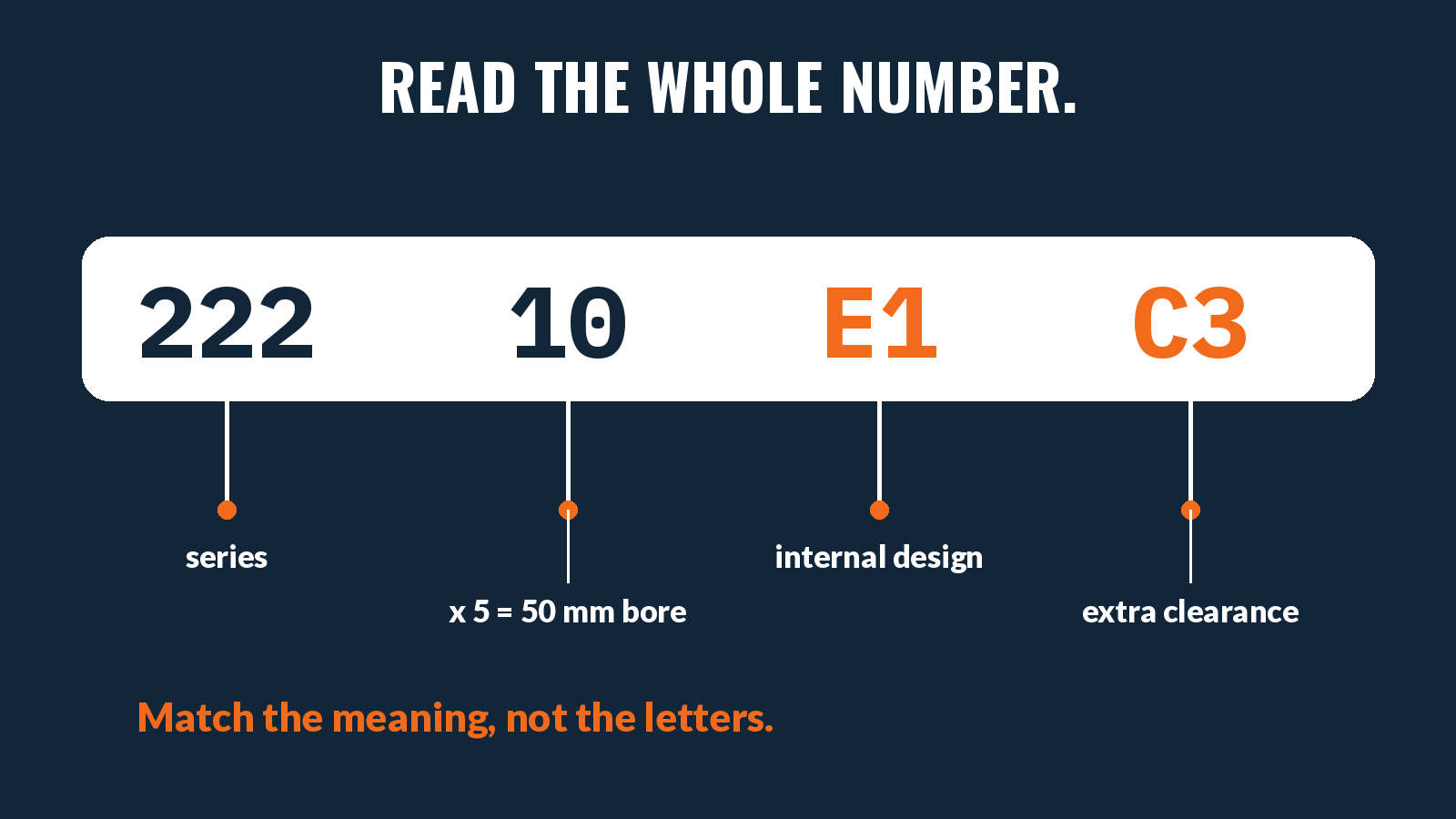
A real example from our shelf: FAG 22210-E1-C3. “222” is the series, “10” times five gives the 50 mm bore, “E1” is FAG’s internal design, and “C3” is greater-than-normal internal clearance. An SKF 22210 E/C3 or an NSK 22210EAE4C3 is the same envelope with the same clearance. That’s what a cross-reference actually is: matching the meaning, not the letters (nomenclature). Every good bearing cross reference and bearing interchange chart is built on that same logic.
Get those right and the brand stamped on the ring matters a lot less than people think. SKF bearings, NTN bearings, FAG, NSK, Timken and Dodge bearings all build to the same standard envelopes.
New-production channels sell what’s in this year’s catalog. The bearing that left the catalog in 2015 is sitting somewhere else: in a plant crib that was cleared out, in a distributor’s overstock, in a surplus warehouse and the biggest stock pile of bearings is in the industrial manufacturers shop floor. That’s where you find the exact original, sometimes still in the manufacturer’s box.
It’s also where you find the high-dollar parts at a sane price. Super-precision angular contact pairs for spindles, large spherical roller bearings for crushers and fans, tapered cone-and-cup sets for gearboxes: surplus is often the fastest and cheapest way to replace a discontinued bearing without redesigning the housing around it.
Bearings are the bulk of our inventory: thousands in stock and ready to ship, searchable by size, with angular contact, spherical roller and tapered roller bearings the deepest categories with the cheapest prices.
When you need to replace a discontinued bearing fast, search by bore, OD and width. Every listing shows photos of the actual unit and the condition. If it’s on the site, it’s on our shelf, not drop-shipped from somewhere you’ve never heard of. Live inventory.
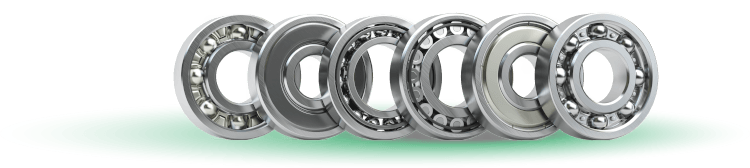
A few of the bearings people come looking for when the catalog says “discontinued,” all in stock today:
Don’t see yours? Search the store by size; there are thousands more behind these.
Some bearings really (really rarely) are custom or modified: special widths, integrated flanges, proprietary raceways built into a shaft or hub. If the dimensions don’t match any standard size, that’s your sign; sometimes refered to as “exclusive to the brand.” Get the OEM drawing or build exact specifications. Everything else is a sourcing problem, and sourcing problems are solvable.
Usually, yes, if the dimensions, type and suffix features match. Standard boundary dimensions are why cross-referencing works at all. There are exact matches and similar matches.
Measure bore, OD and width, note the type, and photograph the seals and cage. That’s enough to identify the prodcut family. More details help identify the part.
Often it’s new old stock in the original packaging. Each listing states the condition, so you know before you buy.
In-stock bearings ship same day, which is why we keep the stock on our own shelves instead of promising it from someone else’s.
The machine doesn’t care what the catalog says. It cares that the bearing fits and runs. Find the size, match the suffix, and check the shelf that still has it.
Need a bearing that’s “discontinued”? Make it easy. → Shop Bearings


Our team can locate, cross-reference, and source all parts.
Our team can locate, cross-reference, and source all parts.