
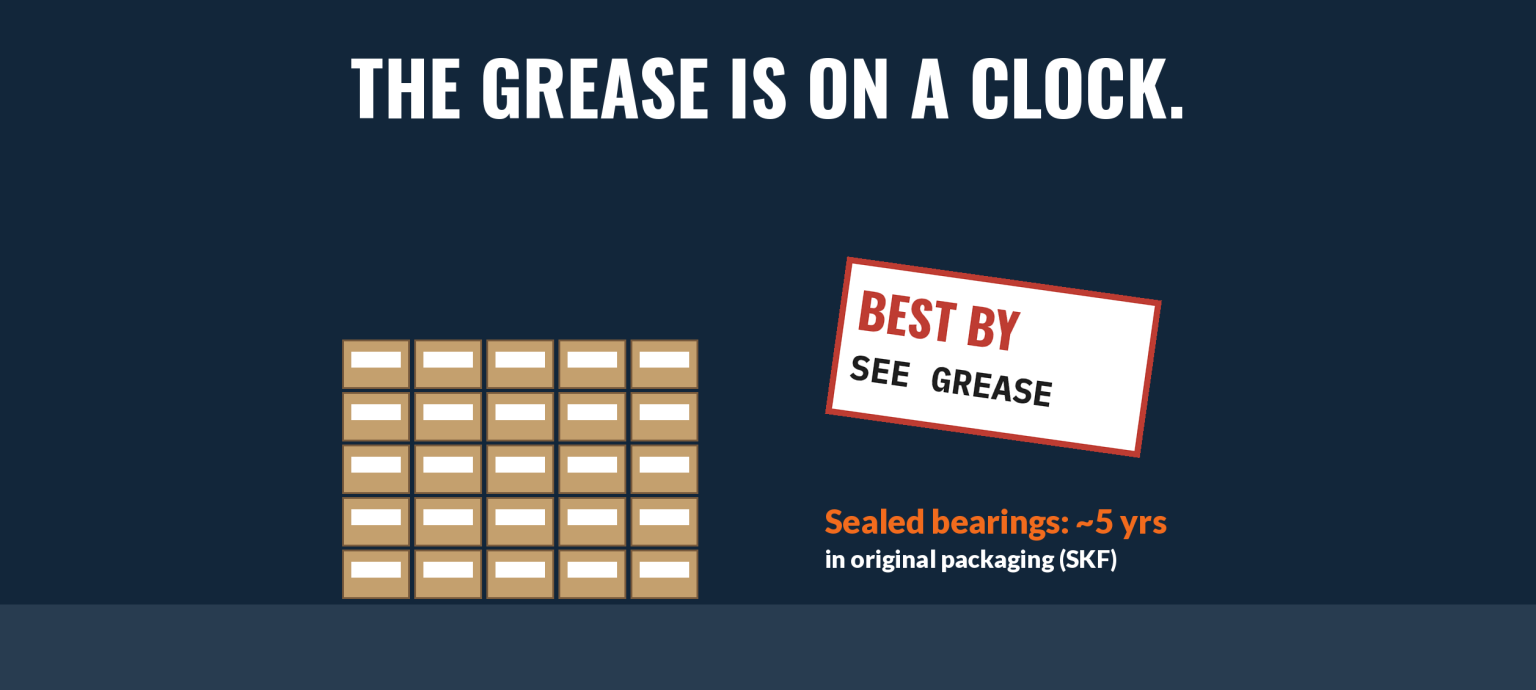
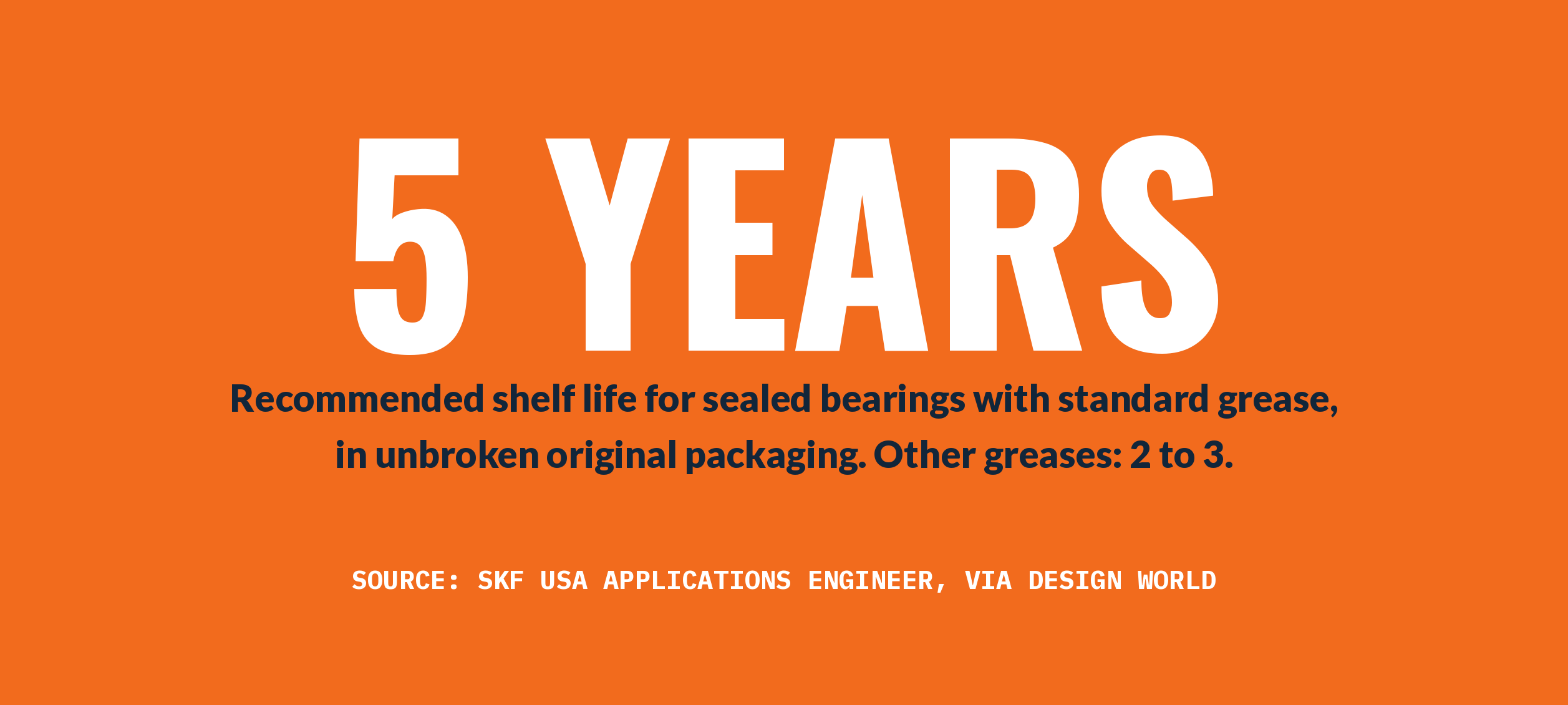
Ask SKF how long a sealed bearing can sit on a shelf and you get a straight answer. In an interview with Design World, an SKF USA applications engineer put the recommended shelf life for sealed bearings with standard grease, in unbroken original packaging, at five years. Other greases: two to three.
So that crib of boxed bearings you inherited isn’t just taking up space. The grease inside is on a clock, and it started the day the box was sealed.
Nobody buys too many bearings on purpose. It happens one sensible decision at a time.
Ten years later, or the week a manufacturing plant closes, you’ve got shelves of angular contact pairs, spherical rollers, tapered cones and cups, and pillow blocks for equipment that left the building before half your team was hired.
A box of bearings doesn’t send an invoice, but it gets paid for anyway. Floor and rack space. Insurance. The physical count every year, where somebody has to find, scan and argue about each box. Property or inventory tax on parts carried at full book value. And every year the grease gets a year older and the pool of machines that use that size gets a little smaller.
The longer you wait to sell the shelf full of bearings, the more that bill grows. Keep them two more years and you’ve paid for them twice: once to buy them, and again to babysit them.
When you decide to sell surplus bearings, you have roughly four options. A scrapper pays by weight, and a $900 cylindrical roller weighs the same as the $90 one from a different brand. A broker or consignment deal lists them and waits, so they stay on your books until each one sells. Selling them yourself online means photographing, listing and shipping thousands of boxes one at a time, which only works if you have a reselling expert and system on staff.
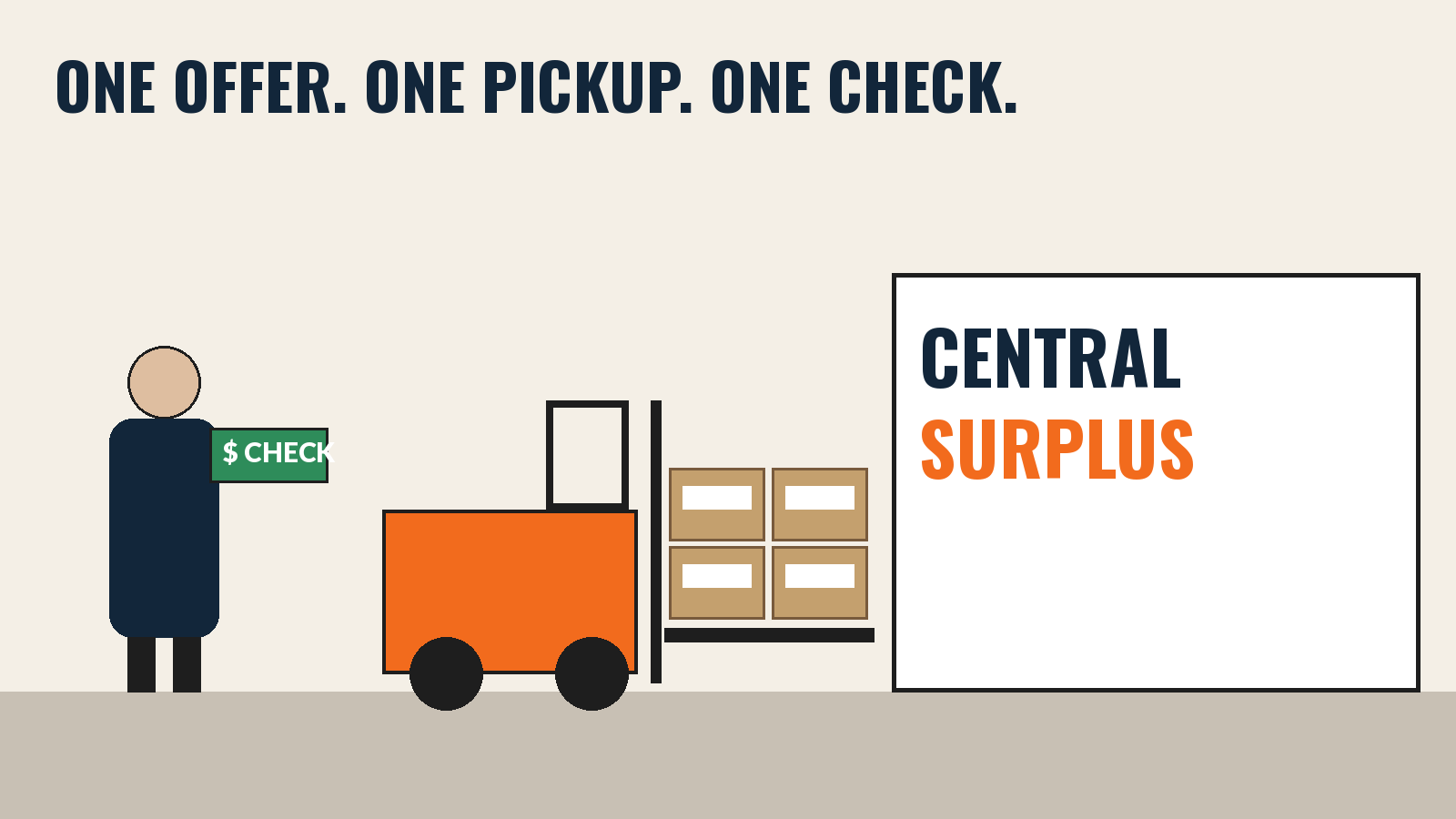
Or you sell the whole lot to a surplus buyer who knows bearings. One offer, one pickup, one ACH transfer, and the slow movers become someone else’s problem.
Bearings are the core of what Central Surplus buys and sells, so we’ll look at almost anything that turns:
All the major brands (SKF bearings, NTN bearings, Timken bearings, FAG bearings, NSK bearings, Dodge bearings), metric and inch, from a few boxes to a full crib to 10 truckloads. Original packaging is best, but opened boxes and mixed shelves are fine. If you also have power transmission, motors, electromechanical or automation parts in the same storeroom, send those too. One lot is easier for everyone, and it’s the simplest way to sell surplus industrial parts of every kind.
A general liquidator sees a pallet of brown boxes. A bearing buyer sees a 7013 super-precision pair, a 22213 spherical roller with a tapered bore, a Timken cone-and-cup set that still fits half the gearboxes in North America. The difference shows up in the offer.
When you sell surplus bearings to a buyer who already stocks them and supplies bearing distributors, the buyer knows which sizes move, which brands interchange, and which suffixes matter. That knowledge is what turns a crib nobody can price into a number you can take to finance.
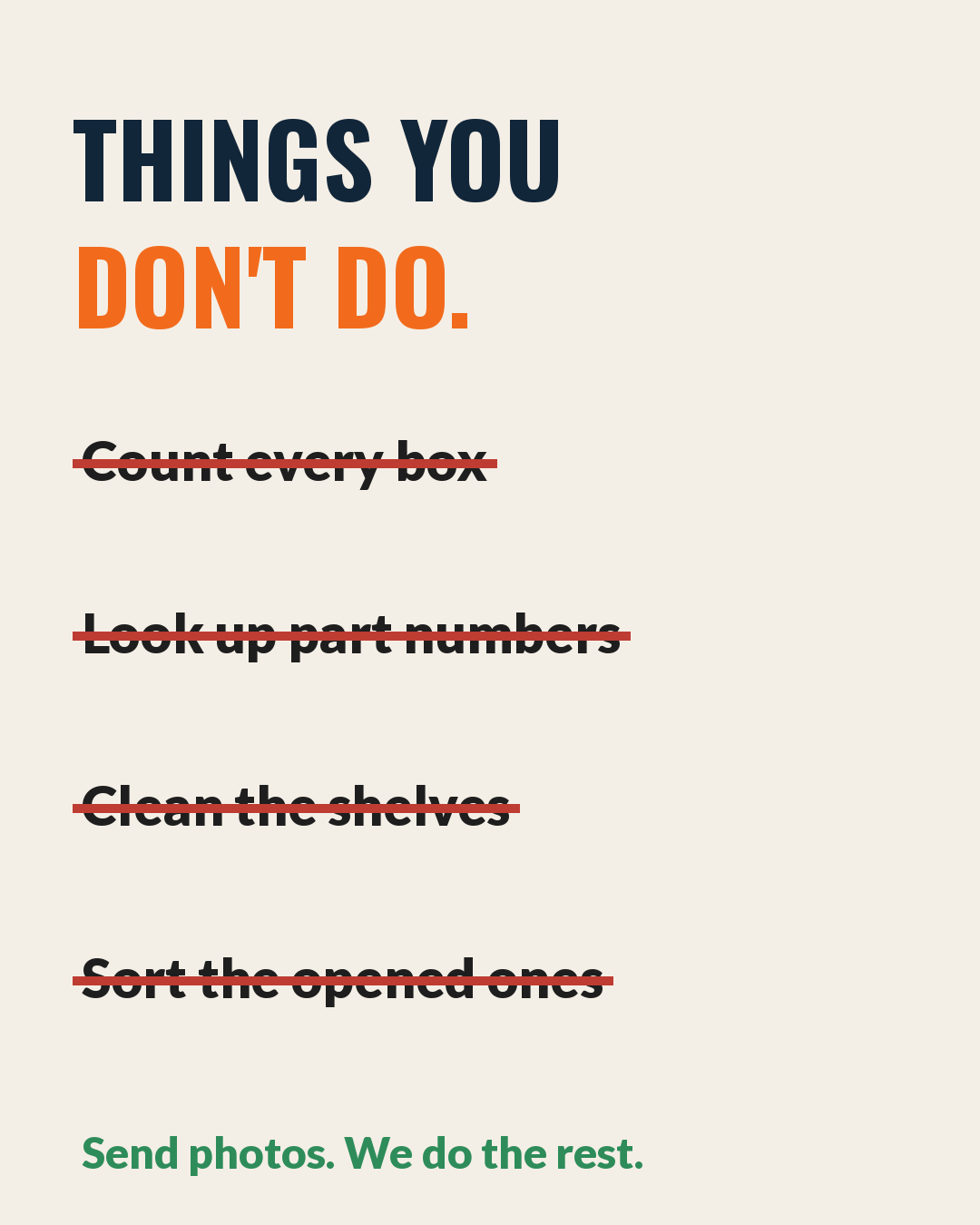
You don’t need to do any of this, but if you want the offer fast, these help:
That’s it. A buyer who wants every box counted, cleaned and re-labeled before making an offer is asking you to do their job.
This is the part people expect to be hard. It isn’t.
To sell surplus bearings to us, you send a list or photos, we send an offer, we schedule the pickup, and you get paid. That’s the whole list. If bearings are only part of what you’re clearing, here’s how to sell excess industrial inventory as one lot.
Often, yes, as long as they’re sold while the sizes and applications are still in demand. The longer they sit, the more grease age and shrinking demand work against you.
Yes. Condition affects the offer, but we’d rather see the whole shelf than have you sort it.
No. Bearings are our biggest category, but we buy the rest of the storeroom too: power transmission, motors, electrical, hydraulics, PLCs, drives and PCBs – anything industrial automation or MRO. Selling it all in one lot means one decision instead of ten.
Photos to offer is usually quick. Pickup gets scheduled around your dock, not ours.
If you’ve been meaning to sell surplus bearings for a few budget cycles now, this is the cheapest time it will ever be to do it. Every year you wait costs more storage, more tax and older grease.
Ready to sell industrial MRO parts? Make it easy. → Sell Your Parts


Our team can locate, cross-reference, and source all parts.
Our team can locate, cross-reference, and source all parts.