
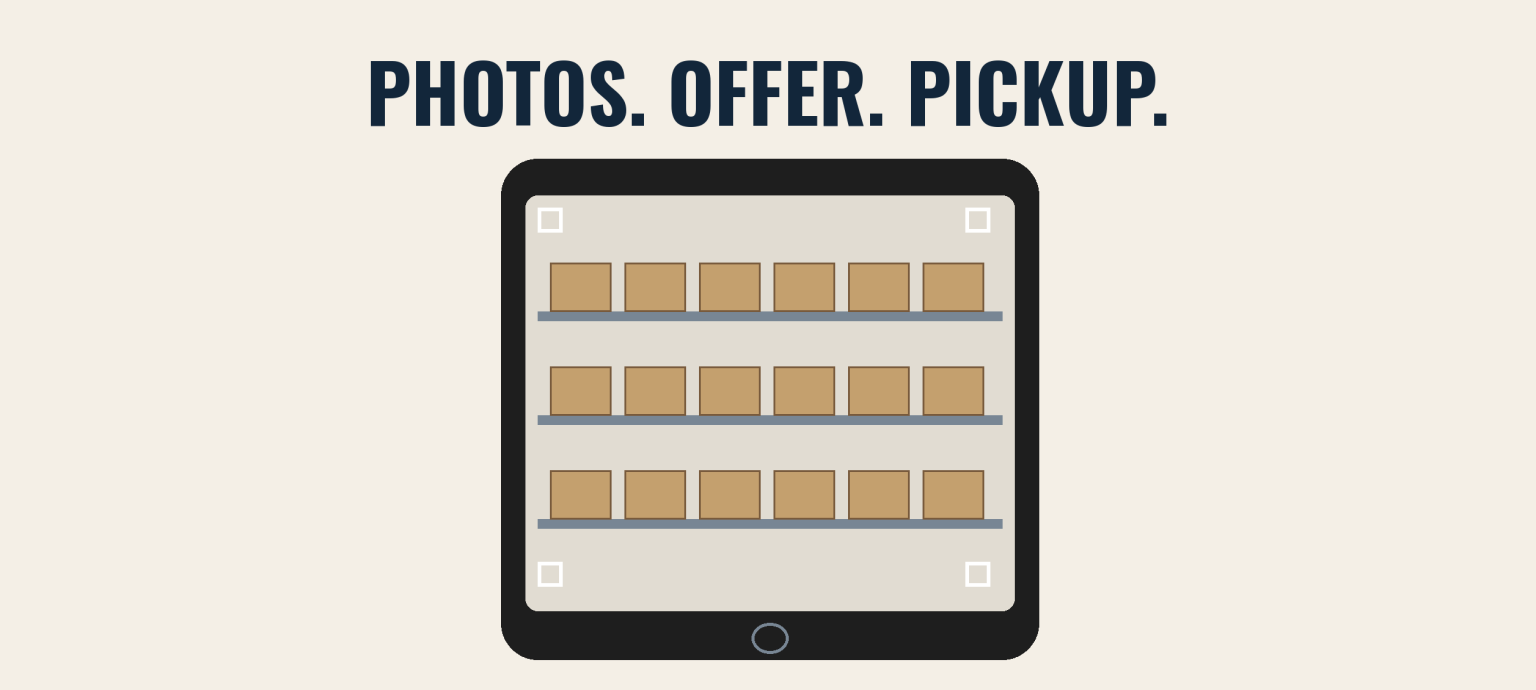
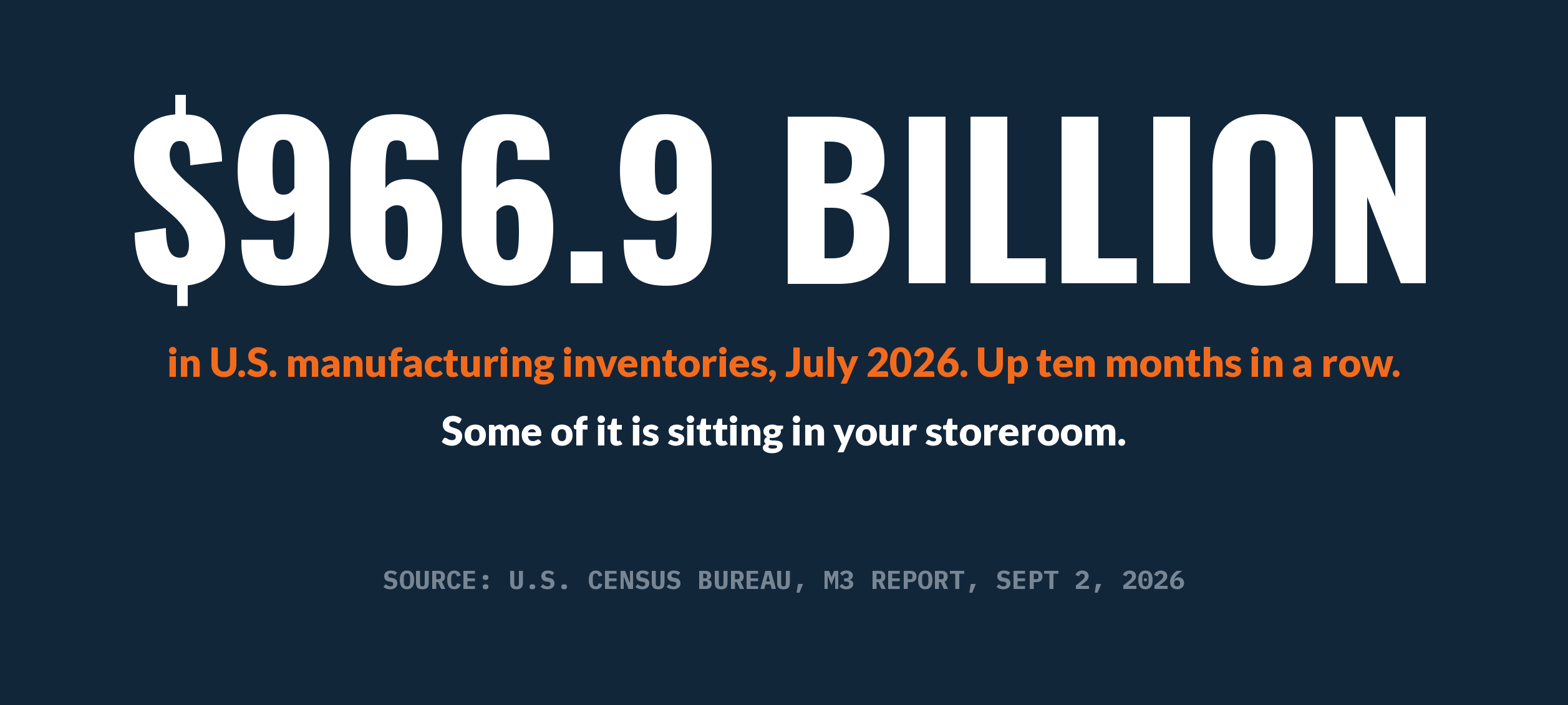
American manufacturers are sitting on a lot of stuff. The Census Bureau’s latest factory report put total manufacturing inventories at $966.9 billion in July 2026, up ten months in a row. Not all of that is excess. But walk any plant’s storeroom and you’ll find the part that is: spares for retired lines, overbuys, parts for machines that left years ago.
Particularly the industrial manufacturing plants with MRO spares like bearings, PLCs and automation parts.
If you’ve been told to clear it, here’s the plain-English version of how to sell excess industrial inventory without turning it into a second job.
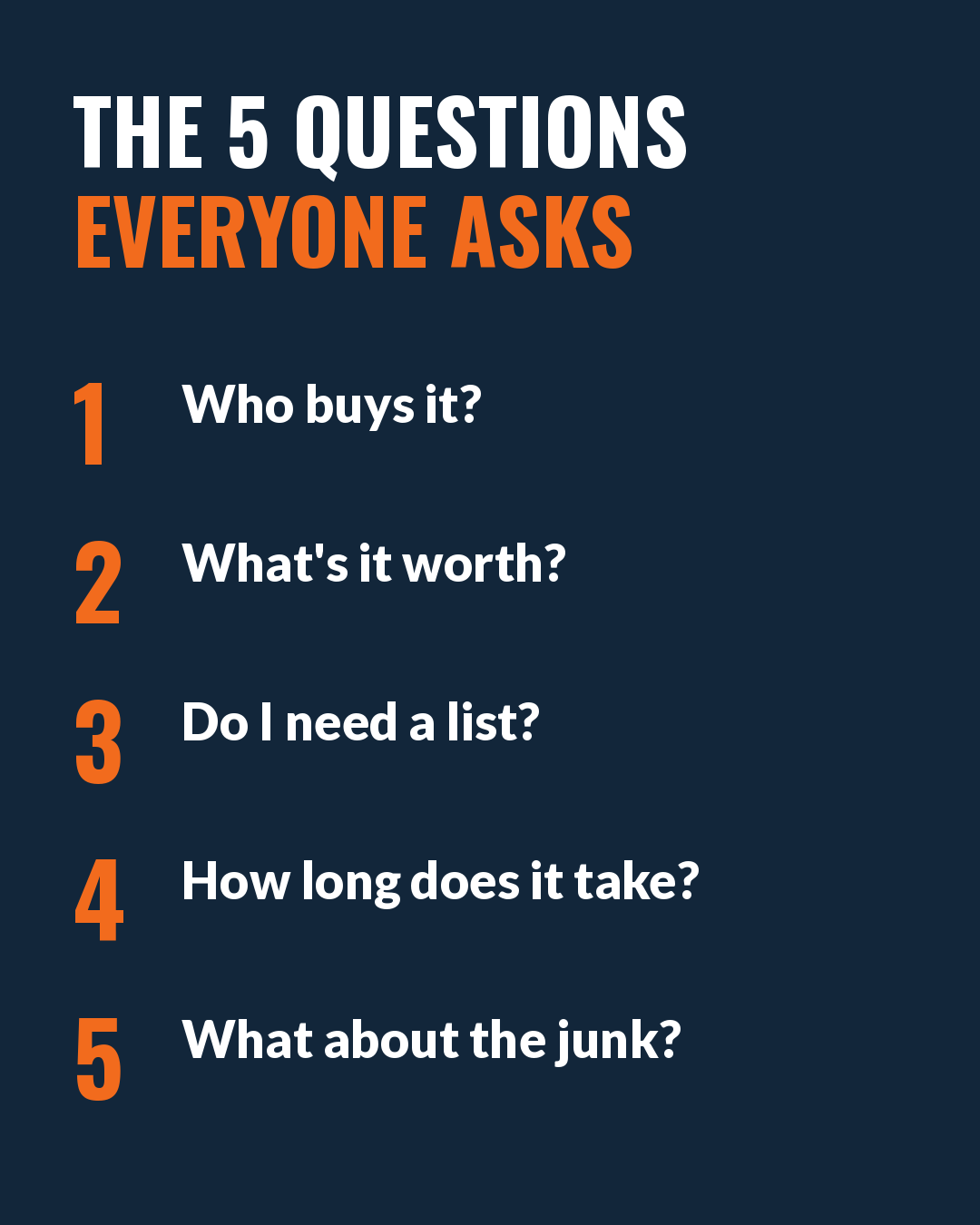
Surplus buyers. Companies like Central Surplus, an MRO parts supplier, buy excess MRO and industrial parts from plants and resell them to the maintenance teams and distributors who still need them. Scrap yards will take it too, but they pay by weight, so a working servo drive and a dead one bring the same few dollars. Auction houses and brokers will move some of it eventually, but you wait, prep and pay fees, and anything unsold comes back to you.
Less than you paid, more than scrap, and a little less every year. The parts are worth what someone will pay for them today, and that number shrinks as the machines that use them retire. That’s not a reason to wait for a better price. It’s the reason not to.
No. If your ERP can export a rough list, or you have a spreadsheet of the parts, great. If not, photos of the shelves are enough to get an offer. Nobody should make you count, clean and catalog parts you’re trying to get rid of.
Photos to offer is usually days, not months. After that it’s one pickup. The slowest step in most plants is getting someone to decide.
Every storeroom has it: unlabeled boxes, open packages, parts nobody can identify. Send it all. A lot buyer prices the whole lot, and sorting the good from the bad is their job, not yours.
When you sell excess industrial inventory as one lot, a good buyer looks at everything. The categories that matter most:
Excess inventory doesn’t look expensive because nobody gets a bill for it. You pay anyway: the floor space, the racking, the insurance, the annual count, and the tax on inventory carried at book value. Then there’s the hidden cost: somebody gets assigned to “deal with it,” and it’s never their real job.
The decision to sell excess industrial inventory usually gets made at year-end, when finance asks why the storeroom number hasn’t moved. It’s cheaper to make it now.
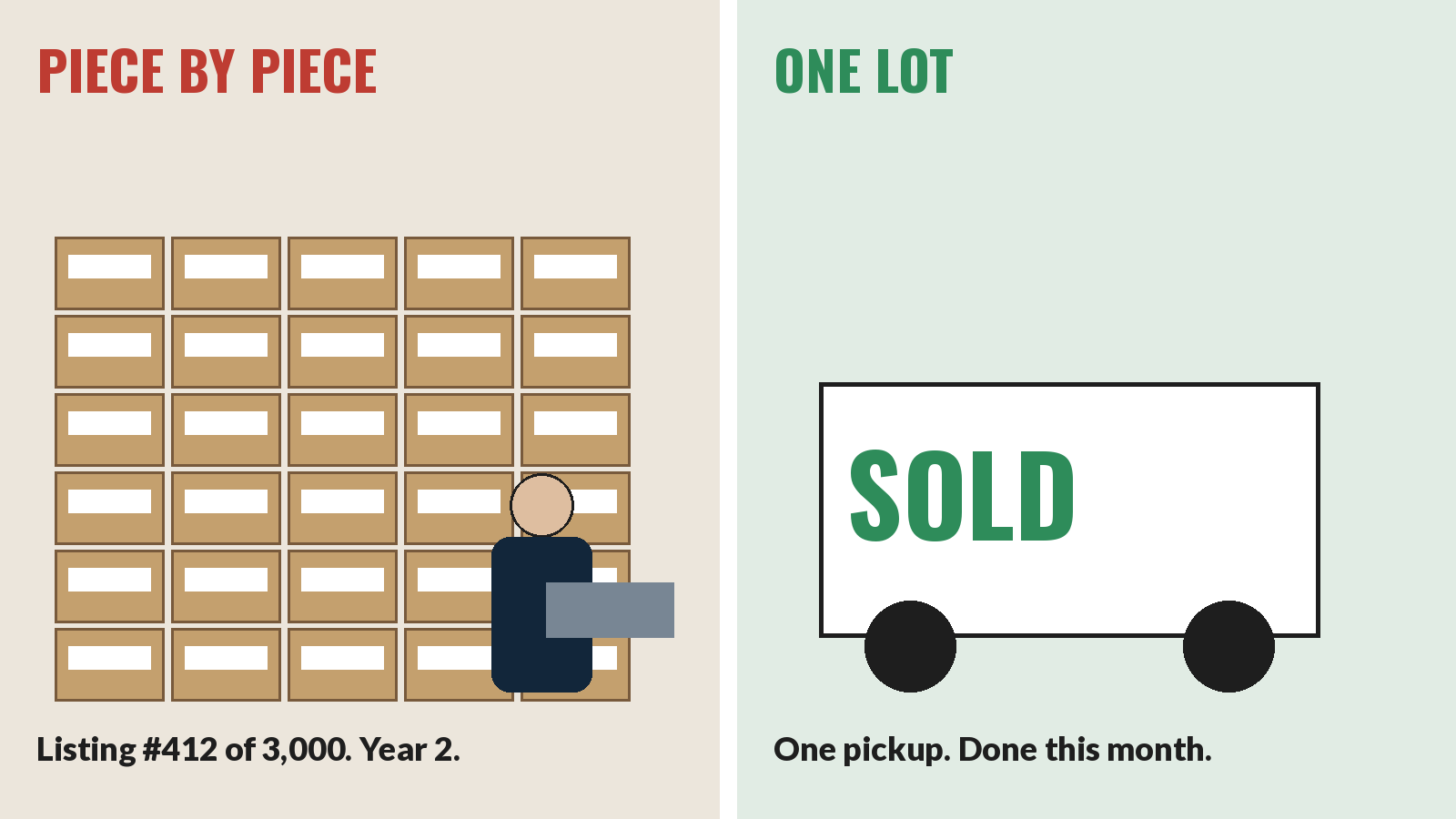
You can sell excess industrial inventory one part at a time. Some plants try. It looks like more money on paper: list the expensive items individually, get top dollar, scrap the rest.
In practice it goes like this. The ten best parts sell in the first month. The next fifty sell over a year, each one a listing, a question, a packing job and an invoice. The remaining thousand sit, because nobody wants to photograph a box of seals worth $4. Two years later you have the same storeroom, minus its ten best parts, and a buyer who now offers less because the good stuff is gone.
A one-lot sale gives up a little on the top items and gets you out of everything else. For most plants that’s the better deal, and it’s the only one that ends the project.
Whatever doesn’t resell is our problem now, not yours.
If any of those sound familiar, the hard part is already done. Someone noticed.
To sell excess industrial inventory, skip the spreadsheet, skip the auction and skip the scrapper. Take photos, get one offer, schedule one pickup. 1 decision, 0 headache.
Ready to sell industrial MRO parts? Make it easy. → Sell Your Parts

Our team can locate, cross-reference, and source all parts.
Our team can locate, cross-reference, and source all parts.