
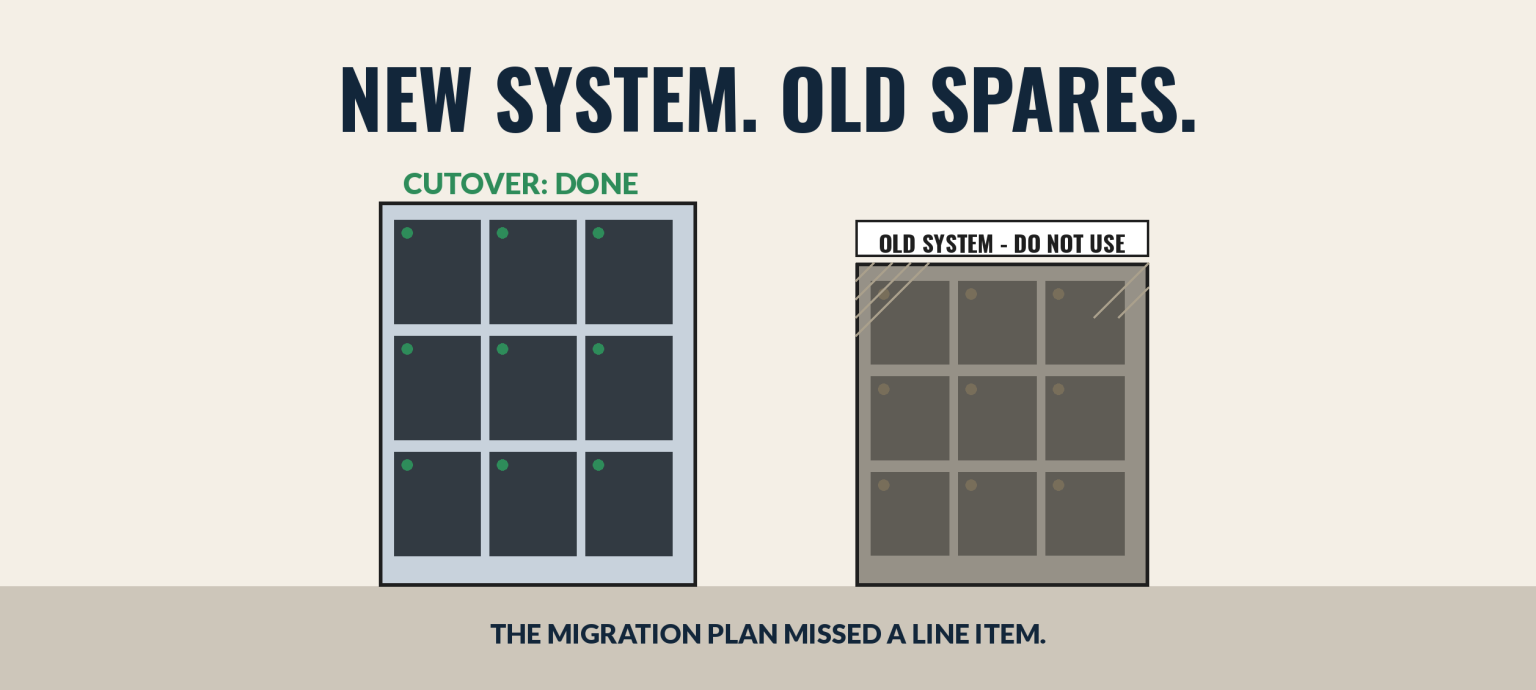
Back in 2015, ARC Advisory Group put a number on the wave that was coming: roughly $65 billion of installed automation systems reaching the end of their useful lives. A decade later, plenty of that wave has crashed through your plant. New controllers, new drives, new HMIs, a fat integrator invoice and a cutover weekend nobody wants to talk about.
And in the back of the crib, the old system’s spares. Processors, I/O cards, drives, PCBs, a power supply still in its box. The migration plan had a line item for everything except them.
Most plants do one of three things with PLC spares after a migration: leave them on the shelf, scrap them, or sell them. Leaving them is the most common and the most expensive. The best time to sell is the week the new system is accepted, because that’s when the old parts are worth the most to the plants still running them, and worth nothing to you.
Nobody plans to keep a cabinet of dead-platform parts. It just happens, on a schedule you could set your watch by.
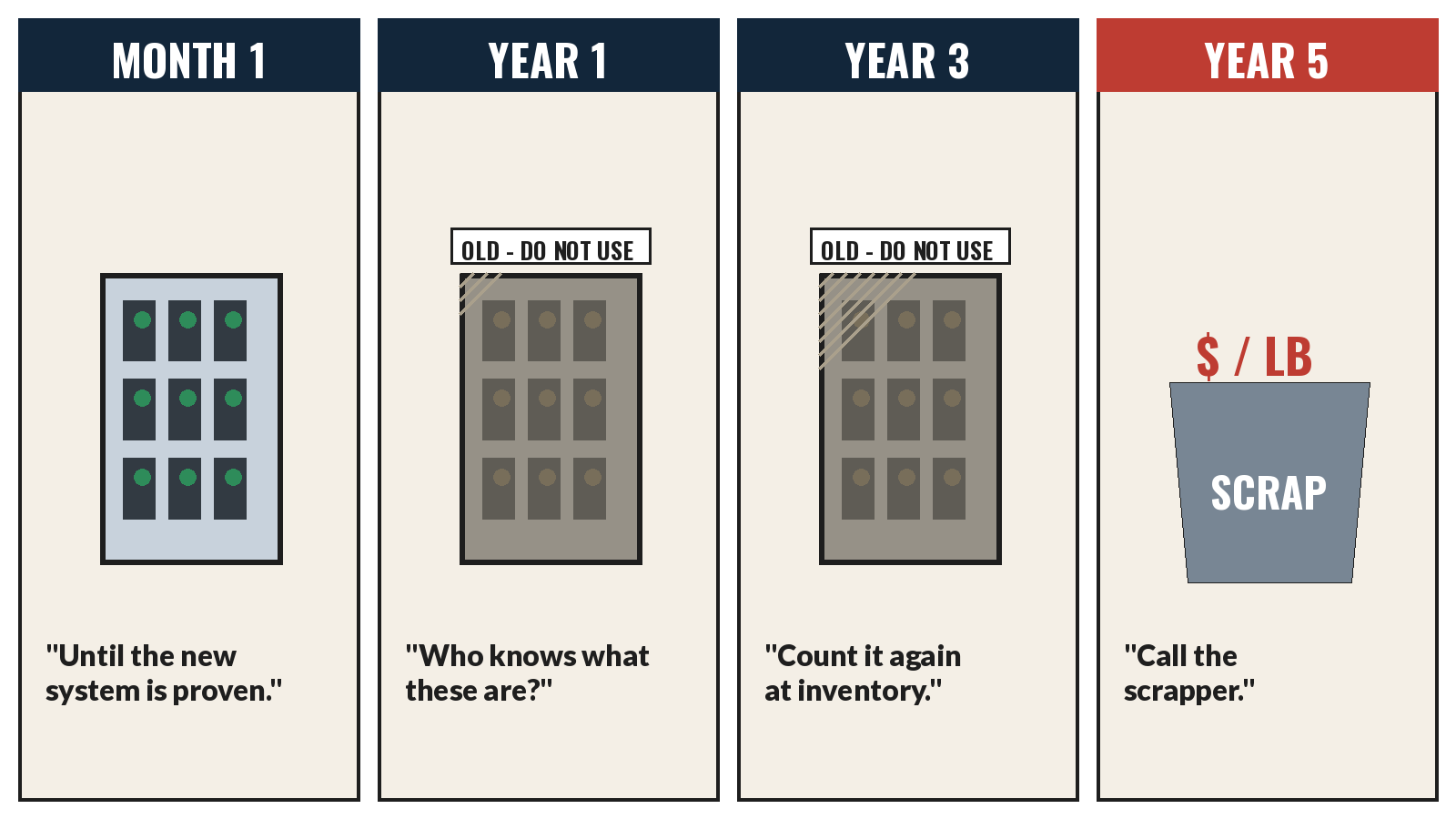
The spares stay put “until the new system is proven.” Reasonable. Nobody touches them.
The system is proven. The spares are still there. The controls engineer who knew which board went where has moved on to the next project. The bins get a new label: “OLD SYSTEM, DO NOT USE.”
Now it’s a cabinet nobody can identify, counted every year at physical inventory and carried on the books. You’ve paid for the floor space, the insurance and the annual count, and the tax on inventory nobody will ever pull. Meanwhile, every other plant on that same platform has been migrating too. The buyers for your old parts are retiring right alongside them.
Someone finally calls the scrapper. The board that would have sold in year one goes out by the pound.
Electromechanical moves fast. Automation isn’t a mature-products market anymore; platforms turn over in years, not decades. The value of PLC spares after a migration only goes one direction.
But smart money calls the surplus wholesaler.
The main crib is the easy part. The PLC spares after a migration hide in more places than that: the cabinet in the maintenance shop, the spare-parts kit that shipped with an OEM machine, the controls engineer’s desk drawer, the truck. There’s often a second processor sitting in a rack doing nothing, because “it was already paid for.”
Walk the plant once with the old system’s part list in hand. Anything with the old platform’s name on it goes into the pile. Every piece you find now is one less thing to count, insure and pay tax on later.
Three things are true the week your new system goes live, and they won’t be true for long.
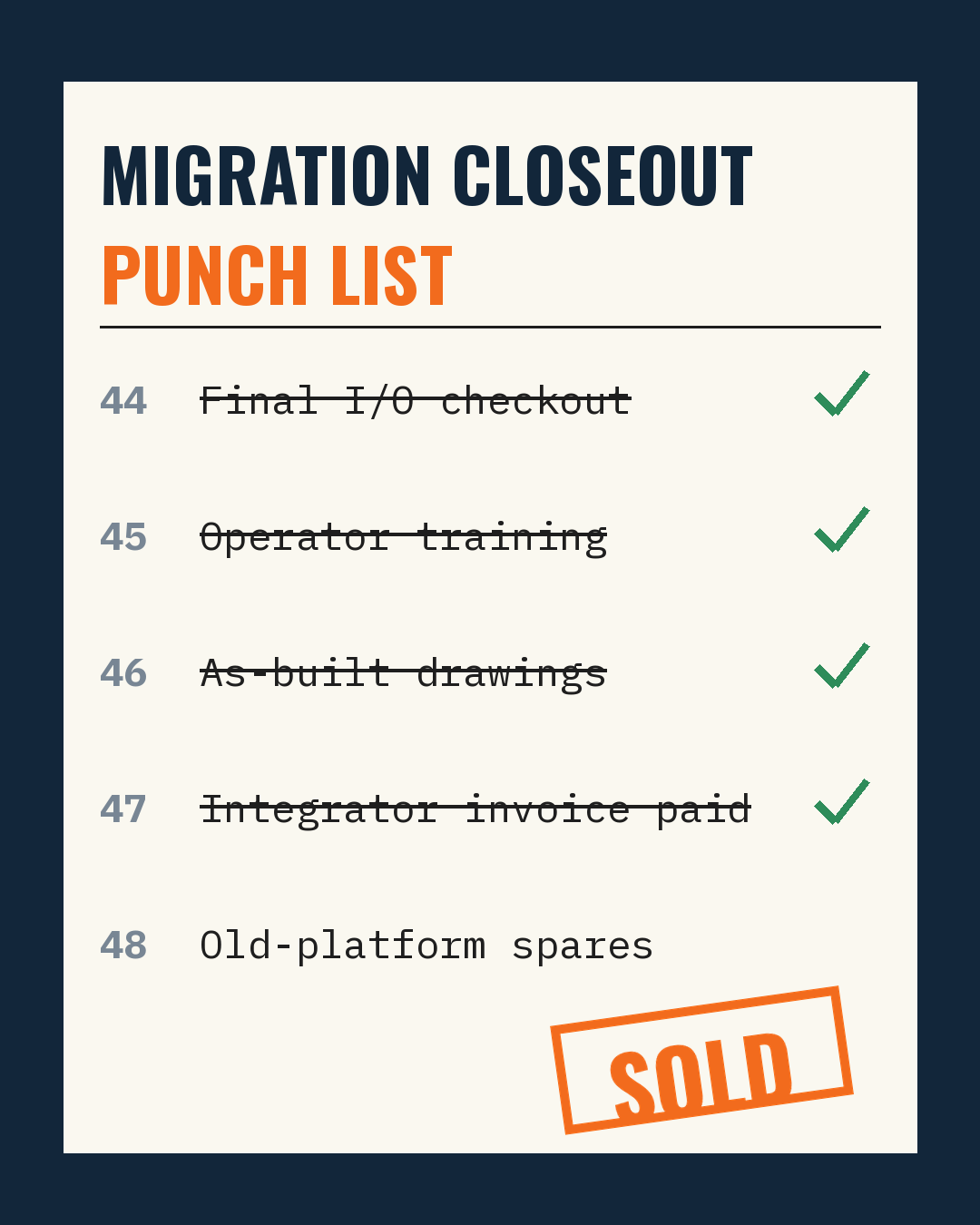
The fix is boring, which is why it works. Add one line to the migration closeout: “Old-platform spares: sold.” Then do four things.
That’s the entire process for clearing PLC spares after a migration. It takes less time than the cutover meeting did.
Scrap is fast and pays almost nothing; a working processor and a dead one weigh the same. Auctions move the lot eventually, but you prep it, wait for the sale date (months) and take whatever the room bids, minus fees. A broker or consignment deal leaves the parts on your books until each one sells, which can take years.
An outright sale to a surplus buyer is the only option that ends the problem on the day you decide to. If you want the longer version, we compared the exits in liquidating excess MRO inventory, and if the old system leaves behind controllers or drives, our pieces on selling surplus PLCs and selling surplus servo drives go deeper.

You know the numbers are much larger now.
Rollback is a cutover-weekend decision. Once the new system is accepted, nobody is reinstalling the old one. Keeping the spares “just in case” means keeping them forever.
Often, yes, if they’re sold while the platform still has users. Timing matters more than condition.
No. Photos of the shelves are enough for a lot buyer to make an offer.
We buy PLC spares after a migration as one lot: processors, I/O, drives, servo amplifiers, HMIs and PCBs, labeled or not, boxed or not. You send photos, we send an offer, we arrange pickup and you get paid. The cabinet’s gone, the line item’s closed, and what happens to the parts next is our problem, not yours.
Selling now means one less year of storage and one less year of tax on parts you’ll never use again.
Ready to sell industrial MRO parts? Make it easy. → Sell Your Parts


Our team can locate, cross-reference, and source all parts.
Our team can locate, cross-reference, and source all parts.