

The automation cage is the lightest shelf in the plant, and the one losing buyers fastest. Smart money knows this, it’s just locked behind a door nobody opens.
If you plan to sell surplus PLCs, PCBs, drives, servo amplifiers or any industrial automation parts, the clock started the day the platform did.
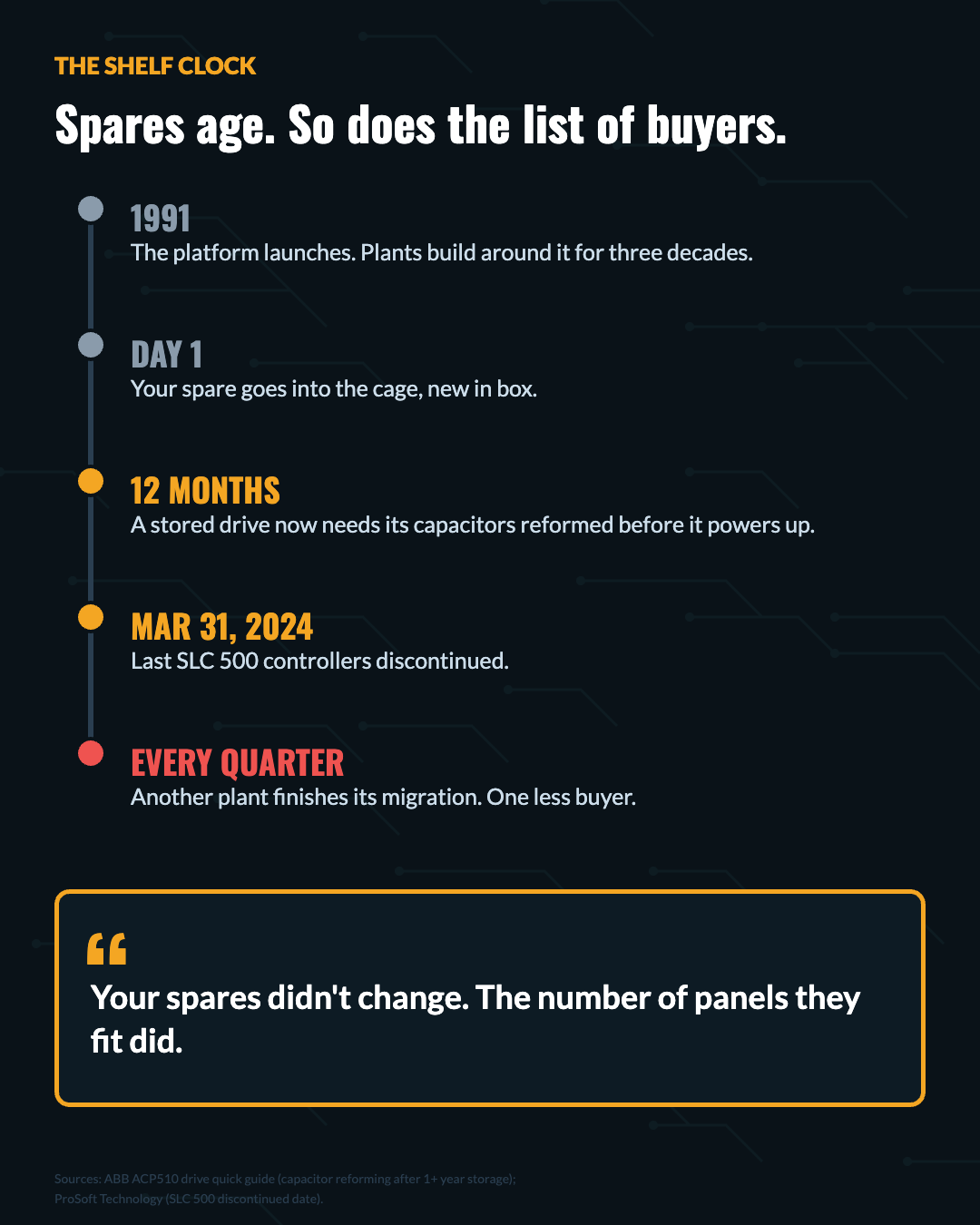
Rockwell set March 31, 2024 as the discontinued date for the last SLC 500 controllers, a platform first released in 1991.
Plenty of people read that and thought their spare cards just got rare.
They didn’t. The plants that can use them just got fewer.
Every migration to a new platform retires a customer for the old one. Quietly. One cutover weekend at a time.
Your spares didn’t change. The number of panels they fit did.
That’s the real story behind the cabinet full of spares nobody has touched since the upgrade.
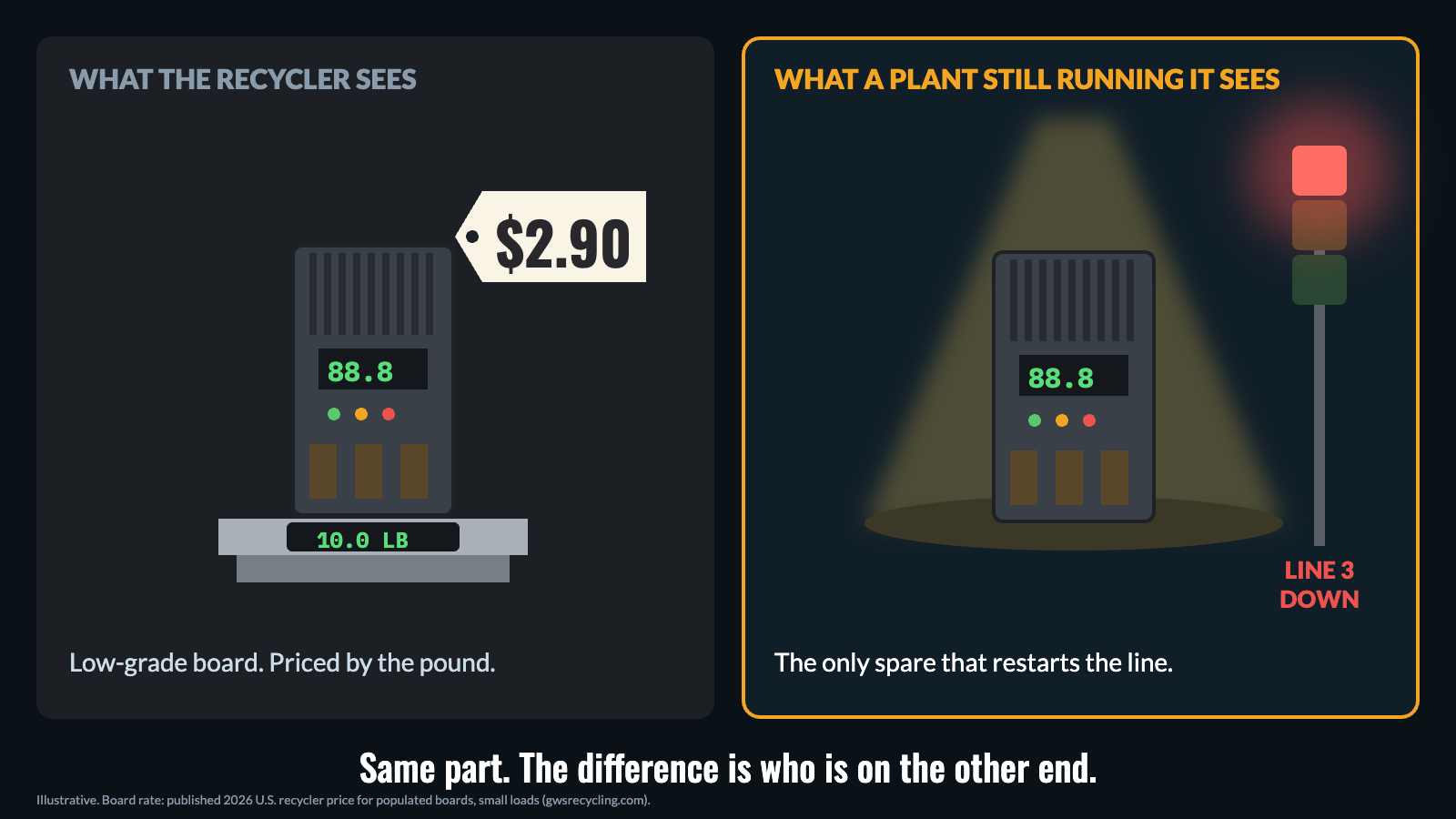
Electronics don’t exit the building the way bearings do. The wrong exit here is worse.
Here’s the catch. Weight is the only thing a recycler measures, and electronics are the lightest merchandise in the plant.
Now the numbers:
If you’re going to sell surplus PLCs at all, the only question that matters is whether the buyer still runs the platform.
Bottom line: a PLC or a drive is only valuable to a plant that still runs the platform, and that list gets shorter every year.
(The automation spares are usually in a locked cage in the maintenance office, which is exactly why nobody ever counts them.)
Most guides tell you to test, photograph and list every module. That’s how a rack of spares turns into a four-year eBay project.
The fastest way to sell surplus PLCs is to stop treating them like a catalog. Three moves.

That’s the whole market in four words.
Plants are modernizing controls as fast as budgets allow. New processors, new drive families, new networks.
Each one sends a cabinet of perfectly good spares to the back room, where nobody will look for them again.
Two camps come out of every one of those projects.
The first camp finishes the cutover and forgets the cage. Three years later somebody finds it, and the recycler weighs it.
The second camp sells the old platform’s spares the same quarter the migration closes. Clean cage, cash in hand, done.
Where do they go? Not back to the OEM. Most likely overseas, to legacy machines in other countires, or to a plant that can’t justify a migration yet and needs your spare to keep running.
The buyer on the other end isn’t shopping for fun. His line runs on a processor the OEM stopped making, and his own migration is two budget cycles away.
Take the emotion out of it. Nobody wants to admit they ordered six spare processors for a rack that came out two years later.
The plants that sell surplus PLCs on purpose get paid for them. The ones that wait hand them to the recycler at 29 cents a pound.
You have now figured out how to sell your spares for cash.
What to watch: February 15, 2027, when the SLC 500 EtherNet/IP adapter goes discontinued, and every end-of-life notice after it. Clearing the rest of the crib too? Here’s how to pick the exit.
And if you sell now, you’re not paying for another year of storage and you’re reducing your tax exposure.
Ready to sell industrial MRO parts? Make it easy. → Sell Your Parts


Our team can locate, cross-reference, and source all parts.
Our team can locate, cross-reference, and source all parts.