What Are MRO Supplies? A Plain-English Buyer’s Guide
General MRO
MRO supply explained: what it means, what to stock, and how to get parts shipped same-day at below-distributor prices. Order before 6 PM ET.
Short answer: MRO supplies are the parts and materials a plant uses to keep equipment running. They don’t become part of the product. Bearings, motors, belts, filters, fuses, PLCs, lubricants, fasteners and safety gear all count. Production materials, the steel or resin that ends up in what you ship, don’t.
What MRO Stands For, and Why the Line Matters
MRO means maintenance, repair and operations. The distinction from production materials isn’t just vocabulary. Production materials are planned off a schedule. MRO supplies are bought off failures, PMs and gut feel, in small quantities, across thousands of part numbers. That’s why the same plant that runs a tight production supply chain can have a storeroom full of the wrong spares and still be short the one it needs today. We dug into that problem in why your storeroom is full yet still short.
The Main Categories of MRO Supplies
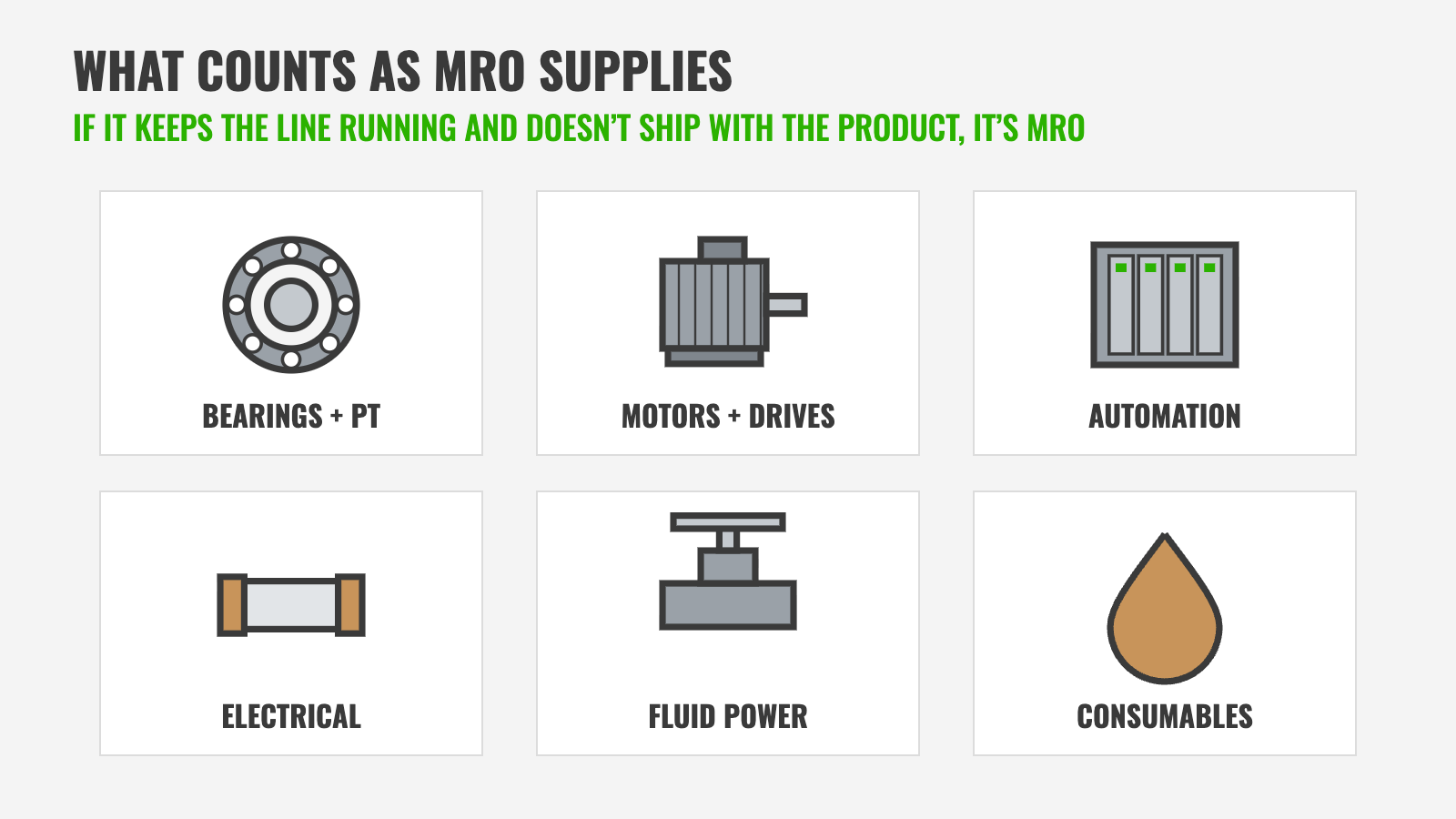
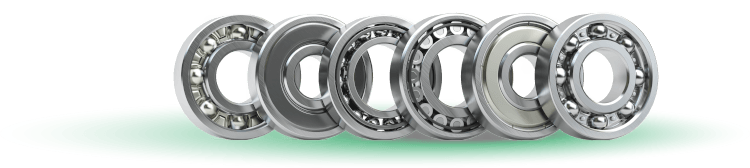
Bearings and power transmission:bearings, mounted units, belts, sheaves, couplings, chain, sprockets, gear reducers.
Motors and drives:AC and DC motors, gearmotors, VFDs, servo drives and amplifiers.
Automation and controls: PLCs, I/O modules, HMIs, sensors, PCBs and other industrial automation parts.
Electrical: contactors, starters, overloads, breakers, fuses, relays, wire and terminals.
Consumables: lubricants, filters, fasteners, abrasives, tape and cleaning supplies.
Safety and facility: PPE, lockout/tagout, lighting, HVAC parts.
The first five carry the cost and the downtime risk. Consumables carry the transaction count.
How Plants Actually Buy MRO Supplies
Most plants use some mix of four channels, each with its own trade-off:
Broadline distributors. One catalog, fast on common items, negotiated pricing. Weak on obsolete parts and specialty brands.
Specialty and authorized distributors. Deep on one line (bearings, automation, electrical), with factory support. Long lead times when the factory is backordered.
OEMs. The exact part, sometimes. Often the highest price and the longest wait, and nothing at all once a product is discontinued.
Surplus suppliers. New and new-surplus stock bought from other plants and distributors. Strong on obsolete and hard-to-find parts, usually priced below list, and in stock today instead of in eight weeks.
Smart buyers don’t pick one. They run commodity consumables through a broadline contract and send the urgent, obsolete and expensive items where they’re actually on a shelf.
What Makes MRO Buying Hard
The parts aren’t exotic. The buying pattern is: unplanned, low volume and spread across a huge catalog. A few things make it worse:
Part numbers outlive products. A machine runs 25 years; the drive inside it was discontinued in year eight.
Nameplates wear off. Half of sourcing is identifying the part.
Urgency wrecks pricing. A line-down order pays whatever it costs.
Duplicate and dead stock. The same bearing stored under three numbers, while the part you need isn’t stocked at all.
How Much to Keep on the Shelf
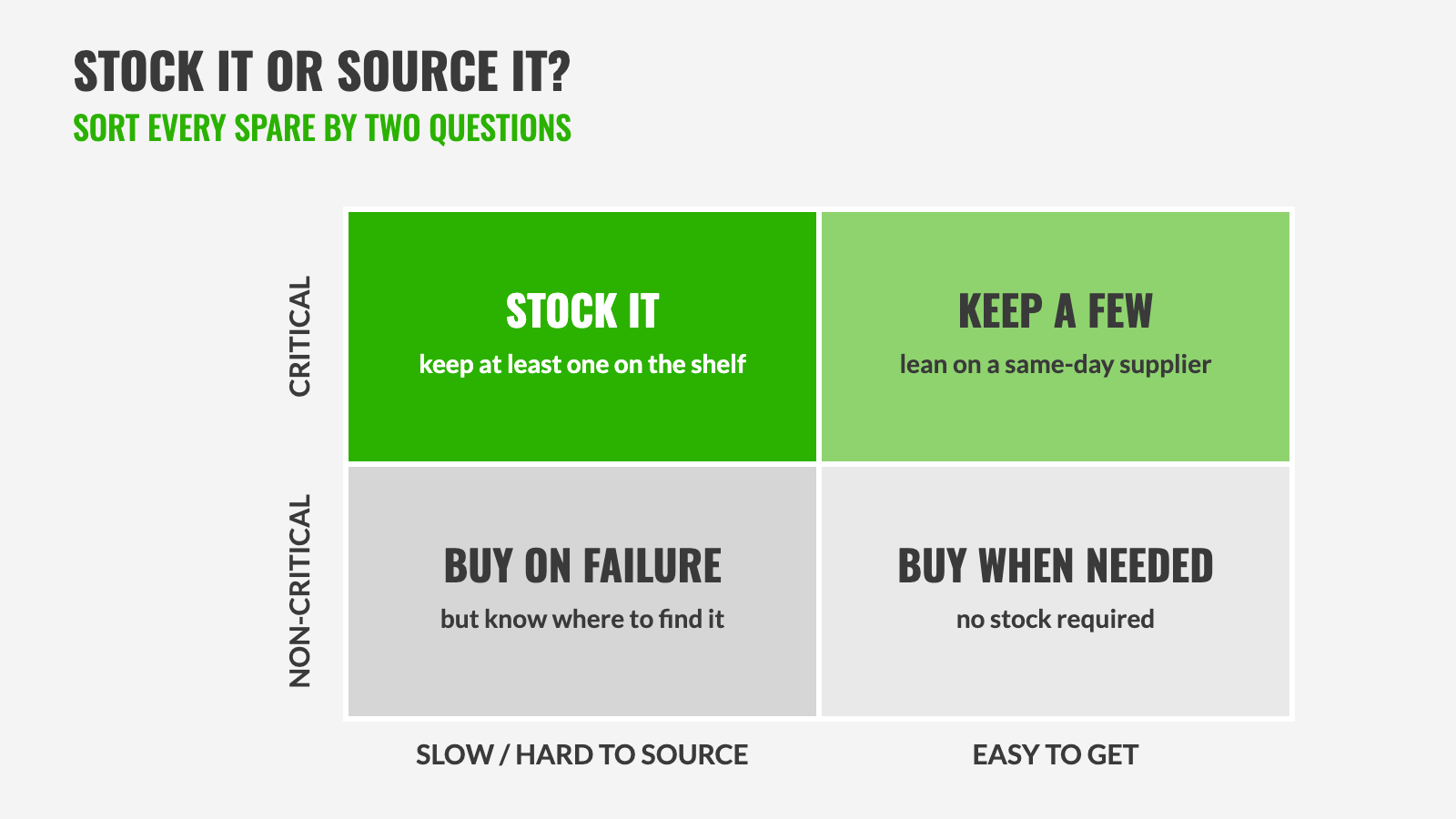
Stocking is a balance between two costs. Too little, and a failed part stops the line while you wait. Too much, and you pay to store, count, insure and eventually write off parts nobody touches. A simple way to sort it:
Critical and slow to source: stock at least one. A long-lead drive or an obsolete PCB belongs on your shelf, not a supplier’s.
Critical but easy to get: keep minimal stock and lean on a supplier who ships same day.
Non-critical: buy when needed.
Review the list once a year. Equipment gets retired, and its spares turn into dead stock fast.
How to Buy MRO Supplies Smarter
Know your critical spares. List the parts that stop a line if they fail. Those deserve a stocking plan, not a rush order.
Clean up part numbers. Cross-reference duplicates so one bearing has one number in your system.
Check obsolescence before it bites. If a critical part is discontinued, source spares now while surplus stock exists.
Quote lists, not lines. Sending a full list gets better pricing and faster turnaround than 20 separate requests.
Use surplus for what it’s good at. Obsolete, hard-to-find and high-dollar parts, at below-list prices, often shipped today.
MRO is the largest piece of indirect spend in most plants. Indirect spend also includes office supplies, services and IT.
Are MRO supplies capital or expense?
Usually expensed as operating costs. Major equipment and rebuilds may be capitalized. Check with your accounting team.
What does “new surplus” mean?
Unused parts, often in the original box, sold by a plant or distributor that no longer needs them.
Where Central Surplus Fits
Central Surplus stocks new and new-surplus MRO supplies across bearings, motors, power transmission, automation, electrical and fluid power. We ship same day on orders placed before 6:00 p.m. Eastern and typically price below the big distributors. Send a part number, a nameplate photo or a whole list. If it isn’t on the site, tell us what you need and we’ll track it down.