
A pillow block that’s grinding, wobbling or running hot rarely gets a second chance. The fix is swapping the unit, or just the insert, before it takes the shaft with it. The hard part isn’t the wrenching. It’s ordering a replacement that bolts into the same holes, sits the shaft at the same height, and locks the same way. This guide covers pillow block replacement step by step. For the basics of what a pillow block is and how one works, start with our pillow block bearings guide.
Don’t wait for the shaft to drop. Plan a pillow block replacement when you see any of these: grinding or rumbling you can hear over the line, a housing too hot to keep a hand on, grease purging out dark or gritty, visible wobble or shaft play, a set screw that won’t stay tight, or rust bleeding from the seal. One sign means inspect. Two means order the part now, while the machine still runs.
Most mounted units carry a number cast or stamped on the housing and another on the insert. On the common UC family, the number tells you nearly everything:
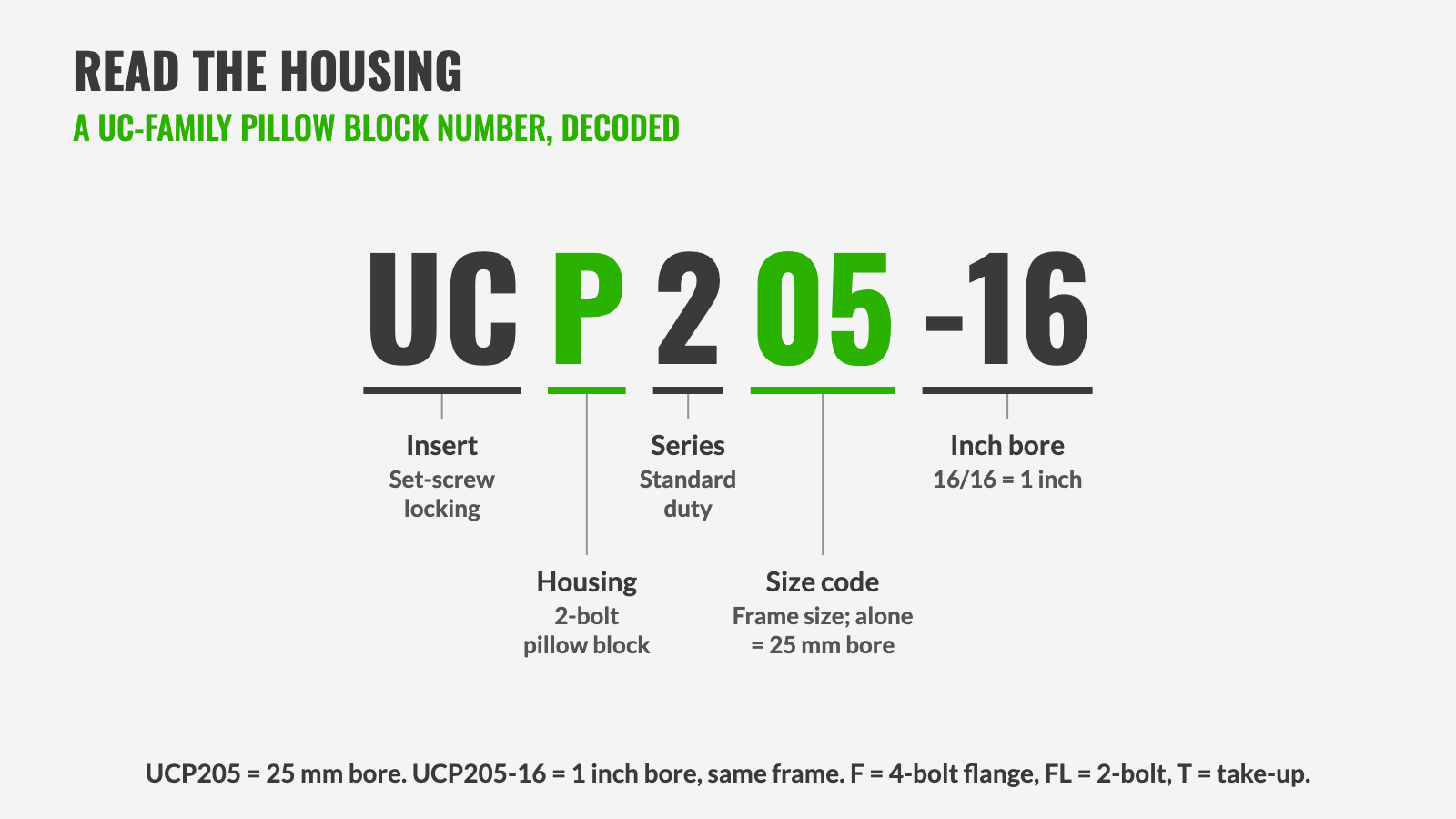
So a UCP205-16 is a standard two-bolt pillow block with a set-screw insert for a 1-inch shaft. Brands like Dodge, SKF, Sealmaster and Browning use their own numbering, but most cross to a UC equivalent on dimensions.
If the number is gone, or you’re crossing brands, these dimensions decide the fit:
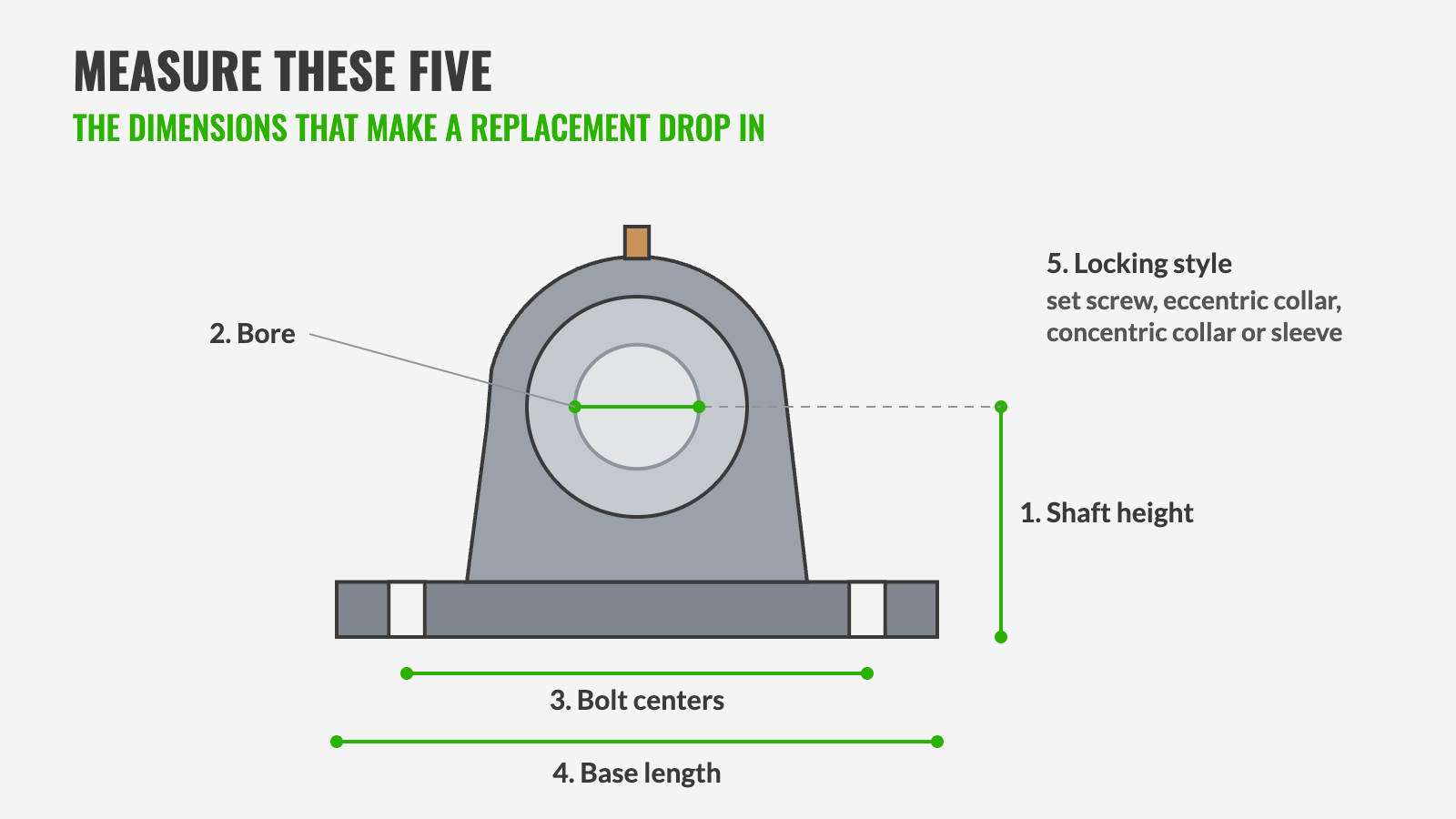
How the insert grips the shaft matters as much as the bore.
Swapping set screw for collar can work, but check the insert width. A wider insert may hit a neighboring part on the shaft.
If the housing is clean, uncracked and the bolts haven’t wallowed the holes, you can often replace just the bearing insert. It’s cheaper and faster, and the shaft height and bolt pattern don’t change. Replace the whole unit when the housing is cracked, the seat is worn or rusted, you’re changing materials (cast iron to stainless or thermoplastic for washdown), or the grease fitting and seals are shot. Before you reuse a housing, check the insert’s outer ring sits snug in the seat. A loose seat spins the new insert and you’re back in a month.
The number off the housing and insert, or the bore, shaft height, bolt centers and locking style. A photo helps.
A UC set-screw insert in a two-bolt pillow block (P), standard 200 series, 25 mm bore. A UCP205-16 is the same frame with a 1-inch bore.
Yes, if the housing and seat are in good shape. Match the insert’s number or bore, OD and width.
Many do on bore, shaft height and bolt centers, especially in the UC family. Verify all three before ordering.
A dash number (like -16) means inch. No dash number usually means metric. When in doubt, measure the shaft.
Central Surplus stocks pillow block bearings, flange units and inserts across the major brands, ships same day on orders placed before 6:00 p.m. Eastern, and typically prices below the big distributors. Send the number off the housing, the dimensions or a photo, and we’ll match it. Our bearing cross-reference covers the common inserts.
Need a pillow block replacement? Make it easy. Shop Pillow Blocks

Our team can locate, cross-reference, and source all parts.
Our team can locate, cross-reference, and source all parts.