Product Description
What this part is
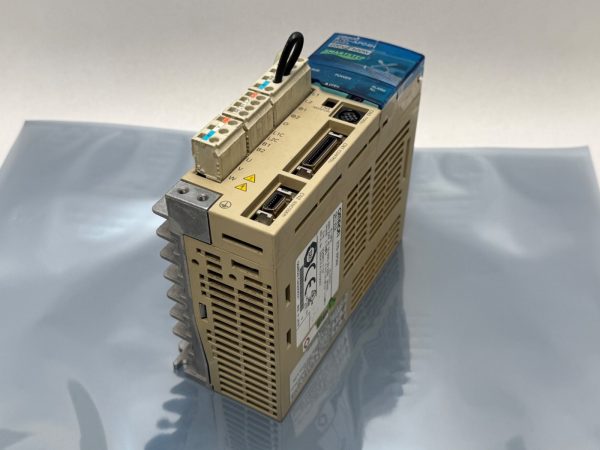
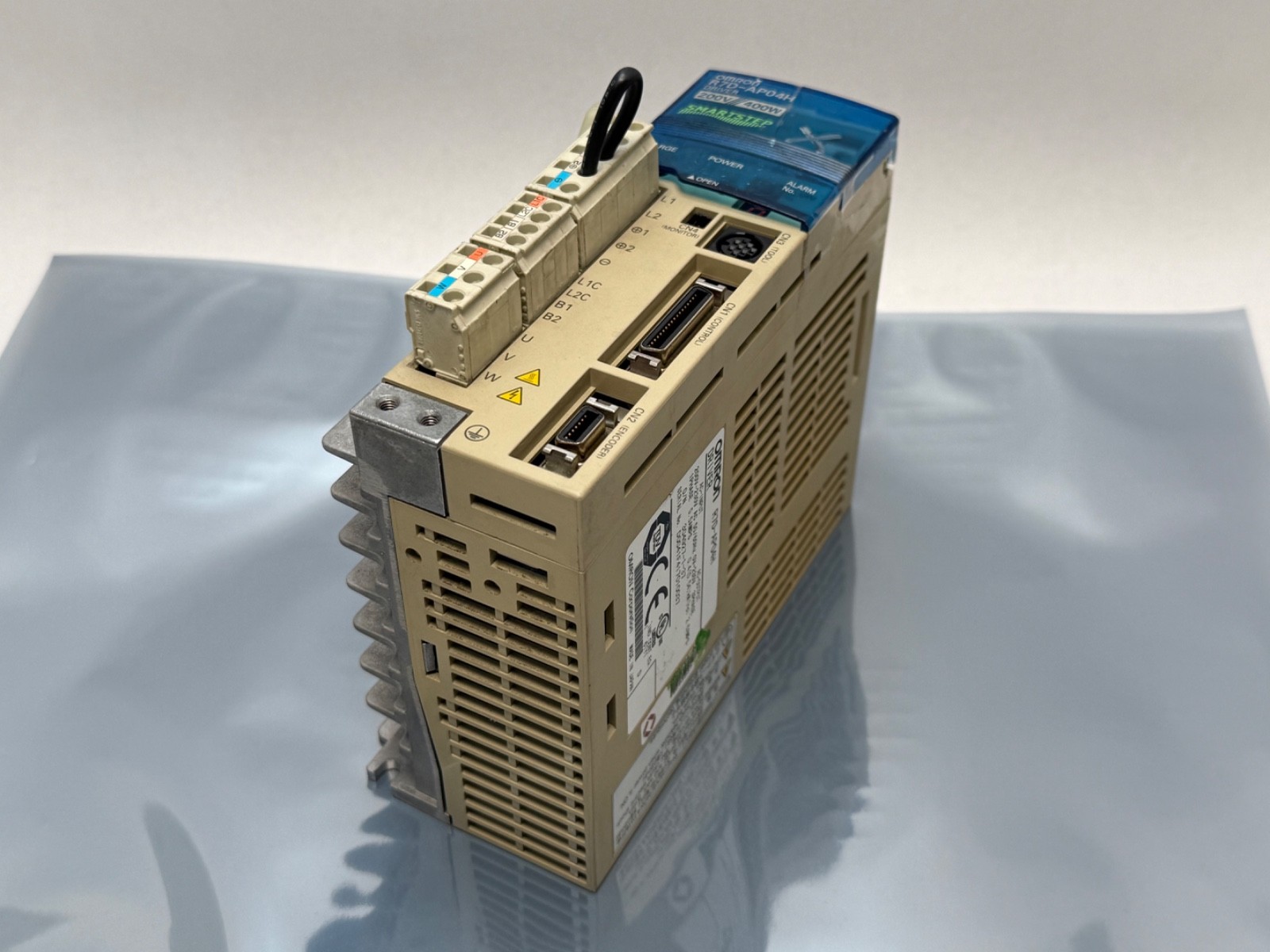
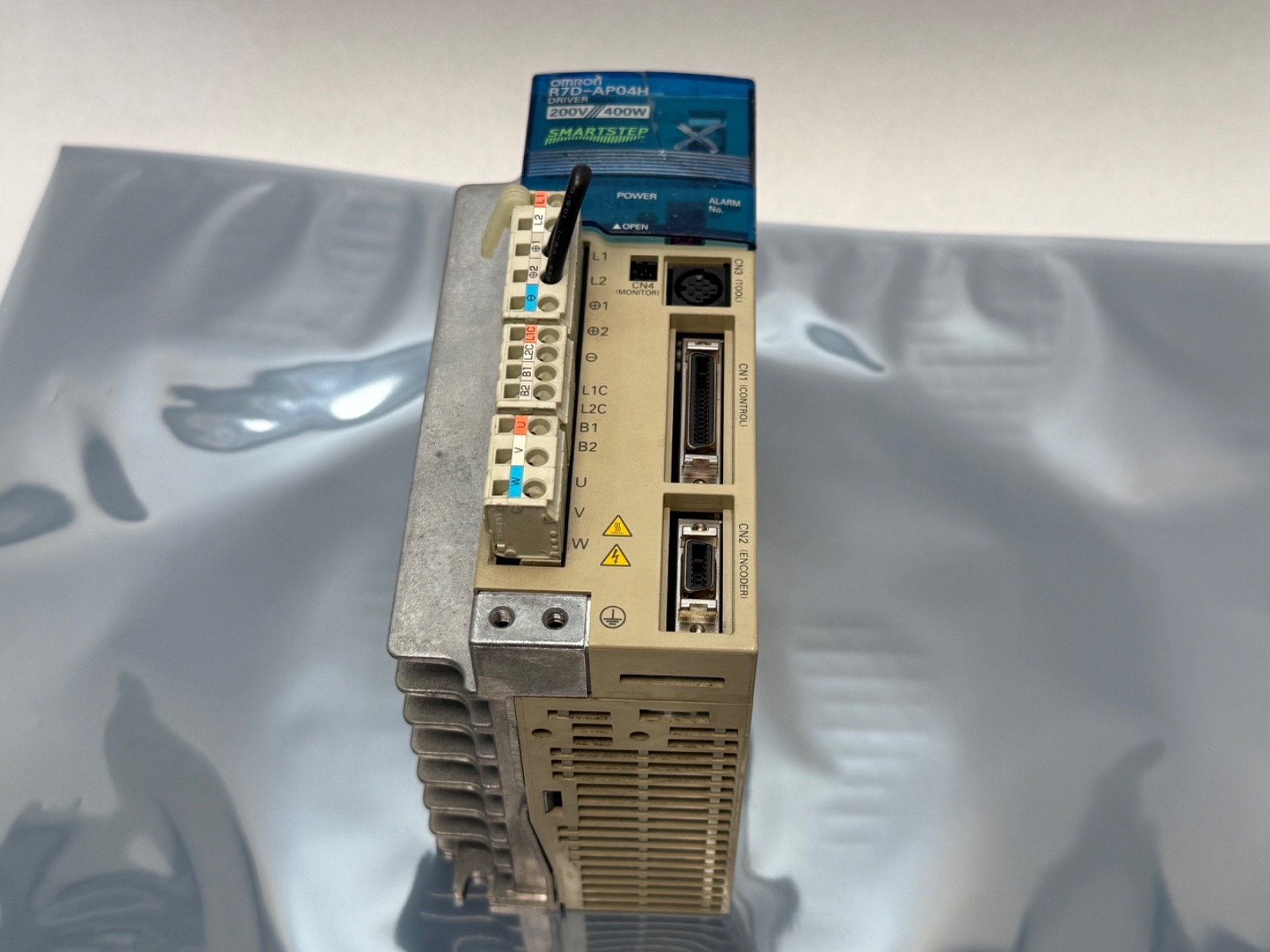
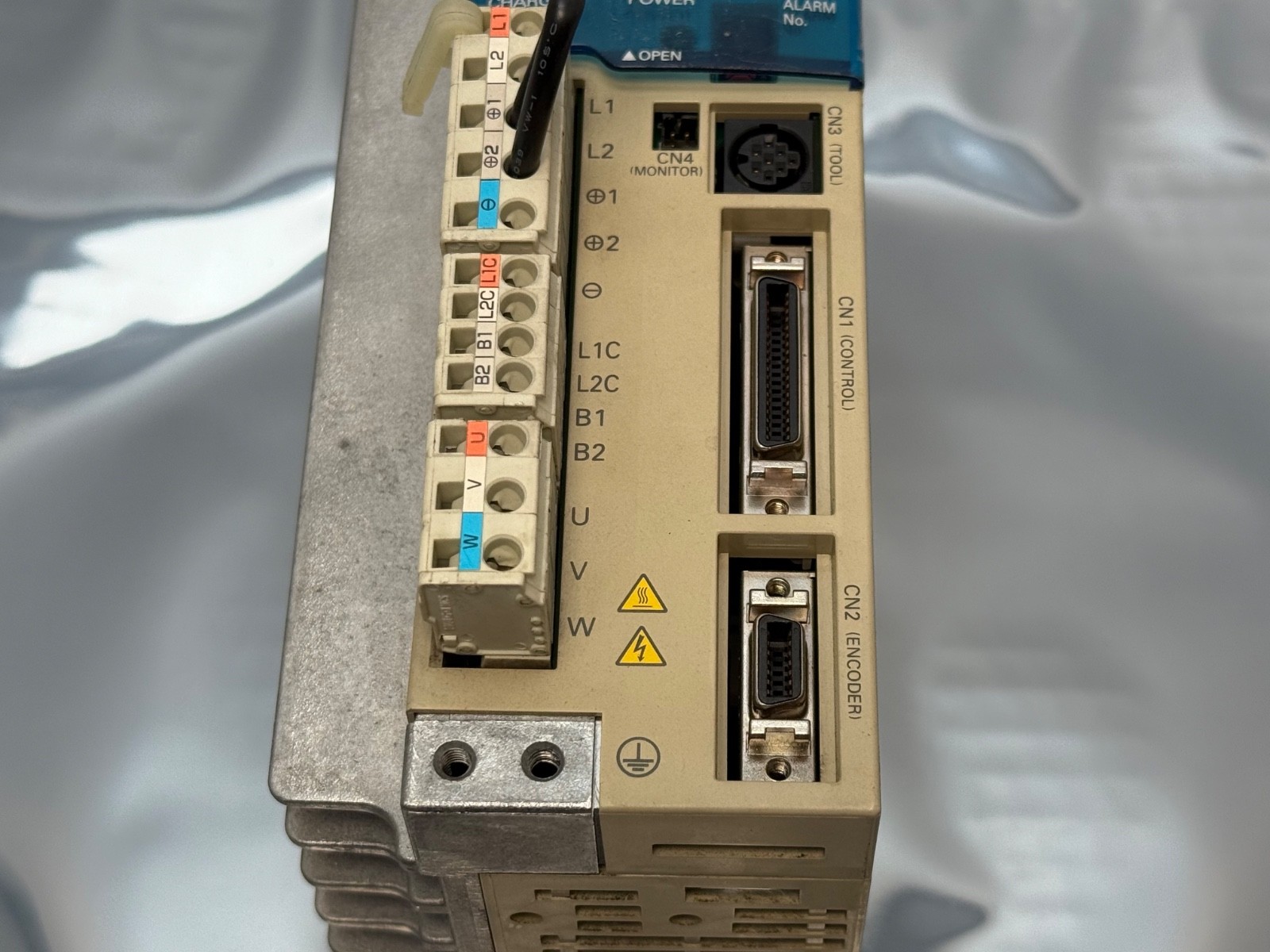
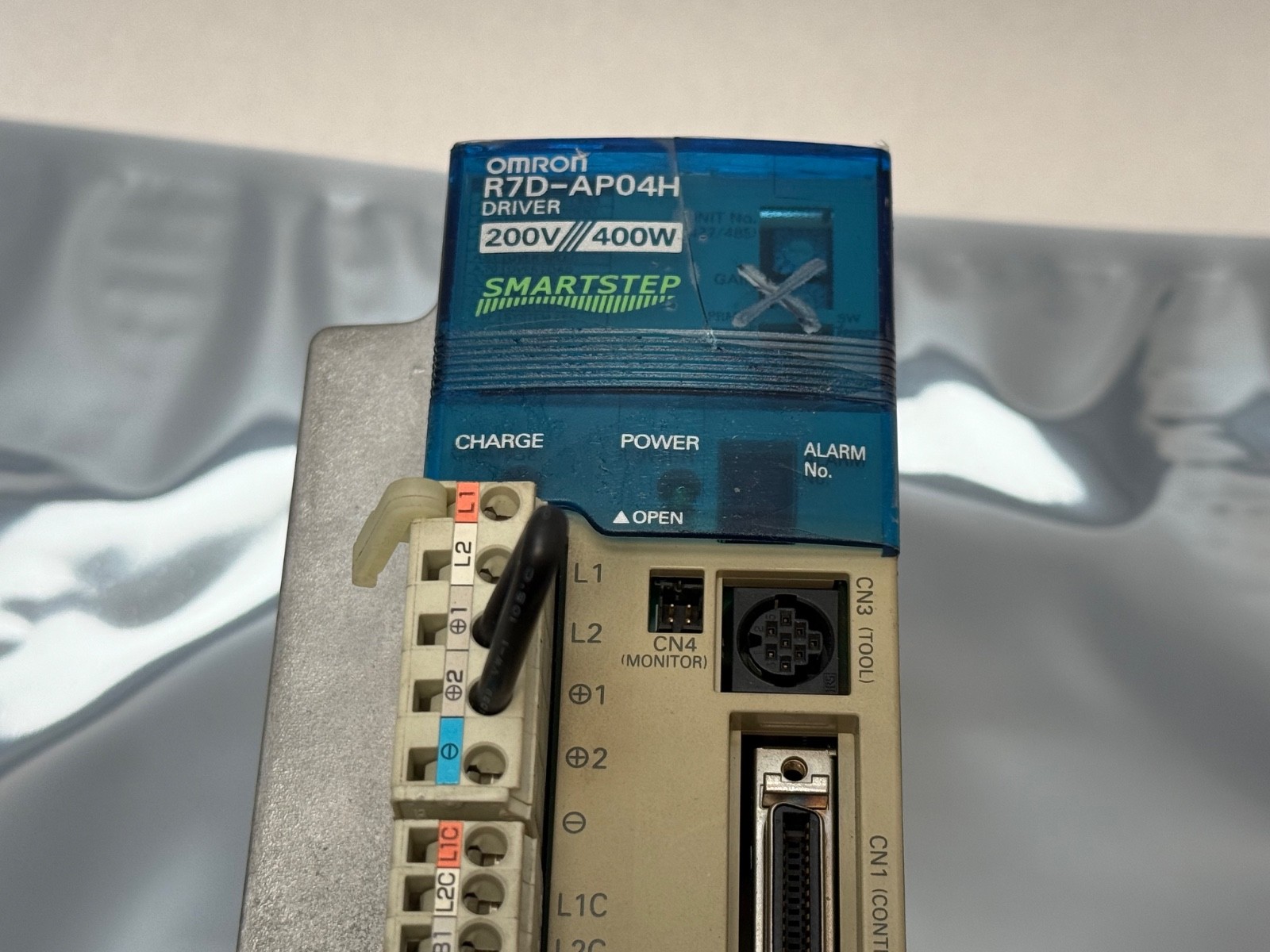
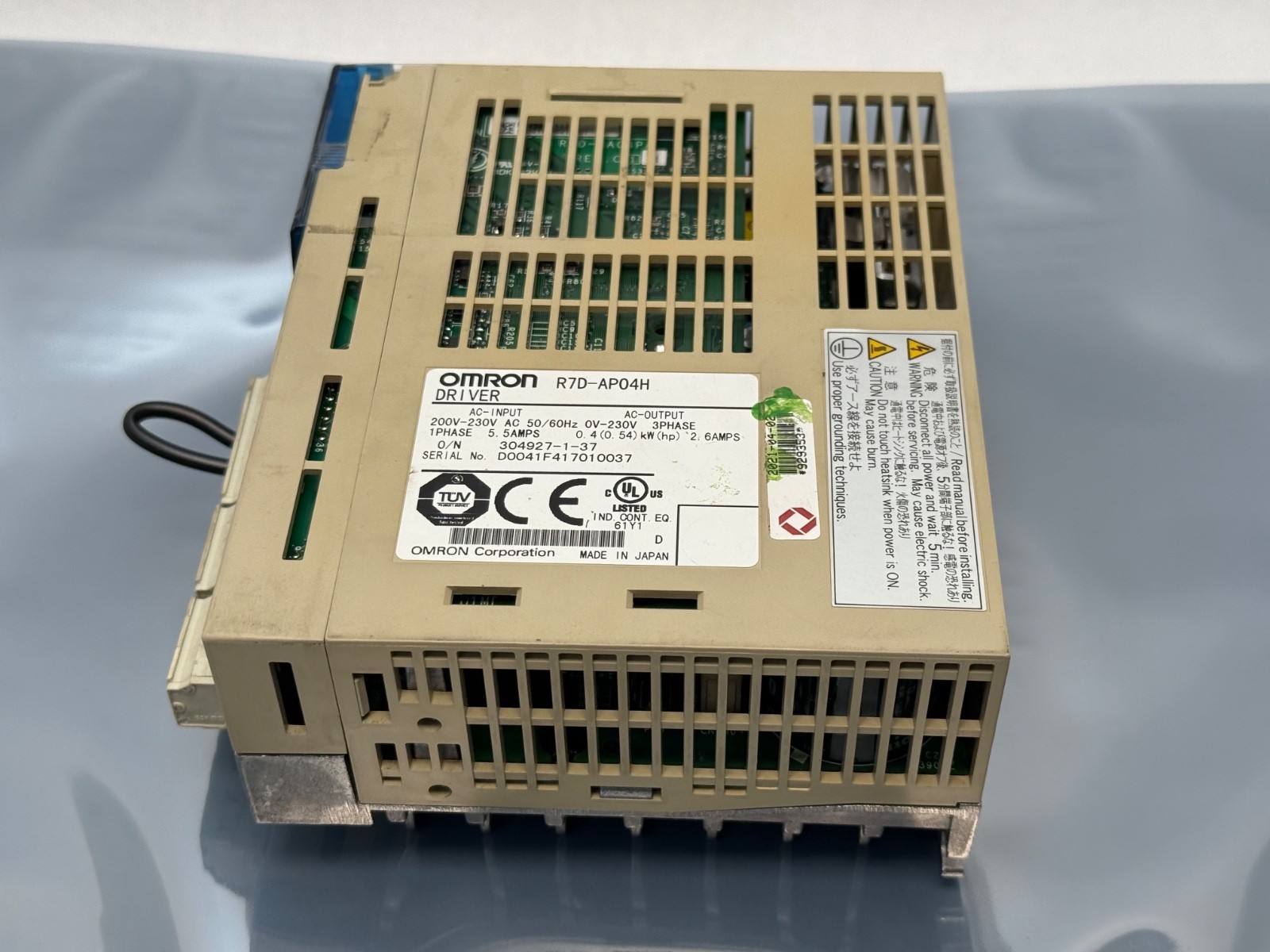
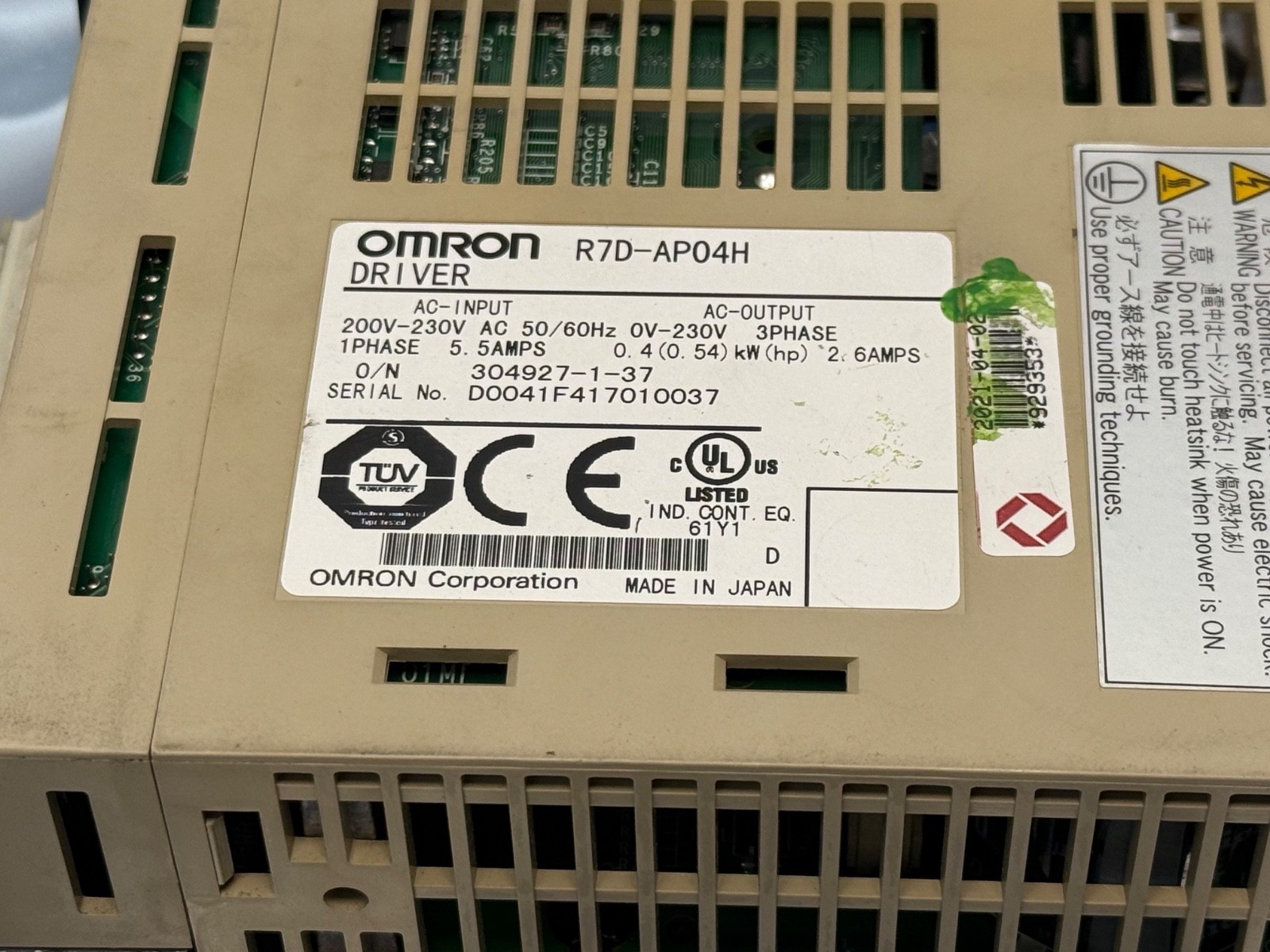
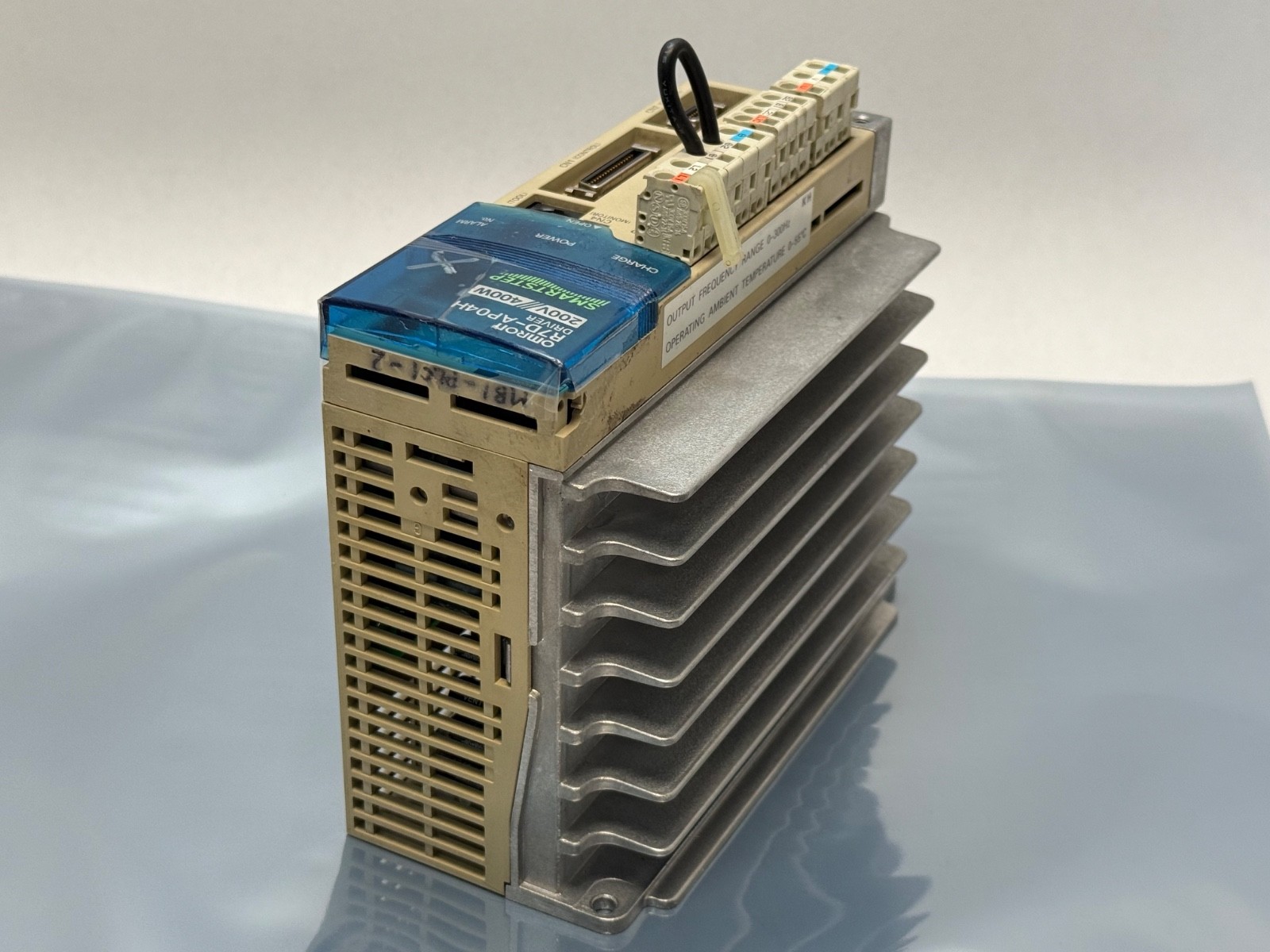
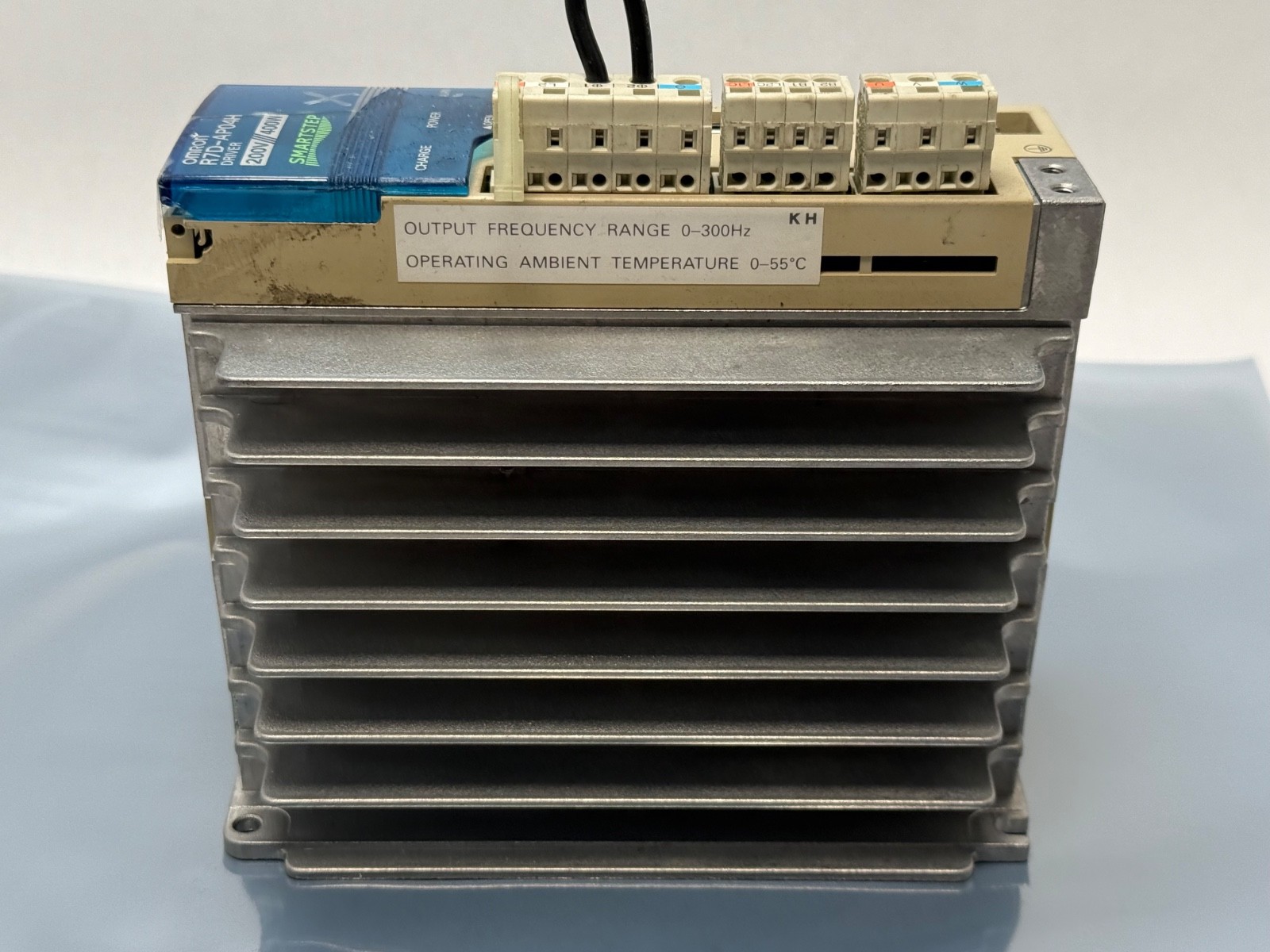
This is a servo drive (amplifier), not a servo motor. It is a single-axis Omron SmartStep A-Series amplifier rated to run a 400 W SmartStep servo motor from a single-phase 200–230 V AC supply. Position commands arrive as a pulse train from a host controller — a PLC positioning module, a motion card or a CNC pulse output — and the drive closes the loop on the motor’s incremental encoder. It has no built-in indexer, no program storage and no fieldbus port; it is deliberately a low-cost, switch-configured amplifier for straightforward point-to-point and electronic-gearing work.
Decoding the order code
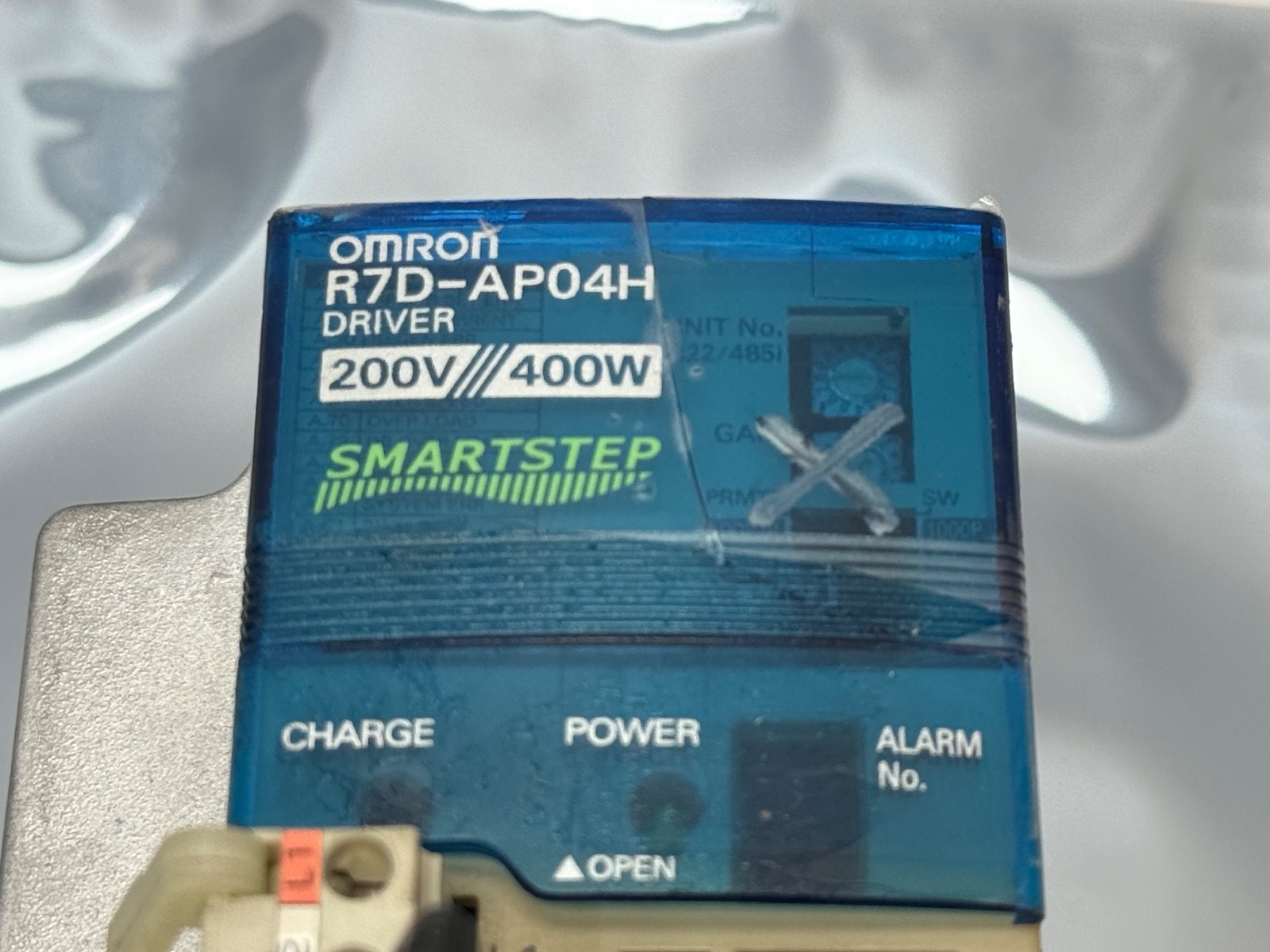
R7D — SmartStep servo drive (the matching motors are R7M).A — A-Series SmartStep platform.P — pulse-train (position) command input, as distinct from the analogue/speed-and-torque variants.04 — 400 W motor capacity.H — 200 V class (single-phase 200–230 V AC). The L-suffix members of the family are 100 V class, so an R7D-AP04H and an R7D-AP04L are not interchangeable on the supply side.
Published specifications
Rated motor capacity: 400 WMain-circuit input: single-phase 200–230 V AC, 50/60 HzOutput: three-phase PWM, 0–230 V AC to the servo motorRated input current: approximately 5.5 AContinuous output current: approximately 2.6–2.8 A rms; momentary maximum approximately 8 A (about 300% of rated, for acceleration)Command type: line-driver or open-collector pulse train — CW/CCW, pulse-and-direction, or 90° phase-difference (quadrature)Feedback: incremental encoder on the R7M motor; 8,000 pulses per revolution after internal multiplicationControl method: closed-loop position control with on-line autotuning and selectable rigidity/gain settingsSetup: DIP switches and rotary switches on the front face plus the CN3 monitor/setup port — no keypad, no display beyond status LEDsEnclosure: IP20, panel/base mount, natural coolingAmbient operating temperature: 0 to +40 °C. Derate or force-ventilate above 40 °C; keep the specified clearance above and below for convection.Approvals: UL / cUL listed, CE marked
What these specs mean in practice
Because the command is a pulse train, this drive only ever does what the host tells it to — there is no stored motion profile inside it. That makes it an easy swap in an existing machine, because the pulse and direction wiring, the enable and the alarm contacts are all that need to match. It also means you cannot use it standalone: you need a pulse-generating controller. The 300% momentary current is what gives the 400 W motor its acceleration headroom; if your cycle asks for that peak continuously the drive will trip on overload rather than quietly derate, so size on RMS torque over the whole cycle, not on peak.
Single-phase 200–230 V input is the usual constraint. On a 400 V plant supply you need a step-down transformer — do not feed this drive from 400 V or from a three-phase 480 V panel.
Braking: what you still need:
Regenerative energy is absorbed in the internal bus capacitance on this frame size. A high-inertia load or a fast decelerating cycle may need an external regeneration resistor unit; no braking resistor is supplied with this drive. Motor holding brakes, where the motor has one, are switched externally and need their own 24 V DC supply and relay — the drive does not power a motor brake.
What is in the box
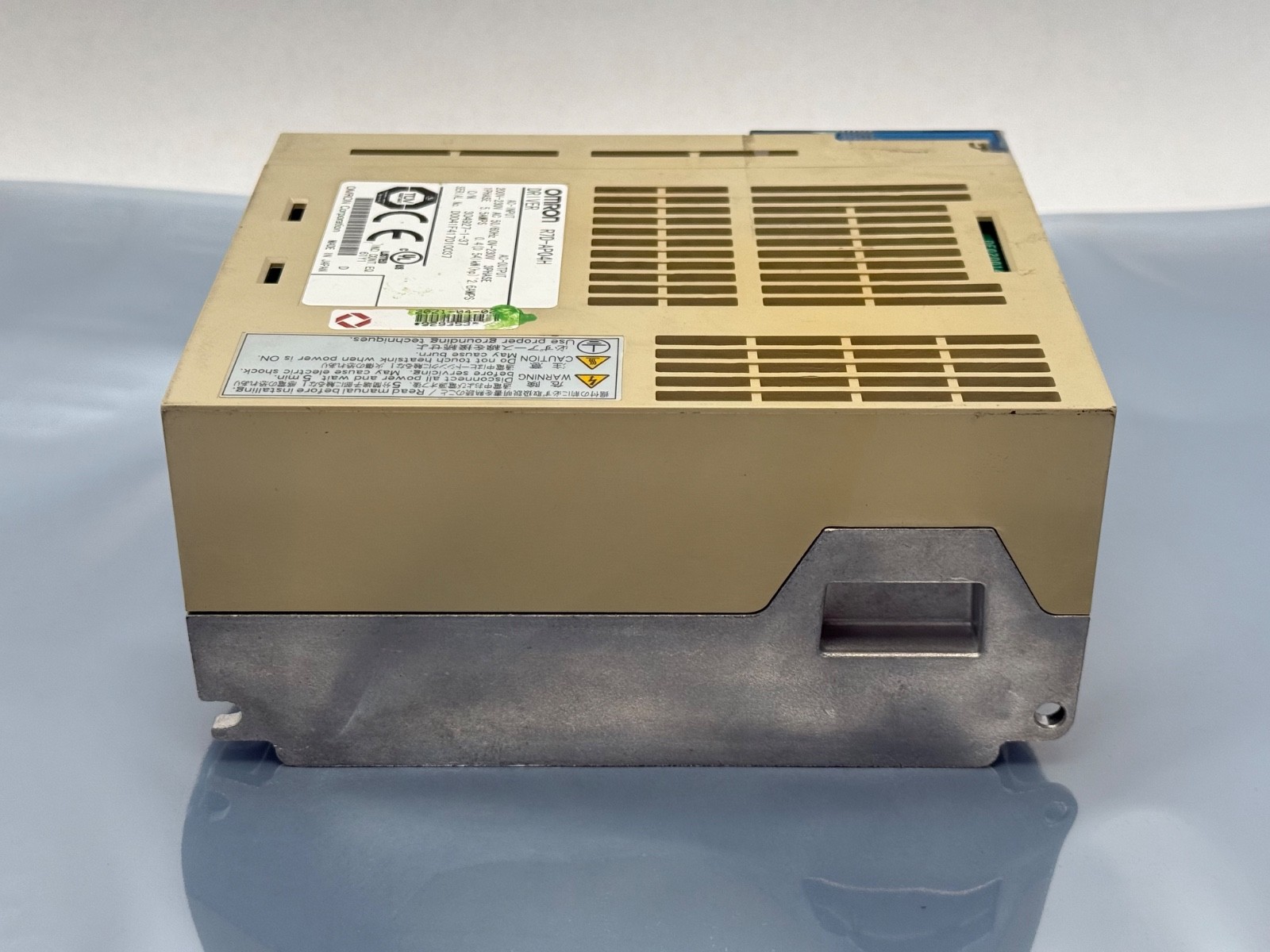
The servo drive only, as photographed. Not included: servo motor, power cable, encoder cable, I/O connector kit, CN1 command connector, terminal-block plugs beyond those fitted, mounting screws, regeneration resistor, filter, or manual. SmartStep encoder and power cables are motor-length-specific (R7A-CEA… / R7A-CAB…) and are ordered separately.
Installation and setup notes
Mount vertically with the specified clearance for convection cooling. Set the motor-capacity and rotation-direction switches to match the motor before first power-up; a mismatched capacity setting is the most common cause of an immediate alarm. Run autotuning with the load coupled, then trim the rigidity setting down if the axis buzzes or hunts at rest. Allow the bus capacitors to discharge before touching power terminals.
Interchange guidance
Direct equivalents are other 400 W 200 V class pulse-input SmartStep A-Series drives. The later SmartStep 2 range (R7D-BP04H) is the successor generation and is not a drop-in: connector pinouts, parameter access and motor pairing differ. Within the A-Series, the wattage suffix must match the motor — an R7D-AP02H (200 W) or R7D-AP08H (750 W) will not correctly drive a 400 W R7M-A40030 axis. Pair with R7M-A40030 (3,000 r/min, 400 W) or the equivalent R7M-AP40030 motor.








 Power Line Connection Module — 380-460 V AC 3-Phase Input, DC Bus and Commutation Chokes$227.40
 Single-Axis Brushless AC Servo Drive, 10.6 A Continuous / 21.2 A Peak, 90–264 VAC Input, Resolver Feedback$295.36
 Servo Inverter Module — PUMASYN Modular Drive Axis Module$305.20
 DC Brush Servo Amplifier — 8 A Rated, 16 A Peak, ±10 V Analog Velocity Reference, Tachogenerator Feedback, Minispeed 60$314.46