
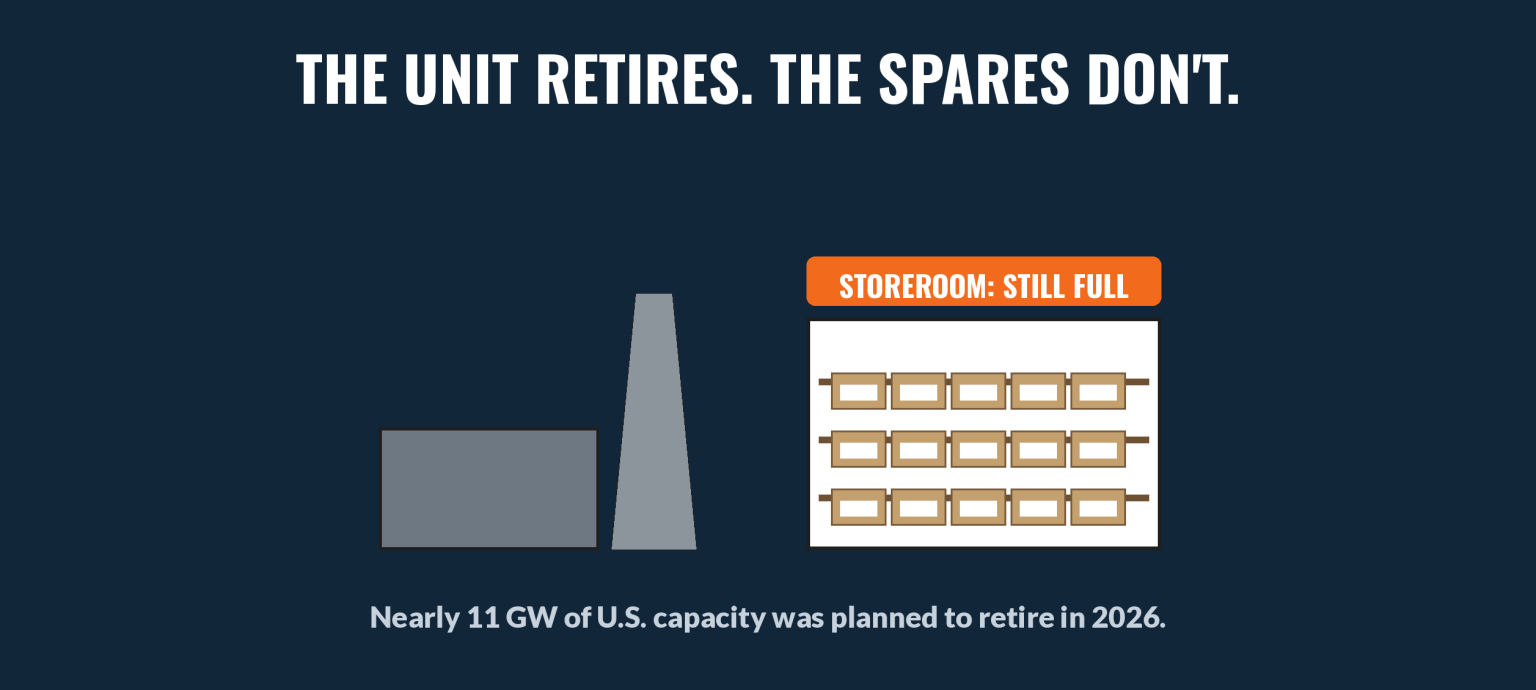
Short answer: when a coal or gas unit retires or converts, its power plant spare parts lose their only customer overnight. Bearings, motors, pumps, drives, PLC and DCS cards, PCBs and conveyor parts bought for that unit become surplus. The best time to sell them is before the unit’s last day, while the stock is still sorted, labeled and in demand at plants that are still running.
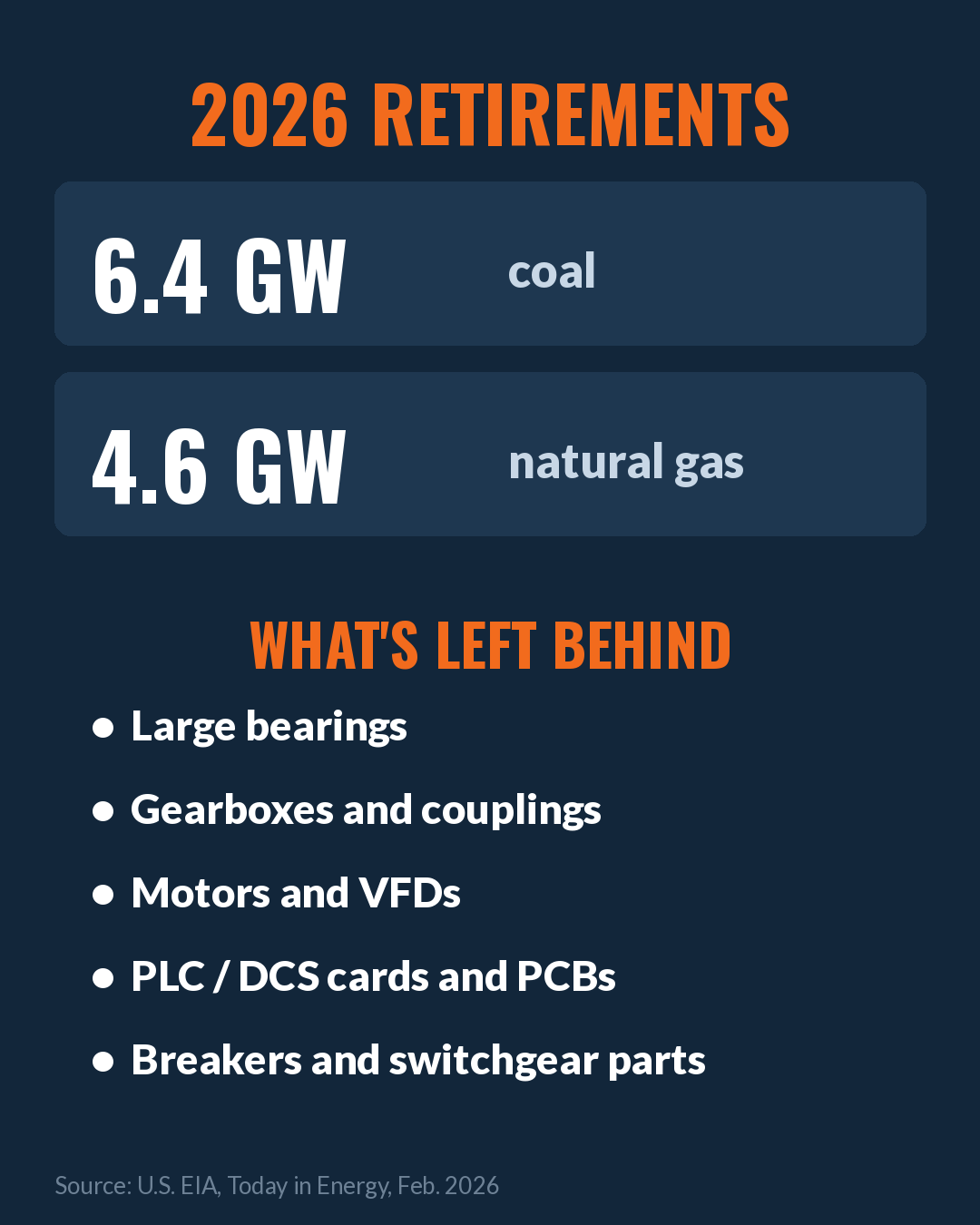
The retirement list is long. U.S. owners planned to retire nearly 11 gigawatts of generating capacity in 2026: about 6.4 GW of coal and 4.6 GW of natural gas, according to EIA data released in February.
Some of those units will close on schedule. Some will get pushed back again. Some will convert to gas. Every one of those paths leaves a storeroom behind.
Utilities have been delaying retirements. In 2025, owners planned 12.3 GW of retirements and retired only 4.6 GW, the least since 2008. Federal emergency orders have kept some coal units online past their planned dates.
That uncertainty is hard on the storeroom.
Every path ends with a crib full of power plant spare parts nobody on site will ever install.
Generating stations stock deep, because downtime is expensive and lead times are long. A typical storeroom carries:
Much of it is new in the box, bought as insurance and never needed. (Power plant cribs are some of the best-kept storerooms we walk. Labeled bins, original packaging, years of outage spares that never got used.)
A retiring unit’s spares don’t get more useful with time.
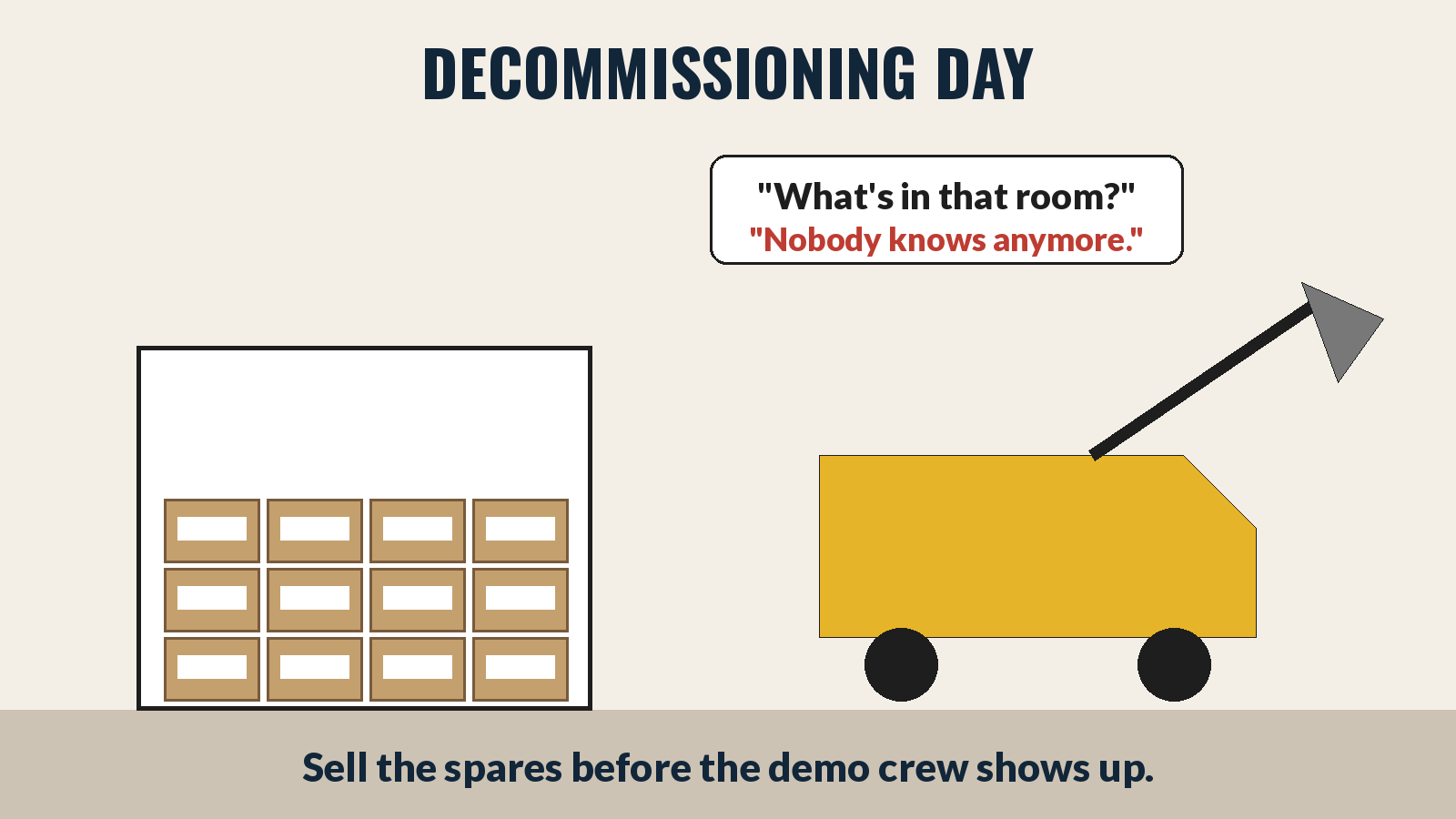
The window to sell power plant spare parts well is between the retirement announcement and the last day of operation. After that, it gets harder every month.
At most utilities and large generators, the storeroom falls between departments. Operations is running the unit down. Engineering is planning the conversion or demolition. Supply chain owns the inventory records. Investment recovery, if the company has one, owns the disposal.
That’s how good parts end up forgotten: everyone assumes someone else has it.
The person who takes it on gets a clean, visible win. The storeroom is cleared before decommissioning, the inventory comes off the books, and the cash lands while the closure budget is still open. One call, one lot, one pickup.
Central Surplus buys power generation and industrial surplus outright. If you’re weighing the alternatives, our guide to every way to sell surplus MRO inventory compares them side by side, and what happens when a plant closes covers the storeroom side of a shutdown.

What happens to power plant spare parts when a plant retires?
They become surplus. Utilities typically transfer what other plants can use and sell, auction or scrap the rest.
Who buys surplus power plant spare parts?
Surplus buyers that purchase whole lots of new industrial and power generation MRO, like Central Surplus, which picks up nationwide.
Do coal-to-gas conversions create surplus?
Yes. Coal handling equipment and its spares, including conveyor, crusher and feeder parts, are no longer needed after conversion.
When should a utility sell retiring-unit spares?
Before the final day of operation, while the parts are documented and other plants still need them.
The unit’s last day is already on a calendar somewhere. The storeroom’s should be too.
Ready to sell industrial MRO parts? Make it easy. → Sell Your Parts



Our team can locate, cross-reference, and source all parts.
Our team can locate, cross-reference, and source all parts.