
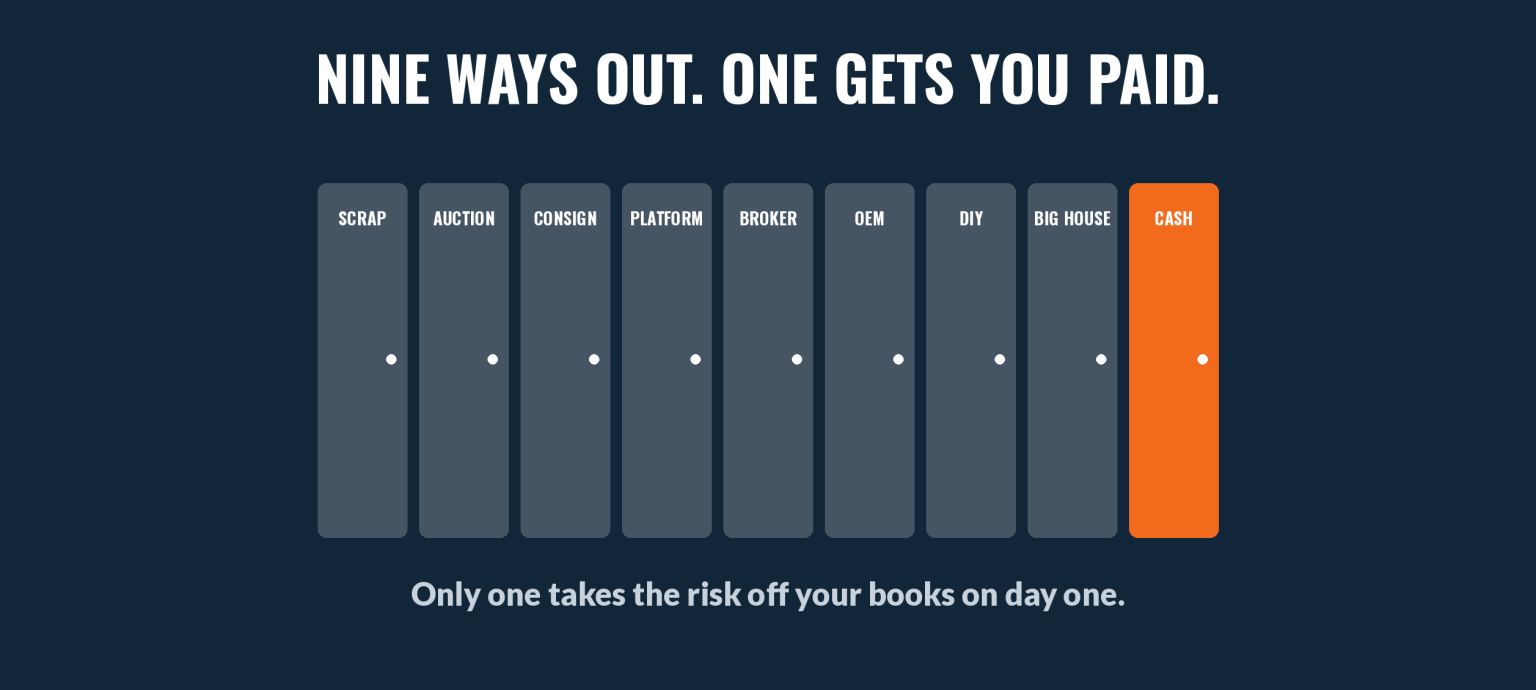
Short answer: there are multiple ways to sell surplus MRO inventory. Only one moves the risk off your books on day one: selling the whole lot outright to a surplus buyer for cash. Every other route either pays by the pound, pays by the pallet, or pays you last, after you’ve carried the parts, the taxes and the liability for months or years.
Here’s every option a plant actually has, what it pays, how long it takes, and who’s holding the bag while you wait.
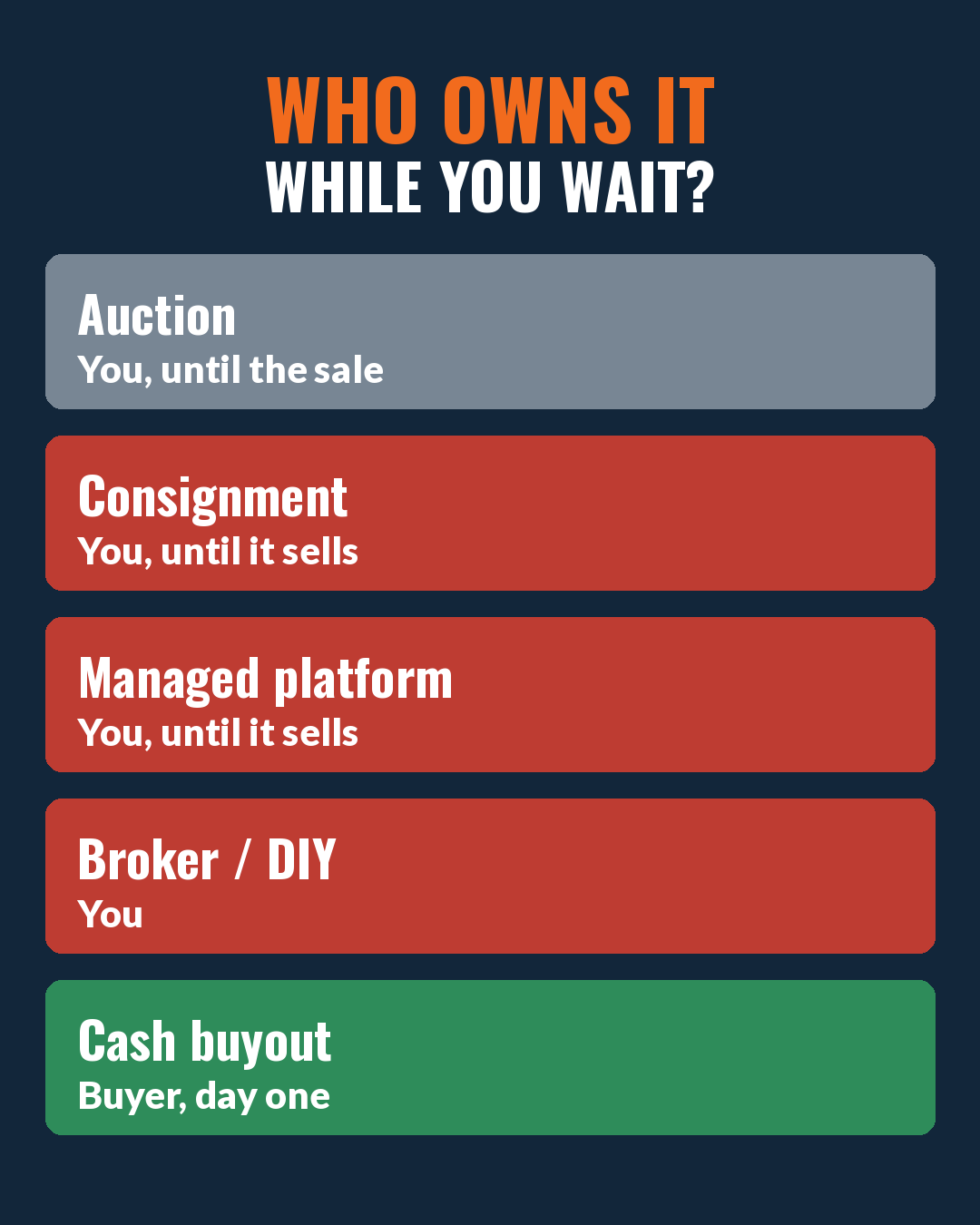
| Option | Who owns the parts while you wait | How long until you’re paid | What it costs you |
|---|---|---|---|
| Scrap | Scrapper, immediately | Days | Paid by the pound, not the part |
| Auction | You, until the sale | About 6 months on average | Seller commission, often 12–20% |
| Traditional consignment | You, until each part sells | As parts sell, if they sell | Split of each sale, often 35% or more |
| Managed consignment platform | You, until each part sells | As parts sell, if they sell | Platform cut plus reseller cut |
| Broker | You | Months to years | Commission |
| OEM return or buyback | You, until accepted | Varies, often slow | Restocking fees, if accepted at all |
| Sell it yourself online | You | Part by part, for years | Staff time, listing fees, shipping, returns |
| Large surplus house | Buyer, after purchase | Can be months on long terms | Lower offer on mixed lots |
| Direct surplus buyer, whole lot | Buyer, on day one | Usually within a week | One price, known up front |
Read the second column again. That’s the whole story.
Scrap is the fastest exit and the worst price. The yard pays by the pound, so a case of new bearings and a pile of rusted gears go out at the same rate. PLCs and PCBs are worth almost nothing as scrap and a lot as working spares.
Auctions look fair and take a while. You are paid in months, after the auctioneer takes its cut. Seller commissions in industrial auctions typically run 12% to 20%, before cataloging, photography and removal costs. From cataloging to cash, sellers wait about six months on average. And auctions sell by the pallet, so your best boxes get lotted with your worst.
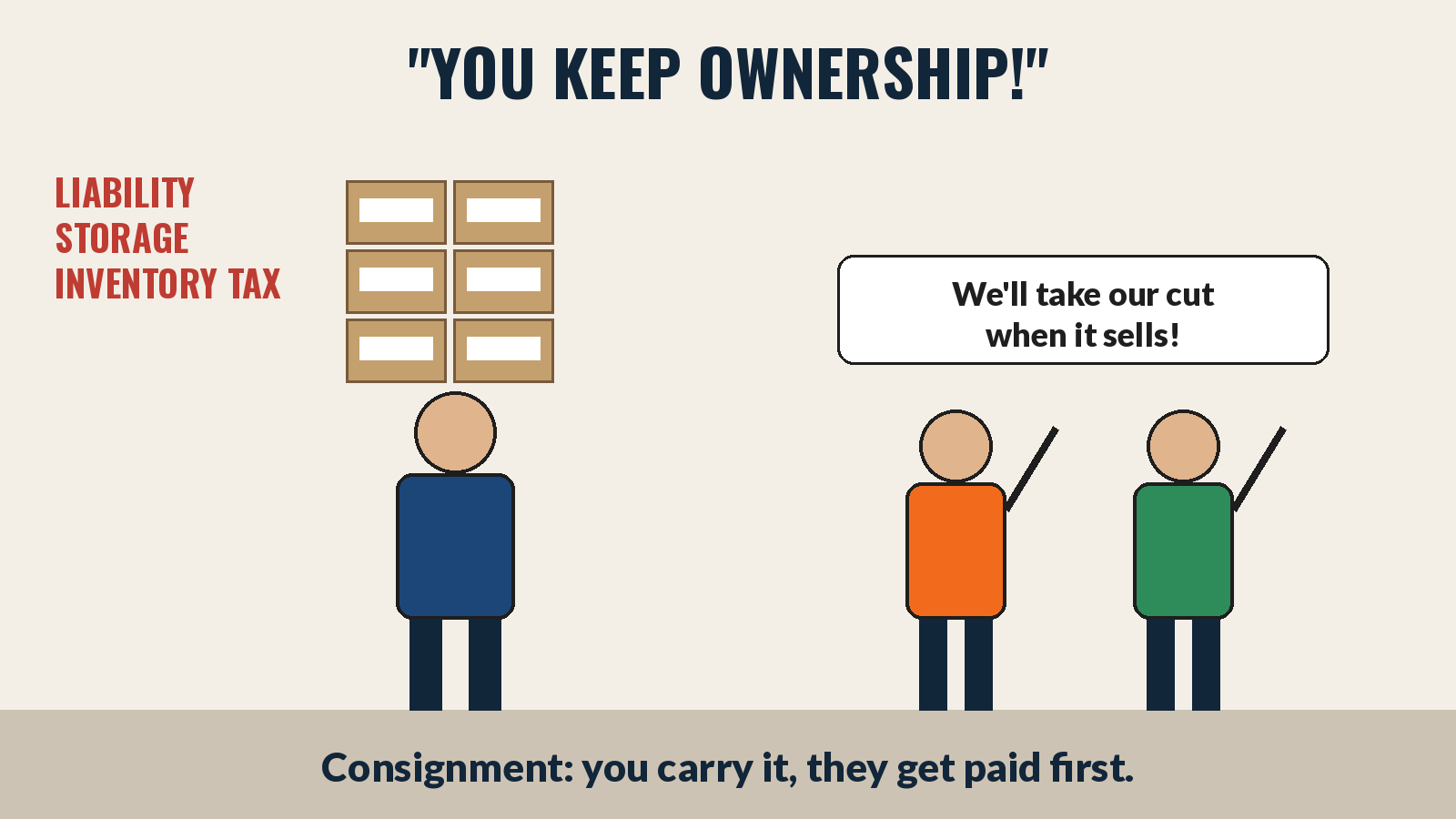
Consignment sounds like a partnership. The legal reality is simple: the owner retains title to the goods until sold. Until a part sells, it’s yours.
That means you still carry:
Then there’s the split. Published industrial consignment programs commonly pay the owner around 65% of each sale and keep the rest to cover marketing, packing and shipping. That’s 65% of parts that sell, whenever they sell.
You want the truth…? We’ve worked through hundreds of consignment deals over the years, and stopped offering it. It works for the reseller, not for the owner.
A newer model is spreading: software platforms that take your whole surplus list and route it to a network of resale partners or a ‘surplus seller’. They photograph, list, pick up, pack and pay out as parts sell, and you track it all in an app.
It’s the same structure in cleaner packaging. You keep ownership until each part sells. You keep the holding cost and the tax on what hasn’t sold. And now there are two cuts: the platform’s and the reseller’s.
Ask who pays for the work, too. Photographing and listing thousands of line items costs real money. So do answering buyer questions, shipping, and processing returns. However it’s billed, it comes out of the owner’s share.
You are also already sitting on those parts for a reason: they move slow (you still have them).
The parts you have are probably closer to obsolescence. That is why the ‘amazing’ consignment deal you are being offered is being offered. It is a better deal for the surplus seller for you to sit on those parts. They don’t have to pay you anything up front for them.
And the “every part gets a route” promise needs a straight answer: what happens to the parts that don’t sell in 12 or 24 months? If the answer is “they come back to you” or “they get scrapped,” you’ve paid to wait.
Sometimes you are even sold software that helps you identify the MRO spares. But you can do that yourself: look at your ERP or inventory management system, and simply get rid of what you have not used in the past 12–24 months. You don’t need software to tell you this.
A buyer who prices your whole lot and pays for it takes on exactly the risk consignment leaves with you. The slow movers, the obsolete numbers and the long tail become the buyer’s problem the day the truck leaves.
That’s how Central Surplus buys surplus MRO inventory from industrial plants:
For the deeper dives, see surplus inventory consignment vs. cash, scrap, auction, consign or sell, and what happens to MRO spares after a merger.

What is the best way to sell surplus MRO inventory?
For most plants, selling the whole lot outright to a surplus buyer. It’s the only option that transfers ownership, risk and holding costs immediately.
Is consignment better than selling outright?
Consignment can pay more per part on the parts that sell. You keep ownership, holding costs, tax exposure and the unsold tail until then. Owners come out ahead taking cash now.
How long do auctions take to pay?
From cataloging to cash, about six months on average.
Who buys surplus MRO inventory from plants?
Surplus buyers and surplus wholesalers that purchase whole lots of new, unused industrial parts, like Central Surplus.
Holding it costs money every month. Selling it once doesn’t.
Ready to sell industrial MRO parts? Make it easy. → Sell Your Parts


Our team can locate, cross-reference, and source all parts.
Our team can locate, cross-reference, and source all parts.