
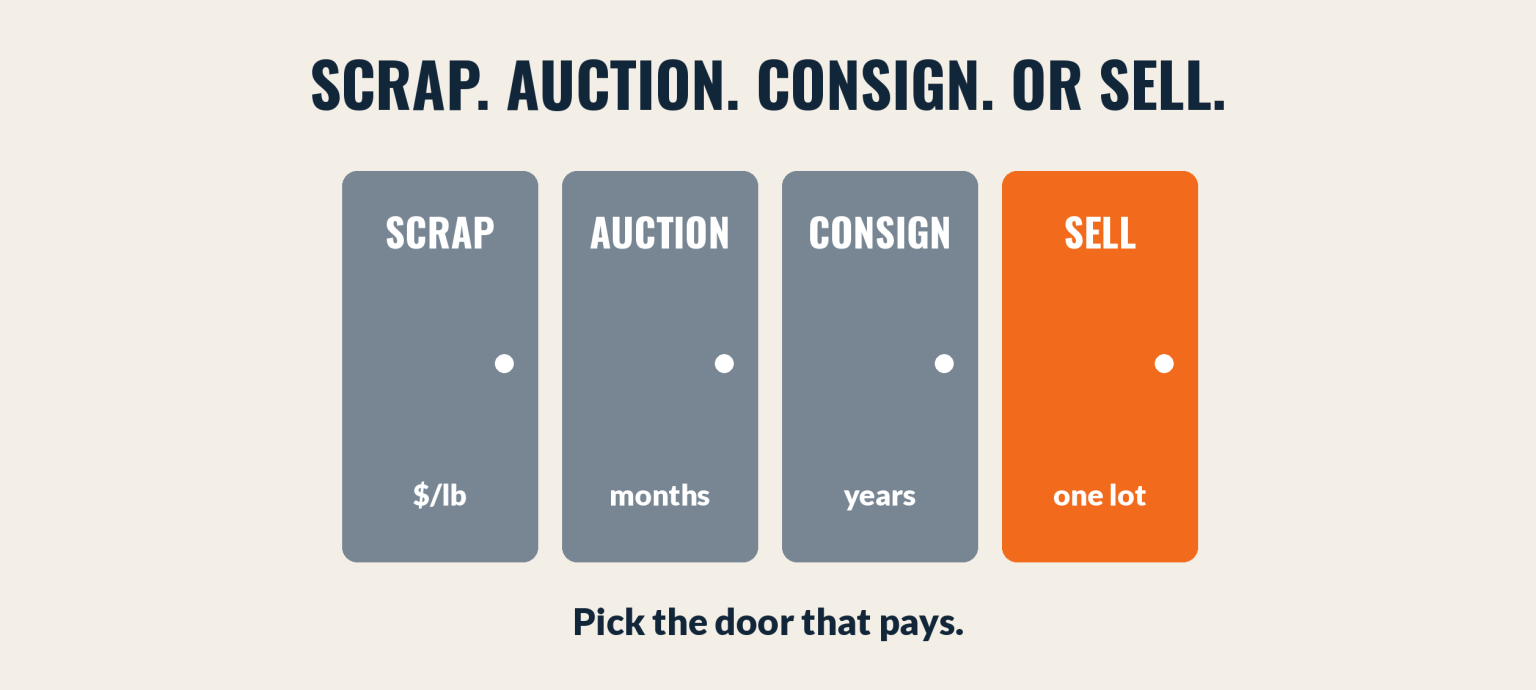
Short answer: if you want the most money with the least work, sell excess MRO inventory in one lot to a surplus buyer. Scrap pays by the pound. Auctions take many months and pay by the pallet. Consignment and brokers take years and a cut. A surplus reseller buys everything at once, gets you the highest bulk price, and pays via ACH, usually within a week.
That’s the bottom line. Here’s how each option actually plays out, so you can show your boss the math.
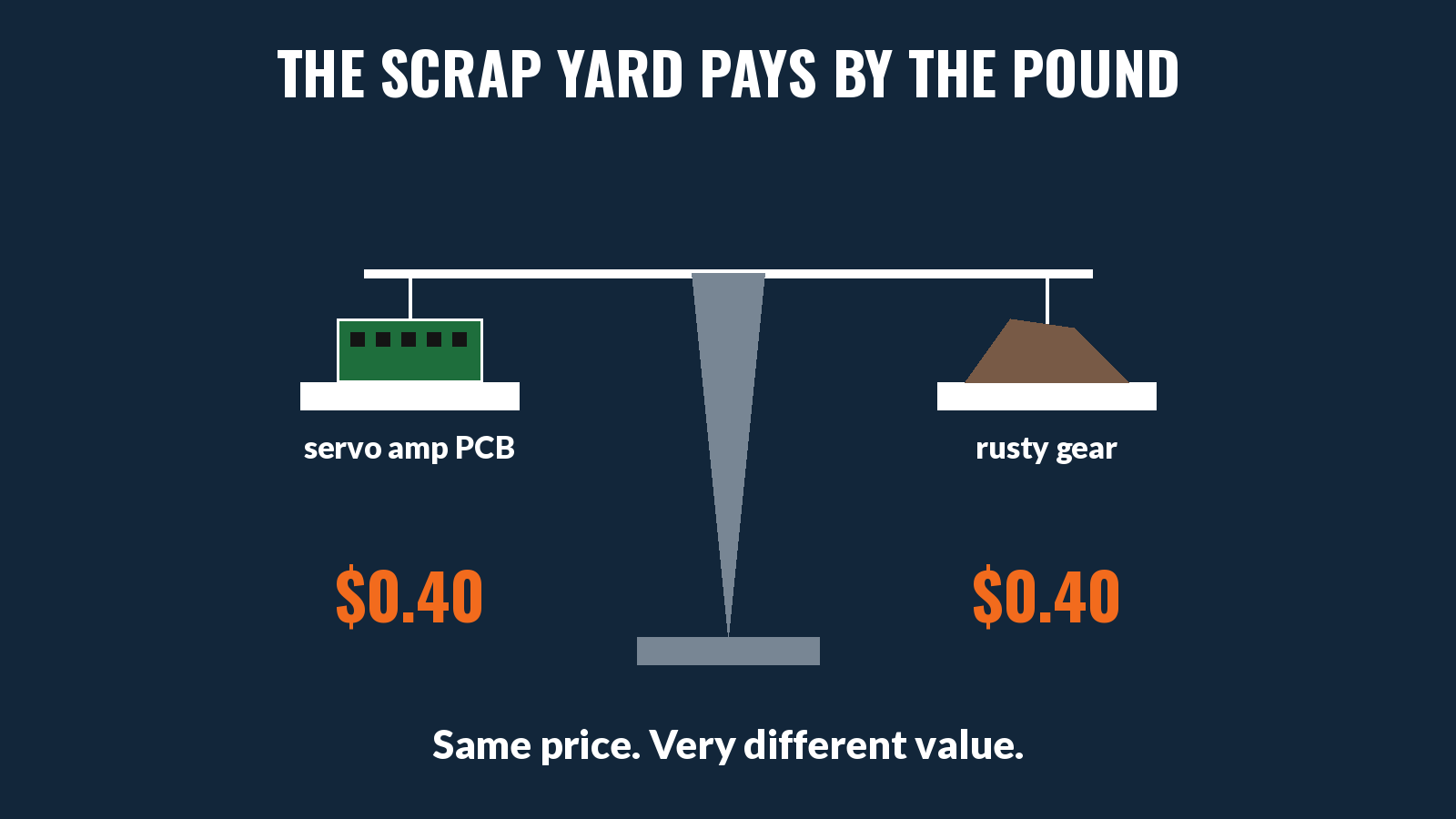
What you get: metal weight. A box of new spherical roller bearings goes in at the same price per pound as a rusted gear.
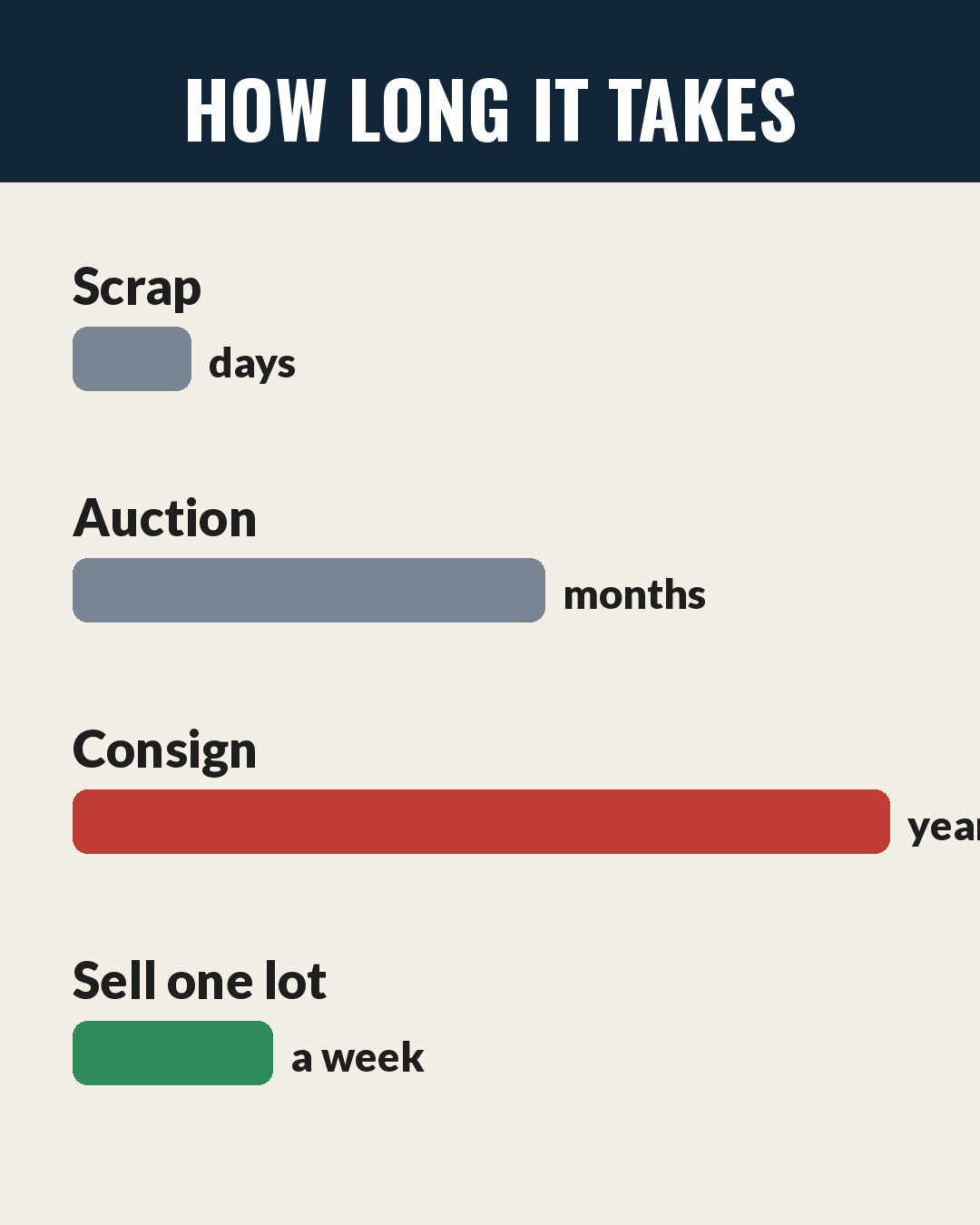
How long: a day or two.
The catch: the scrap yard pays by the pound, not by the value of the parts. PLCs, PCBs and servo amplifiers are worth almost nothing as scrap and a lot as working spares. Scrap only makes sense for stock that’s truly broken, obsolete beyond use, or contaminated.
What you get: whatever the room bids that day, minus the auctioneer’s commission.
How long: months. Cataloging, photography, scheduling, the sale, then settlement.
The catch: auctions sell by the pallet. Your best boxes get lotted with your worst, and a pallet of mixed bearings usually goes for a fraction of what the good ones were worth alone, dragging down the price of the good stuff. You also need someone on site for viewings and loadout.
What you get: a percentage of whatever eventually sells.
How long: years. Consignment models overpromise and underdeliver: the fast movers sell, the rest sits, and you still own it the whole time. It’s on your books and you pay taxes.
The catch: you keep the carrying cost. The storage, the insurance, the inventory tax and the annual count stay on your books while you wait to find out what it was worth.
What you get: better prices on the parts that sell. If you have a DTC channel you can get 20-40% of the NDC. Otherwise you have to sell on marketplaces.
How long: forever, part-time.
The catch: someone has to list, photograph, answer questions, pack and ship hundreds of part numbers. And you deal with returns, complaints, excsuses. That only works if you have a reselling expert and a system on staff. Most plants don’t, so it ends up as a side job for whoever got assigned, and the storeroom barely moves.
What you get: one offer for everything, at a bulk price.
How long: days to weeks, depending on the size of the lot. Getting paid qickly is always the most profitable transaction.
The catch: you won’t get retail. That’s the trade: you get the cash and the floor space now, and the slow-moving stock becomes the buyer’s problem instead of yours.
Smart money sells excess MRO inventory to a surplus reseller, gets the highest bulk price, and gets paid in a week.
Every option involves some waiting. The question is who pays for it. Excess stock doesn’t send a bill, but it shows up everywhere else: rack space that could hold production material, insurance on inventory nobody uses, the property tax on stock at book value, and two people losing a weekend to the annual count.
It also shrinks. Every year, fewer plants still run the equipment those spares fit, which means fewer buyers and lower offers. Electromechanical and automation parts move fastest of all. A drive or PCB that’s a hot spare today can be a museum piece in five years.
That’s why the best time to sell excess MRO inventory is the first time someone asks what it’s doing there.
The person who clears the storeroom tends to look good to finance. Floor space back, a line item closed, cash on the books instead of dust.
For specific situations, see what to do with MRO spare parts after a merger, what happens when a manufacturing plant closes, and why to sell surplus bearings before the grease gets old. Our first take on how to sell excess industrial inventory covers the basics.

Is it better to scrap, auction or sell excess MRO inventory?
Selling to a surplus buyer pays more than scrap and closes faster than auction or consignment. Scrap only stock that’s truly unusable.
Who buys excess MRO inventory?
Surplus buyers, wholesalers, liquidators and lot buyers that purchase new, unused industrial parts in bulk from plants and industrial end users.
Do I need an inventory list?
It helps. It isn’t required. Photos work.
Will a buyer take mixed categories?
A good one will. Mixed lots are normal.
Holding it costs money every month. Selling it doesn’t. Do you still want to wait another year?
Ready to sell industrial MRO parts? Make it easy. Sell Your Parts →



Our team can locate, cross-reference, and source all parts.
Our team can locate, cross-reference, and source all parts.