
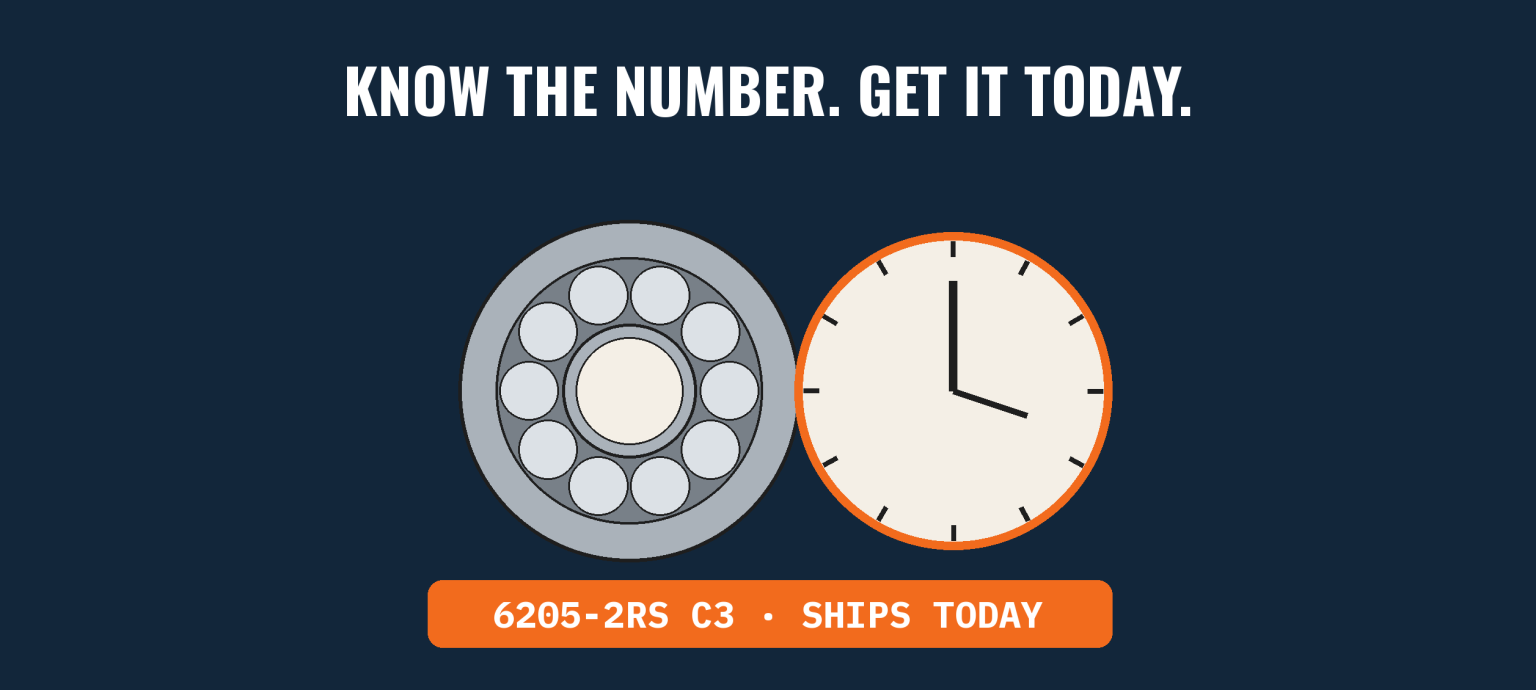
Short answer: to buy bearings by part number and have them ship today, go to a seller that holds the stock on its own shelf, not one that drop-ships from a warehouse it has never seen. Read the full model number off the old bearing, confirm bore, OD and width, and buy where the listing says “in stock” and means it.
That last part matters more than the price. A line that’s down does not care that the bearing was $14 cheaper somewhere else. Siemens put unplanned downtime at roughly 11% of revenue for the world’s 500 largest companies, about $1.4 trillion a year. Your plant is smaller. The ratio isn’t.
The base number tells you the size. The suffix tells you everything else: seals or shields, internal clearance, cage material, precision class, contact angle. A 6205 and a 6205-2RS C3 fit the same shaft. They do not do the same job.
Bearings rarely carry the full MPN on the ring, so pull it from the box, the maintenance record or the machine’s parts manual. If all you have is a worn ring with half a number on it, our bearing cross reference chart walks through how SKF, FAG, NSK and NTN write the same suffix four different ways. About 99% of bearings have an interchange somewhere. The trick is knowing whether you want an exact match or a similar one.
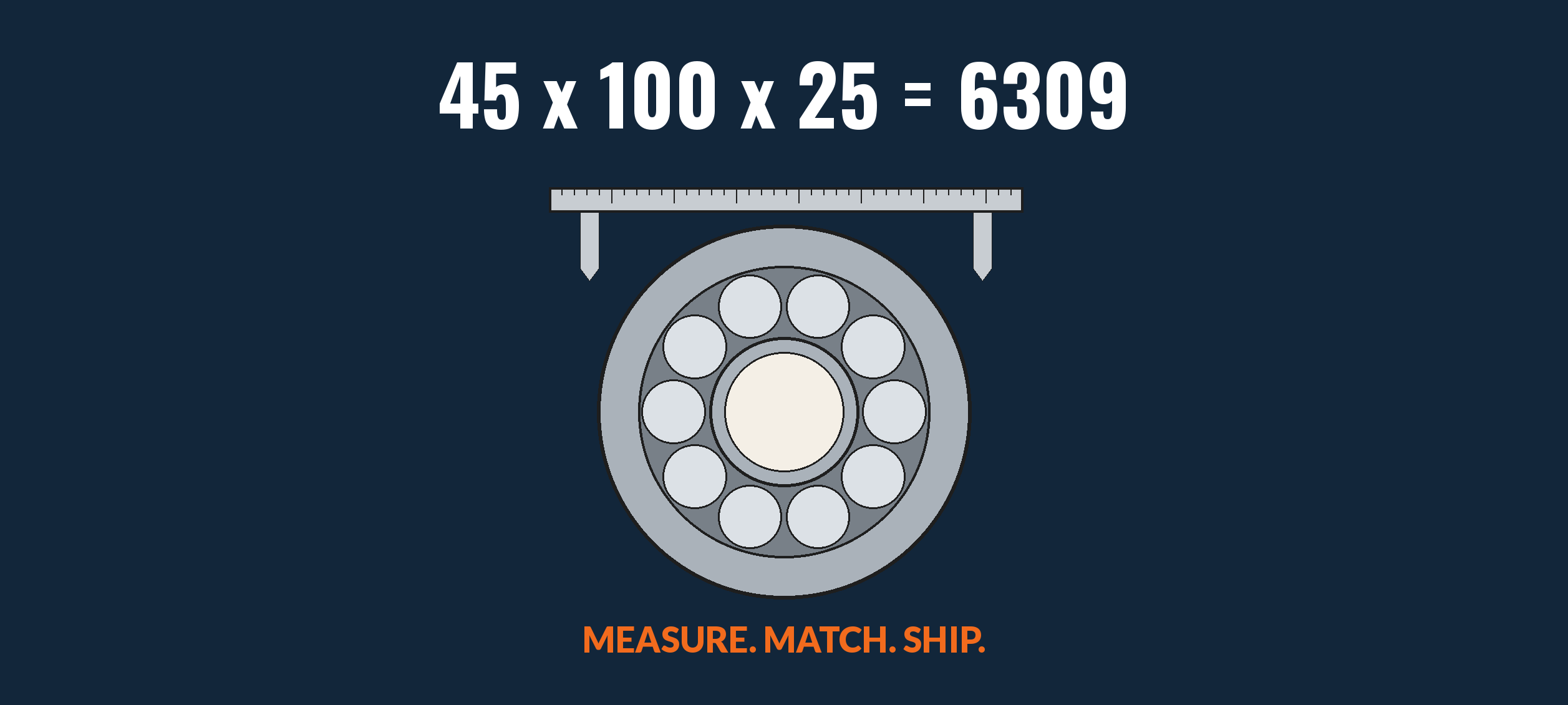
Three numbers settle most arguments: bore, outside diameter, width. Calipers, not a tape. If the full model number is gone entirely, those three dimensions plus the bearing type will still get you to the right shelf.
That’s also how to search our store. The site search doesn’t match part numbers well yet, so shop by type and size instead:
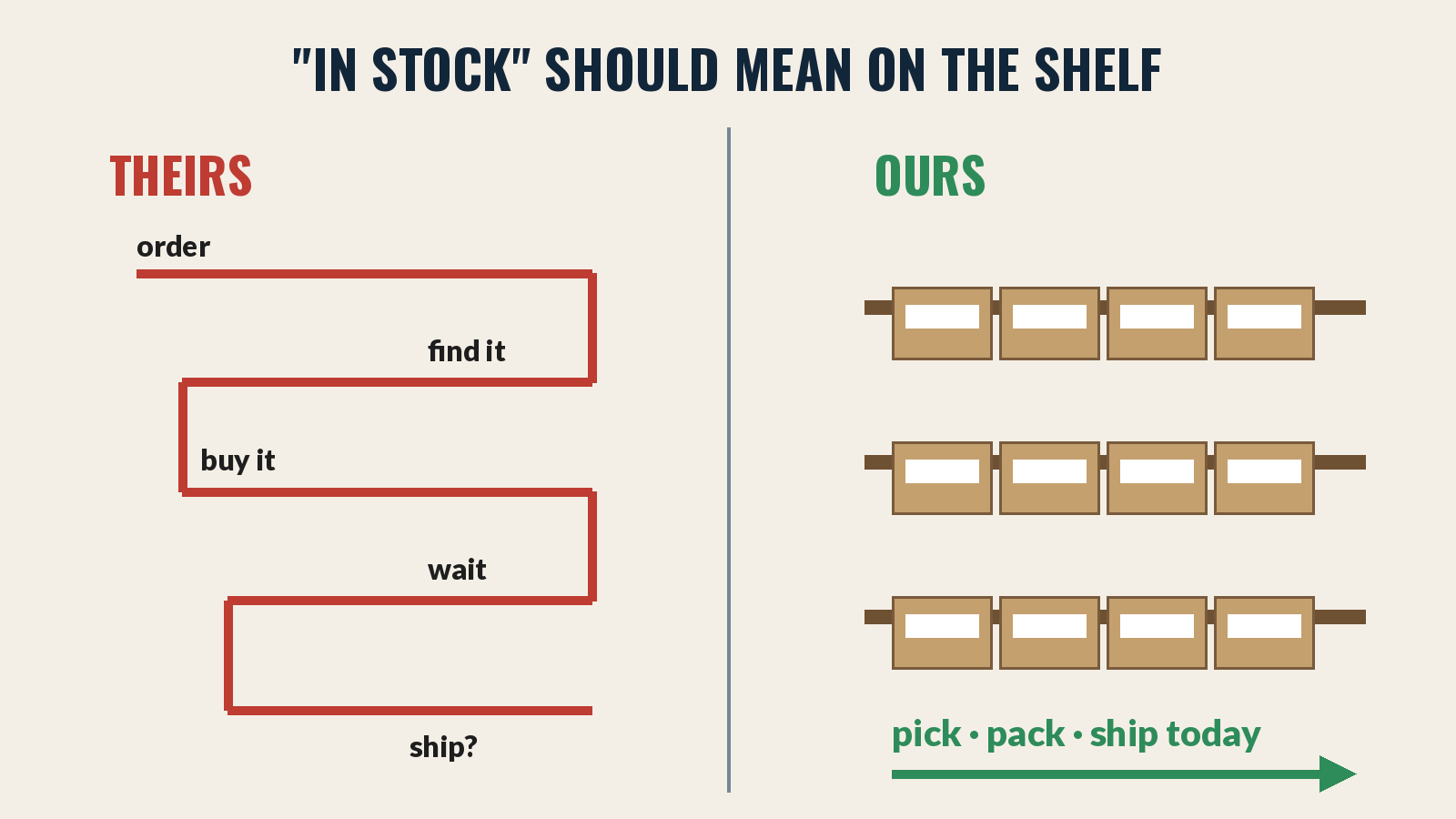
“In stock” is the most abused phrase in industrial ecommerce. Plenty of sites list a part, take your order, then buy it from someone else and ship it to you from who knows where. That’s fine on a Tuesday restock for MRO spares. It’s a problem at 2 a.m. with a line down.
Questions worth asking before you click buy:
When a plant changes lines, merges, or simply over-orders for a decade, the spare bearings don’t vanish. They sit in boxes until someone sells the storeroom. That’s where the old SKF bearings, NTN bearings, Fafnir and MRC numbers end up: new, still sealed, no longer in any distributor’s catalog.
Central Surplus buys those storerooms. That’s why we carry 50,000+ bearings on our own shelves, priced 50 to 90% under net distributor price, with same-day shipping on in-stock orders and free returns. You can see real numbers on every listing, along with photos of the part we’ll actually ship. If you’re replacing a number that’s been discontinued, our guide on how to replace a discontinued bearing covers the ISO sizing logic that keeps old sizes alive.
When you buy bearings by part number online, the listing should do most of the work for you. Look for:
If a listing is missing two of those, keep scrolling. If it’s missing all four, it’s a placeholder.
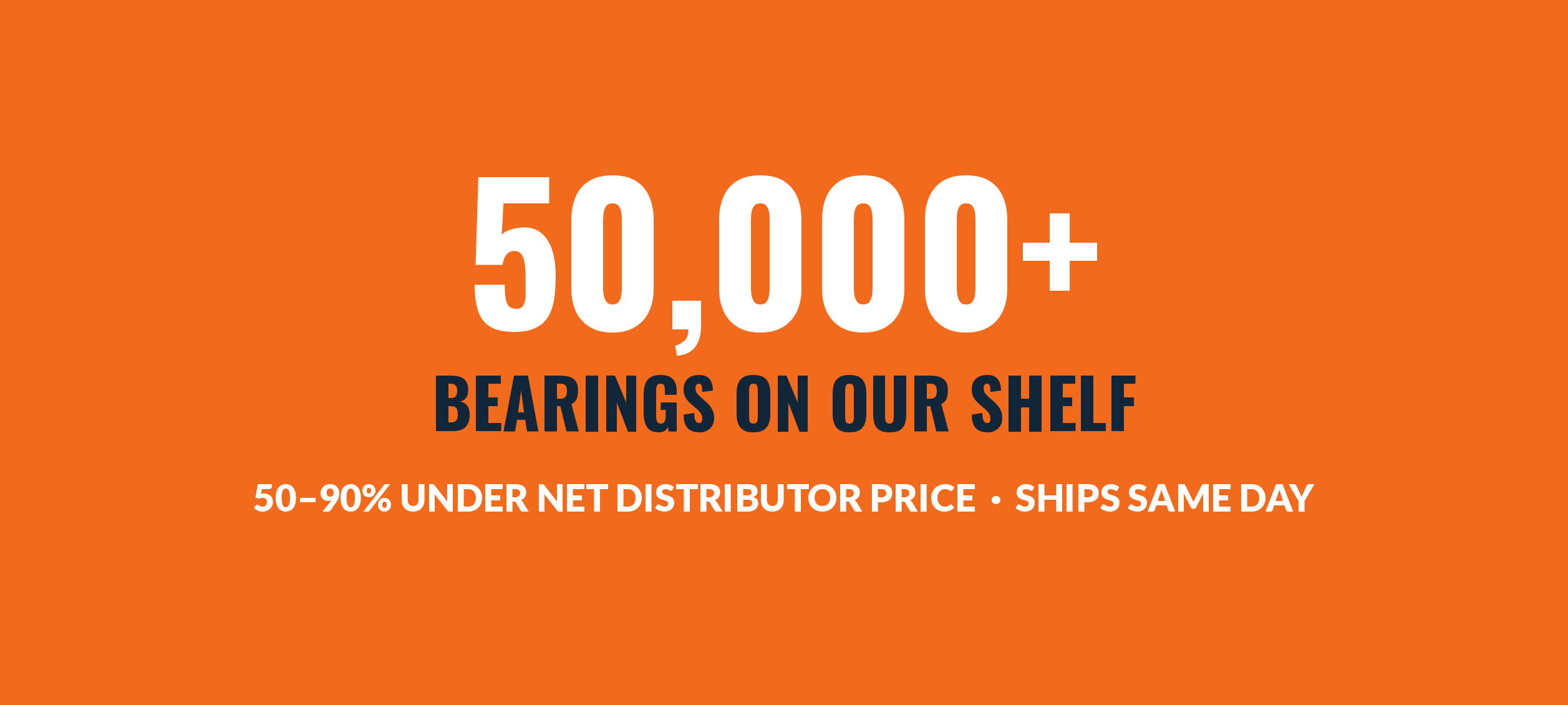
Most wrong bearings get bought in a hurry. Run this before you buy bearings by part number, every time:
Take your time to find out you are ordering the correct part. A return costs you much more long term with a line down than rushing into a purchase you are not sure about., even with free shipping and returns.
That spare is cheap insurance. Bearings in the same machine tend to wear out on the same schedule, and the next failure rarely waits for a convenient shift.
Can I buy bearings by part number if the number is worn off?
Yes. Measure bore, OD and width, note seals and type, and shop by size. Most standard bearings are identifiable from those alone.
Is surplus the same as used?
No. Surplus bearings are typically new, unused stock from a plant or distributor that bought too many. Condition should be stated on the listing.
What if I need a lot of them?
Quantity on hand is listed on each part. For bigger orders across many part numbers, our distributor page covers volume buying.
Do I have to buy the same brand?
Not always. Same size and same suffix meaning usually equals same job. When it doesn’t, the cross reference chart tells you why.
Line down? Need it today? Make it easy. Shop bearings in stock →

Our team can locate, cross-reference, and source all parts.
Our team can locate, cross-reference, and source all parts.