Gearmotors: What They Are and How to Size a Replacement
Motors, Resources
Many industrial loads need torque an electric motor can’t deliver on its own, at a speed the motor doesn’t naturally run. A gearmotor combines an electric motor and a gear reducer into a single integrated unit. Instead of buying a motor and separate gearbox and coupling them yourself, a gearmotor arrives as one assembly, matched, aligned, ready to bolt in and wire up.
This guide explains gearmotor components, main configuration types, proper sizing for replacements, and when it is better to build a custom motor and gearbox combination instead of buying an integrated unit.
What’s Inside a Gearmotor
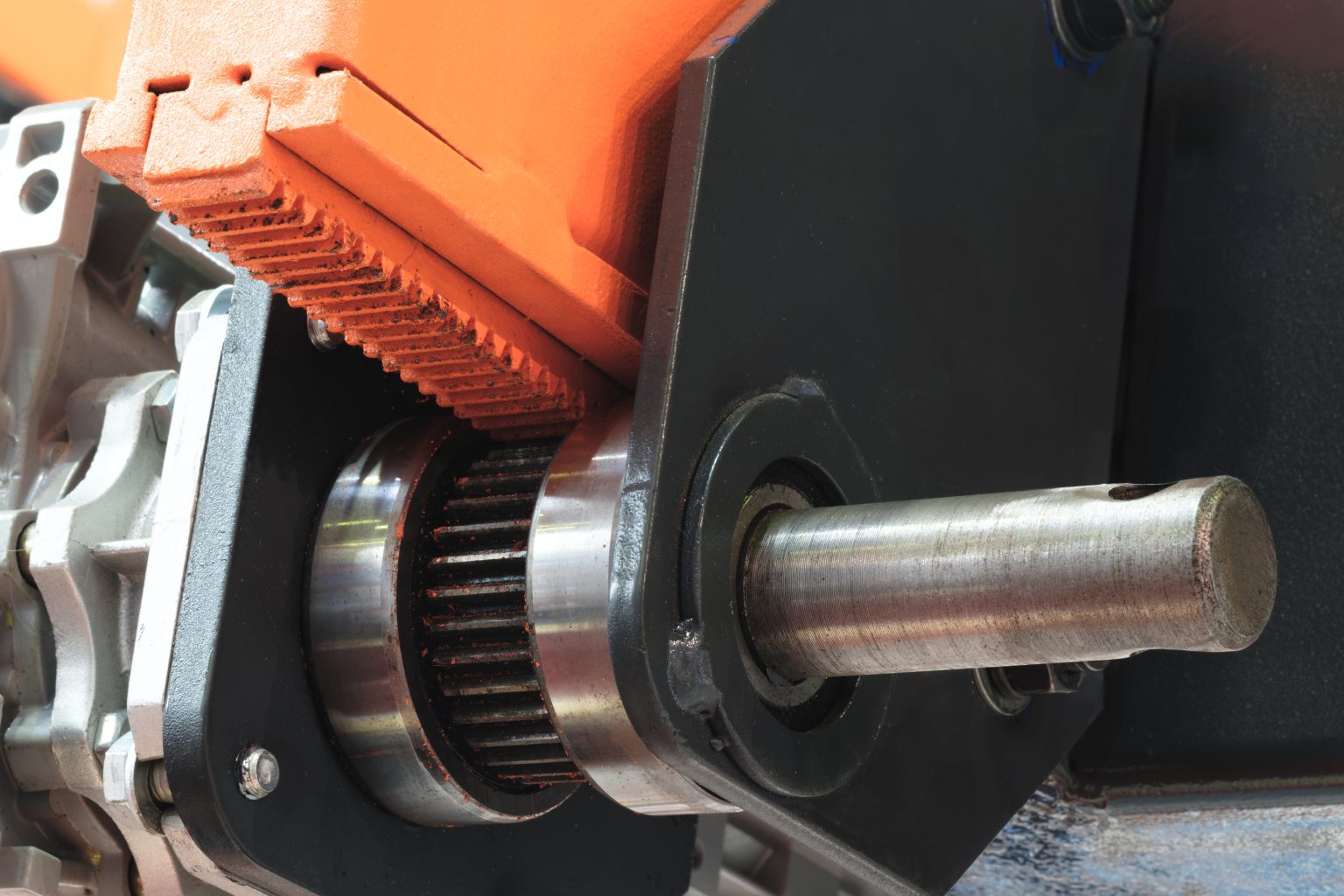
A gearmotor consists of an electric motor, typically AC induction, integrated directly with a gear reduction stage within a shared housing (often using a pinion gear cut directly onto the motor shaft rather than a standard shaft coupling). The gear reduction lowers the motor output speed to the required level and increases torque.
This is important because most electric motors operate efficiently at high speeds, typically 1,200 to 3,600 RPM, while most mechanical loads require lower speeds and higher torque. The gear stage solves this difference.
Common Gearmotor Configurations
Parallel Shaft
The output shaft is parallel and offset from the motor shaft. This design is compact in one dimension and used when the drive must be positioned beside, not in line with, the driven equipment.
Right-Angle (Worm or Bevel Gear)
The output shaft is perpendicular to the motor shaft. Right-angle gearmotors are used when space or mounting constraints require a change in direction. Worm-gear versions provide high reduction ratios in a compact form, but suffer from significantly lower mechanical efficiency (often 50% to 75%) due to sliding friction compared to high-efficiency hypoid or helical-bevel designs.
Inline (Coaxial)
The output shaft aligns with the motor shaft through a helical, planetary, or coaxial gear stage. This configuration is axially compact and suited for applications with limited linear space.
Key Specs for Sizing a Gearmotor Replacement
1. Output torque required by the load, with an appropriate service factor based on daily run hours and load classification (uniform, moderate shock, or heavy shock) for shock, frequent starting, or variable load conditions
2. Output speed (RPM) needed at the driven equipment
3. Motor horsepower or kilowatt rating, sized to deliver the required torque at the required speed through the gear ratio
4. Gear ratio, which is the relationship between motor input speed and gearmotor output speed
5. Mounting configuration: foot-mounted, flange-mounted, or shaft-mounted (with torque arm, matched to how the existing unit attaches to the equipment
6. Output shaft orientation and configuration: parallel, right-angle, or inline, matched to the physical layout of the driven equipment
7. Permissible overhung load (OHL) capacity on the output shaft when using chain sprockets or belt sheaves rather than a direct flexible coupling
The gear ratio is often overlooked when replacing a gearmotor without original documentation. A unit with the same motor horsepower but a different gear ratio will run at the wrong speed and deliver incorrect torque output. Always verify the gear ratio, not just the motor rating, using the nameplate or original part number.
Gearmotor vs. Separate Motor and Gearbox: Which Makes Sense
For most standard applications, an integrated gearmotor is simpler and more cost-effective. The motor and gear stage are pre-matched, aligned, and sold under a single part number, streamlining sourcing and installation.
A separate motor and gearbox are preferable in some cases. If the application requires a specialized motor type not available in integrated gearmotors, sourcing components separately may be necessary. This approach is practical when the existing gearbox is functional and only the motor needs replacement, as it is more economical. Facilities that standardize on a specific motor brand or control platform may also choose separate components for consistency.
If you maintain an integrated gearmotor and only the motor fails, check if the motor is a standard frame size that can be replaced independently of the gear stage before replacing the entire unit.
Engineering Tip: Nameplate Horsepower vs. Output Torque Sizing
When cross-referencing or replacing a gearmotor, never size the unit by motor horsepower alone. Two gearmotors with identical 2 HP motors can produce wildly different output torques depending on their internal gear ratios and gear train efficiencies. Always match the required output torque (lb-in or Nm) and output RPM to prevent stalling the drive or overloading the gear teeth.
Central Surplus Gearmotor InventoryWe stock gearmotors and related motor and gearbox components from major industrial manufacturers, including parallel shaft, right-angle, and inline configurations. Contact us with your part number or with torque, speed, and mounting requirements, and we’ll help identify the right unit.