Timken vs. SKF Bearings: The Difference Between Tier-1 Bearing Brands
When sourcing a replacement bearing, you will often find both Timken and SKF options for
Availability:
7 in stock
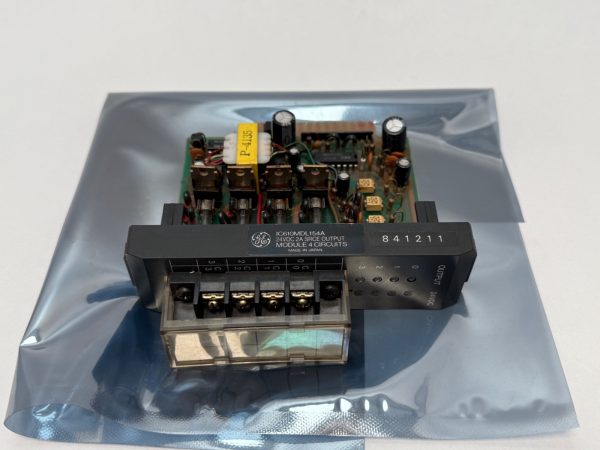
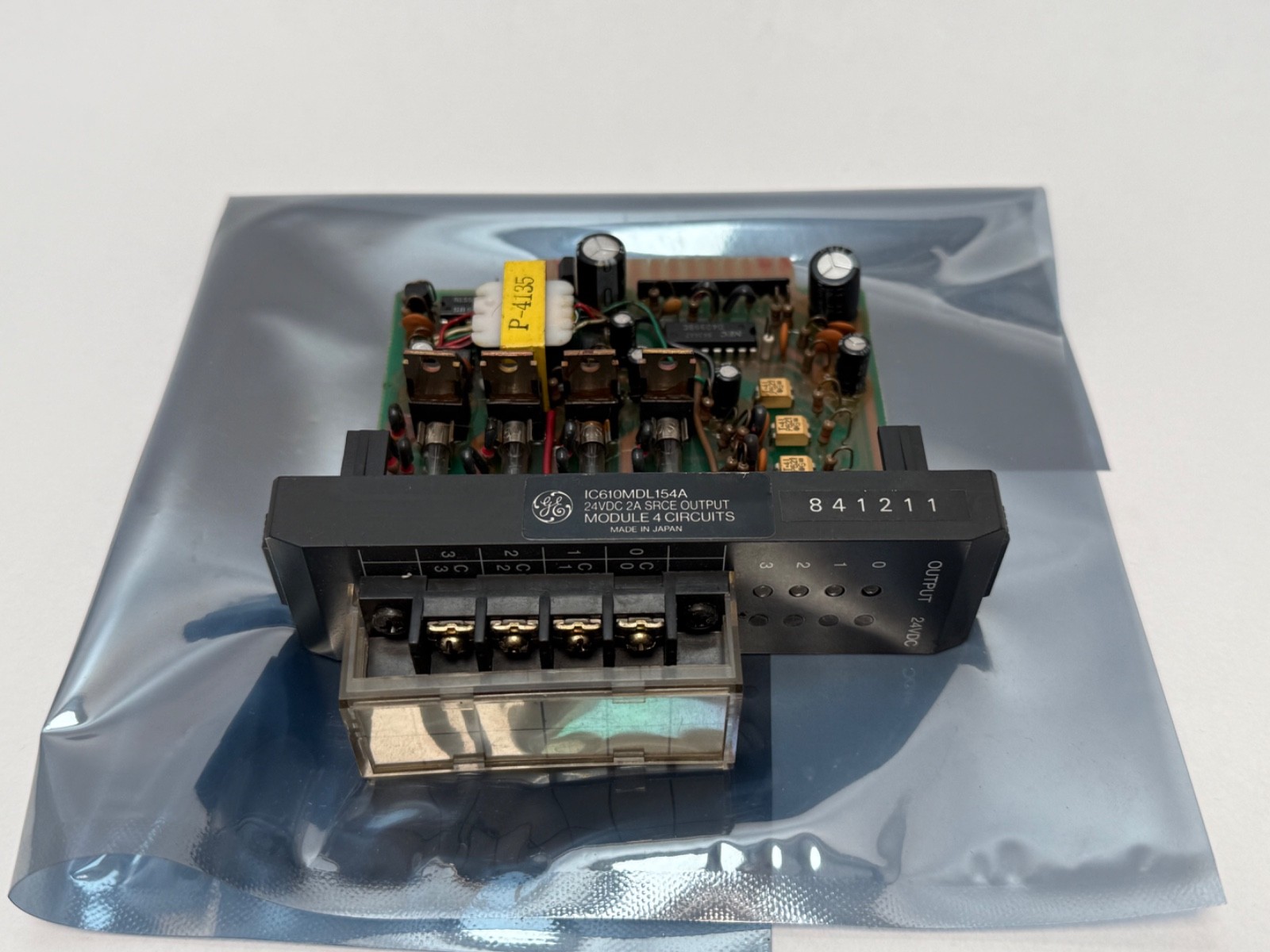
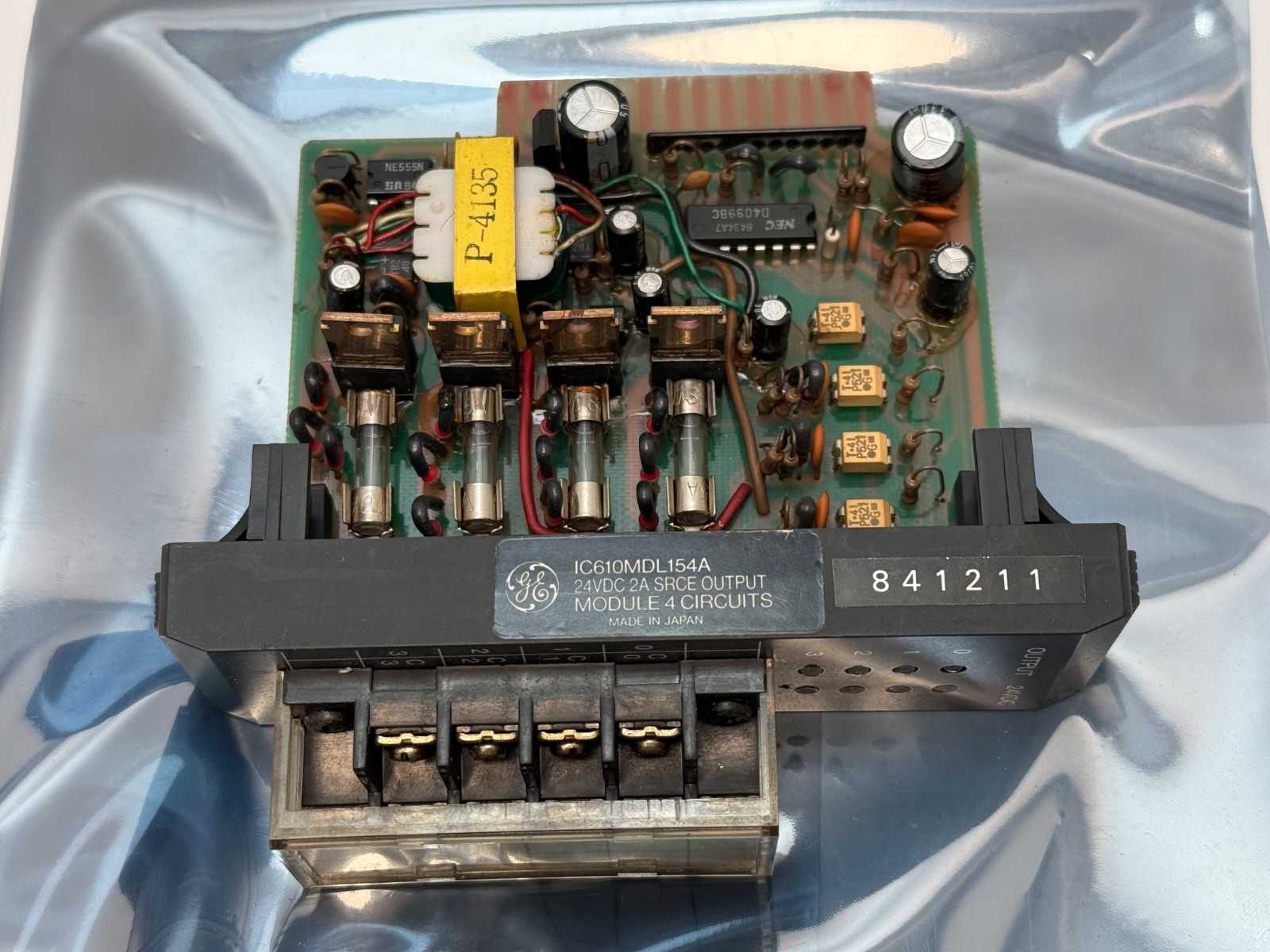
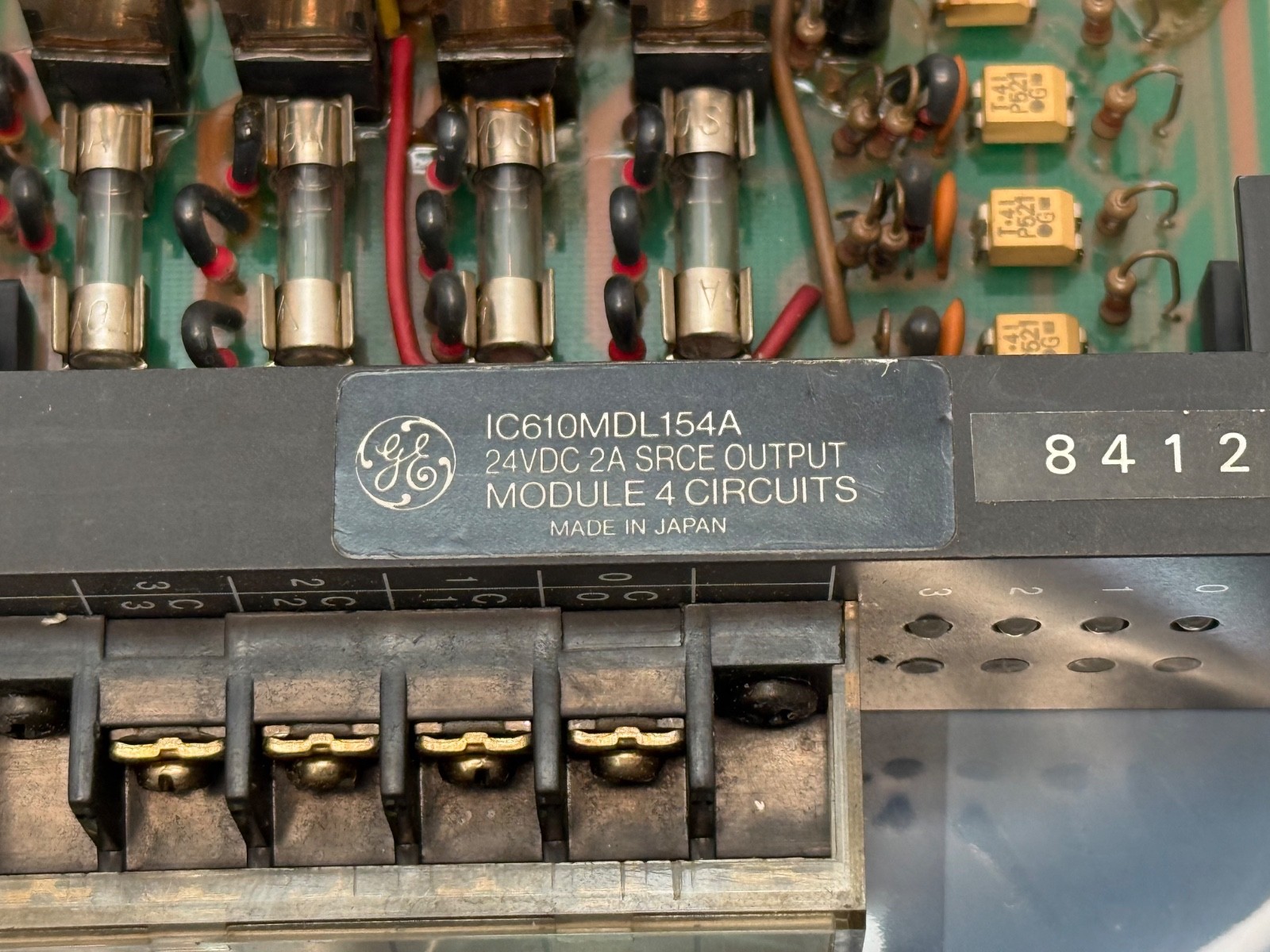
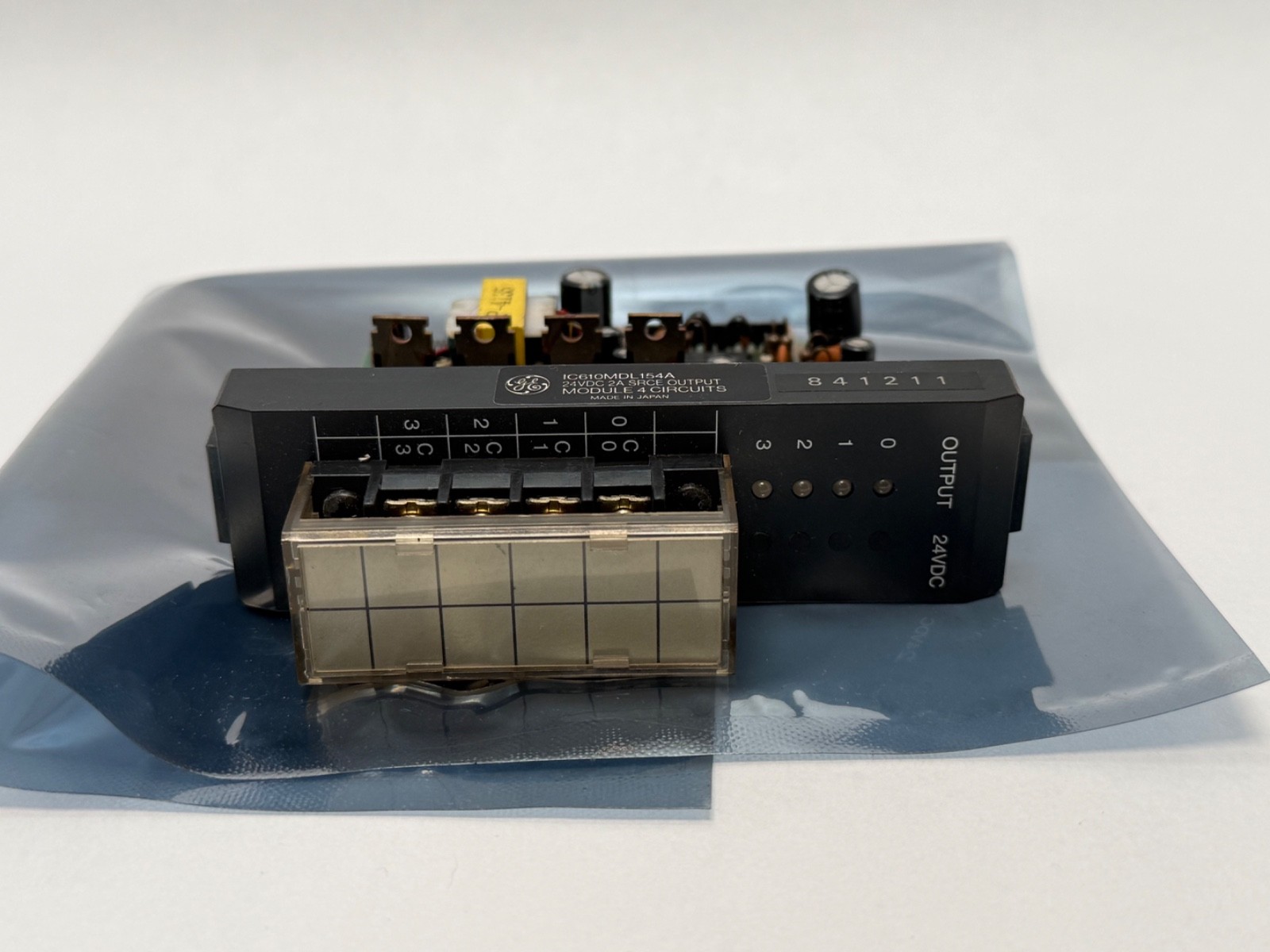
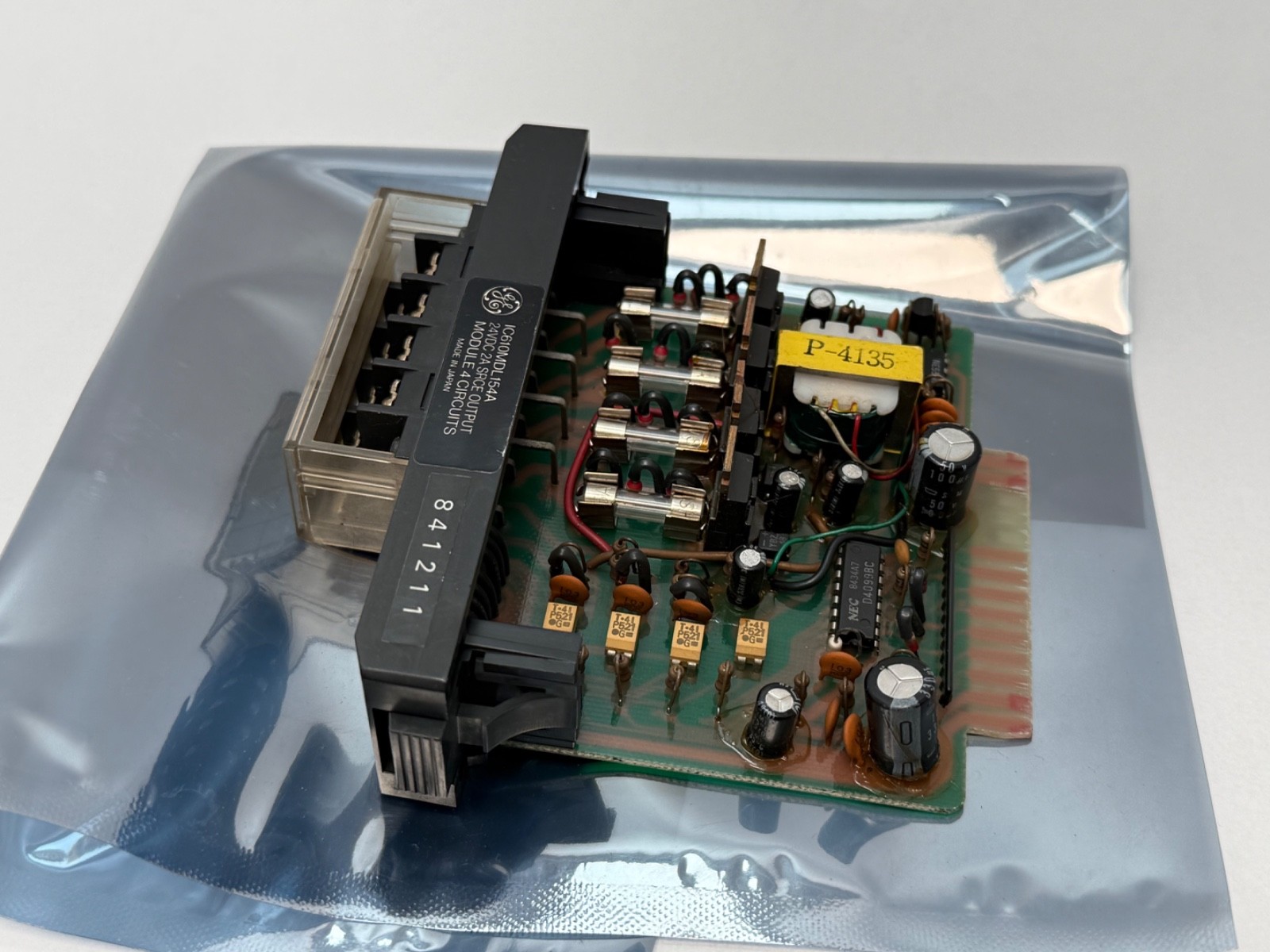
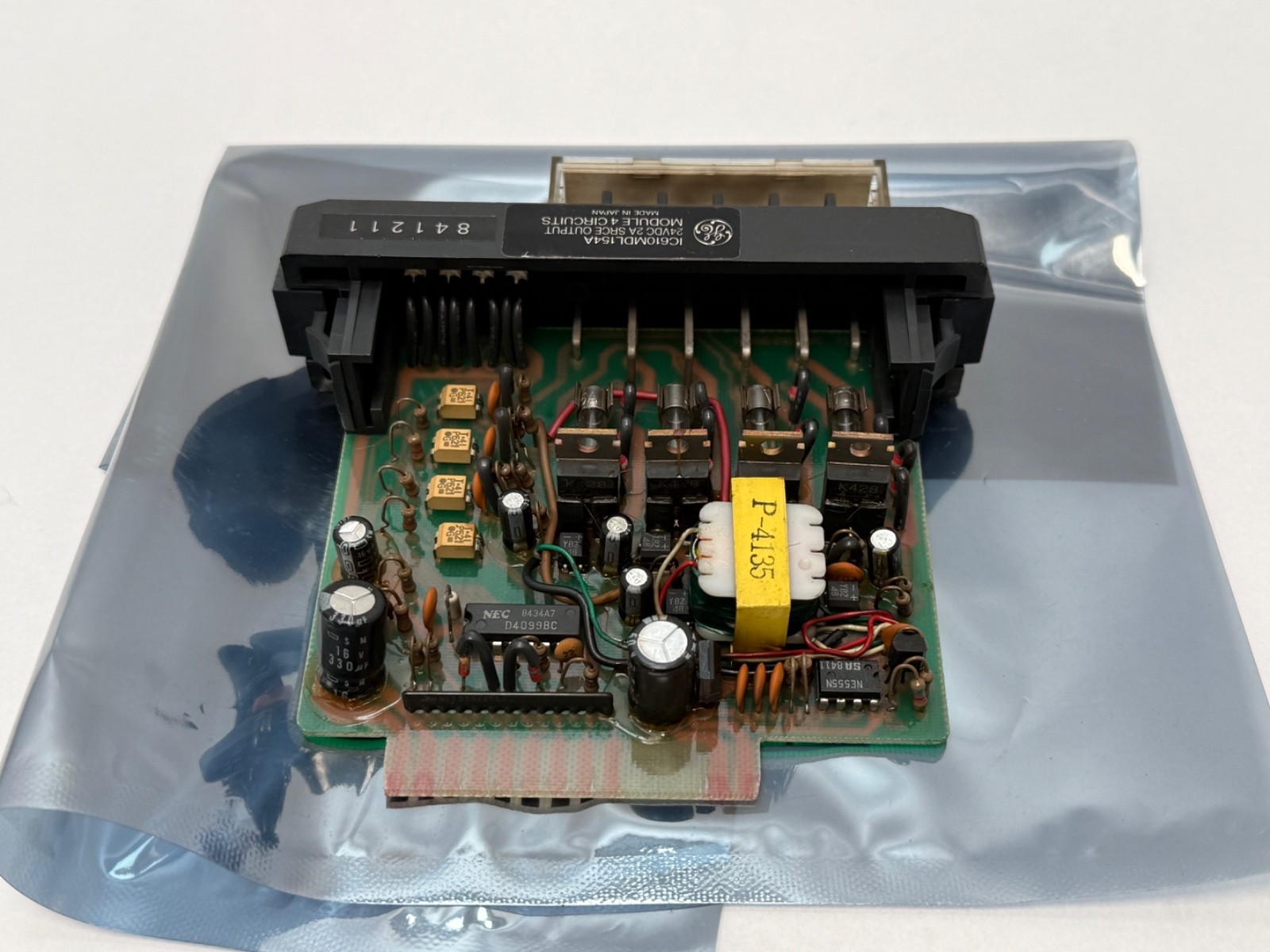
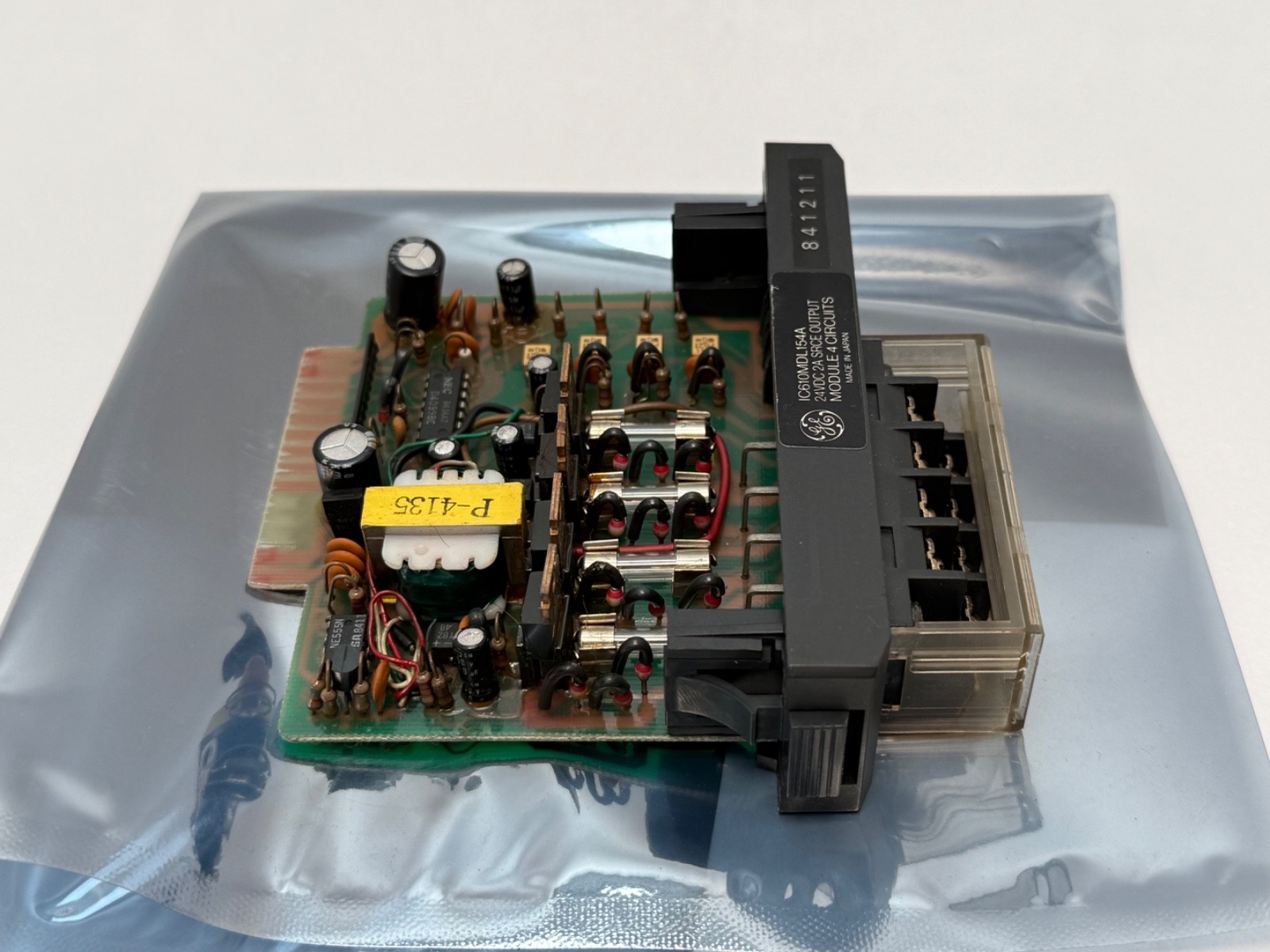
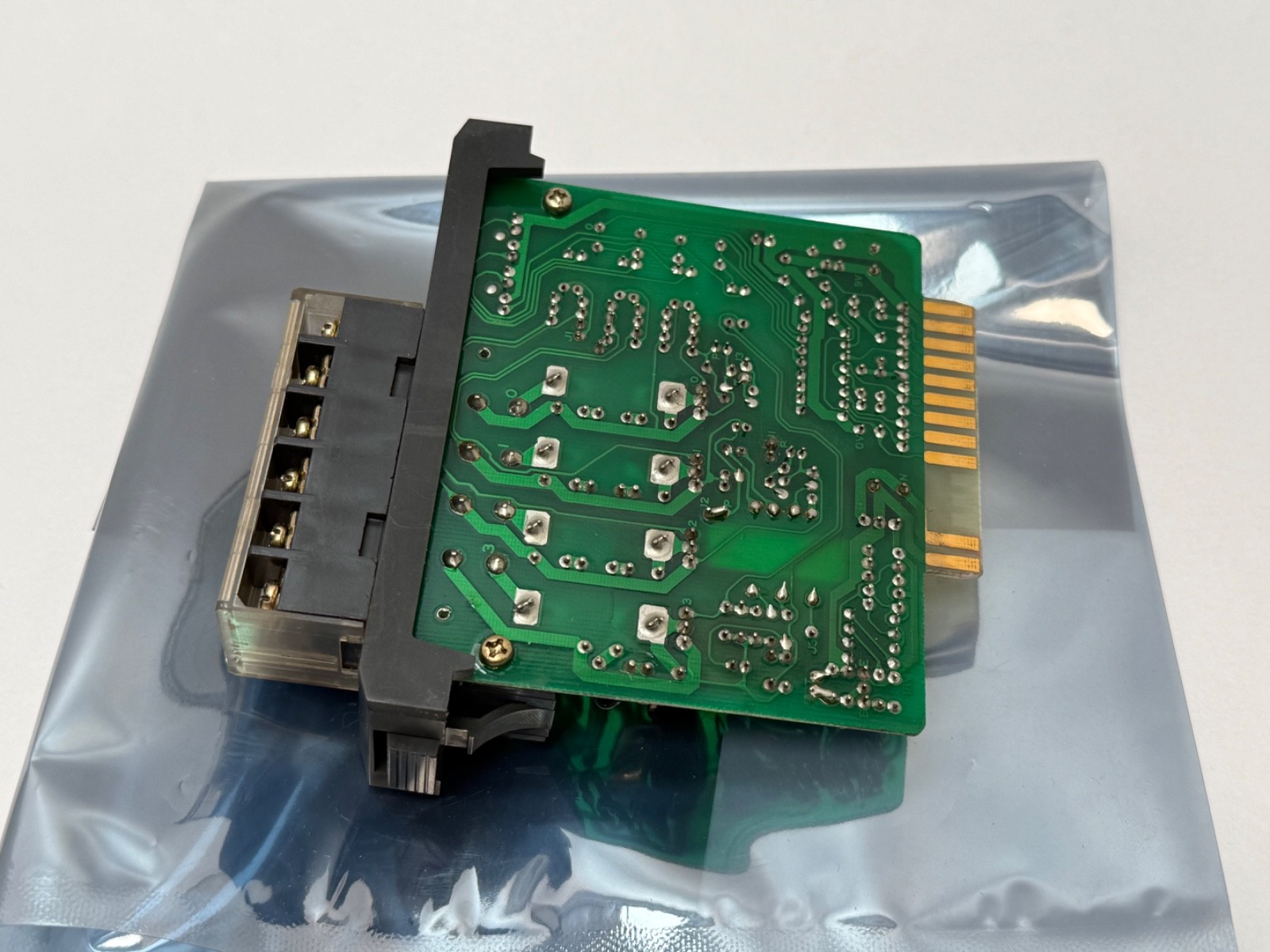
Four-point DC output module for Series One and Series One Plus programmable controllers, with four individually isolated and individually fused circuits that can be wired sinking or sourcing in any mix. Rated 5–24 VDC nominal 24 VDC, 2 A continuous per point and 8 A peak, with temperature derating that limits how many circuits carry full current in a hot panel. Consumes eight consecutive discrete references for four real outputs. For maintenance and rack rebuilds on legacy Series One I/O.
List Price
$76.11
7 in stock

7 in stock
On the Shelf & Ready to Ship
On all orders

No Risk, No Hassle
Also Available From:
| MFR / Brand | GE-Fanuc |
|---|---|
| MPN | IC610MDL154A |
| Model | IC610 MDL 154 A |
| Advertise | 1 |
|---|---|
| Condition | New – Open box |
| Type | Output Module |
| Base Number | IC610MDL154 |
| Industry Terms | Series One output module, 24VDC discrete output card, sink source output module, 4-point DC output, fused PLC output module |
| Common Misspellings | IC610MDL-154A, IC61OMDL154A, IC610 MDL154 A, IC610MLD154A, IC610MDL154A source only |
| Application Types | Legacy Series One machine control, packaging, conveyors, machine tools, plant retrofit spares |
| Condition Note | Made In USA, Takeout, Tested |
| Connector Style | Faceplate screw terminal block, two #14 AWG or one #12 AWG per terminal |
| Controller Platform | GE Fanuc Series One / Series One Plus |
| Output Amperage | 2 A continuous per point, 8 A peak |
| Mpn Variants | IC610MDL154A, IC610MDL154, IC610-MDL-154-A, IC610 MDL 154 |
| Manufacturer Status | Obsolete / discontinued, no factory replacement. Series One retired prior to the Emerson acquisition of GE Intelligent Platforms (February 2019). Reman and repair services available. |
| Compatible With Replaces | GE Fanuc Series One and Series One Plus controllers. Series One Junior compatibility not published — not claimed. |
| Additional Attributes | 4 outputs occupy 8 consecutive discrete references; the 4 unused references are usable as internal coils. Outputs may be paralleled for additional current. Derating: 10 °C = 3 circuits at 4 A; 40 °C = 1 circuit at 4 A; 50 °C = 4 circuits at 2 A; 60 °C = 2 circuits at 2 A. Faceplate terminal count not published. |
| Max Temp | 60 °C (derated — 2 circuits at 2 A) |
| Nominal Rated Input Voltage | 24 VDC (operating range 5–24 VDC) |
| Part Number | IC610MDL154A |
| Mounting Type | Rack-mount I/O module |
What this part is:
This is a 24 VDC, 2 A output module for the GE Fanuc Series One family of programmable logic controllers. It provides four output points, each on its own isolated and separately fused circuit, driven from the Series One backplane and wired out through a screw terminal block on the faceplate. It is one of the better-documented modules in the Series One range, which means for once we can give you real numbers rather than hedging.
Sink or source — the wiring decides, not the module:
Our previous title described this module as “SRCE,” source only. That was wrong, and it understated the part. The IC610MDL154A is a sink/source module. Whether a given circuit sinks or sources is determined by how you wire the field load relative to your DC supply, not by anything internal to the module.
In a sourcing arrangement the module supplies the positive side to the load and the load returns to 0 V — the module sits between supply positive and the device. In a sinking arrangement the load is fed positive directly from the supply and the module switches the return path to 0 V. Same module, same terminal, different external wiring, opposite polarity convention. This matters because plant standards differ, imported machinery often assumes one convention and domestic panels the other, and a module labelled source-only gets rejected on paper by engineers who need sinking outputs.
Because all four circuits are individually isolated, you can go further than picking one convention for the module: you can wire some circuits sinking and others sourcing on the same card, referencing different supplies. That flexibility is a genuine reason to specify this module and it is invisible if the listing says “source.”
Published ratings:
Operating voltage: 5–24 VDC, nominal 24 VDCOutput current: 2 A continuous per point, 8 A peak maximumPoints: 4 outputs, 4 individually isolated circuitsIsolation: each circuit may reference a different DC power sourceFusing: 5 A replaceable fuse per circuit, four totalOff-state leakage: less than 0.4 mA at 40 VDCBackplane load: 12 mA at 9 VDC (2 unit loads) / 30 mA at 9 VDC (3 unit loads)Status indication: per-circuit LEDs on the logic sideTerminals: faceplate screw terminal block, each terminal accepts two #14 AWG or one #12 AWGOutputs may be paralleled to increase available current
Temperature derating: the 2 A on the nameplate is not always available:
This is the specification most often ignored and it materially affects how you size the module. The published derating runs as follows: at 10 °C, three circuits at 4 A; at 40 °C, one circuit at 4 A; at 50 °C, four circuits at 2 A; at 60 °C, two circuits at 2 A.
Read the top of that range carefully. At 60 °C only two of the four circuits can carry the nameplate 2 A simultaneously. A panel running hot — no active cooling, summer ambient, drives dumping heat into the same enclosure — is not a place to load all four outputs to their rating and assume it will hold. If your application genuinely needs four circuits at 2 A each, you need the internal panel temperature at or below 50 °C, which is a ventilation question, not a module question. The failure mode when people get this wrong is nuisance fuse operation in July and a maintenance team chasing a fault that is really a thermal design problem.
Off-state leakage and cascaded logic inputs:
Leakage is specified at under 0.4 mA at 40 VDC, which is low. In practical terms it is well below the current needed to hold in any normal contactor or relay coil, so a de-energised output stays de-energised. The exception worth knowing about is feeding this output into another high-impedance logic input rather than into a real load. A few hundred microamps into a high-impedance input can register as a true state, so if you are cascading this module into another controller’s input card, verify the input’s off-state threshold or add a bleed resistor rather than assuming the leakage is negligible.
Fusing and isolation as maintenance features:
Each of the four circuits carries its own 5 A replaceable fuse. That is a real advantage over modules with a single common fuse or no field-replaceable protection: a short on one output takes out one circuit, not the card, and the repair is a fuse from the drawer rather than a module from a surplus dealer. Combined with per-circuit isolation and per-circuit status LEDs, fault-finding on this module is quick — the LED tells you what the logic commanded, the fuse tells you what the field did.
Eight references for four outputs — plan your I/O map:
This module occupies eight consecutive discrete output references in the Series One reference map while providing only four physical outputs. The four references that have no terminal behind them are not wasted: they are usable as internal coils in the program. But you must account for them when laying out addressing. If you plan a rack assuming one reference per point you will run out of address space before you run out of slots, and the discovery usually comes mid-commissioning. Map the eight, use the spare four deliberately as internal bits, and document which four are physical.
Platform compatibility:
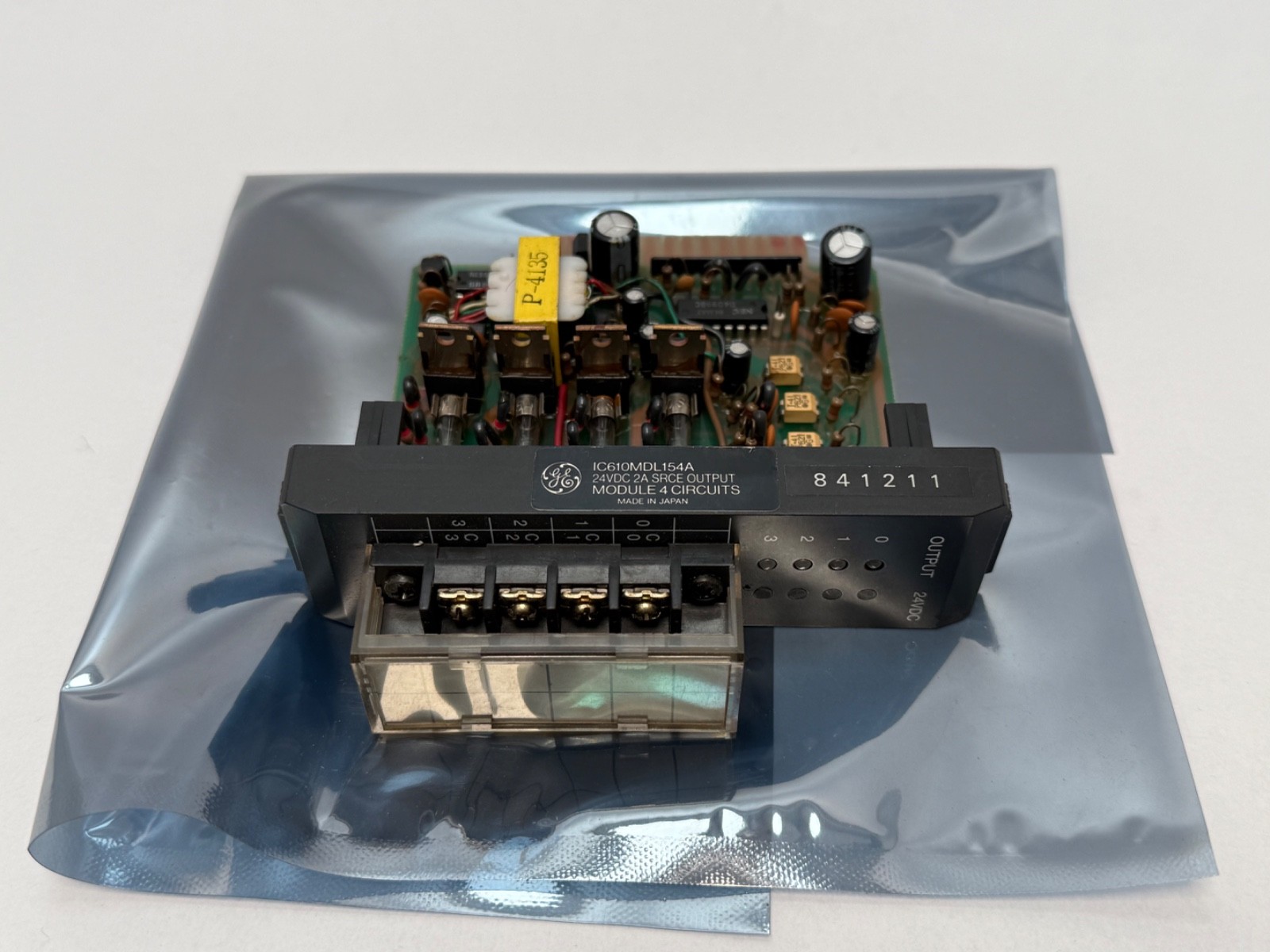
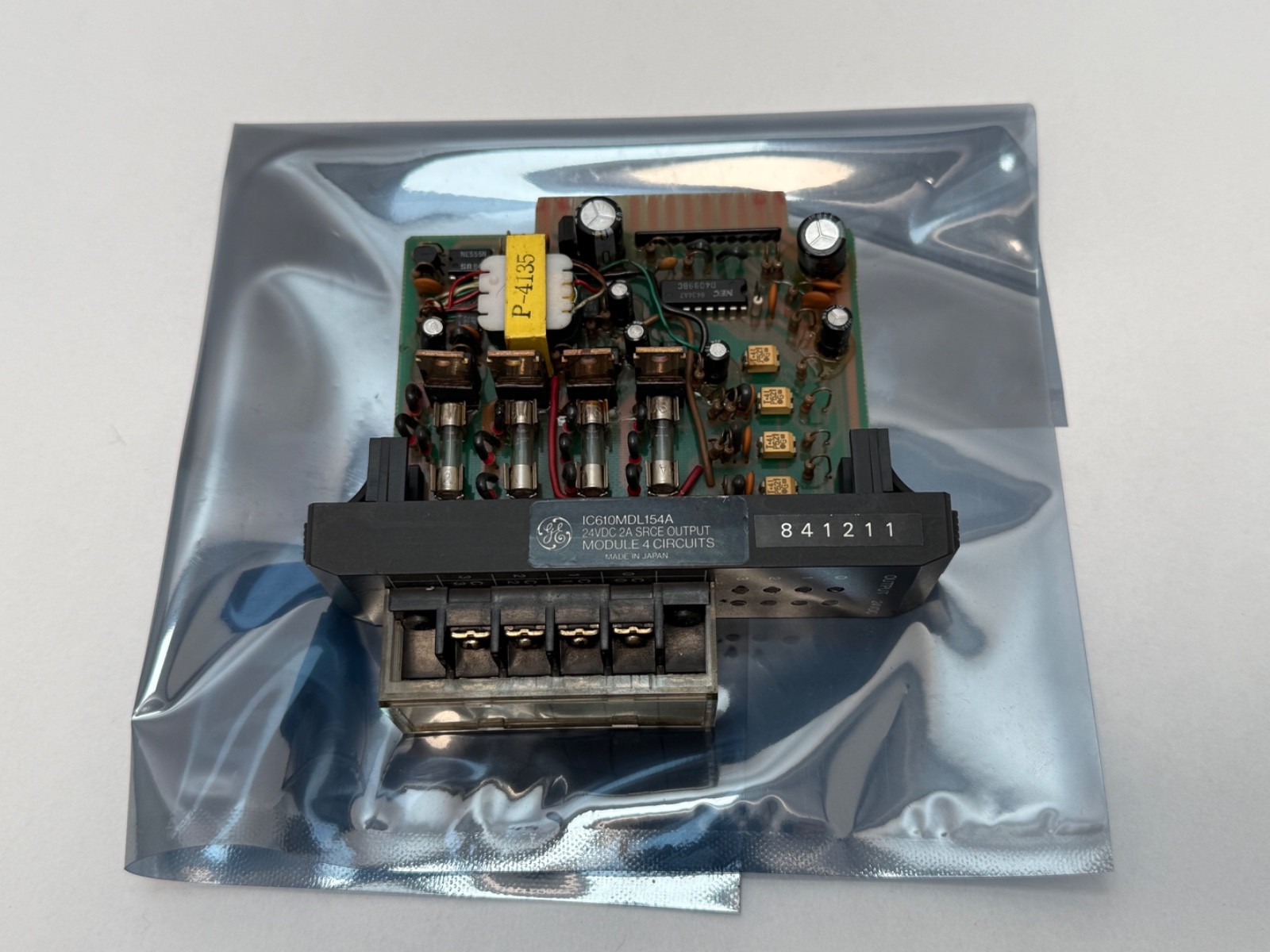
This module is for GE Fanuc Series One and Series One Plus controllers. Series One Junior compatibility is not published and we are not claiming it — Junior uses a fixed, non-expandable I/O configuration, which makes an add-in output module a poor assumption. Terminal count on the faceplate block is not published in any source we could verify; the photographs on this listing show the actual block, so count from the images if the exact number matters to your wiring drawing.
Revisions and part number forms:
The A suffix is the commonly traded revision and IC610MDL154 is the base number most dealers list against. We could not confirm that an IC610MDL154B exists. In this family suffix letters are generally interchangeable, but that is a market observation rather than a documented statement, so match the base number first and check the suffix against your parts list if the application is critical.
Quantity and configuration:
Seven units in stock. On a discontinued I/O module that is the commercial argument: seven cards is enough to re-populate an entire Series One output rack in one purchase, or to put a tested spare on the shelf at several plants. Series One I/O is thin on the ground and getting thinner, and buying depth once is cheaper than buying singles repeatedly from whatever the market offers in five years. Sold individually.
Interchange guidance:
Search forms include IC610MDL154A, IC610MDL154, IC610-MDL-154-A and IC610 MDL 154. Obsolete and discontinued with no factory replacement — Series One was retired well before the Emerson acquisition of GE Intelligent Platforms. Reman modules and board-level repair services remain available.
$52.54
4 in stock
Hot item
$52.54
4 in stock
Hot item
The closure wave isn’t just a jobs story — it’s
When sourcing a replacement bearing, you will often find both Timken and SKF options for
Both variable frequency drives (VFDs) and servo drives control motor speed and torque. While they
A rotary encoder converts shaft rotation into an electrical signal. This signal tells a control
Our team can locate, cross-reference, and source all parts.
Sort
Brand
Price
MPN
Categories