

Short answer: when a servo amplifier faults, rule out the motor, cable and encoder first, then save the parameters. If the amplifier itself has failed, a matched replacement from stock gets the machine running today. Repair makes sense when you have a spare to run on while it’s out. Servo amplifier replacement makes sense when you don’t.
A servo axis stops mid-cycle. The display shows an alarm number nobody memorized. The production manager wants a time, not a diagnosis.
Here’s how to decide in the first hour whether you’re replacing the amplifier, repairing it, or chasing a fault that isn’t in the amplifier at all.
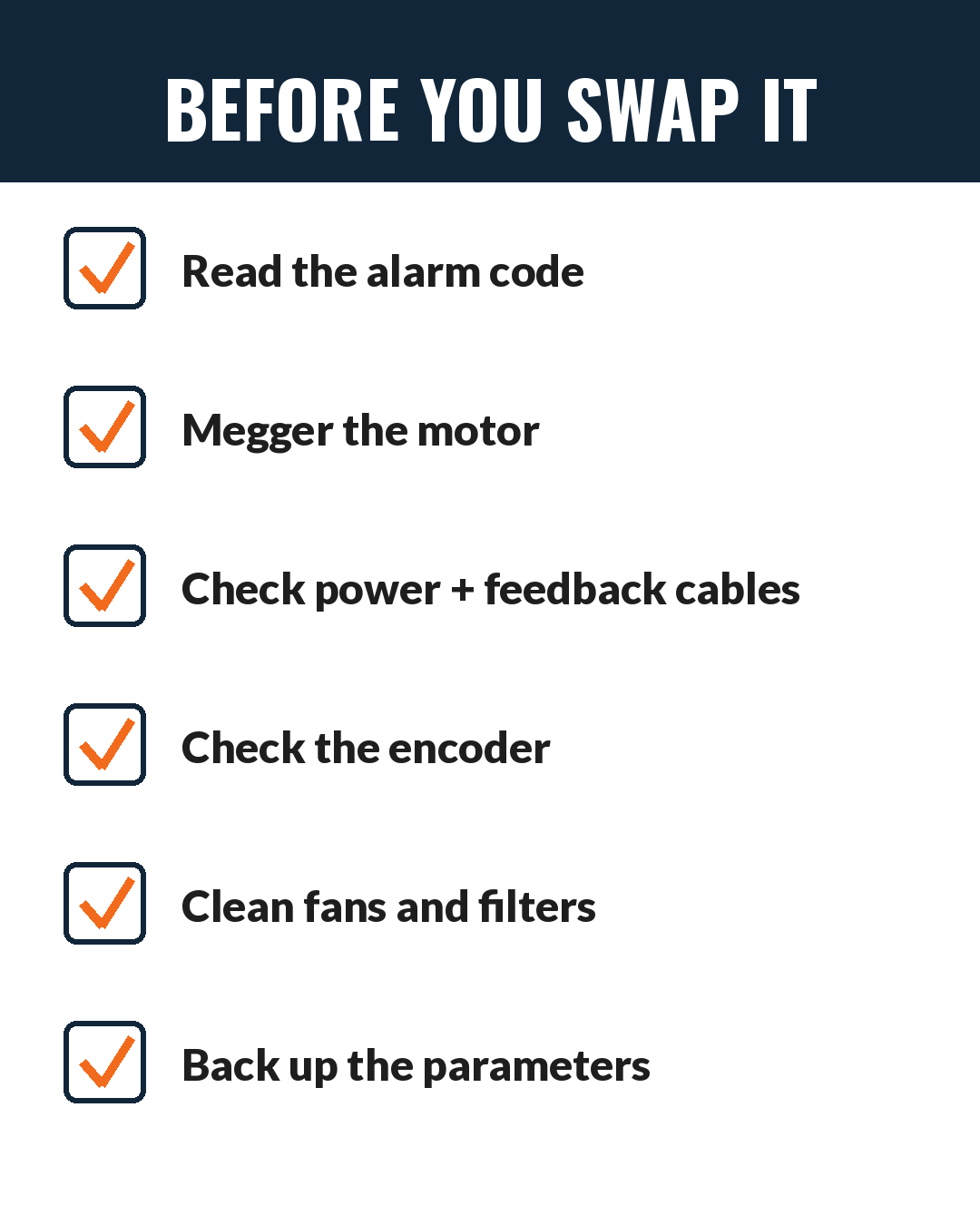
A lot of amplifiers get swapped for problems they didn’t cause. Before anything gets ordered:
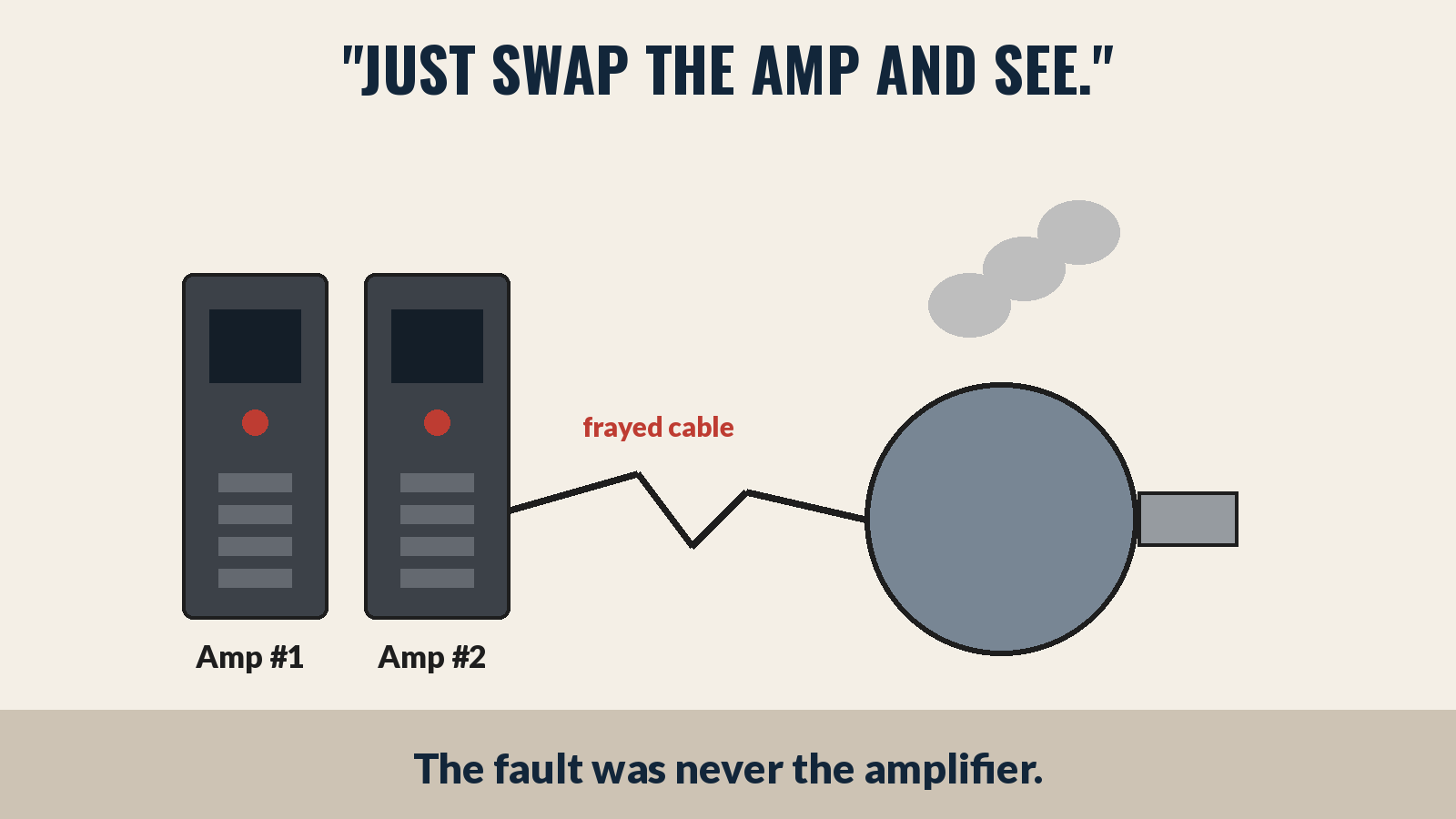
“Swap the amp and see” is the fast answer. It’s also how a plant ends up with two dead amplifiers and the same fault.
Both are legitimate. The deciding factor is usually time, not price.
That last option is how plants stop having the same emergency twice.
Servo amplifiers are not “close enough” parts. Before ordering:
Our guide to reading industrial automation part numbers covers series letters and revisions across the major brands.
The best time to plan a servo amplifier replacement is before the next one fails. Most machines run several axes on the same family of amplifiers, often the same model. When one fails from age or heat, the others are usually running under the same conditions.
(Some of the cleanest amplifiers we see came out of storerooms where someone did exactly this, then the machine was retired before they ever needed it.)
The OEM may quote weeks, or may have discontinued the model entirely. Distributors often drop-ship from somewhere else. When the axis is down, you want the unit on a shelf, photographed, with a ship date of today.
Central Surplus stocks servo drives and amplifiers, spindle amplifiers and the industrial automation parts around them, including Fanuc, Yaskawa, Allen-Bradley, Siemens and Mitsubishi, much of it new surplus from plant storerooms. Photos show the actual unit, so you can read the nameplate and revision yourself. In-stock orders ship same day, priced well under distributor list.
Legacy CNC on the floor? See where to source replacement PCBs for legacy CNC machines and browse Fanuc parts.

How do I know if a servo amplifier is bad?
Read the alarm, then rule out the motor, cables, encoder and cabinet cooling. If the fault follows the amplifier when swapped to a known-good axis, the amplifier is the problem.
Is it better to repair or replace a servo amplifier?
Replace when the machine is down and you have no spare. Repair when you have time or the model is unobtainable. Many plants do both: replace now, repair the old one as a spare.
Can I use a newer revision of the same amplifier?
Often, yes. Check firmware and compatibility notes in the manual first.
What should I do before removing a servo amplifier?
Back up the parameters and photograph the nameplate and every connector.
One faulted axis is a bad day. The same fault a second time, with no spare on the shelf, is a pattern.
Axis down? Make it easy. → Find Your Part



Our team can locate, cross-reference, and source all parts.
Our team can locate, cross-reference, and source all parts.