
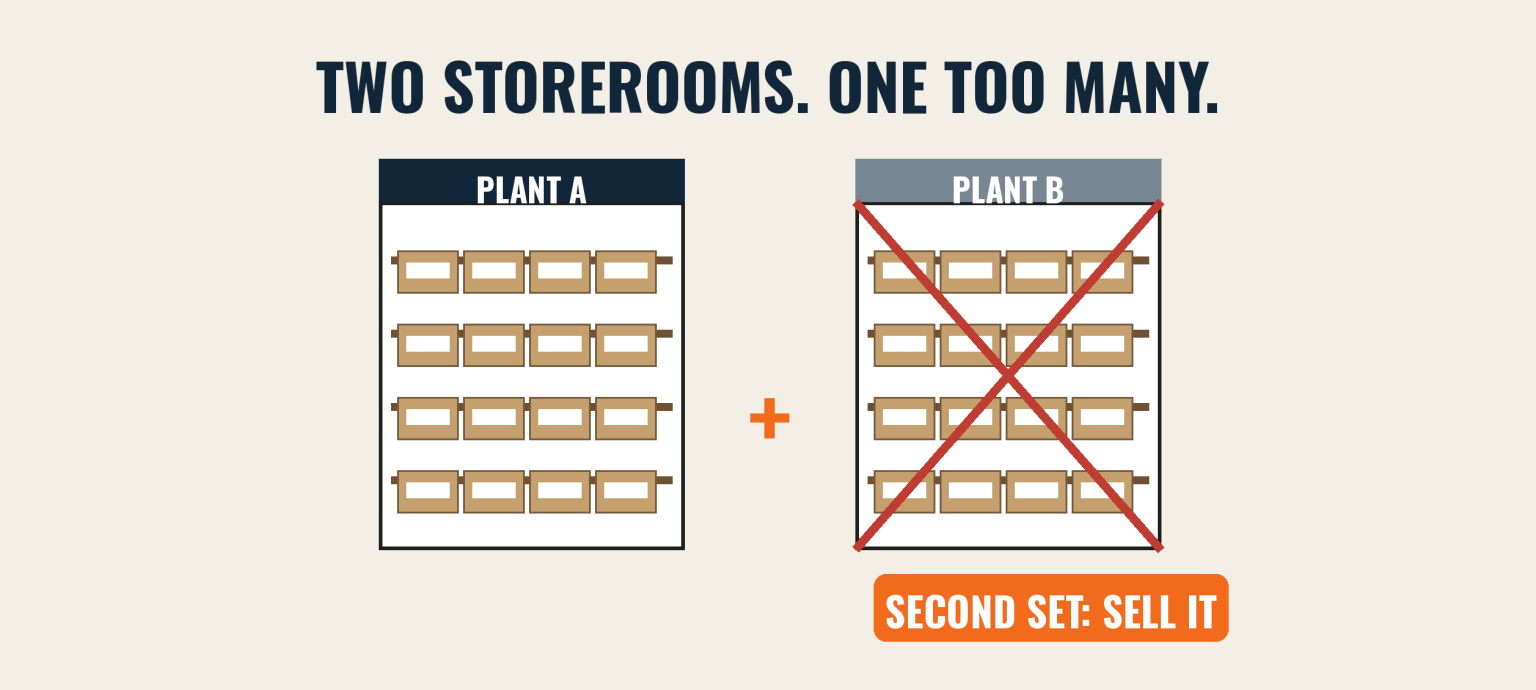
Short answer: after a merger or acquisition, MRO spare parts end up duplicated across plants, orphaned by retired equipment, and forgotten in a storeroom nobody owns anymore. The fastest fix is to sell the excess in one lot to a surplus buyer before it gets another year older on the books.
Deals are not slowing down. Industrial manufacturing M&A climbed 28% to $173 billion over the past year, per PwC’s 2026 midyear outlook, and strategic buyers made up 86% of that value. Strategic buyers combine plants. Combined plants combine storerooms. Somebody has to decide what happens to the second set of everything.
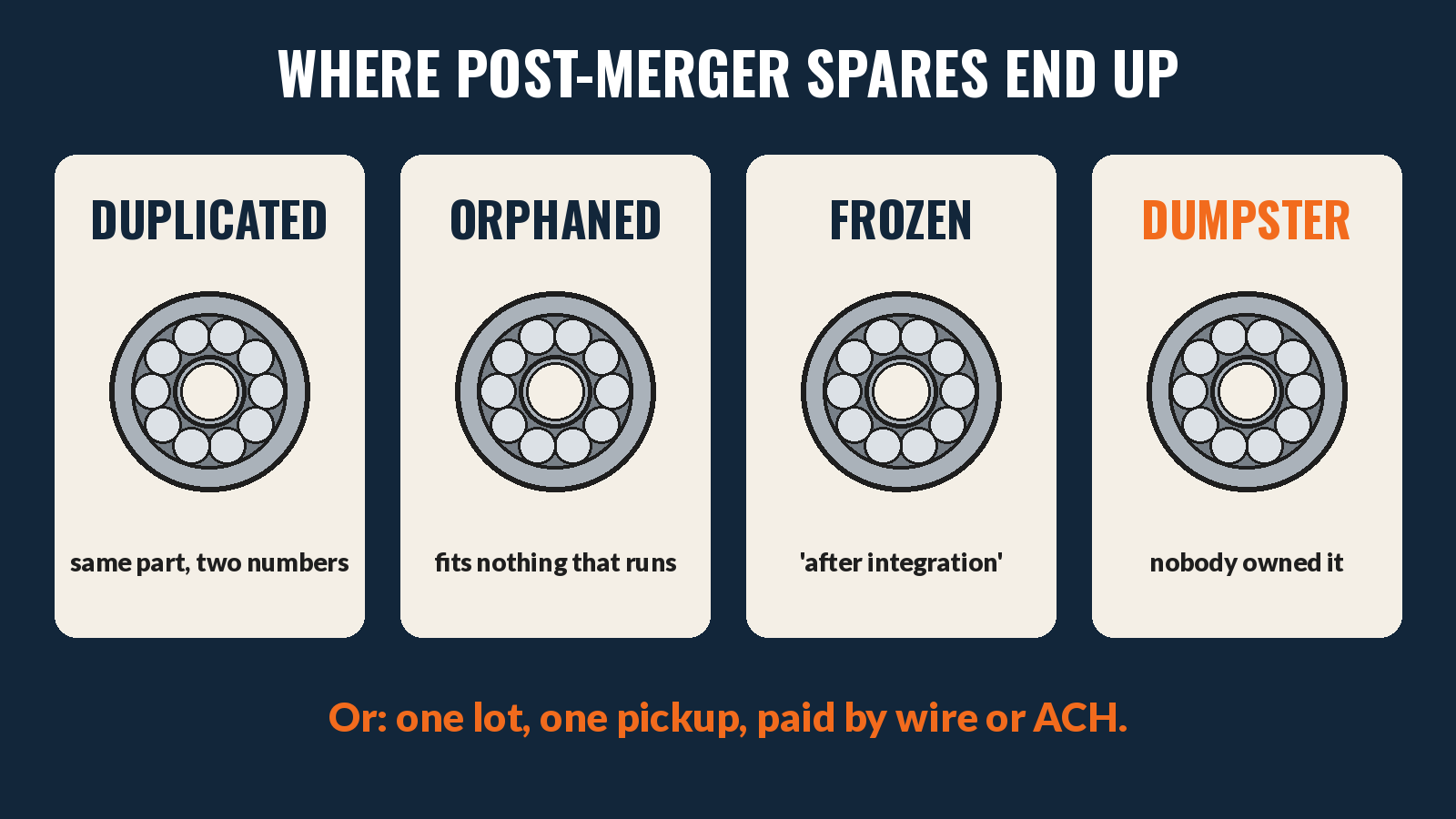
Nobody puts “deal with the bearings” in the integration plan. The finance team models synergies, the IT team merges the ERPs, operations picks which lines survive. The MRO spare parts after a merger sit in the background while all of that happens, and they tend to go one of four ways:
None of these is a strategy. Three of them cost money every month they continue.
Excess spares don’t send invoices, which is exactly the problem. The bill shows up in other places: the square footage, the insurance, the annual cycle count, the property tax on inventory at book value, and the person who keeps getting asked “what is all this?”
It also compounds. A 2025 industrial spare parts survey found 22% of MRO inventory had gone unused for more than five years. Post-merger stock is the fastest way onto that list. The longer it sits, the fewer plants still run the equipment it fits, and the smaller the market for it gets.
So the question isn’t whether to clear it. It’s whether you want to do it this quarter or explain it next year.

The instinct after a deal is to be thorough: reconcile both catalogs, transfer what’s useful, list the rest piece by piece. That plan needs a reselling expert and a system nobody on the integration team has. Brokers sell on commission and take years. Consignment models overpromise and underdeliver. Auctions take months and pay by the pallet. The scrap yard pays by the pound, not by the value of the parts.
Smart money sells to a surplus reseller and gets the highest bulk price and gets paid in a week.
Selling the excess to a surplus buyer in one lot is the shortcut. One buyer, one price, one pickup, one payment via ACH. The slow-moving stock becomes their problem. You get the floor back and close the line item.
It also gives somebody on the integration team a clean win: space recovered, cash in, a storeroom that finally matches the asset list. Finance tends to notice.
You don’t need a full audit to know. If two or more of these are true, the MRO spare parts after a merger are already costing more than they’re worth to keep:
That last one is the tell. After integration, there’s always another project. Selling MRO spare parts after a merger works best while people still remember what the parts were for, and while the plants that need them are still running.
If the deal also closed a site, our piece on what happens when a manufacturing plant closes covers the storeroom side of a shutdown. If the merger forced a controls standardization, read PLC spares after a migration before those spares hit year three.

Who buys surplus MRO parts from plants after an acquisition?
Surplus buyers and surplus wholesalers who purchase whole lots of new, unused industrial parts. Central Surplus buys bearings, automation, PCBs, drives, power transmission, electromechanical, and general MRO from industrial end users nationwide.
Do the parts need to be in original boxes?
Not at all. Boxed and labeled helps. It isn’t required. Send what you have.
Should we transfer spares to the surviving plant first?
Move what that plant will actually use in the next year. The rest is the second set of everything, and it should go.
What about our excess bearings specifically?
Grease has a shelf life. See why to sell surplus bearings sooner, and our broader guide to selling excess industrial inventory.
Ready to sell industrial MRO parts? Make it easy. Sell Your Parts →


Our team can locate, cross-reference, and source all parts.
Our team can locate, cross-reference, and source all parts.