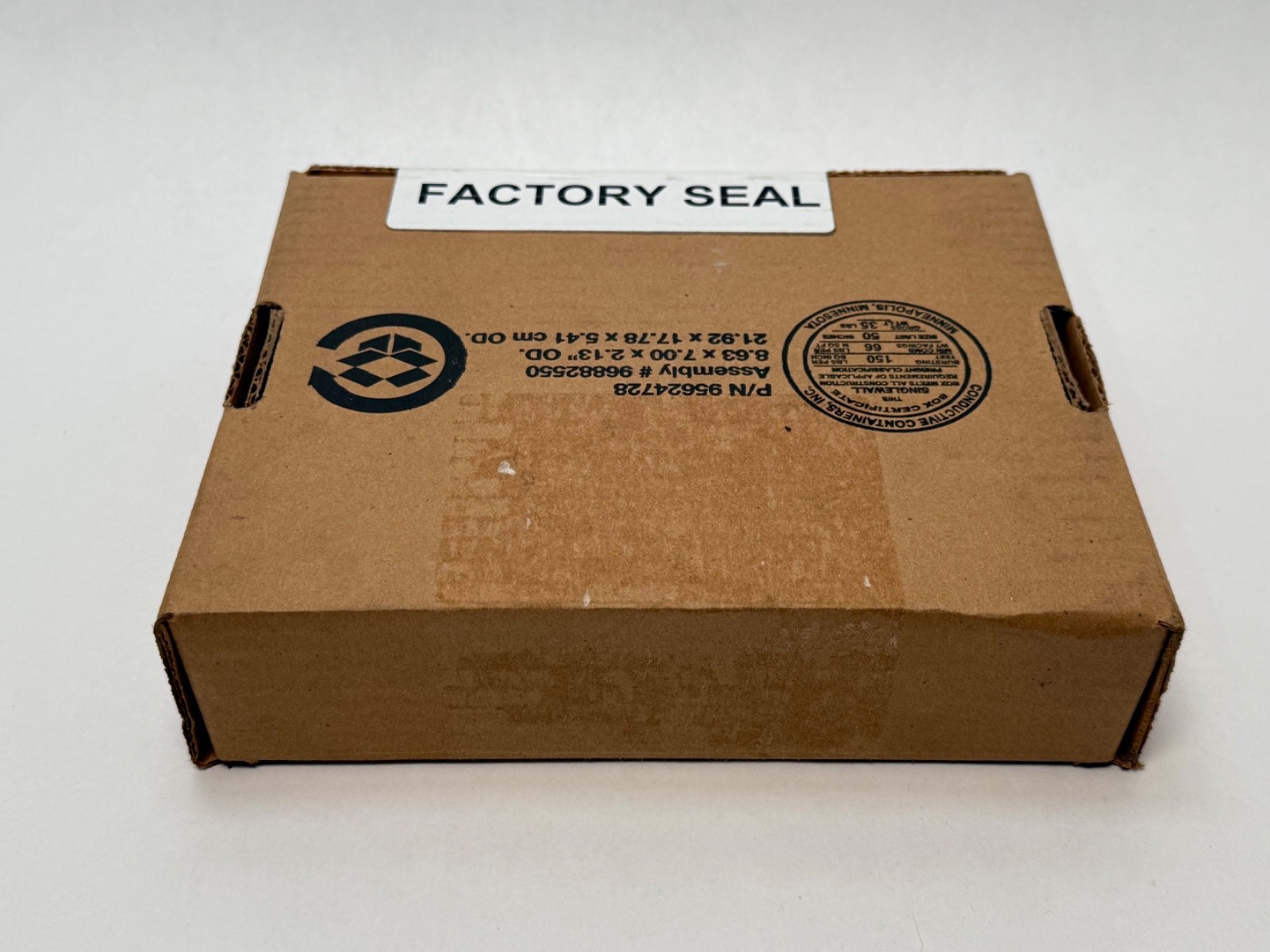
Product Description
What this part is
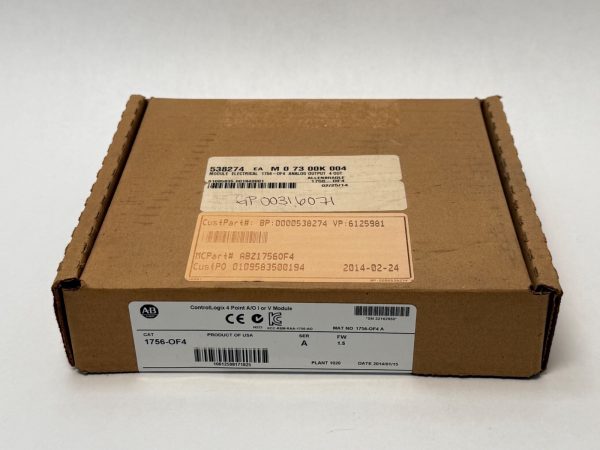
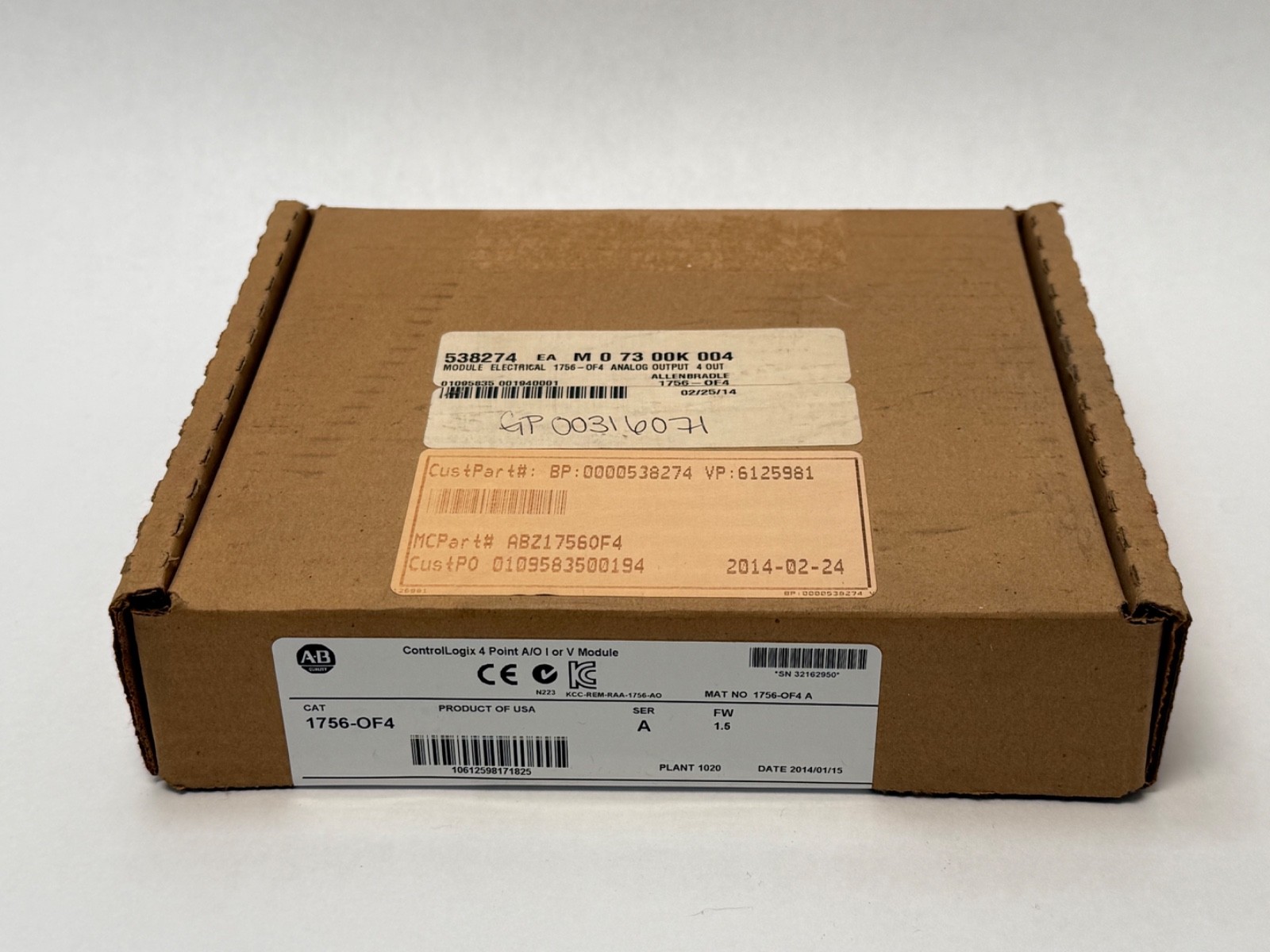
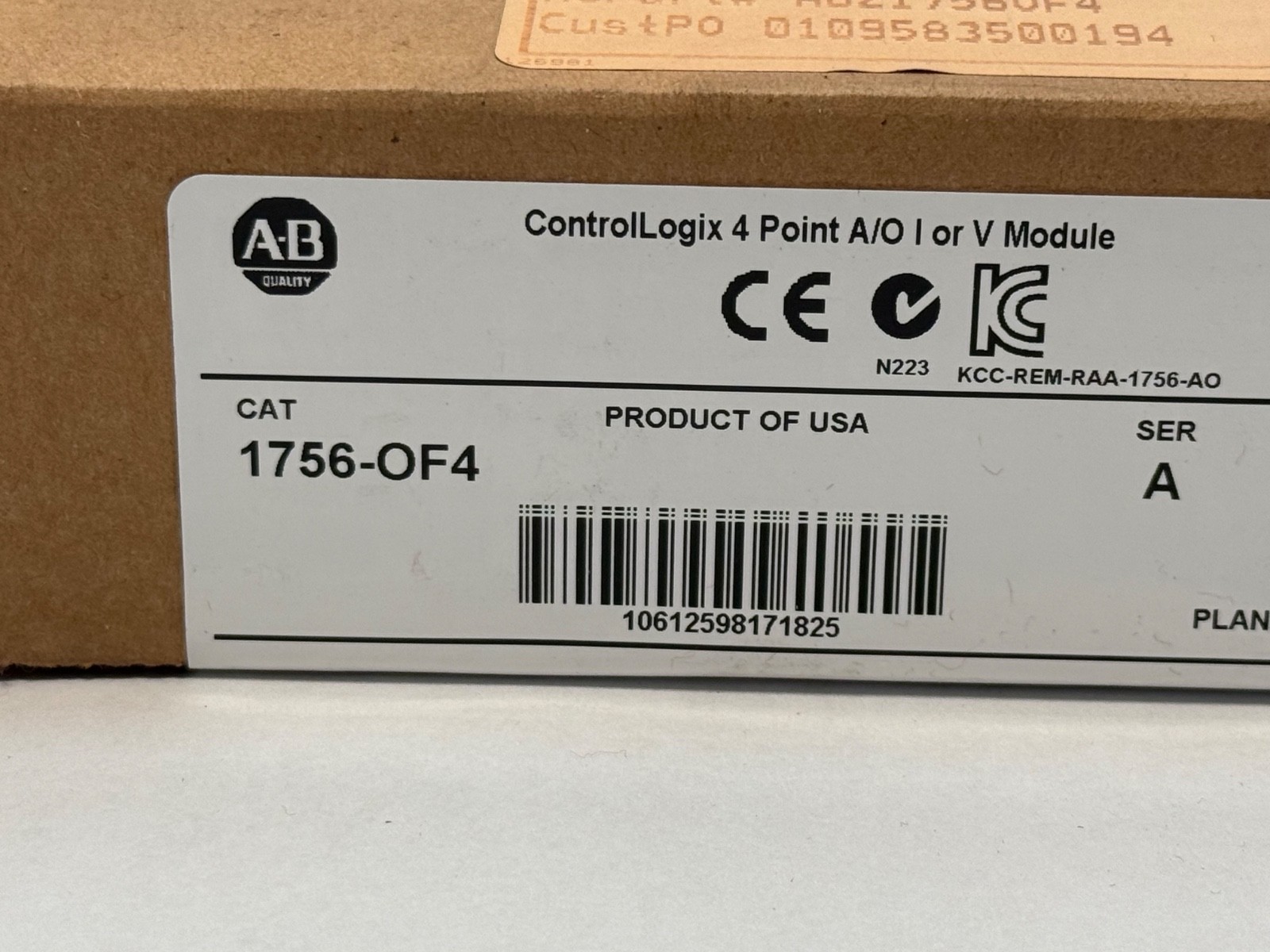
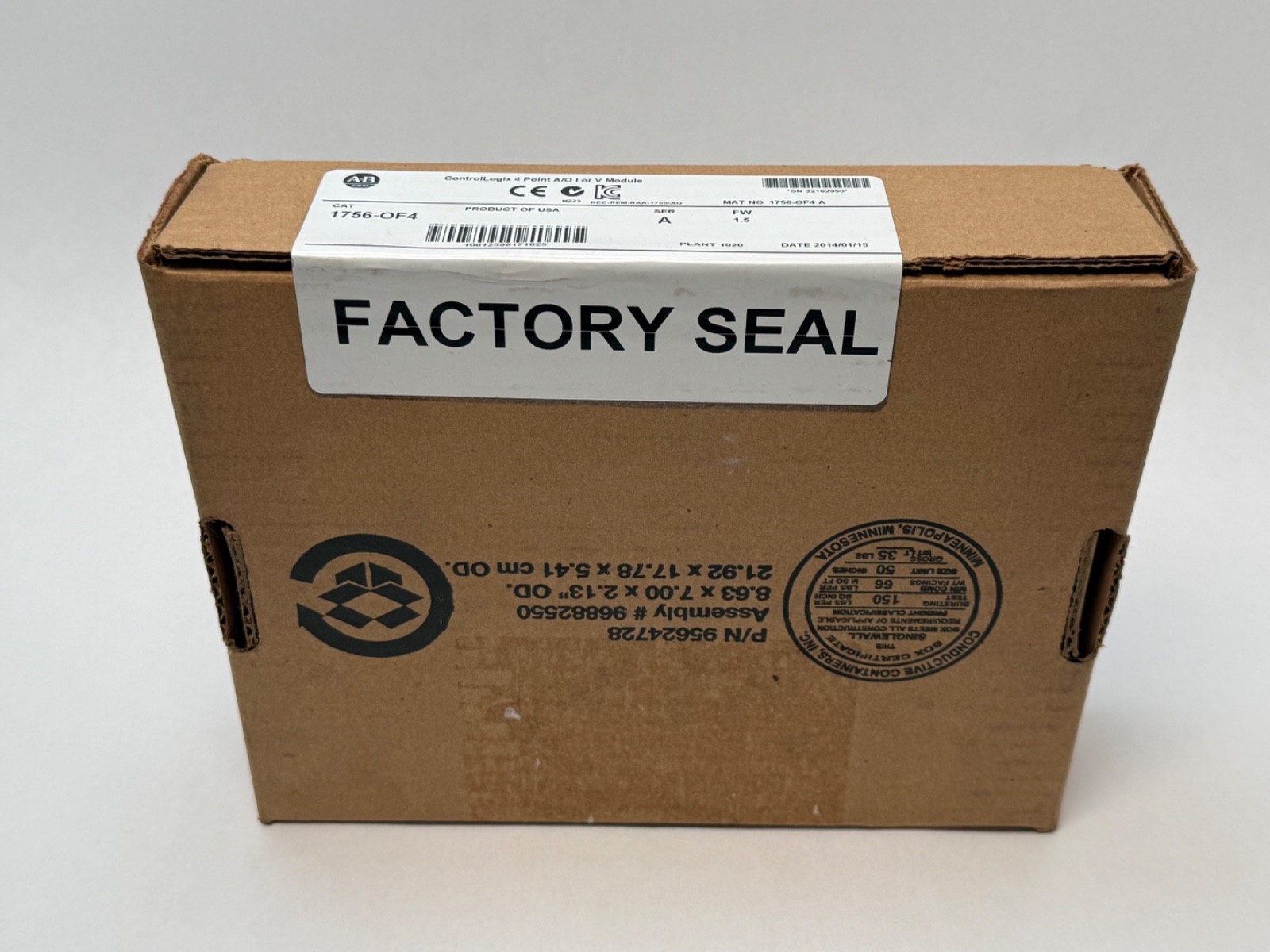
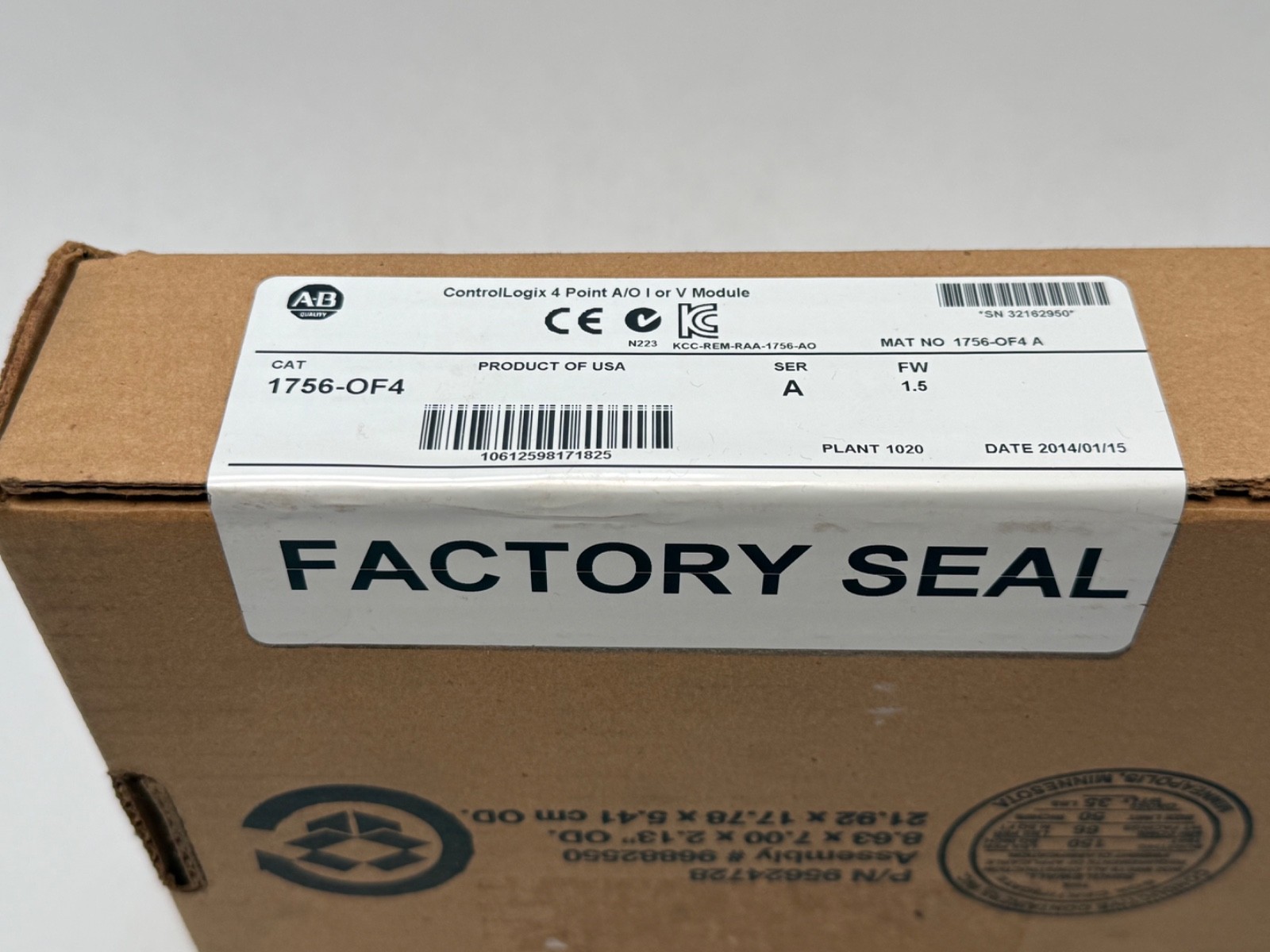
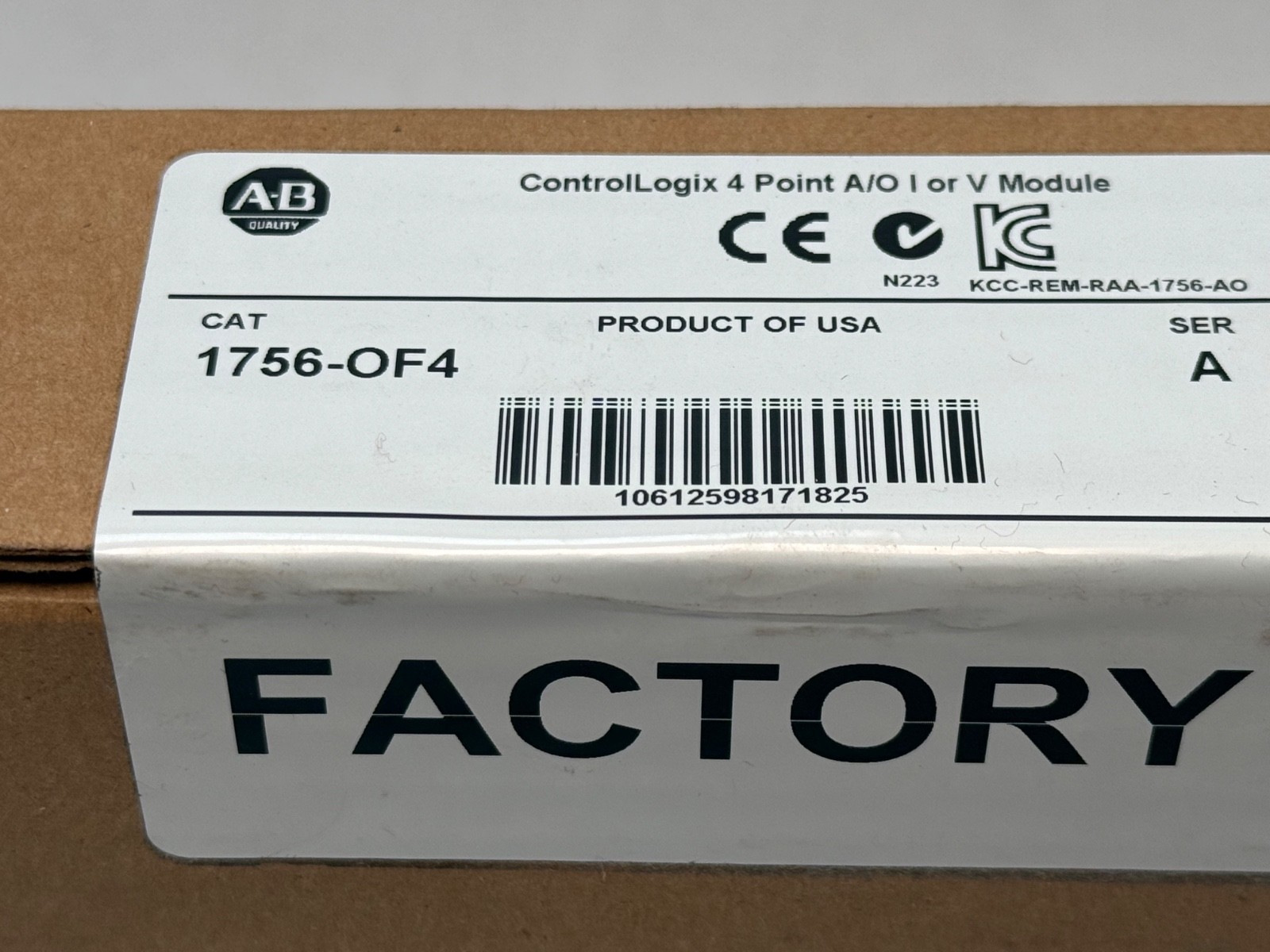
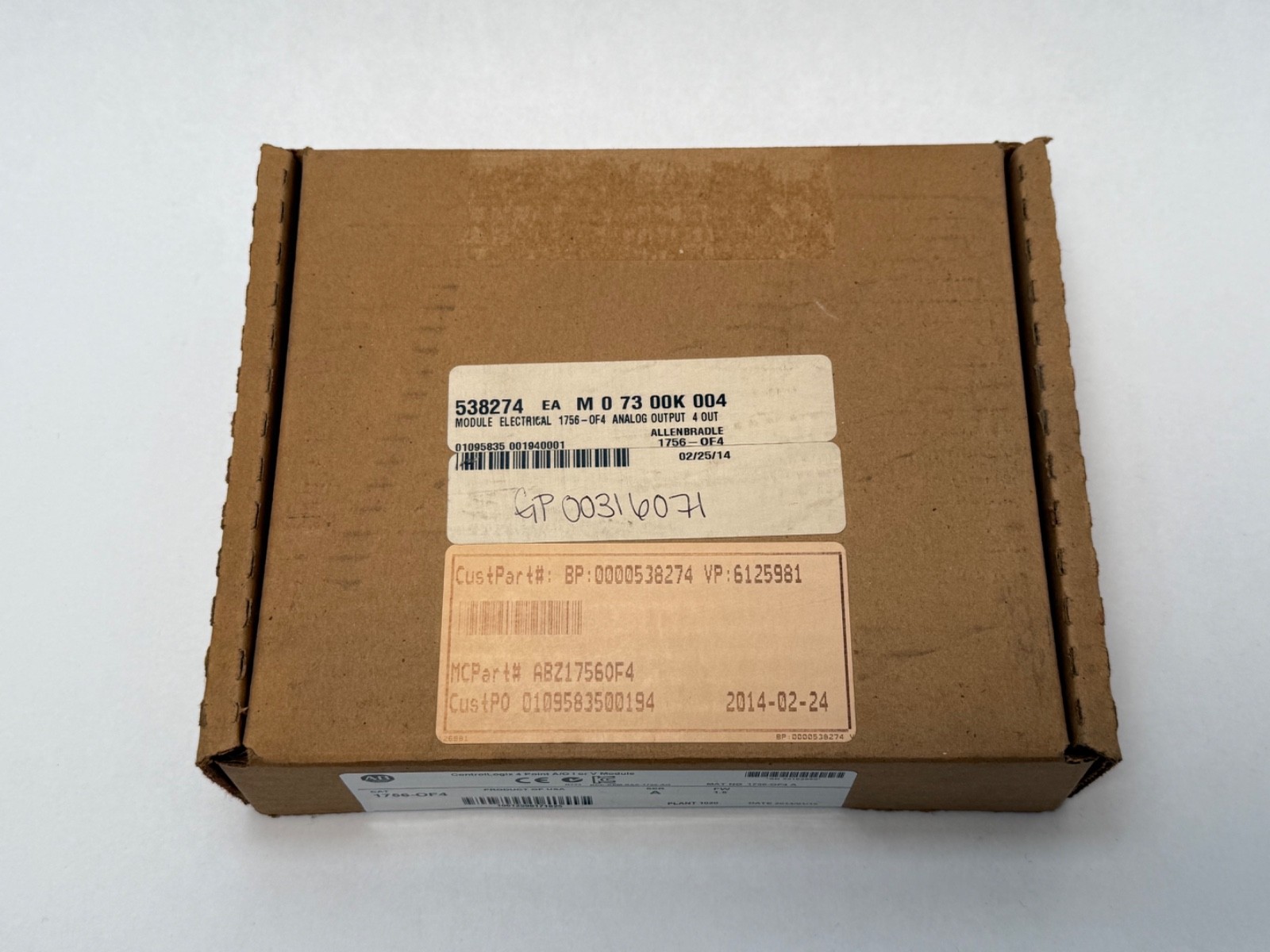
An Allen-Bradley ControlLogix 1756-series analog output module with four output channels. Each channel is configured in software as either a voltage output, bipolar about zero, or a current output, so one module can drive a mixture of valve positioners, drive speed references and chart recorders. Channels share a common return; this is the non-isolated member of the range rather than a channel-isolated one. The module takes one slot in a 1756 ControlLogix chassis and receives its output values from the controller across the chassis backplane.
Decoding the catalogue number
1756 is the ControlLogix I/O and chassis platform. O marks an output module and F the analog (floating-point capable) category, which is the letter that separates it from the discrete B DC and A AC modules. 4 is the channel count, so 1756-OF8 is the eight-channel equivalent. Where the range adds a trailing V, C or I, as in 1756-OF6VI and 1756-OF6CI, the letters fix the signal type as voltage or current and mark the channel-isolated construction; the absence of those letters here is what identifies this module as selectable-type and non-isolated. SER A is the hardware series letter.
What these specs mean in practice
The bipolar voltage range is the distinguishing capability and it is regularly misread. A bipolar output swings either side of zero, which is what a reversible drive reference or a servo velocity command needs — positive volts for one direction, negative for the other, from a single pair of terminals. A unipolar module cannot do that at all, and a discrete output module cannot approximate it. Current output, by contrast, is the choice for long cable runs and noisy plant, because a current loop is indifferent to voltage drop in the wiring while a voltage signal is not. Selecting type per channel means those two decisions are made independently on each of the four loops.
Non-isolated construction is the trade being made for the price and the channel density. All four channels reference a common point, so a ground-potential difference between two field devices appears as an error on both. Where field devices sit on separately earthed skids, the channel-isolated modules in the range are the correct choice.
Quantity and configuration
1 Pc. Module only. No removable terminal block, no chassis, no chassis power supply and no wiring arm. The RTB is a separate 1756-TBNH or 1756-TBCH item.
Installation and setup notes
The module goes into any I/O slot of a 1756 chassis and must match its entry in the controller’s I/O configuration tree by slot, catalogue number and revision, with electronic keying deciding how strictly. Signal type, scaling, ramp rate and hold-last-state or user-defined fault behaviour are all set in the module configuration rather than by jumper, so a replacement module inherits its behaviour from the project file. Field wiring lands on the removable terminal block and survives a module swap.
Interchange guidance
Later series letters of 1756-OF4 are the substitution path and use the same terminal block. The 1756-OF8 is the same electrical design at eight channels. The 1756-OF6VI and 1756-OF6CI are related modules rather than replacements: they are channel-isolated, fixed to one signal type, and six channels wide. 1756-IF-prefixed catalogue numbers are analog inputs, not outputs.