
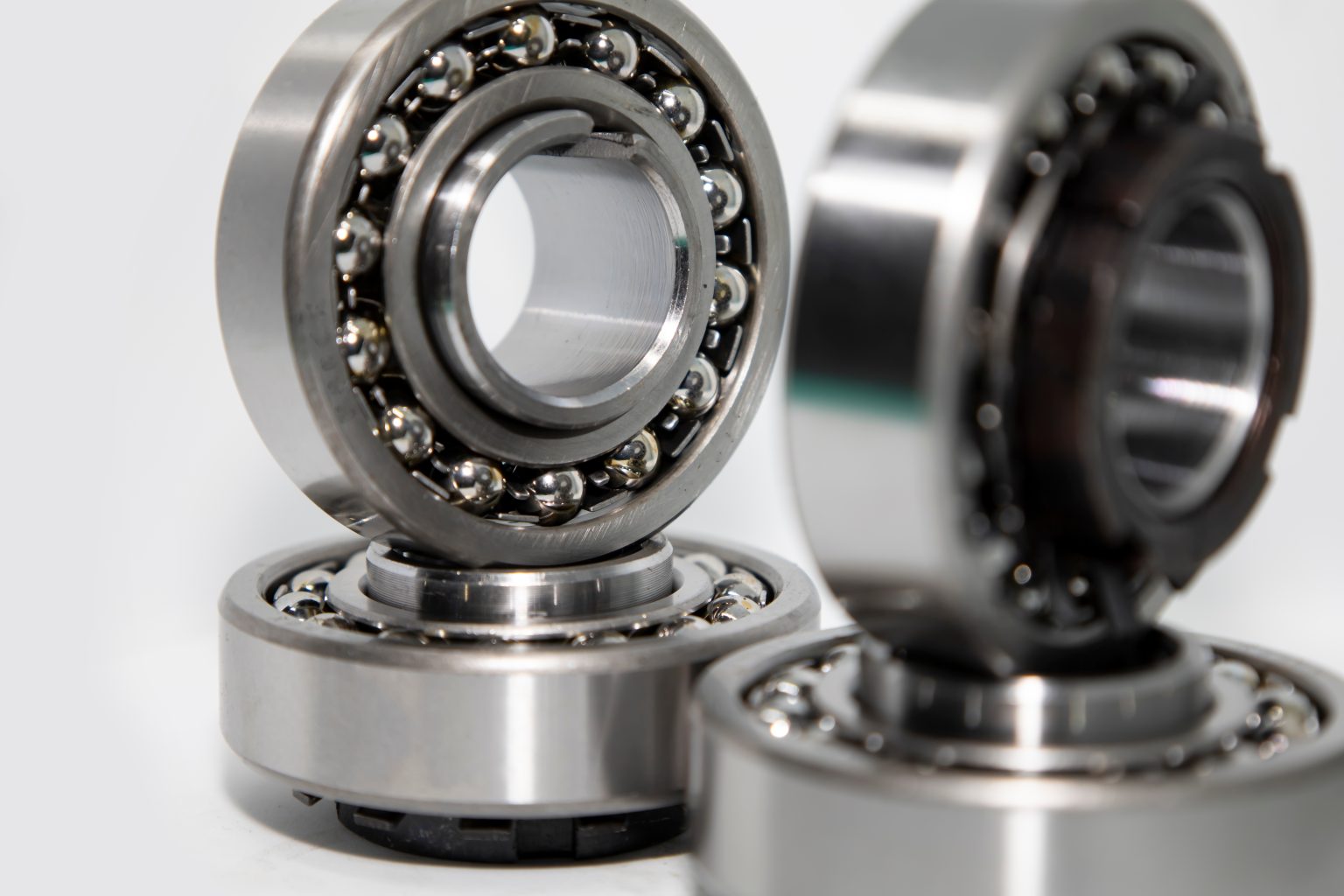
From Caligula’s luxury fleet to modern factories, this is the story of how a single mechanical concept evolved over two millennia into an essential component in nearly every machine worldwide.
While watching a History Channel documentary on ancient Rome, something caught our attention: Caligula’s pleasure ships on Lake Nemi were fitted with ball bearings. Bronze ones. Caged. In 40 AD.
Something we assumed was an innovation of the Industrial Revolution was solved by Roman engineers nearly two thousand years before the first bearing patent was filed.
A ball bearing lets two surfaces move relative to each other with almost no friction or wear. Few inventions have done more for ordinary life. It made the bicycle possible, giving working people independent mobility for the first time. It made electric motors, which consume 40 to 53 percent of the available energy on Earth, practical for powering factories. It put reliable machinery in hospitals, on farms, and inside vehicles moving goods across continents. Every time a machine runs smoothly and quietly, doing exactly what it’s supposed to do without failure, a ball bearing is almost certainly part of the reason.
The bearings available at Central Surplus today are the result of this remarkable history. Let’s explore how they came to be.
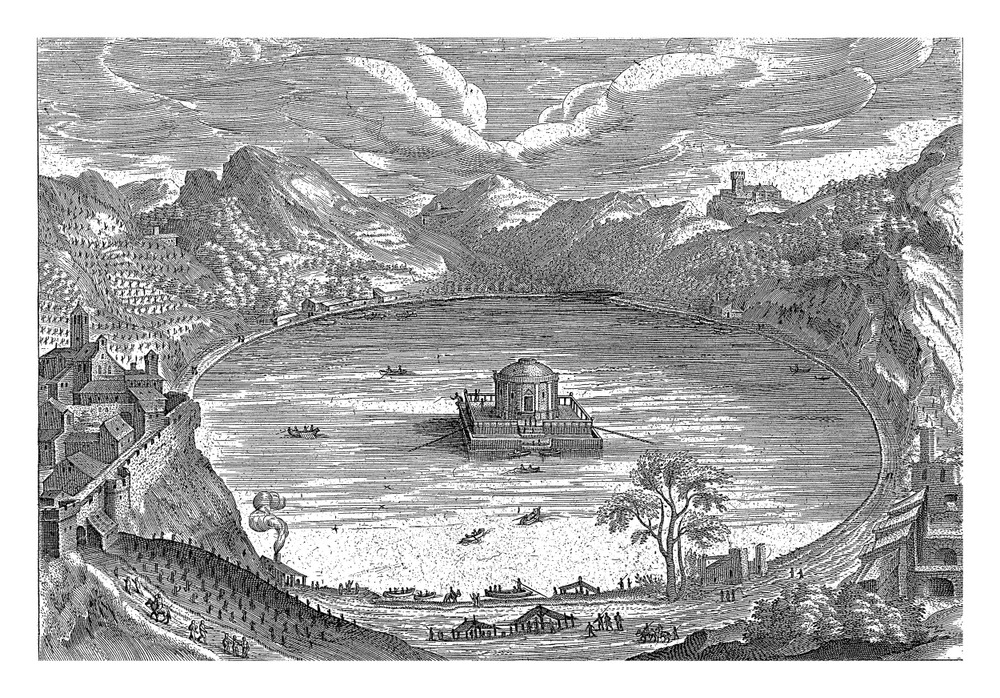
Emperor Caligula had two massive pleasure barges constructed on Lake Nemi, a small volcanic lake southeast of Rome. With one over 70 meters long, they were floating palaces, with marble floors, bronze fittings, hypocausts (underfloor heating), and plumbing.
When the ships were raised from the lake bed in the 1920s and 1930s, archaeologists made an astounding discovery: two rotating platforms, both designed to spin freely on rolling elements.
The first platform used caged bronze balls in a thrust ball bearing, with the balls held in a bronze cage between two flat races. The platforms were most likely built to display rotating statues, a common element in Roman imperial design. These rolling-element bearings are structurally identical to modern thrust ball bearings. The second platform featured cylindrical rollers in a similar configuration. What is so confounding is that no other examples have appeared in the historical record until the Renaissance. And yet, both types used on the Nemi ships are available in the Central Surplus catalog today, manufactured to tolerances far beyond what Roman engineers could have achieved, yet based on the same mechanical principle.
Additionally, lenticular (lens-shaped) bronze balls discovered at Roman thermal bath sites were used on water-wheel axles. These predate the Nemi ships and represent an earlier, simpler solution. The caged configuration found in the Nemi design aligns it more closely with modern thrust bearings.
The historical record is just that: documented evidence from discovered or preserved artifacts. It does not account for thousands of years of undocumented history or artifacts lost to time, conflict, or neglect. After the Nemi ships, no documented evidence of caged rolling-element bearings exists for over a thousand years. And how Roman engineers developed this knowledge remains unclear.
Neither archaeological discoveries nor written records from the medieval period document any bearing designs similar to those found on the Nemi ships.
But medieval engineers did use plain bearings: wooden axles in wooden or iron housings, sometimes lubricated with animal fat or plant-based oils. Waterwheels, windmills, and early machinery operated using sliding contact. These bearings wore out over time, yet remained the standard for many centuries.
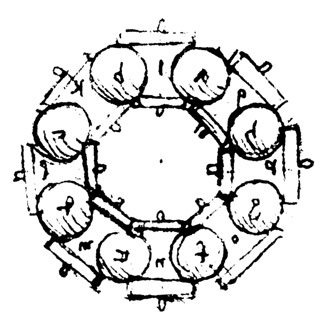
Around 1498 to 1500, Leonardo da Vinci sketched a ball bearing in his private notebooks: balls held in a cage between two concentric rings, intended for his aerial screw concept. The design is functionally identical to a modern radial ball bearing. Da Vinci understood that the cage was the critical element. Without it, the balls generate their own friction against each other, defeating the purpose.
But the notebooks were not published during his lifetime and didn’t circulate widely. The design sat untouched while the rest of Europe built machines on wooden plain bearings. In the 17th century, Galileo formally described the caged bearing in writing, articulating why separating rolling elements with a cage reduces friction between them. Still no manufactured bearing. But it was now in the scientific literature.
The innovations emerged, sometimes in advanced forms, but failed to spread due to the absence of the institutional and industrial frameworks necessary for mass production and widespread adoption.
John Harrison was a Yorkshire carpenter-turned-clockmaker whose mission was to build a timepiece accurate enough to determine longitude at sea, a problem that had killed sailors for generations. His H3 marine chronometer required a solution to a specific motion problem, so he built the first practical caged roller bearing, a limited-oscillating component designed for the clockwork. Narrow in application, but real: a working rolling-element bearing built to solve a specific engineering need in 1740.
In 1794, Philip Vaughan of Wales received the first patent for a ball bearing race: balls running along a groove in an axle assembly. The rolling bearing entered the engineering record as intellectual property for the first time. Vaughan’s patent wasn’t just a mechanical idea. It was a commercial claim. Someone had decided the ball bearing was worth protecting because it was worth selling.
The public proof of concept came in 1869, when Parisian bicycle mechanic Jules Suriray patented a radial ball bearing and fitted it to a bicycle. That year, a rider using Suriray’s bearing won the Paris-to-Rouen road race, the world’s first long-distance cycling event. The bicycle industry noticed. The first mass market for ball bearings had arrived.
The early 1900s saw bearing manufacturing become a mature industrial sector. Timken and SKF both trace their founding patents to this period.
The bicycle boom exposed the production problem: ball bearings are only as good as the balls inside them. Hand-formed steel balls were inconsistent, slightly oval or off-center, and inconsistent balls meant uneven load distribution and shortened service life. In 1883, Friedrich Fischer built a machine capable of grinding steel balls to a consistent spherical shape. This solved the mass production problem. Before Fischer, bearing manufacturing was engineering. After it, bearing manufacturing was an industry.
In 1898, Henry Timken, a carriage manufacturer who understood axle loads, patented the tapered roller bearing, designed originally for horse-drawn carriage axles. He founded the Timken Company the following year. The tapered roller bearing became standard in automotive, heavy industrial, and agricultural applications, and Timken is still one of the most widely stocked brands in industrial distribution.
In 1907, Sven Wingquist of Sweden patented the self-aligning ball bearing, a design where the spherical outer raceway allows the bearing to compensate for shaft misalignment. He founded SKF around this patent. The self-aligning ball bearing Wingquist designed is still in production today.
The complete arc from first principles to the modern bearing.
| Year | Ball Bearing Evolution Throughout History |
| ~3000 BC | Wooden logs are thought to have been used as rollers beneath heavy loads. |
| ~3000 BC | The wheel appears in Mesopotamia. Wheeled vehicles use plain (sliding) bearings: wooden axles turning in wooden holes, sometimes lubricated with animal fat. |
| ~40 AD | Caligula’s ships on Lake Nemi are fitted with rotating platforms. One runs on caged bronze ball bearings, the earliest confirmed thrust ball bearing in history. The second uses cylindrical rollers. |
| ~100-300 AD | Lenticular (lens-shaped) bronze balls used in Roman water wheel axles at thermal bath sites. |
| ~1500 AD | Leonardo da Vinci sketches a caged ball bearing in his private notebooks, intended for his aerial screw concept. The notebooks are not published. Da Vinci never built it. |
| 17th century | Galileo formally describes the caged bearing in writing, articulating why the cage matters: separating rolling elements eliminates the secondary friction they would otherwise generate against each other. |
| 1740 | John Harrison builds the first practical caged roller bearing for his H3 marine chronometer. The first working rolling-element bearing was built to solve a specific precision engineering problem. |
| 1794 | Philip Vaughan of Wales receives the first patent for a ball bearing race. The rolling bearing is recorded in the engineering record as intellectual property. |
| 1869 | Jules Suriray patents the first radial ball bearing and fits it to the winning bicycle in the Paris-to-Rouen road race. The bicycle industry becomes the first mass market for ball bearings. |
| 1883 | Friedrich Fischer builds a machine capable of grinding steel balls to a consistent spherical shape. Mass production of reliable rolling elements becomes possible. |
| 1898 | Henry Timken patents the tapered roller bearing, originally for carriage axles. He founded the Timken Company the following year. |
| 1907 | Sven Wingquist patents the self-aligning ball bearing and founds SKF. The design compensates for shaft misalignment and is still in production today. |
Every bearing in the Central Surplus catalog reflects this historical progression. The thrust ball bearing engineered by Caligula’s team in 40 AD, refined over two millennia, now manages axial loads in pumps and gearboxes. The tapered roller bearing patented by Henry Timken for carriages continues to support modern mining conveyors.
The fundamental engineering principles remain unchanged. Advances in manufacturing precision, material science, lubrication technology, and large-scale production have transformed the industry. Bearings from Central Surplus feature tighter tolerances, superior steel, and more consistent geometry than ever before, yet are based on the same mechanical insight first applied by Roman engineers.
Central Surplus stocks ball bearings, roller bearings, thrust bearings, pillow block units, and more from Timken, SKF, FAG, NTN, Dodge, and other leading manufacturers. Search by part number or contact our team for cross-reference and sourcing support.
Browse our full bearing inventory, use our bearing cross-reference tool to match part numbers across brands, or contact us with a part number and we’ll get you sorted.
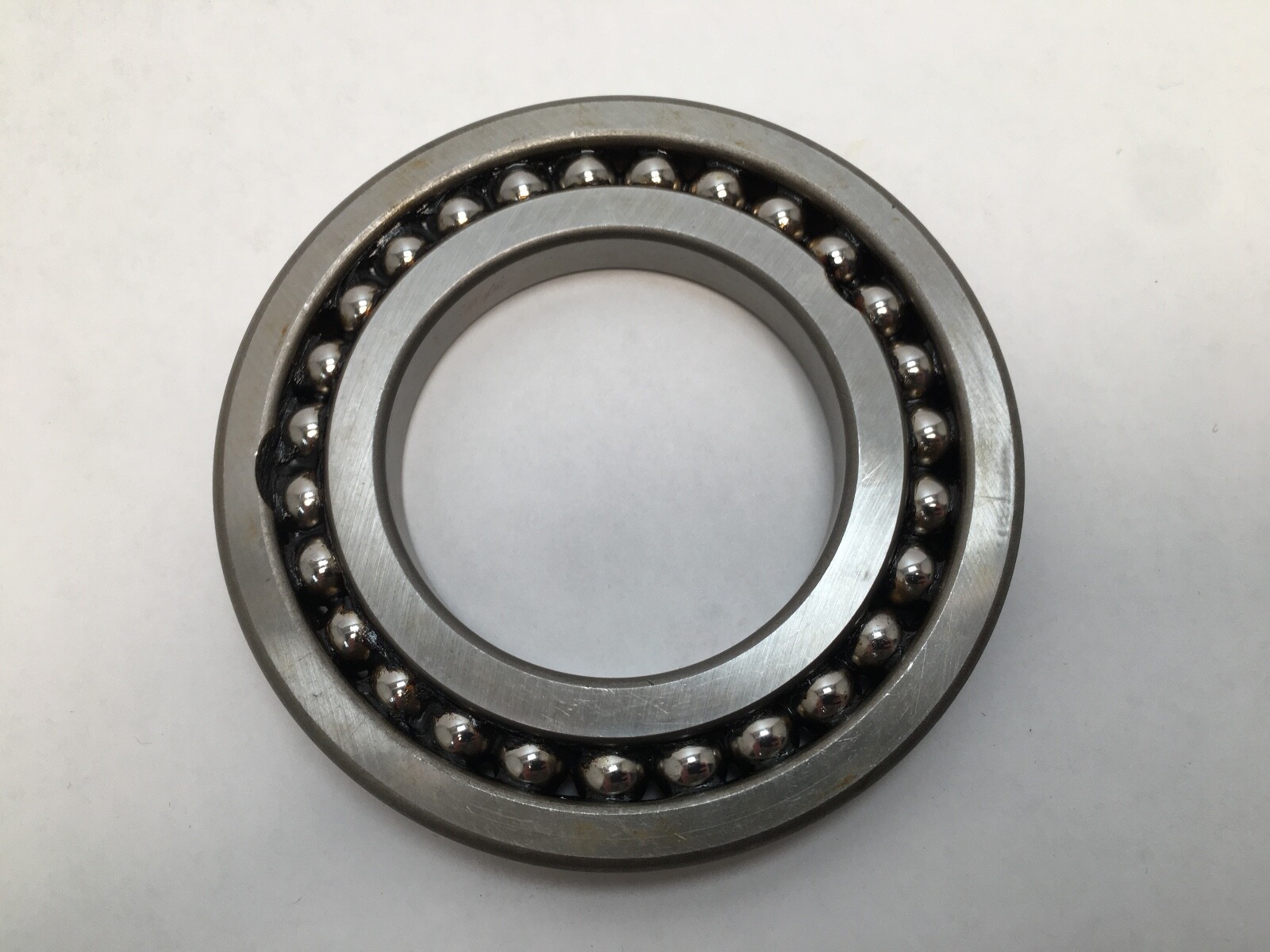

Our team can locate, cross-reference, and source all parts.
Our team can locate, cross-reference, and source all parts.