New Inventory Daily | Same Day Free Shipping
12,984 ratings on eBay See our eBay feedback →

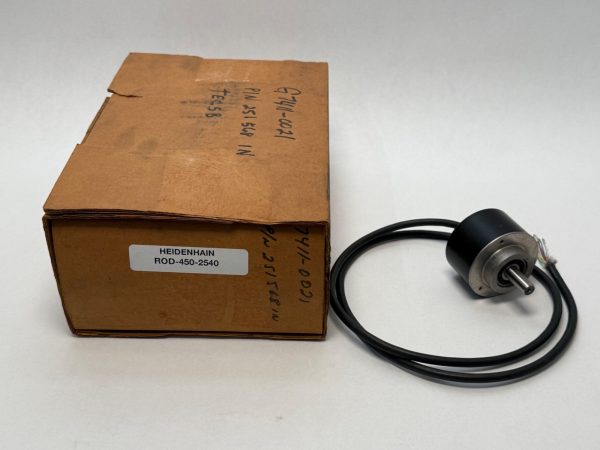
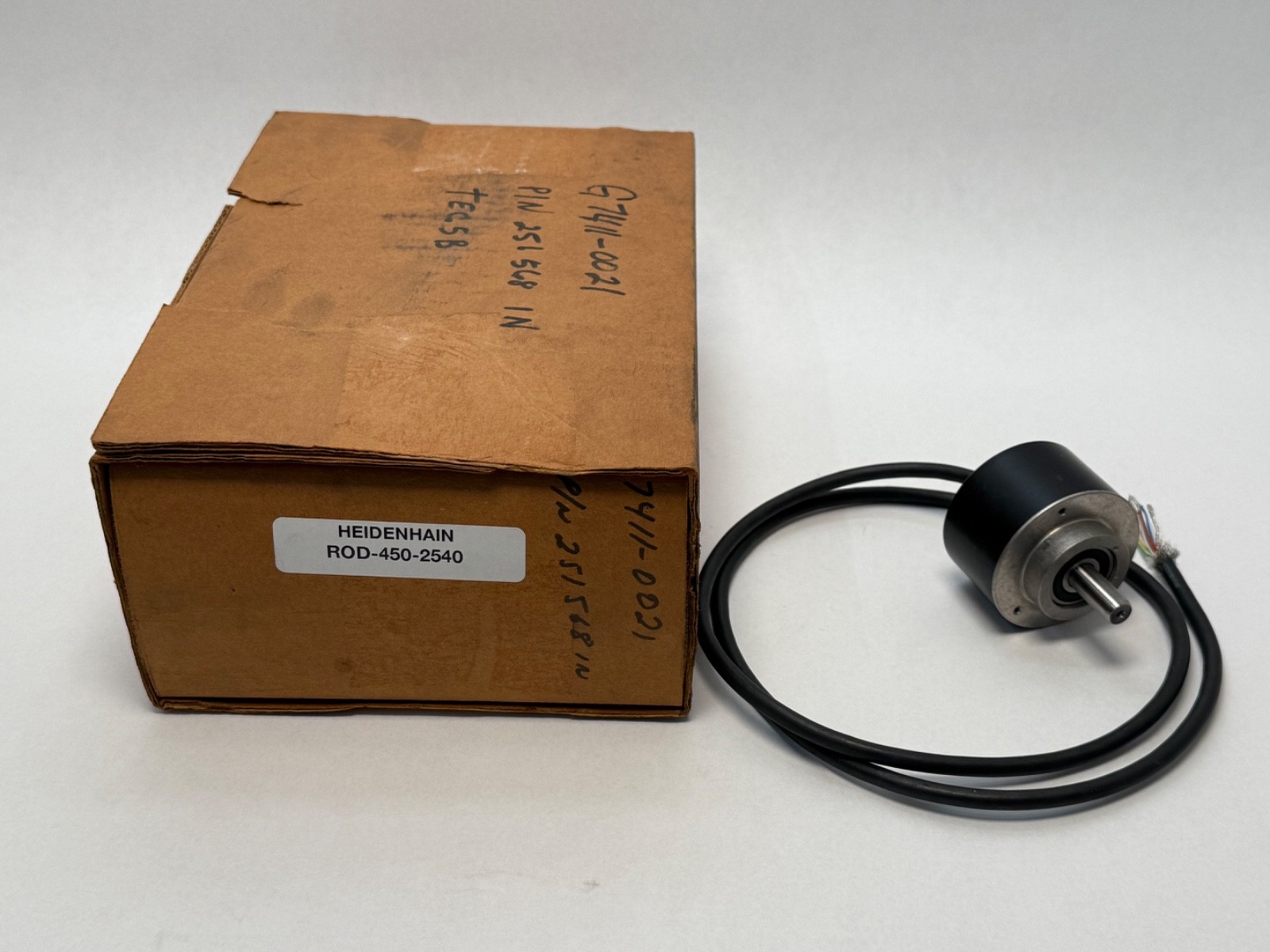
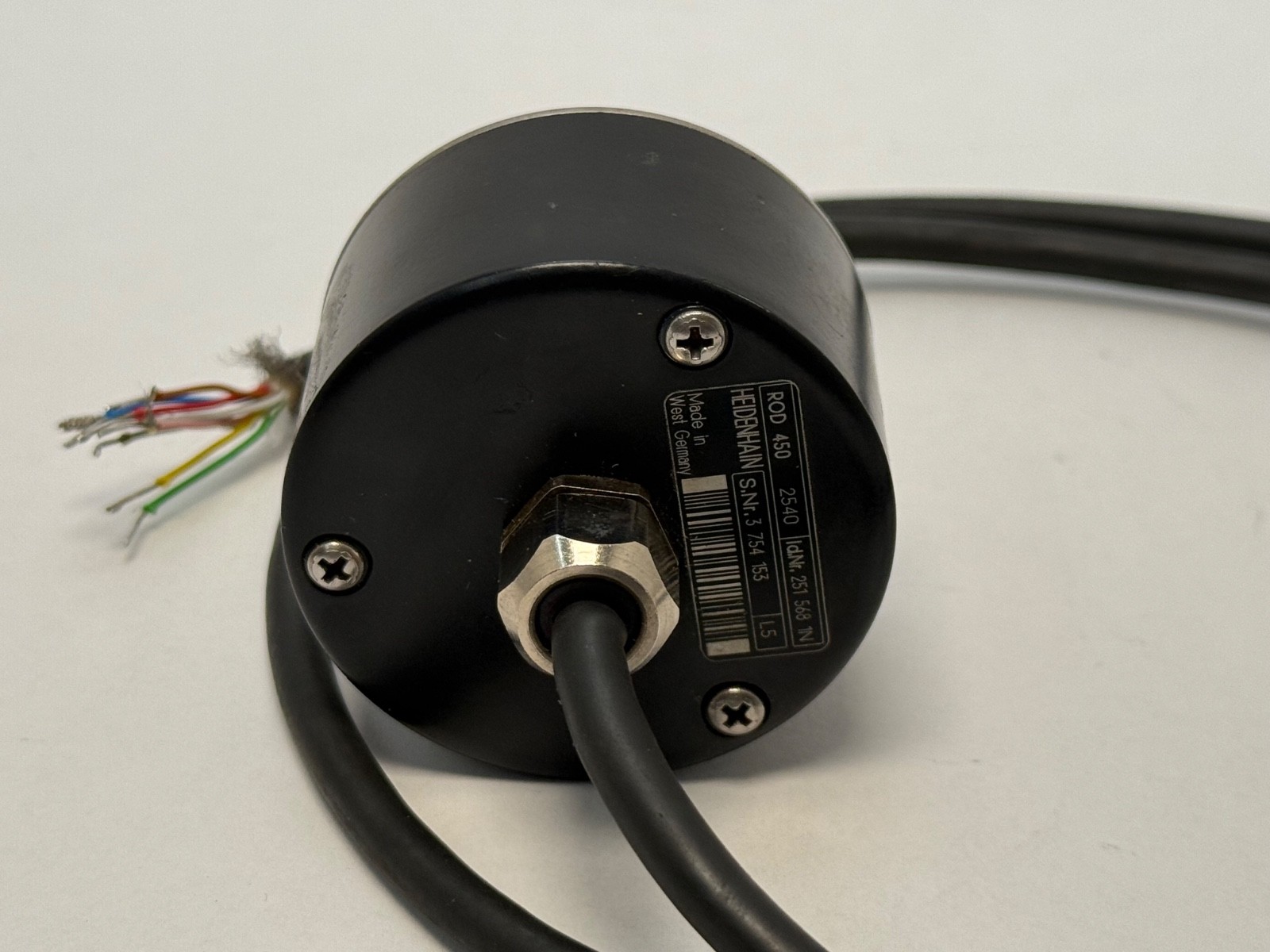
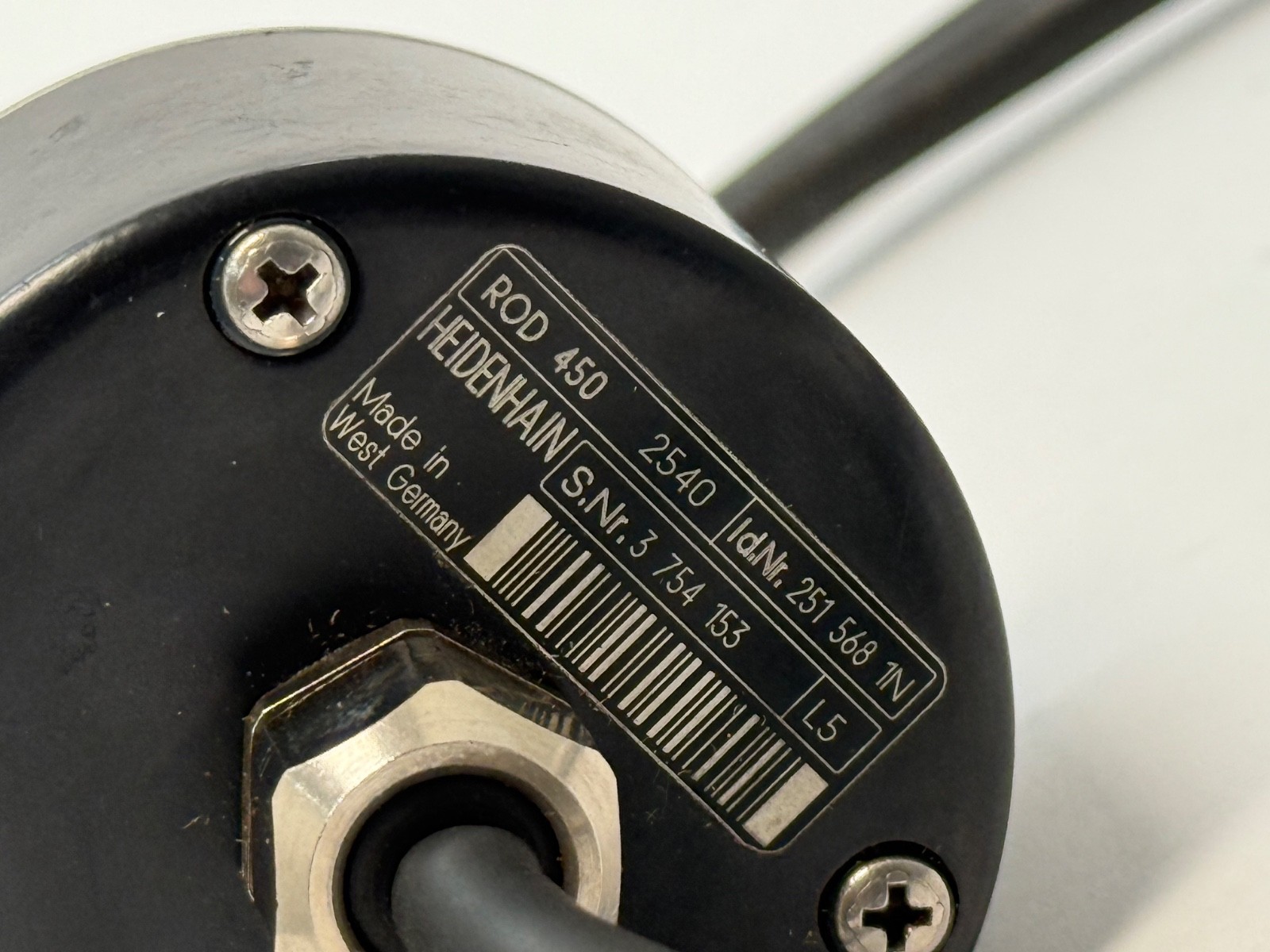
HeidenhainROD-450-2540Incremental Rotary Encoder, 2540 Lines/Rev, 11 µApp Sinusoidal Output, 10 mm Solid Shaft, IP67, 12,000 rpm, 5 V Supply

Condition: New – Open box
Condition Note: Made In Germany, New Old Stock

Availability:

1 in stock

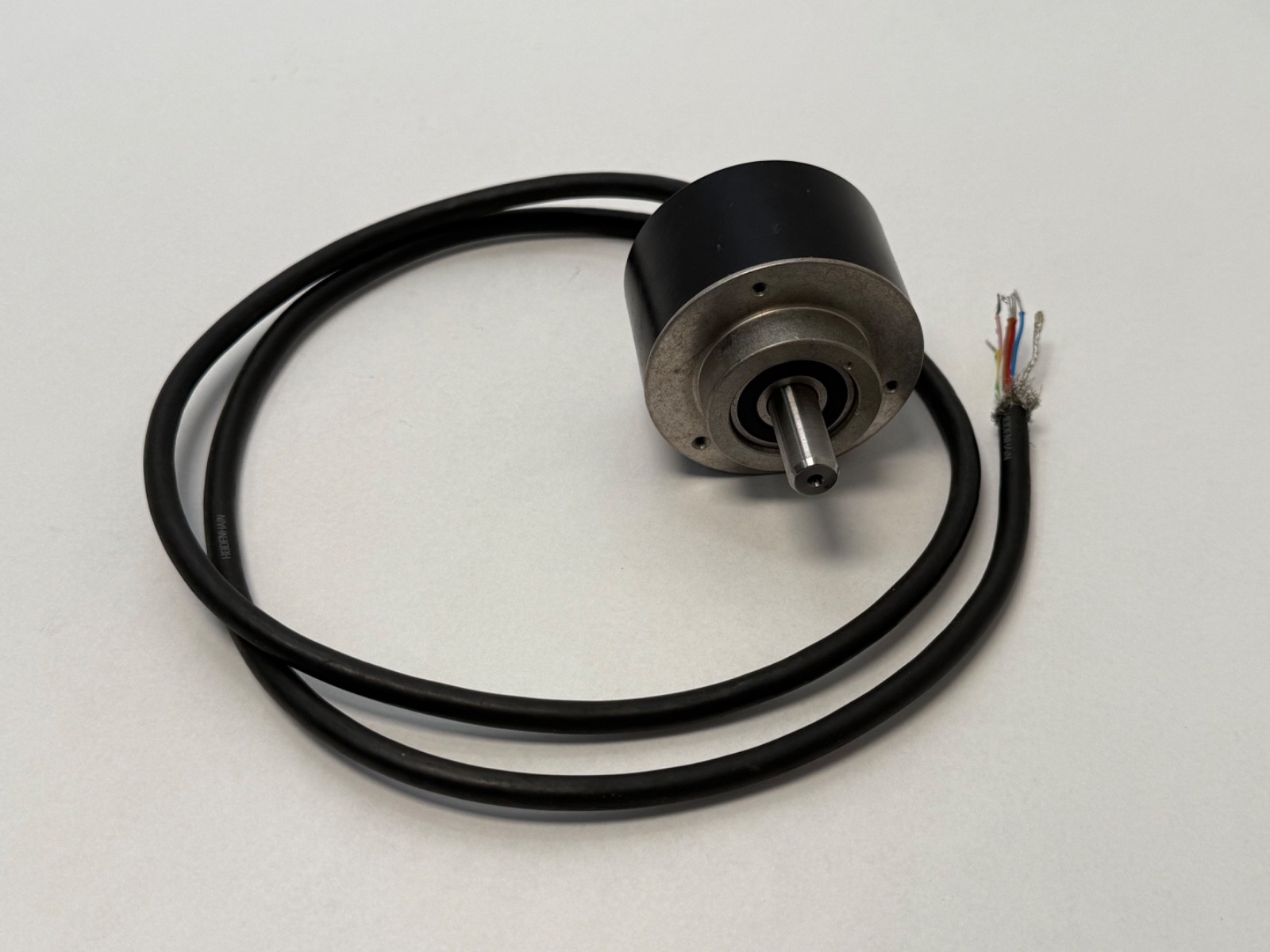
Incremental rotary encoder with integral bearing, 2540 lines per revolution, 10 mm solid shaft and a single reference mark, sealed to IP67 and rated to 12,000 rpm mechanical. It outputs 11 µA peak-to-peak sinusoidal current on a 5 V supply, not TTL square wave — so it needs a control with a sinusoidal current input or an external pulse-shaping interface, which is the specification that decides fit. The shaft is coupled to the driven shaft through a separate rotor coupling. For machine builders and CNC retrofitters maintaining older sinusoidal-input position and velocity feedback loops.

List Price

$140.42

1 in stock

Availability

1 in stock

On the Shelf & Ready to Ship

Free Shipping

On all orders

Free Returns

No Risk, No Hassle

Also Available From:

Specifications

Key Specifications

MFR / BrandHeidenhain
MPNROD-450-2540
Model251-568-1N

Technical Specifications

ConditionNew – Open box
TypeRotary Encoder
Base Number251568
Common MisspellingsHeidenhein, Heidenhain, Hiedenhain, Heidenhan, ROD450 2540, ROD 450 2450, 251568 1N, 251-568 IN, 251 568-IN, Heidenhain ROD brand
Condition NoteMade In Germany, New Old Stock
Shaft Type10 mm solid shaft, separate rotor coupling required
Mpn VariantsROD 450, ROD-450, ROD450, ROD 450-2540, ROD-450-2540, ROD4502540, 251568-1N, 251 568-1N, 251-568-1N, ID 251568
Manufacturer StatusDiscontinued. Successor information is contradictory in available sources: one vendor page links the ROD 420 as successor while its body text states the ROD 450 was replaced by the ROD 480 with an in-line signal adapter; the ROD 420 is itself also discontinued. The ROD 1000 series is the current-generation family. No HEIDENHAIN migration notice found.
Compatible With ReplacesControls, counters and position displays with an 11 µA peak-to-peak sinusoidal current input. NOT directly compatible with TTL A/B quadrature inputs — requires a HEIDENHAIN EXE interface unit for TTL. Requires a separate rotor coupling for a 10 mm shaft. Flange type not published for the ROD 450 — confirm from photos against the machine.
Additional AttributesLine count 2540 lines/rev, within the ROD 450 family range of 50-5000 lines/rev; no 2540-specific datasheet is published. Output 11 µA peak-to-peak sinusoidal current — TTL is NOT native to the ROD 450 and requires an external HEIDENHAIN EXE interface. Signal type/connection/cable length encoded by the -1N variant suffix is NOT published. Supply 5 V ±0.5 V. Cutoff frequency (-3 dB) 160 kHz — at 2540 lines/rev this caps usable speed near 3,800 rpm electrically, below the 12,000 rpm mechanical limit. Single reference mark. 10 mm solid shaft, separate rotor coupling required (inclusion not established — check photos). Available in cable or flange-socket versions, radial or axial — confirm from photos. Flange type NOT published for the ROD 450. Accuracy: ROD 400 family positioning accuracy quoted around ±13 arcsec; system accuracy 1/20 of the grating period. A "±0.5 µm" figure on some vendor pages is a copy error and is not applicable to a rotary encoder. HEIDENHAIN ID system: 6-digit base ID = model/variant family, 2-character suffix = line count, signal type, connection and cable length.
Min Temp-40 °C
Max Temp100 °C
Nominal Rated Input Voltage5 V DC ±0.5 V
Part Number251 568-1N
Mounting TypeFlange mount with integral bearing (flange type not published — confirm from photos)
Communication Standard11 µA peak-to-peak sinusoidal current (analogue incremental); TTL requires external HEIDENHAIN EXE interface

Cross-References

Cross Reference 1251 568-78 — ROD 450-1000 (same base ID, 1000 lines/rev)
Cross Reference 2251 568-4F — ROD 450-1800 (same base ID, 1800 lines/rev)
Cross Reference 3ROD 456 — sibling family member; synchro flange Ø58 mm, Ø42 mm bolt circle (NOT confirmed identical to ROD 450)
Cross Reference 4ROD 420 — cited by one vendor source as successor; itself discontinued (successor data contradictory)
Cross Reference 6ROD 1000 series — current-generation HEIDENHAIN bearing-mounted incremental rotary encoder family
Cross Reference 7HEIDENHAIN EXE interface / pulse-shaping electronics — required to convert the 11 µApp sinusoidal output to TTL square wave
Seller Part Number: BM2#GAWWWS

Product Description

What this part is

This is a HEIDENHAIN ROD 450 incremental rotary encoder in the 2540-line build, HEIDENHAIN ID number 251 568-1N. It is a bearing-mounted incremental encoder: the shaft runs in its own bearings inside the housing and is joined to the driving shaft through a separate rotor coupling rather than being rigidly bolted to it. That coupling exists to absorb axial movement and radial and angular misalignment between the two shafts, which is what keeps the graduated disc running true and stops shaft-to-shaft error from being read as position error.

Why the 11 µA sinusoidal output is the fact that decides fit:
Read this before anything else on the page. The ROD 450 family outputs 11 µA peak-to-peak sinusoidal current signals. TTL square-wave output is not offered natively on the ROD 450. If your control, counter or drive expects TTL A/B quadrature, this encoder will not drive it directly — you need a HEIDENHAIN EXE interface unit to shape the sinusoidal current into square-wave pulses, or you need a control with a genuine 11 µA sinusoidal input. Plenty of older HEIDENHAIN-era CNCs, position displays and counters have exactly that input, which is precisely the population of machines this encoder belongs to. The upside of a sinusoidal encoder is interpolation: an analogue sinusoid can be electronically subdivided far beyond the physical line count, which is how a 2540-line disc yields resolution well finer than 2540 counts per revolution. The downside is that you cannot wire it to a modern digital input card and expect counts.

One honest limit on that: which signal type the specific -1N variant carries is not published. The family output is 11 µA sinusoidal, and the variant suffix is where signal type, connection and cable length are encoded. Verify against your control before committing.

Decoding the two numbers on this encoder

Listings for this part show both “ROD 450-2540” and “251 568-1N”, which looks like two competing part numbers. It is not. HEIDENHAIN uses a 6-digit base ID that identifies the model and variant family, followed by a 2-character variant suffix that encodes line count, signal type, connection type and cable length. Here 251 568 is the ROD 450 base ID, and -1N is the variant code for this specific build. Two confirmed sibling variants on the same base ID make the pattern obvious:

251 568-78 = ROD 450-1000251 568-4F = ROD 450-1800251 568-1N = this unit, corresponding to the 2540-line build
So “-2540” is the designation-side line count and is not part of the ID number at all. The mapping of -1N specifically is not published in any HEIDENHAIN variant table we can cite, but the base ID and the sibling pattern establish it clearly enough to order against. If you are sourcing a match for an existing machine, quote the full ID including the suffix — the base ID alone does not specify the encoder you will receive.

Correcting the source data

Two errors in circulation on this part, corrected here.

The brand on this record previously read “HEIDENHAIN ROD”. ROD is the product family designation for HEIDENHAIN’s bearing-mounted incremental rotary encoders, not part of the company name. The manufacturer is HEIDENHAIN; the family is ROD.Some vendor pages quote a “±0.5 µm” accuracy for this encoder. That is a transcription error from a linear-encoder specification — micrometres are not a unit of rotary accuracy. The correct order of magnitude for the ROD 400 family is positioning accuracy quoted around ±13 arcseconds, with system accuracy of 1/20 of the grating period. We are not repeating the micrometre figure.

Published ratings

Type: incremental rotary encoder with integral bearing, separate rotor couplingLine count: 2540 lines per revolution (ROD 450 family range 50 to 5000 lines/rev)Output signal: 11 µA peak-to-peak sinusoidal currentSupply voltage: 5 V ±0.5 VCutoff frequency (−3 dB): 160 kHzShaft: 10 mm diameter solid shaftReference mark: oneProtection class: IP67Maximum mechanical speed: 12,000 rpmOperating temperature: −40 °C to +100 °C
A note on the 2540 figure: 2540 lines per revolution sits comfortably inside the ROD 450 family’s published 50 to 5000 lines/rev range, so it is a valid family build, but no datasheet specific to the 2540-line variant is published. It is stated here as the line count carried by the designation, consistent with the family range, and not as a figure lifted from a variant-specific document.

What the cutoff frequency and speed rating mean in practice:
These two numbers together set your usable shaft speed, and they do not agree. The 12,000 rpm figure is a mechanical limit — what the bearings and disc will survive. The 160 kHz −3 dB cutoff is the electrical limit on signal amplitude. At 2540 lines per revolution, 160 kHz corresponds to roughly 3,800 rpm before signal amplitude has fallen by 3 dB, so on a high line count like this one the electronics, not the bearings, are what cap your speed. That is worth working out for your application rather than assuming the 12,000 rpm headline applies: a 2540-line encoder is a resolution choice, and resolution and top speed trade against each other on any incremental encoder.

Mounting, flange and coupling — confirm from the photographs:
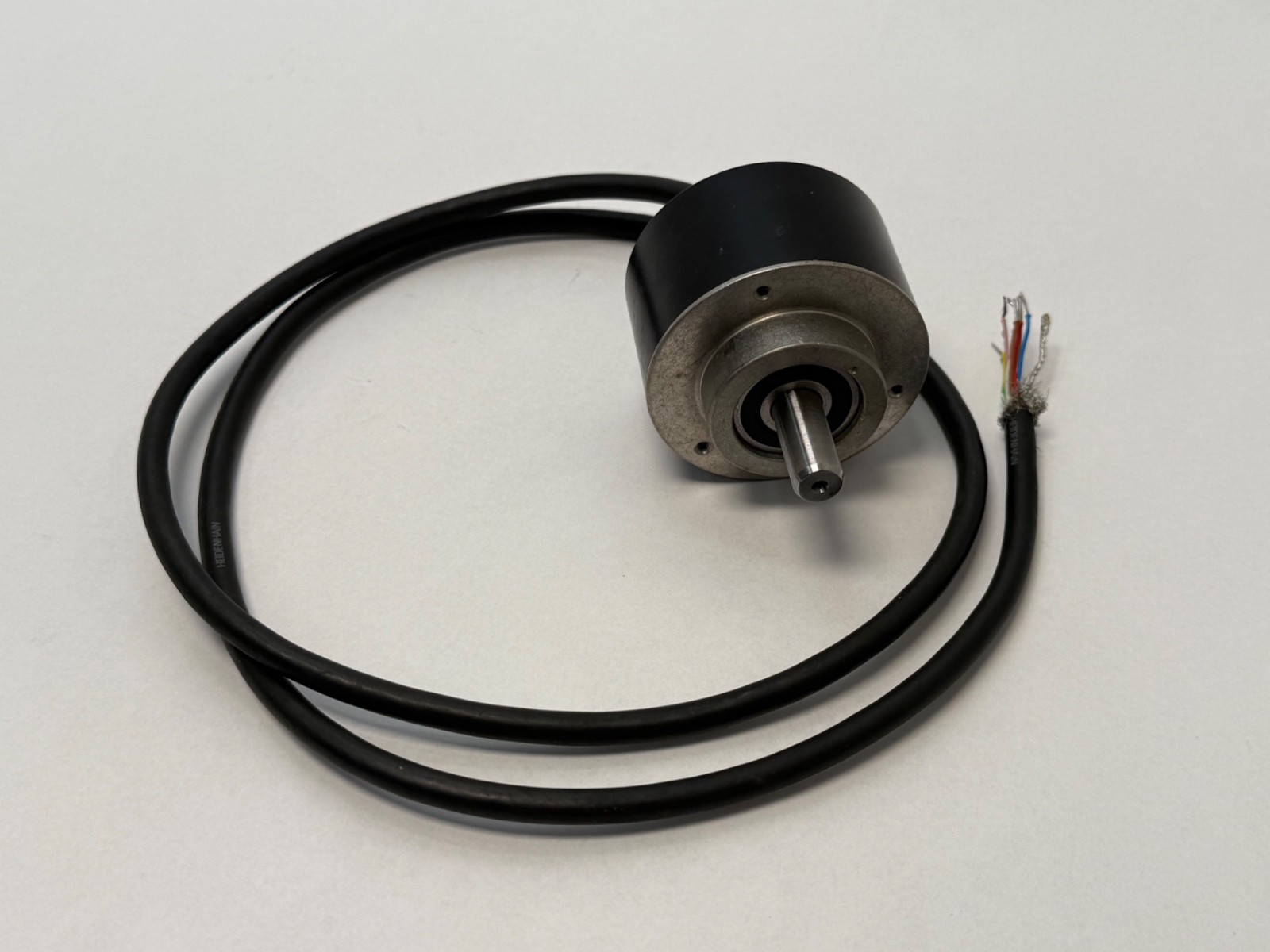
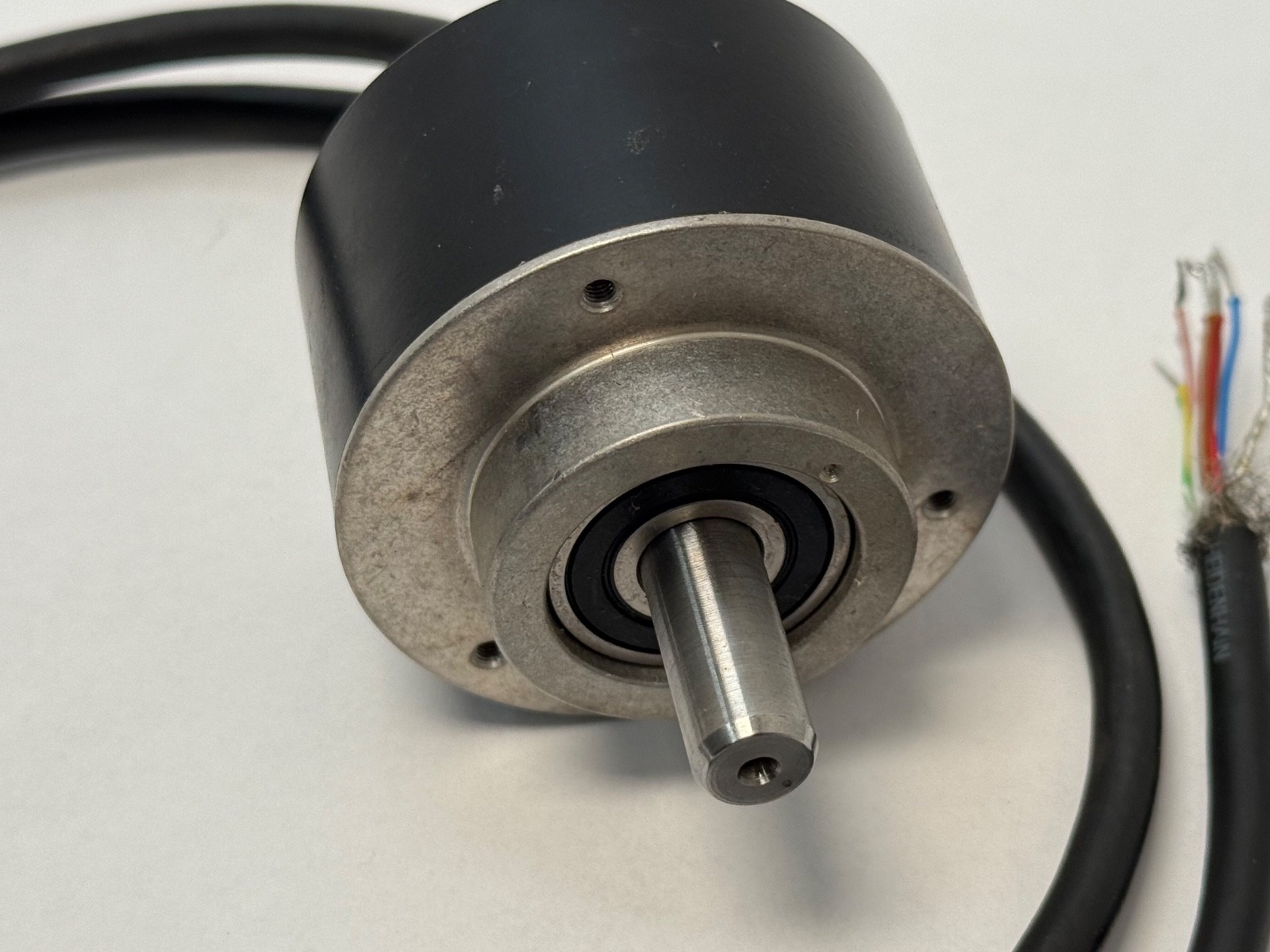
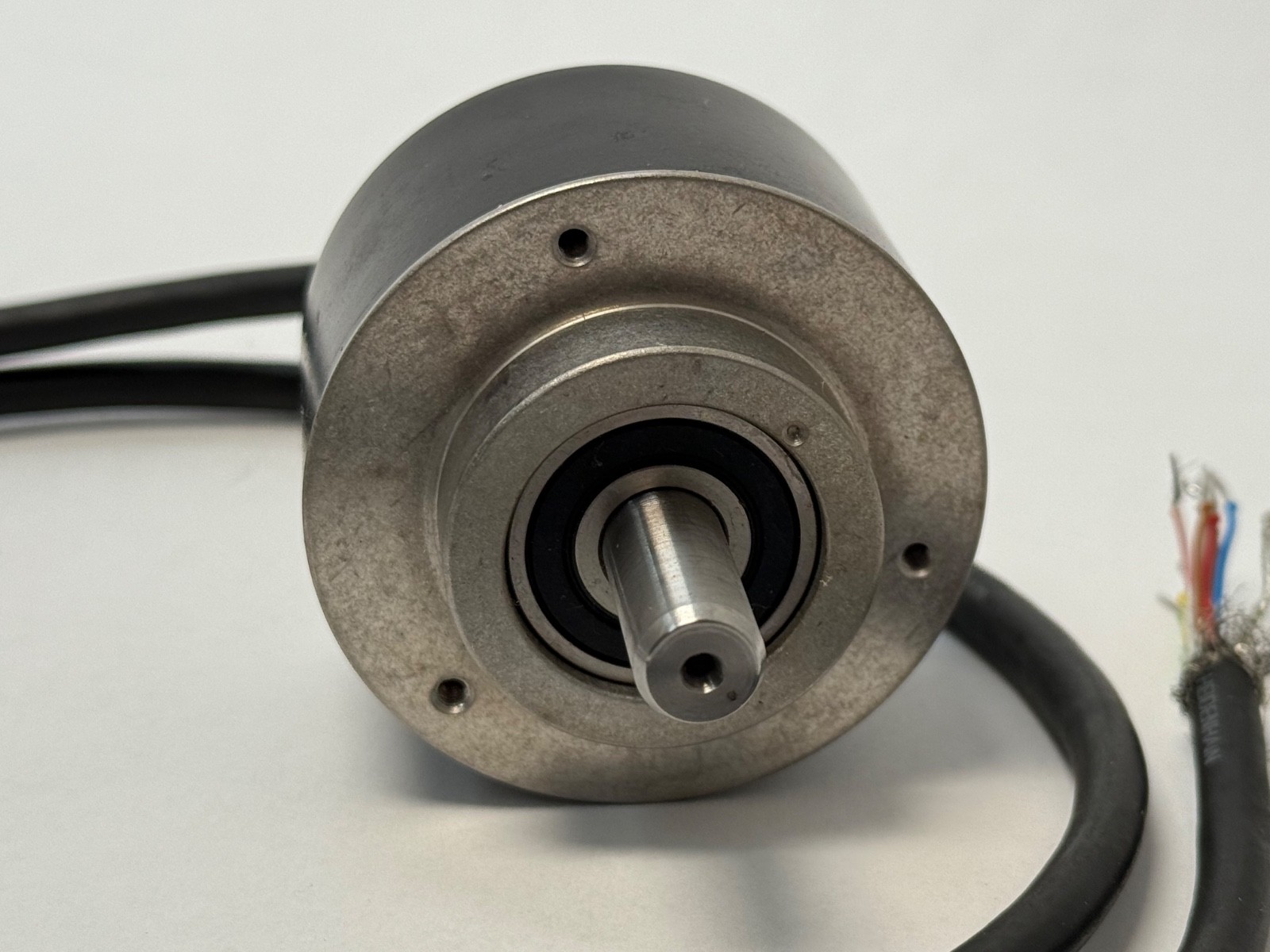
The flange type is not published for the ROD 450 specifically. The sibling ROD 456 uses a synchro flange of Ø58 mm with a Ø42 mm bolt circle, and it would be easy to assume the ROD 450 matches — we are not going to make that assumption for you, because a mounting mismatch is an expensive way to find out. Confirm the flange, bolt circle and pilot diameter from the listing photographs against your machine before ordering, and ask if you need a dimension measured.

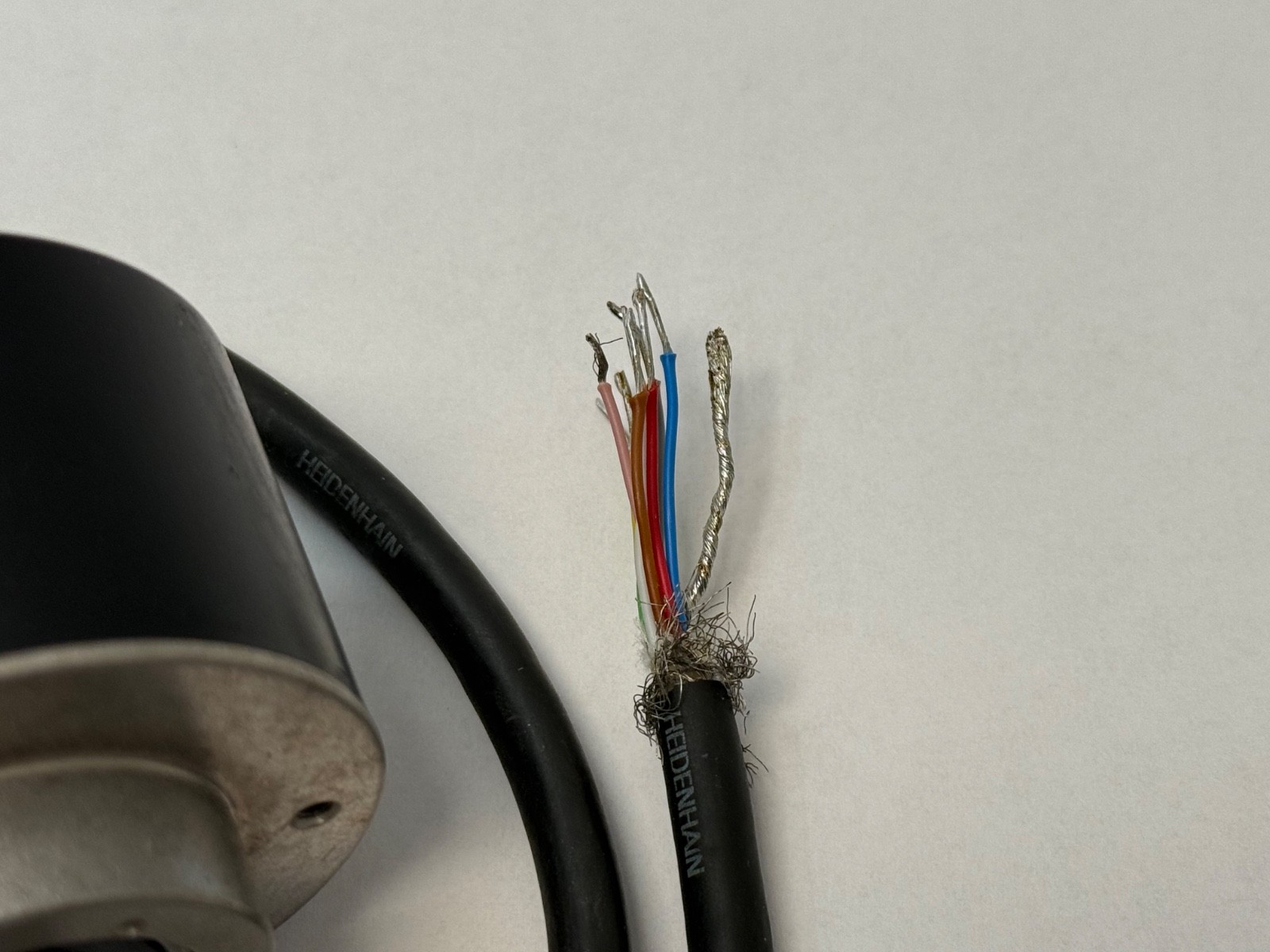
The same applies to two other configuration items. The ROD 450 was supplied in both cable and flange-socket versions, in radial and axial orientations — the photographs show which this unit is. And because the encoder couples to the driven shaft through a separate rotor coupling, that coupling is a distinct item; whether one is present with this unit is not something the record establishes, so check the photographs and ask before you assume one is included.

Lifecycle, and an honest note on the successor

The ROD 450 is discontinued. The successor path is genuinely unclear in the available sources, and rather than pick the version we like, here is the contradiction as it stands: one vendor page lists the ROD 420 as the successor while its own body text states the ROD 450 was “replaced by the ROD 480 with an in-line signal adapter”. The ROD 420 is itself also discontinued. The current-generation HEIDENHAIN family for this class of encoder is the ROD 1000 series. No HEIDENHAIN migration notice covering the ROD 450 was found. The practical reading: if you are maintaining an existing machine with a sinusoidal-input control, an original ROD 450 avoids the interface question entirely, which is the usual reason people are looking for one rather than specifying new.

Interchange guidance

This item is catalogued and searched under a wide spread of formats. All of the following refer to the same encoder: ROD 450, ROD-450, ROD450, ROD 450-2540, ROD-450-2540, ROD4502540, 251568-1N, 251 568-1N, 251-568-1N, and ID 251568. When cross-referencing against a machine parts list, match on the full ID with suffix where you can, and on line count plus signal type where you cannot.

You May Also Like

ROD 450 Incremental Rotary Encoder, 2540 Lines, 10 mm Solid Shaft, Integral Bearing
ROD-450-2540

$207.79

1 in stock

Add to cart

Need help finding the right part?

Our team can locate, cross-reference, and source all parts.

News

Bearing Price Increases Stacked Deep In 2026

Nine bearing and power transmission manufacturers raised list prices this

MRO Spare Parts: Why Your Storeroom Is Full yet Still Short

Maintenance is now 65% Slower, but it’s not a labor

Additional Resources

Need help finding the right part?

Our team can locate, cross-reference, and source all parts.

Get In Touch

Sort

Brand

Price

MPN

Categories