New Inventory Daily | Same Day Free Shipping
12,984 ratings on eBay See our eBay feedback →

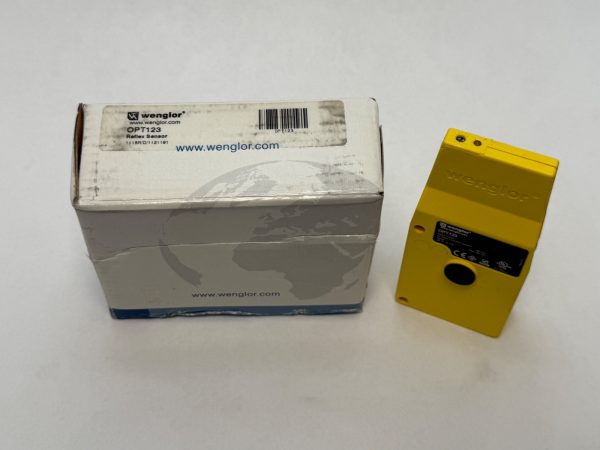
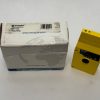
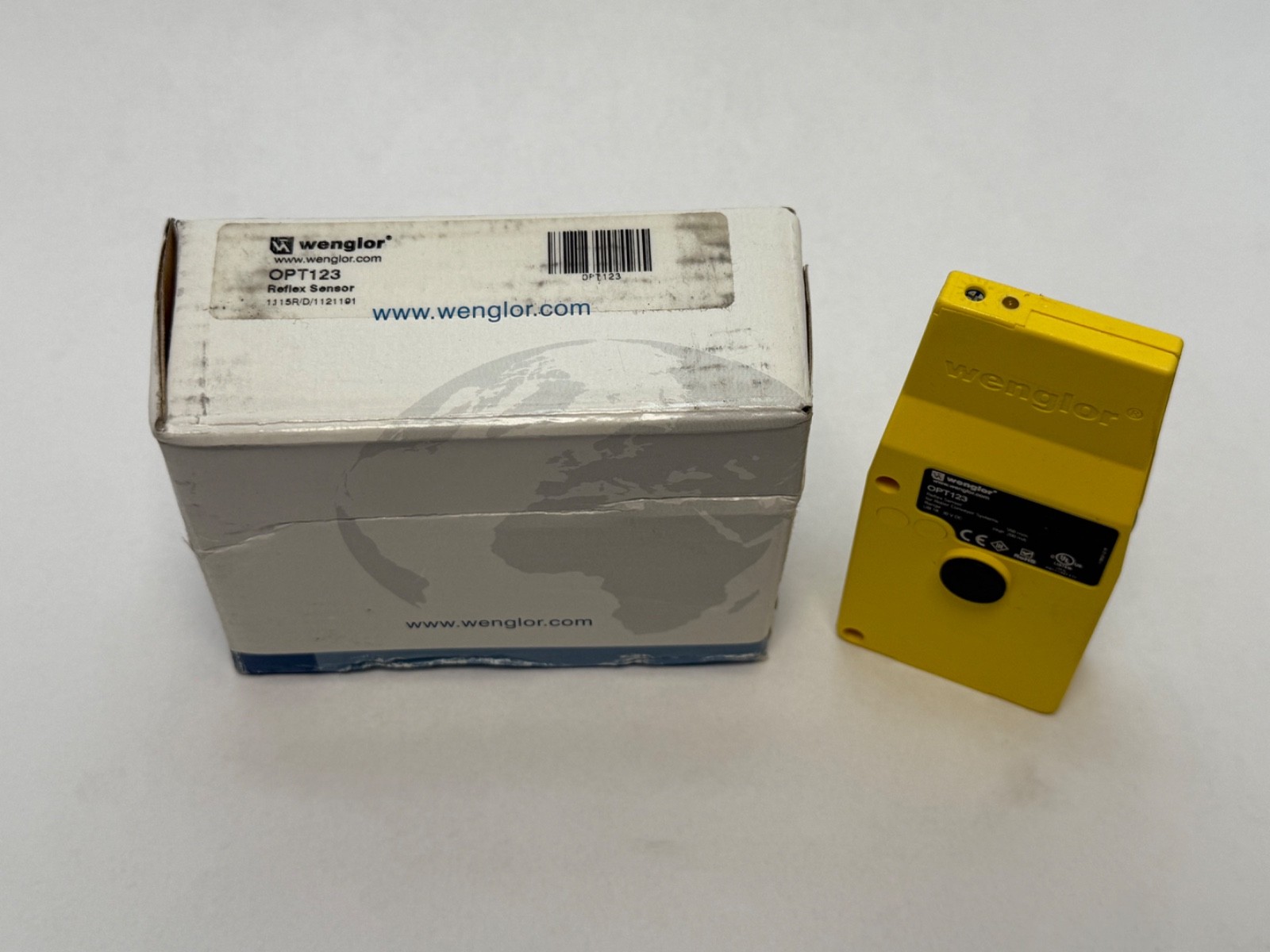
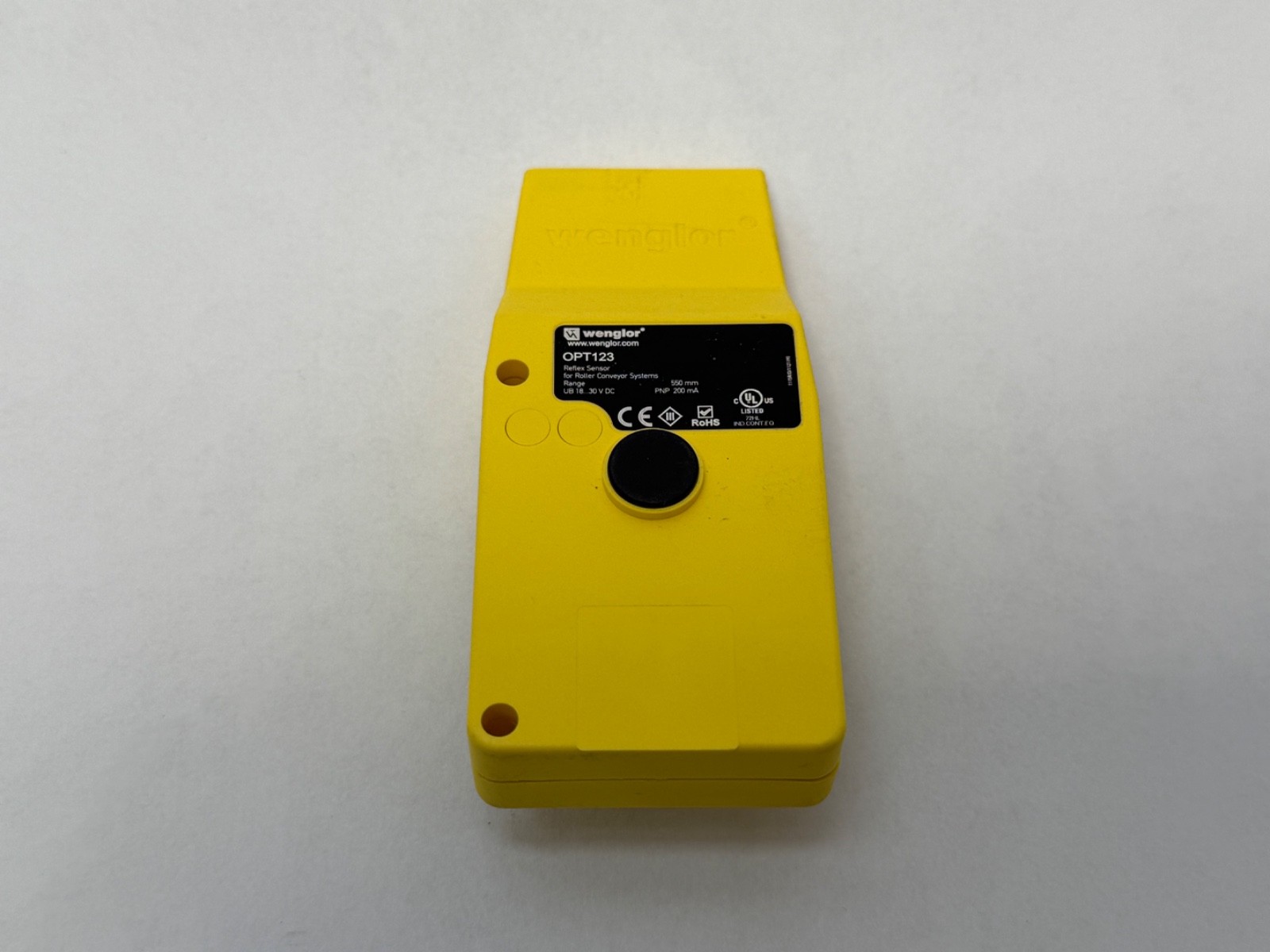
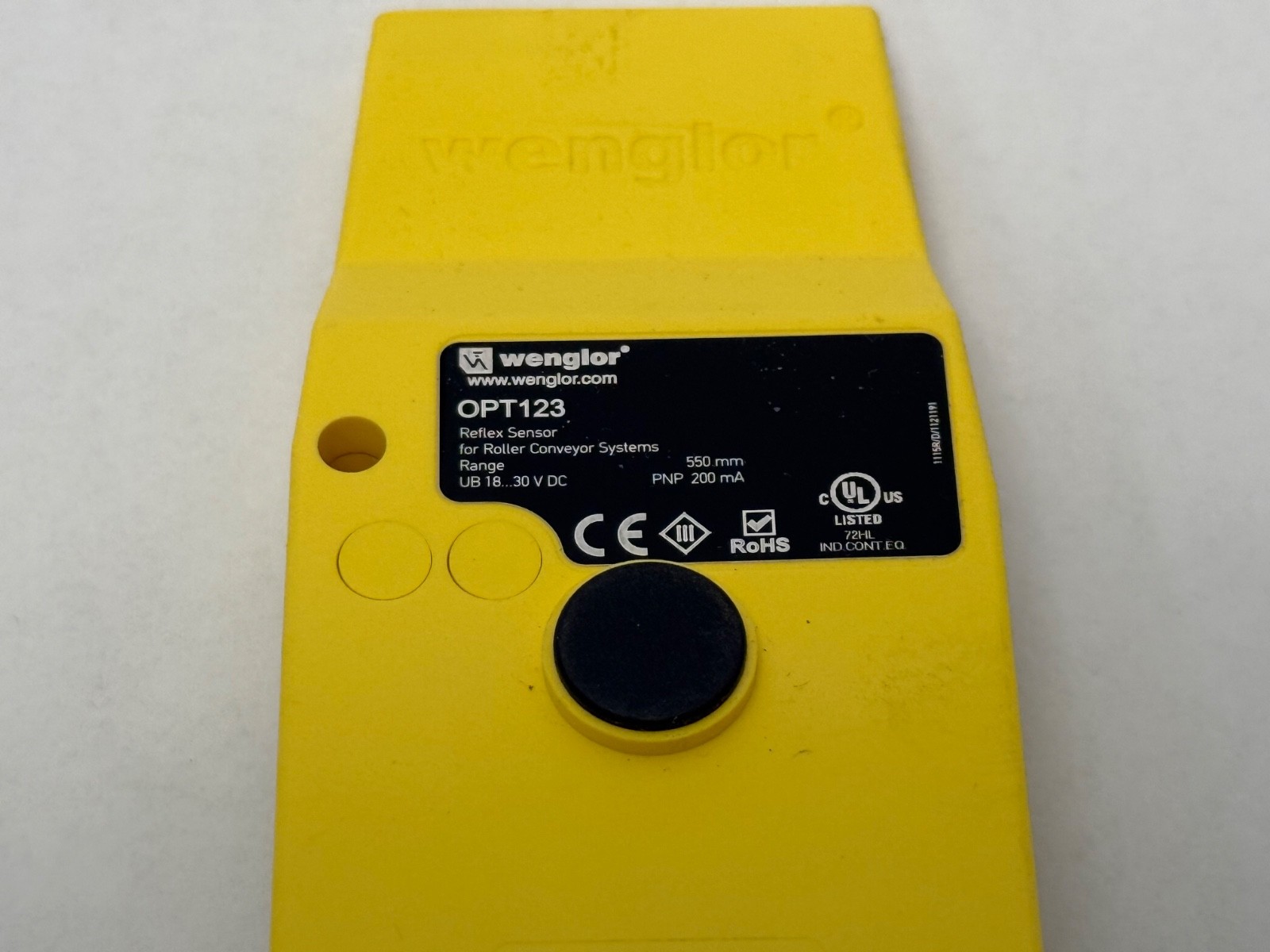
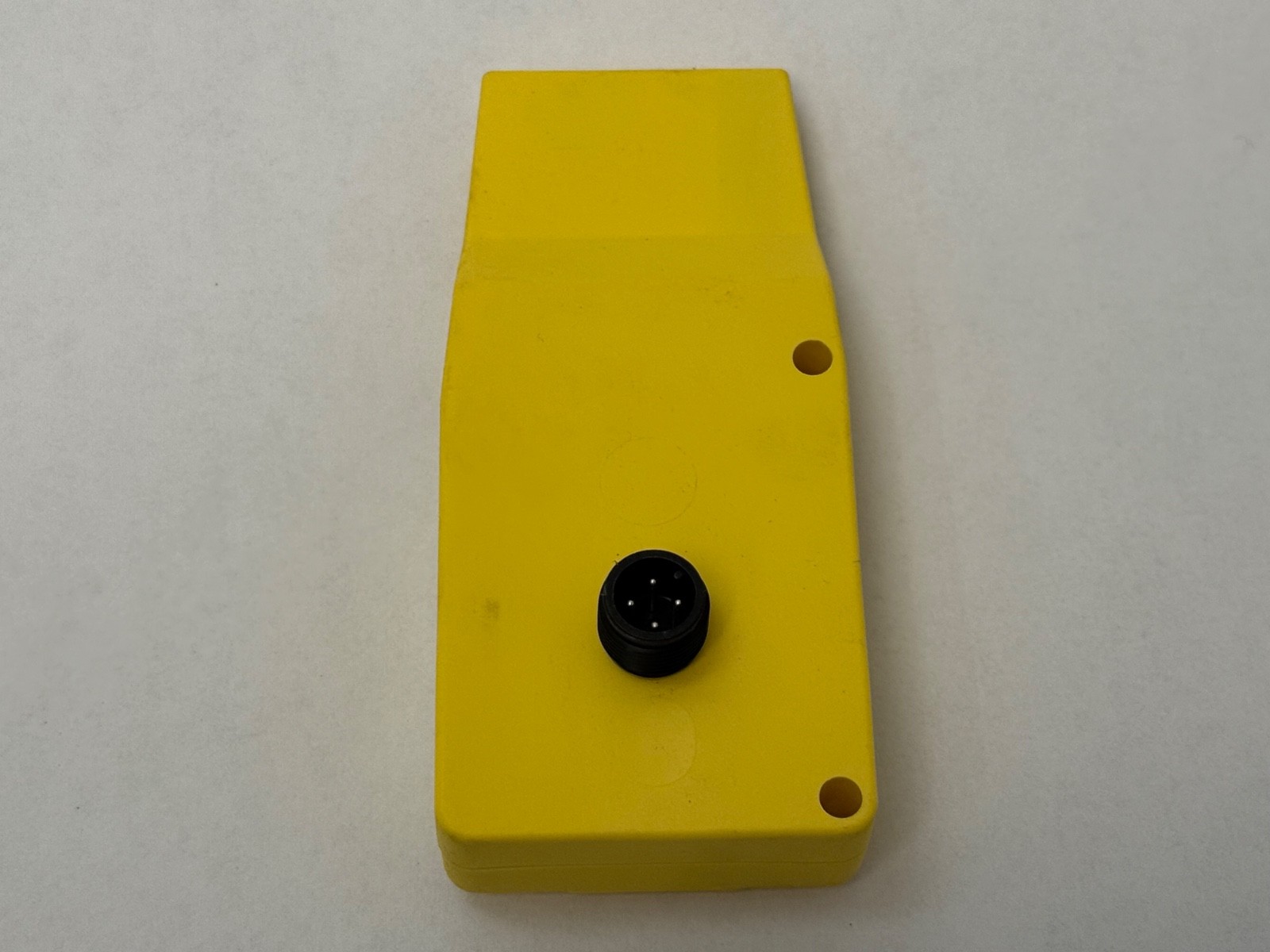
wenglorOPT123Reflex Photoelectric Sensor with Electronic Background Suppression — 550 mm Range, PNP Normally Open, IP65, M12 4-Pin, Roller Conveyor Design

Condition: New

Availability:

2 in stock

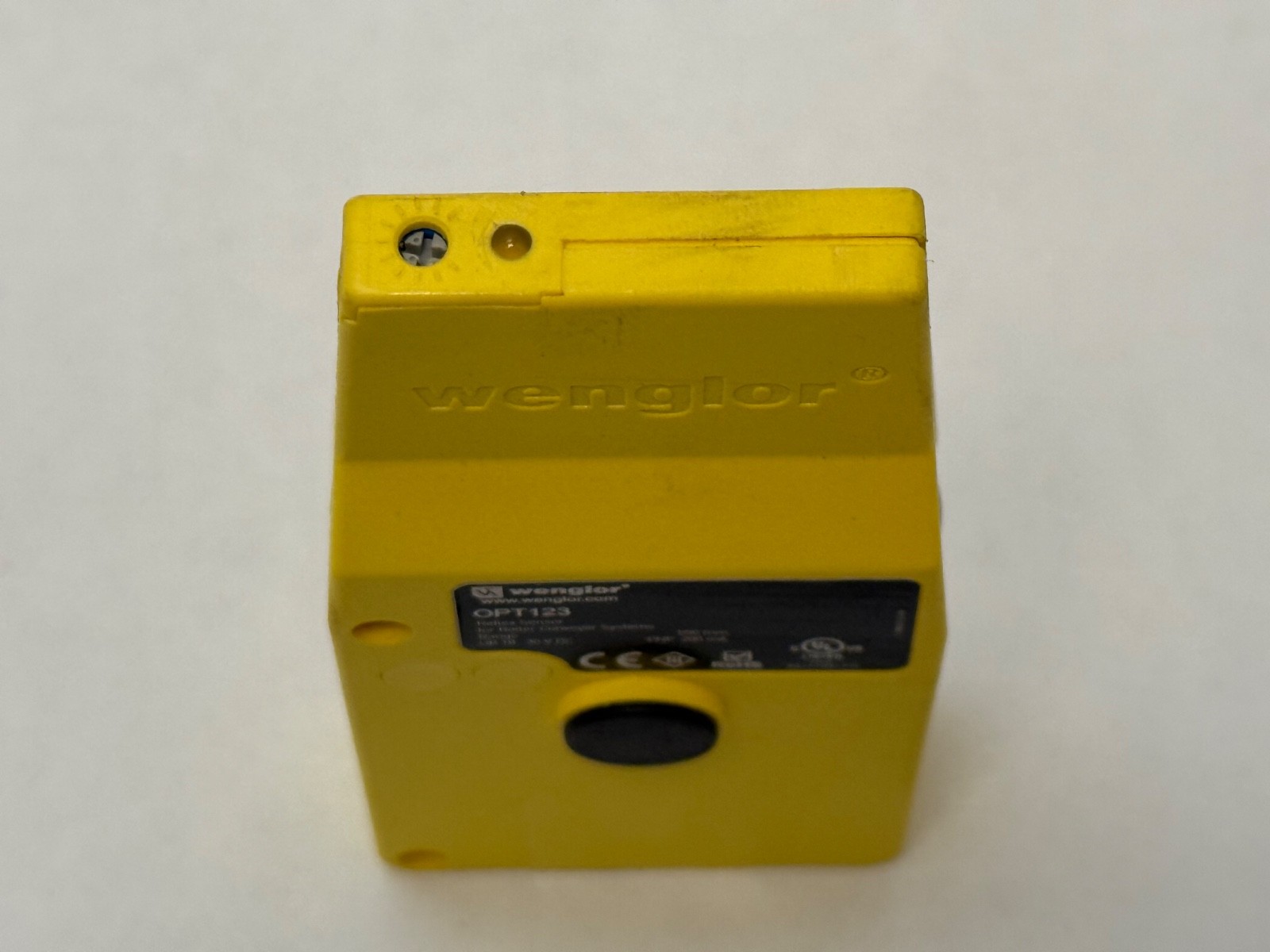
Diffuse reflex photoelectric sensor with electronic BACKGROUND SUPPRESSION — it detects an object at a set distance and ignores anything behind it, so a shiny frame or a wall past the target does not trigger it. 550 mm range, adjustable on a scaled potentiometer, infrared 880 nm, single PNP normally-open output at 200 mA, 18–30 V DC, IP65, fully encapsulated, M12 4-pin connector. Designed specifically to fit between the rollers of an accumulating roller conveyor, below the transport level. No reflector needed. Mating M12 cordset and mounting bracket are NOT included.

List Price

$144.94

2 in stock

Availability

2 in stock

On the Shelf & Ready to Ship

Free Shipping

On all orders

Free Returns

No Risk, No Hassle

Also Available From:

Specifications

Key Specifications

MFR / Brandwenglor
MPNOPT123

Technical Specifications

ConditionNew
Base NumberOPT123
Industry Termsreflex sensor; diffuse sensor; background suppression sensor; BGS photoelectric sensor; proximity photoelectric switch; roller conveyor sensor; accumulation conveyor sensor
Application TypesAccumulating roller conveyors; package and carton detection; presence sensing where a reflective background would false-trigger a plain diffuse sensor; below-transport-level installation
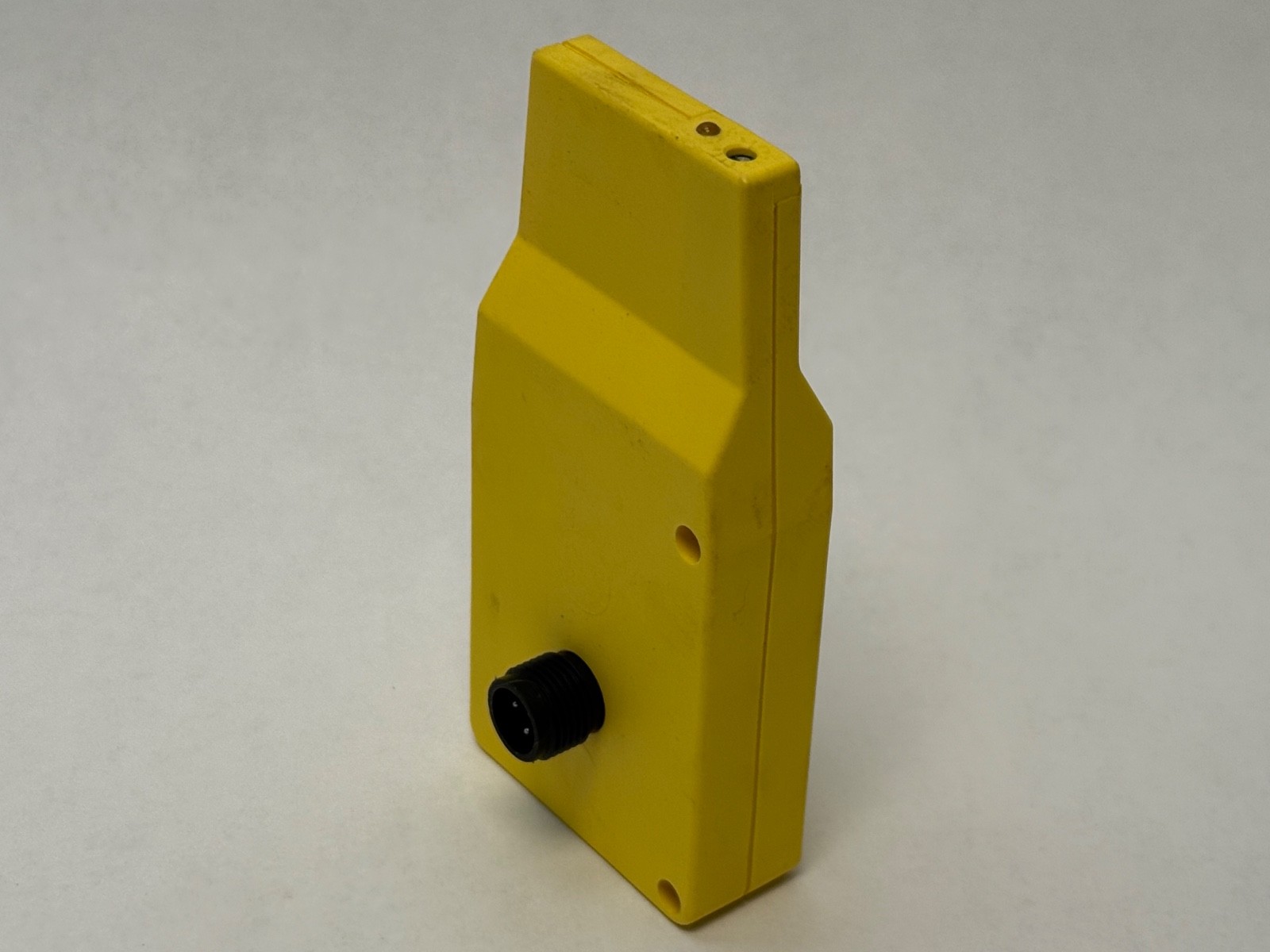
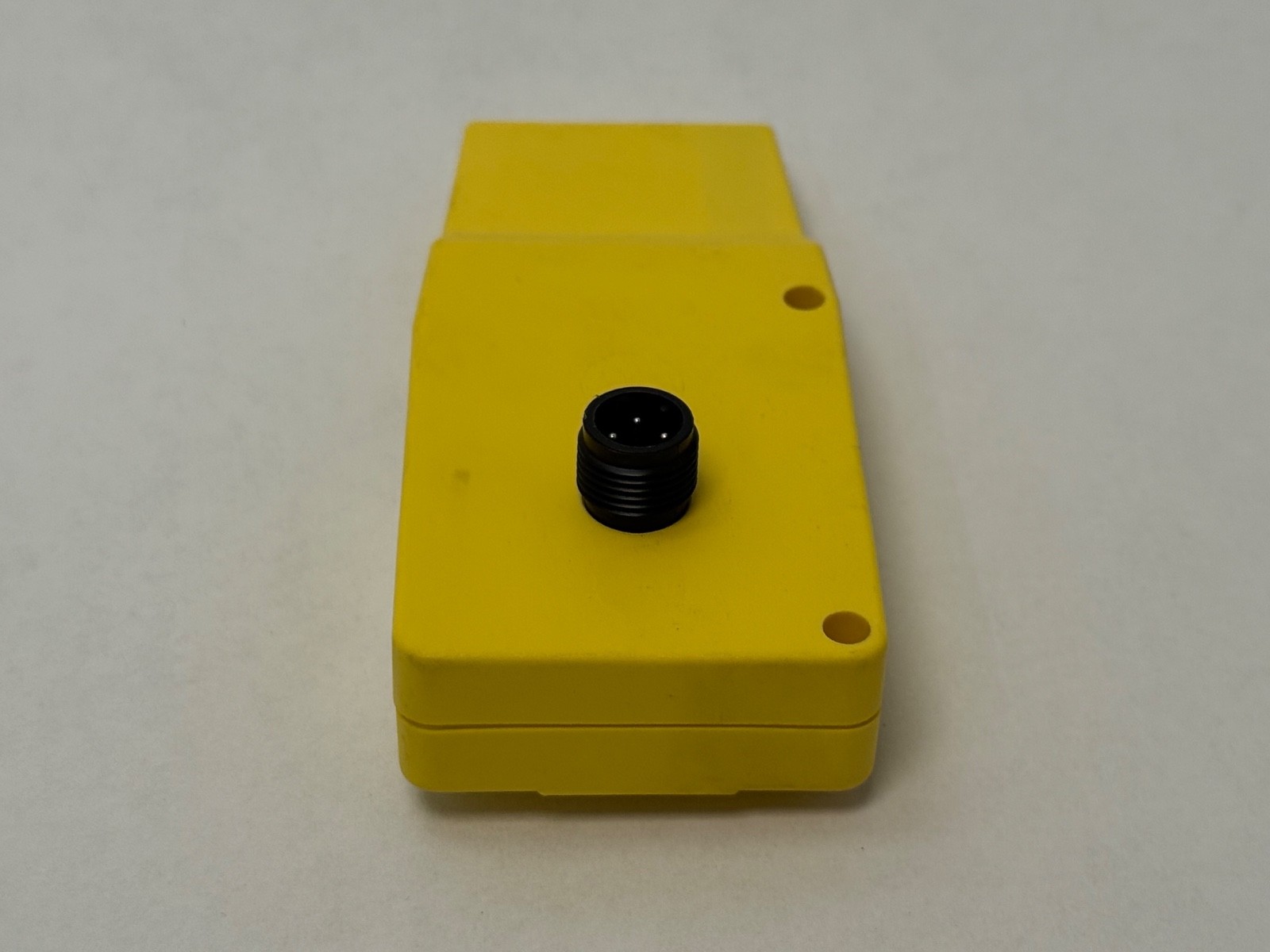
Connector StyleM12 x 1, 4-pin (mating cordset not included)
Output AmperageOne PNP normally-open switching output, 200 mA switching current, voltage drop less than 1.5 V; short-circuit, reverse-polarity and overload protected
Mpn VariantsOPT123; OPT-123; OPT 123; wenglor OPT123
Distributor Stock Numberswenglor.com OPT123 (manufacturer); wenglor sensoric GmbH OPT123 datasheet PDF; vebim-parts 5543
Manufacturer StatusCurrent production. wenglor sensoric GmbH — datasheet and connection diagram available direct from the manufacturer.
Arrangement ConfigurationSensor only — no M12 cordset, no mounting bracket. No reflector required or supplied: this is a diffuse background-suppression sensor, not retro-reflective.
Additional AttributesLight source infrared, 880 nm. Service life 100,000 h at +25 °C. Risk group 1 per EN 62471. Maximum ambient light 10,000 lux. Switching frequency 100 Hz, response time 5 ms, temperature drift less than 10 %. No logic functions. Setting by scaled potentiometer. OUTPUT POLARITY IS FIXED IN HARDWARE as PNP normally open — it sources +V and will drive a current-sinking PLC input, but will not work into a card expecting an NPN sensor, and field wiring cannot change this.
Min Temp−25 °C
Max Temp+60 °C
Nominal Rated Input Voltage18–30 V DC; current consumption less than 30 mA at 24 V; protection class III
Item Weight96 g
Part NumberOPT123
Running Accuracy Radial And Axial RunoutRange 550 mm; potentiometer minimum 220–270 mm, centre 320–400 mm, maximum 550–630 mm; switching hysteresis 15 %; opening angle 5°
Mounting TypeCompact body for installation between conveyor rollers below transport level; bracket per wenglor mounting technology 420, not included

Cross-References

Cross Reference 1wenglor connection diagram no. 712 (M12 4-pin, PNP NO pin assignment)
Cross Reference 2wenglor control panel no. OP1
Cross Reference 3wenglor mounting technology no. 420 (bracket, sold separately)
Seller Part Number: B-AB2B5#9CLKY9

Product Description

What this part is

A wenglor OPT123 reflex (diffuse) photoelectric sensor with electronic background suppression. It emits an infrared beam and detects the light scattered back by the object itself — there is no separate reflector and no separate receiver. What distinguishes it from an ordinary diffuse sensor is the background suppression, which is the whole reason the part exists.

Why background suppression is the specification that matters:
A plain diffuse sensor triggers on how much light comes back. That makes it hostage to the target: a matte black box at 200 mm and a polished steel plate at 500 mm can return the same signal, so the sensor cannot tell them apart. Anything reflective sitting behind the target — a machine frame, a guard, a wet floor, the far wall of an aisle — becomes a false trigger, and the fault is intermittent because it depends on what happens to be there.

Background suppression works on where the light comes back from, not how much. The sensor establishes a distance threshold; objects nearer than the threshold switch the output, objects beyond it are ignored regardless of how bright they are. In practice that means you can set this sensor to see a carton on a conveyor and stay blind to the steel frame 100 mm behind it, and it will hold that behaviour whether the carton is white cardboard or black shrink-wrap.

The threshold is set on a scaled potentiometer on the sensor, so it is a screwdriver adjustment with a visible scale rather than a teach sequence.

What the sensor is actually designed for

wenglor states the design intent explicitly, and it explains the housing shape: these sensors were designed for use in accumulating roller conveyors. The compact body allows installation between the rollers, below the transport level, which puts the sensor out of reach of pallets, forklifts and anything that falls off the line. On an accumulation conveyor that is a real reliability advantage, because the usual failure mode of a side-mounted sensor is mechanical damage, not electronics.

Published specifications

Optical

Range: 550 mmPotentiometer at minimum: 220–270 mm; at centre: 320–400 mm; at maximum: 550–630 mmSwitching hysteresis: 15 %Light source: infrared, 880 nm wavelengthService life at +25 °C: 100,000 hRisk group per EN 62471: 1Maximum ambient light: 10,000 luxOpening angle: 5°

Electrical

Supply voltage: 18–30 V DCCurrent consumption at 24 V: less than 30 mASwitching frequency: 100 HzResponse time: 5 msTemperature drift: less than 10 %Operating temperature: −25 to +60 °CSwitching outputs: 1Output type: PNP, normally openSwitching current: 200 mAOutput voltage drop: less than 1.5 VShort circuit, reverse polarity and overload protection: yes on all threeLogic functions: noneProtection class: III

Mechanical

Setting method: potentiometer, scaledHousing material: plasticFull encapsulation: yesDegree of protection: IP65Connection: M12 x 1, 4-pinWeight: 96 gwenglor reference numbers: connection diagram 712, control panel OP1, mounting technology 420

PNP is fixed here — check your input card

Unlike a relay output or a wiring-selectable arrangement, the output polarity of this sensor is fixed in hardware: it is PNP normally open, meaning it sources +V to the load when the target is present. It will drive a sinking (current-sinking) PLC input card directly. It will not work into an input card that expects an NPN sensor to pull the input down to 0 V. This is a hardware fact about the sensor, not something field wiring can change, so confirm the input card polarity before ordering. It is the single most common reason a perfectly good sensor gets returned as faulty.

The 200 mA switching current is generous for a sensor of this size — enough to drive a small relay or a pilot lamp directly, not just a logic input. And short-circuit, reverse-polarity and overload protection are all present, which on a conveyor sensor that gets rewired by whoever is on shift is worth having.

Range, hysteresis and setting notes

Read the potentiometer figures as ranges rather than points: at minimum the threshold lands somewhere between 220 and 270 mm, at maximum between 550 and 630 mm. That spread is unit-to-unit variation, so a sensor swapped into an existing installation needs its potentiometer set on the machine, not transferred by counting turns from the old one.

The 15 % switching hysteresis is the gap between switch-on and switch-off distance. It is what stops the output chattering when a target sits right on the threshold — useful, but it also means the object must move roughly 15 % of the set distance back out before the sensor releases. On a fast accumulation line, set the threshold so the target is comfortably inside it rather than marginal.

The 5° opening angle is narrow, which is what makes the background suppression sharp, but it also means alignment matters: a small angular error at 500 mm is a large positional error at the target.

What is not included

Sensor only. Not included: the mating M12 4-pin cordset (wenglor connection diagram 712 gives the pin assignment), the mounting bracket or clamp (wenglor mounting technology reference 420), and any reflector — none is needed on a background-suppression diffuse sensor, and that is a genuine saving against a retro-reflective installation, but it is worth stating so nobody goes looking for one in the box.

Quantity and interchange guidance

Two units in stock, sold individually. A pair covers a two-position accumulation zone, or one live sensor plus a shelf spare.

Search forms include OPT123, OPT-123, OPT 123 and wenglor OPT123. Related wenglor families: the wider OPT reflex sensor range and the reflex sensors with background suppression for roller conveyor systems. If you need an NPN output, a different range, or an M8 connector, wenglor’s roller-conveyor sensor family carries those as separate part numbers — the OPT123 itself is a fixed configuration. wenglor sensoric GmbH is a current manufacturer and this sensor is a current catalogue product, so a datasheet and pin diagram remain available directly from them.

You May Also Like

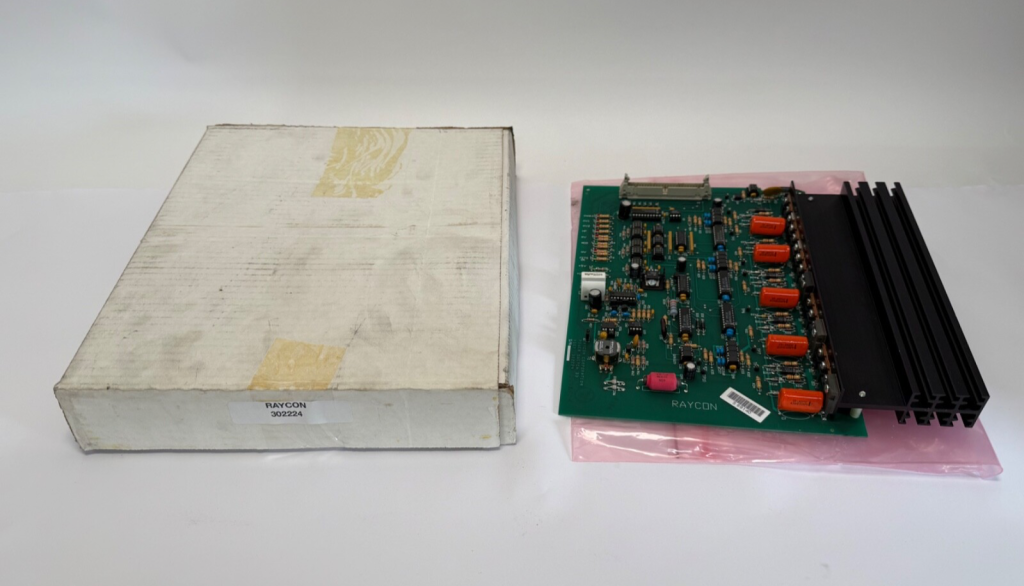
Raycon 302224 Power Switch Board 350280 Rev. C
302224

$417.66

4 in stock

Add to cart
Heidenhain LIDA-19P/100 Linear Encoder 233-042-13
LIDA-19P/100

$160.00

5 in stock

Add to cart
Series One 24 VDC 2 A Output Module — 4 Isolated Fused Sink/Source Circuits, Per-Circuit LEDs, 8 References Consumed
IC610MDL154A

$76.11

7 in stock

Add to cart

Need help finding the right part?

Our team can locate, cross-reference, and source all parts.

News

Bearing Price Increases Stacked Deep In 2026

Nine bearing and power transmission manufacturers raised list prices this

MRO Spare Parts: Why Your Storeroom Is Full yet Still Short

Maintenance is now 65% Slower, but it’s not a labor

Additional Resources

Need help finding the right part?

Our team can locate, cross-reference, and source all parts.

Get In Touch

Sort

Brand

Price

MPN

Categories