Motor Starters vs. Contactors vs. Overload Relays: What Each One Does and Why You Need All Three
When a motor stops running, the first instinct is to find the part that looks
Availability:
3 in stock
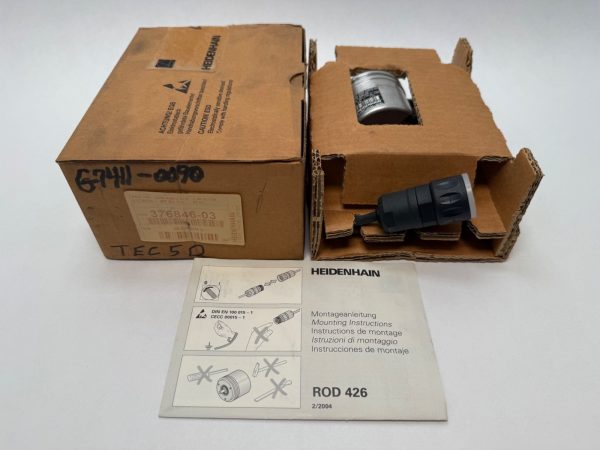
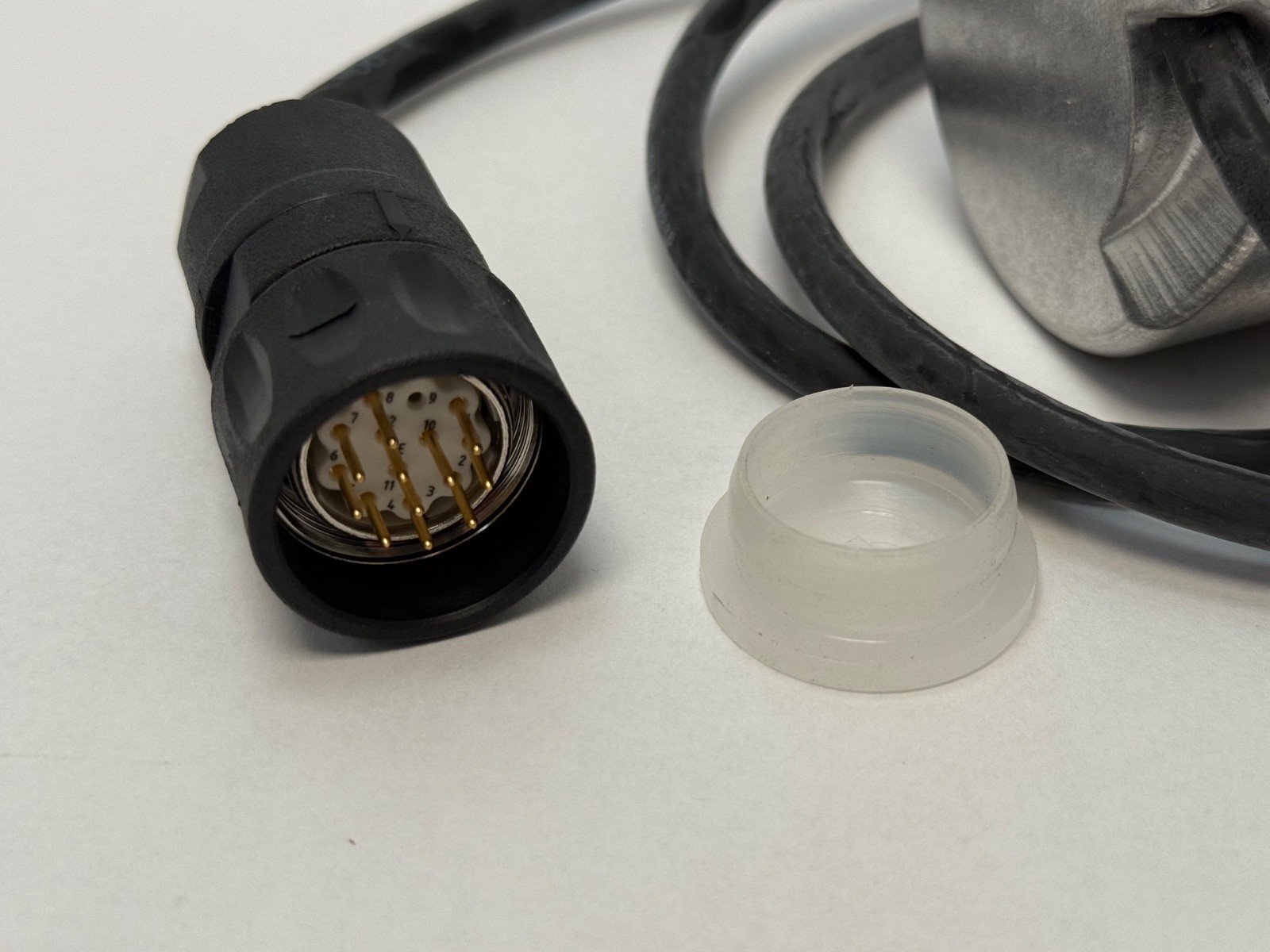
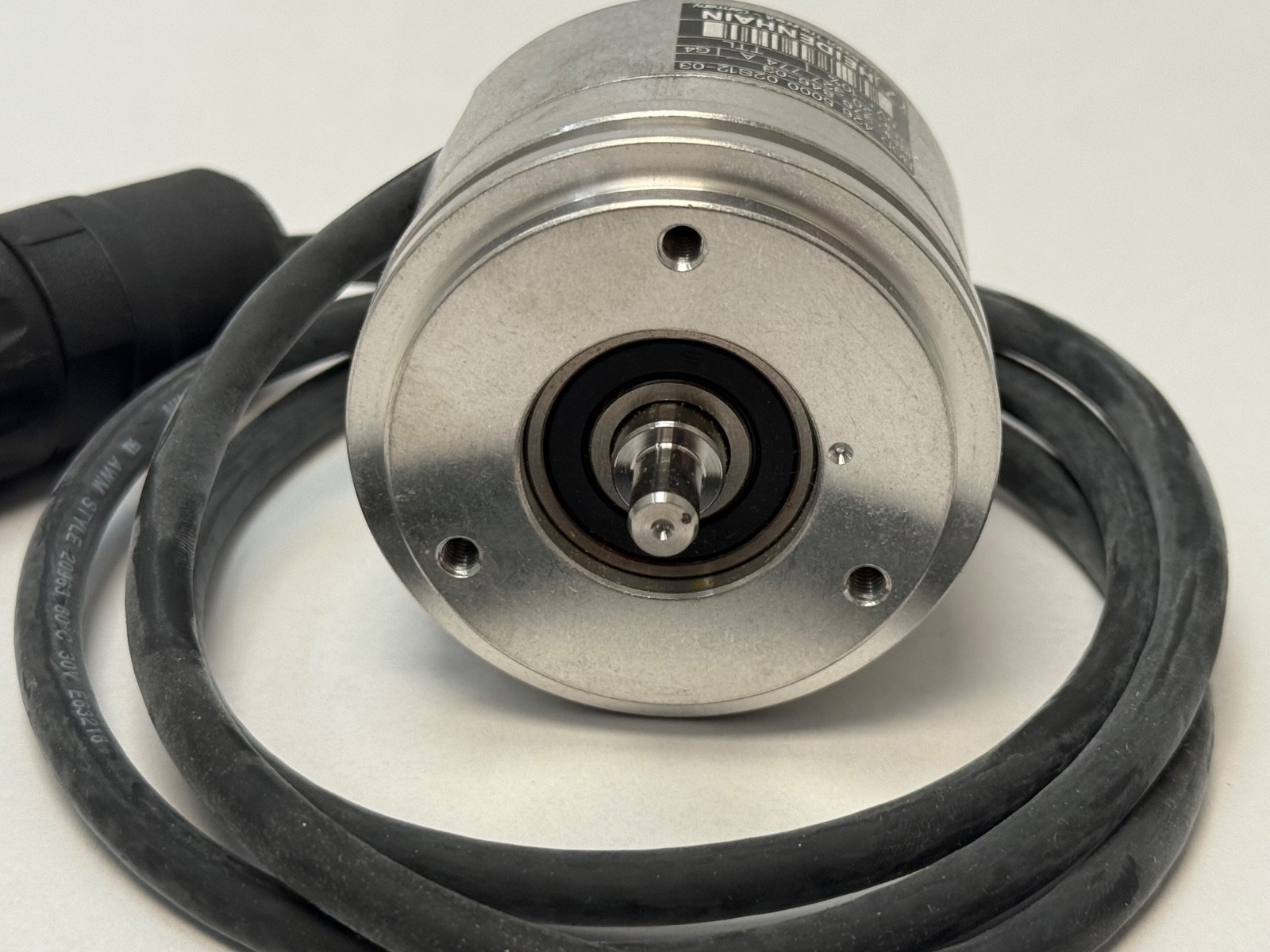
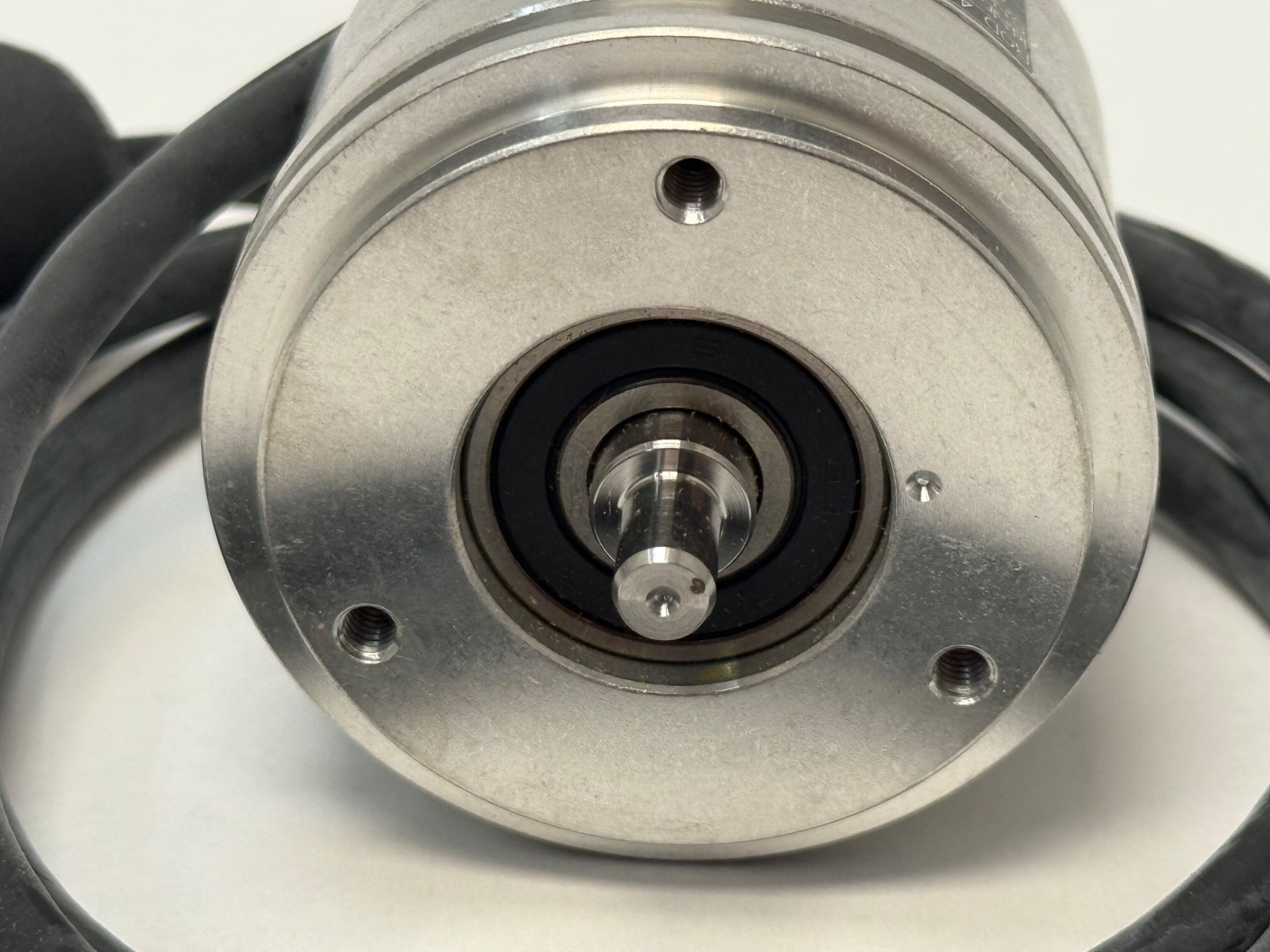
Incremental rotary encoder with integral bearing, 5000 lines per revolution, TTL square-wave output at 5 V DC. 6 mm solid shaft for a separate rotor coupling, synchro flange, M23 12-pin flange socket, one reference mark, IP67 housing. 300 kHz scanning frequency caps the electrical shaft speed at about 3600 rpm at this line count. Sold as 1 piece.
List Price
$186.03
3 in stock

3 in stock
On the Shelf & Ready to Ship
On all orders

No Risk, No Hassle
Also Available From:
| MFR / Brand | Heidenhain |
|---|---|
| MPN | ROD-426-5000-02S12-03 |
| Condition | New |
|---|---|
| Base Number | ROD 426 |
| Industry Terms | incremental rotary encoder, quadrature encoder, TTL encoder, shaft encoder, feedback encoder, pulse generator, drehgeber |
| Common Misspellings | ROD426 5OOO, Heidenhein ROD 426, Heidenhain ROD426-5000, Hiedenhain ROD 426, ROD 4265000 |
| Application Types | machine tool feed axes, rotary tables, ballscrew position feedback, measuring wheels, packaging and converting line registration |
| Termination Type | Cable with Connector |
| Connector Style | M23 12-pin flange socket |
| Shaft Type | 6 mm solid shaft for separate coupling |
| Output Amperage | 120 mA current consumption without load |
| Bore Shaft Size | 6 mm solid shaft |
| Mpn Variants | ROD-426-5000-02S12-03, ROD 426 5000, ROD426, ROD 426.5000, 376846-03, 376-846-03, 376846-xx |
| Manufacturer Status | ROD 400 series - current family, this configuration legacy |
| Compatible With Replaces | Controls and counters expecting Heidenhain TTL square-wave incremental feedback at 5000 lines/rev |
| Additional Attributes | One reference mark; fault-detection signal; RS-422 differential line driver; system accuracy 1/20 grating period; synchro flange; starting torque 0.01 Nm; rotor inertia 2.7e-6 kgm2; shaft load axial 40 N / radial 60 N |
| Min Temp | -40 C (-10 C with moving cable) |
| Max Temp | 100 C |
| Nominal Rated Input Voltage | 5 V DC +/- 0.5 V |
| Item Weight | Approx. 0.3 kg |
| Limiting Speed | 16000 rpm mechanical; approx. 3600 rpm electrical at 5000 lines and 300 kHz |
| Design Units | Metric |
| Part Number | ROD 426 5000 02S12-03 |
| Mounting Type | Synchro flange |
| Communication Standard | TTL square-wave, EIA RS-422 differential line driver |
| Cross Reference 1 | 376846-03 |
|---|---|
| Cross Reference 2 | ID 376846 |
| Cross Reference 3 | ROD 426 5000 01-03 |
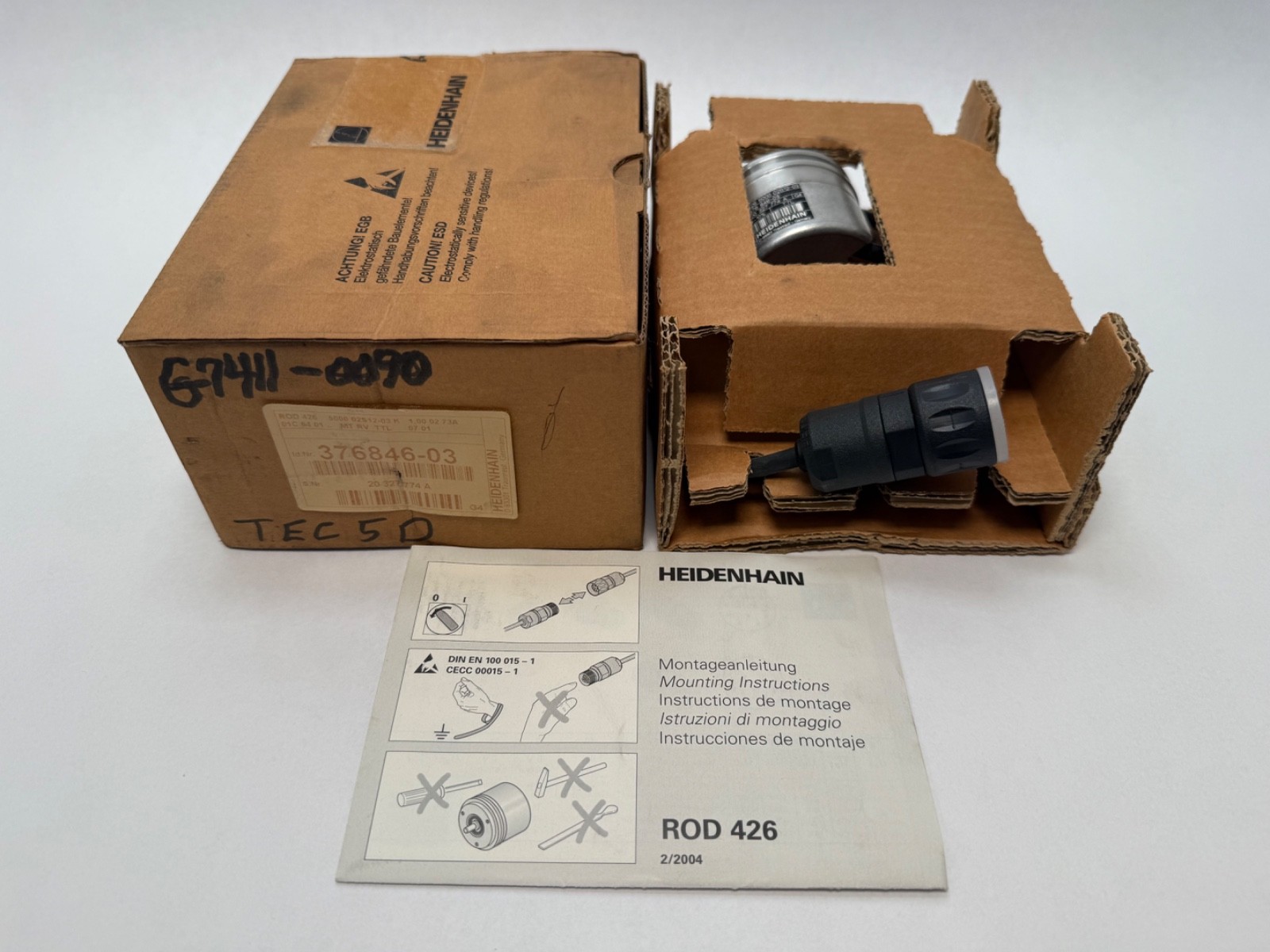
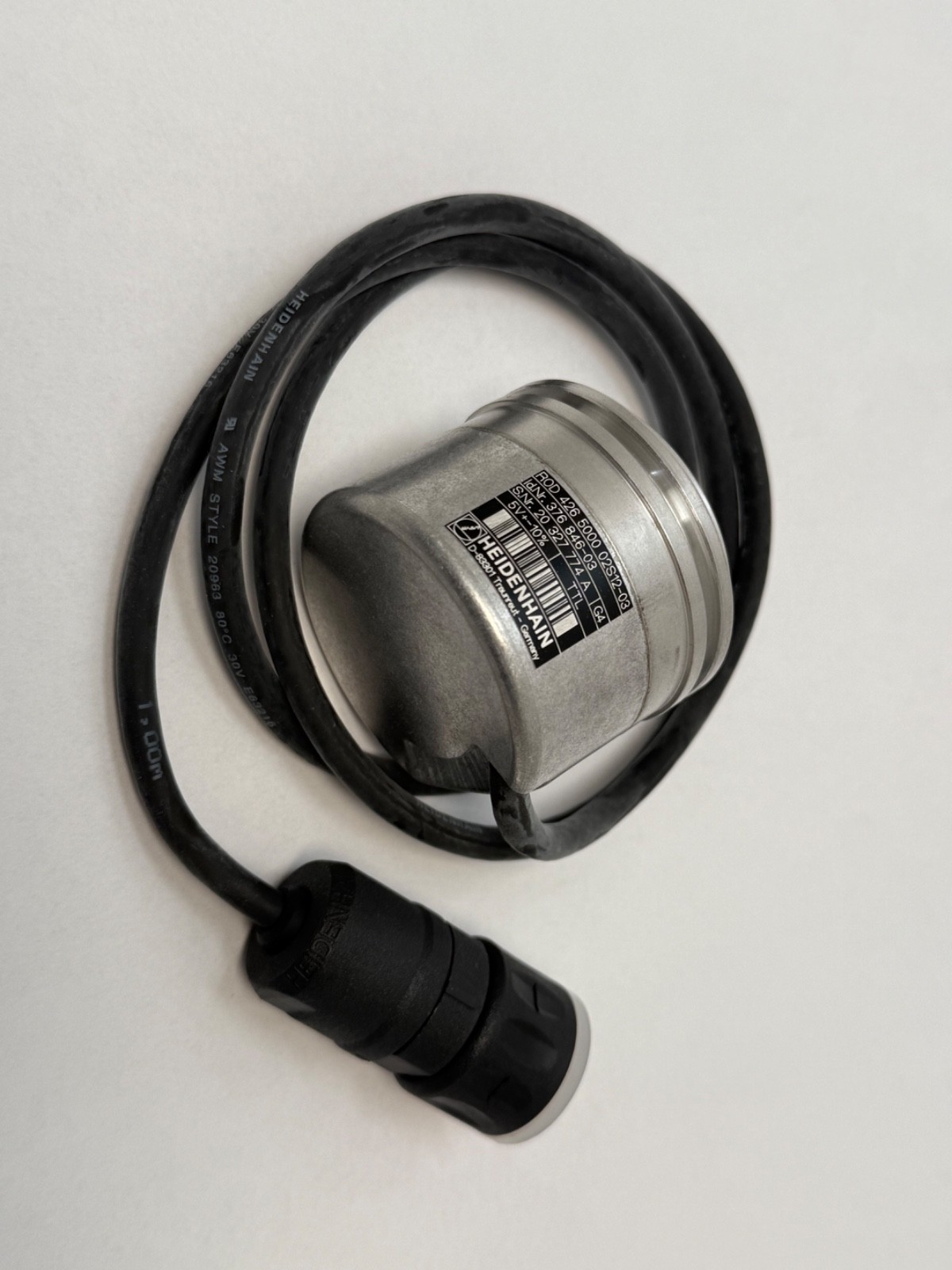
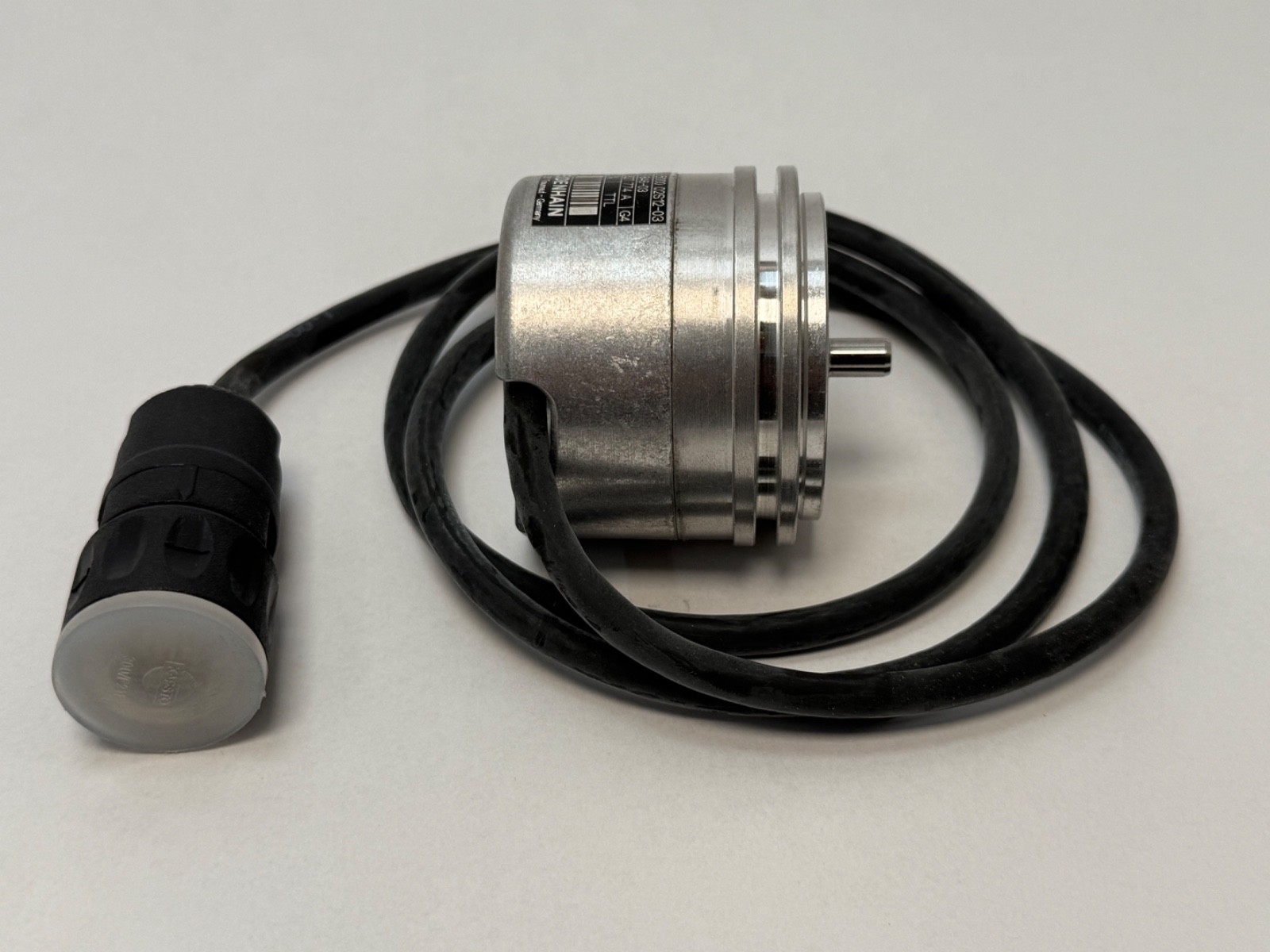
A Heidenhain ROD 426 incremental rotary encoder with integral bearing, ordered at 5000 lines per revolution with the TTL interface. It is a shaft-mounted feedback device: rotate the shaft and it puts out two square-wave channels in quadrature plus a once-per-revolution reference mark, which the drive, counter or CNC uses to derive position, direction and speed.
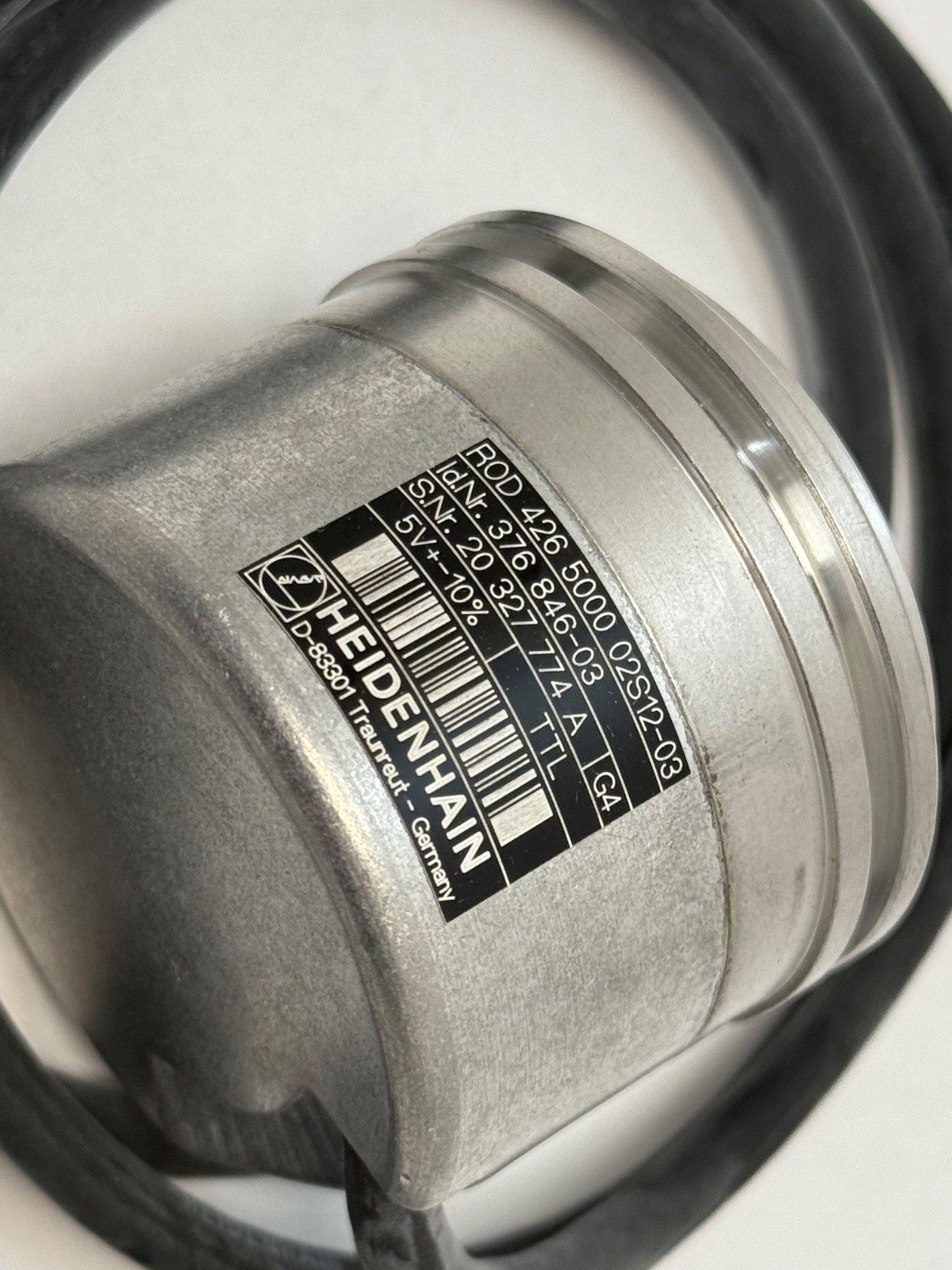
ROD — rotary encoder, incremental, with integral bearing and solid shaft for a separate shaft coupling426 — the TTL member of the ROD 400 family. Its siblings are the ROD 466 (HTL, 10–30 V), the ROD 436 (HTL) and the ROD 486 (1 VPP). Heidenhain’s ID series for the ROD 426 is 376846-xx, which matches the 376-846-03 marked on this unit.5000 — line count, i.e. 5000 signal periods per revolution before any external evaluationS12 — the M23 12-pin flange socket electrical connection, rather than a flying cable03 — Heidenhain variant suffix, giving the full ID 376846-03
5000 lines is one of the higher native counts in the ROD 400 range and gives 20 000 measuring steps per revolution after the four-fold edge evaluation almost all subsequent electronics perform. The number that actually limits you is not the 16 000 rpm mechanical rating but the 300 kHz scanning frequency: at 5000 lines that works out to roughly 3600 rpm before the electronics run out of bandwidth. Fine for a ballscrew, a rotary table, a feed axis or a line-shaft measuring wheel; not the encoder for a high-speed spindle, where you would drop to a lower line count.
The TTL interface is an RS-422 differential line driver, so the encoder sends each channel and its inverse. That is what lets you run 100 m of shielded cable in a noisy cabinet without losing counts. It also outputs a fault-detection signal that goes LOW on a broken supply line or a failed light source — wire it in if your control can use it, because it turns a silent miscount into a clean machine stop.
Type: incremental rotary encoder with integral bearing, ROD 400 seriesLine count: 5000 per revolutionMeasuring steps after 4-fold evaluation: 20 000 per revolutionInterface: TTL square-wave, two channels Ua1 / Ua2 at 90° elec. plus inverted signals, per EIA RS-422 differential line driverReference mark: oneFault-detection signal: one TTL pulse; LOW on fault, HIGH on proper functionVoltage supply: 5 V DC ±0.5 VCurrent consumption without load: 120 mAScanning frequency: 300 kHzMinimum edge separation: 0.39 µsSystem accuracy: 1/20 of the grating periodShaft: 6 mm solid shaft, for separate rotor couplingMechanical permissible speed: 16 000 rpmStarting torque: 0.01 Nm at 20 °CMoment of inertia of rotor: 2.7 x 10⁻⁶ kgm²Permissible shaft load: axial 40 N, radial 60 N at shaft endElectrical connection: M23 12-pin flange socketVibration: 300 m/s², 55 Hz to 2000 Hz (EN 60068-2-6)Shock: 2000 m/s², 6 ms (EN 60068-2-27)Operating temperature: -40 to 100 °C (-10 °C minimum with a moving cable)Protection: IP67 at the housing, IP64 at the shaft inlet, per EN 60529Mass: approximately 0.3 kgMounting: synchro flangeHeidenhain ID: 376846-03
The ROD is a solid-shaft encoder and Heidenhain specifies it for use with a separate shaft coupling — a flexible coupling or a stator coupling absorbs misalignment and keeps axial and radial load inside the 40 N / 60 N limits. Coupling it rigidly to a shaft that runs out will shorten the bearing life and can degrade accuracy. Supply must be 5 V ±0.5 V measured at the encoder, not at the cabinet; over long runs use the sensor lines to let a remote-sense supply correct for cable drop. Maximum cable length is 100 m for the incremental channels, 50 m for the fault-detection signal, and the subsequent electronics must be able to process every edge at the resulting edge separation — allow a 10% margin and subtract 0.2 ns per metre of cable. Recommended differential line receivers are the DS 26 C 32 AT, or the AM 26 LS 32, MC 3486 and SN 75 ALS 193 where edge separation exceeds 0.1 µs. Ground the cable shield to the housing.
One encoder. The shaft coupling, mating M23 connector or cable assembly, mounting hardware and any interpolation or counter electronics are not included.
Within the family, the ROD 466 and ROD 436 are HTL 10–30 V units and the ROD 486 is 1 VPP. They share the 6 mm shaft and the same mechanical envelope but the output signals are completely different — fitting an HTL encoder where the control expects TTL will not work, so match the interface, not just the flange. Line count must match your control’s configuration too: a 2500-line ROD 426 in place of a 5000-line one halves the resolution and will read as a scaling error, not a fault. Also written ROD426, ROD 426.5000, ROD-426-5000-02S12-03, 376846-03, 376-846-03 and ID 376846.
$41.33
5 in stock
$98.89
10 in stock
$527.82
6 in stock
$169.79
5 in stock
$41.33
5 in stock
$41.61
5 in stock
$229.49
5 in stock
$228.53
2 in stock
Nine bearing and power transmission manufacturers raised list prices this
Maintenance is now 65% Slower, but it’s not a labor
When a motor stops running, the first instinct is to find the part that looks
From Caligula’s luxury fleet to modern factories, this is the story of how a single
When sourcing a replacement bearing, you will often find both Timken and SKF options for
Our team can locate, cross-reference, and source all parts.
Sort
Brand
Price
MPN
Categories