New Inventory Daily | Same Day Free Shipping

12,984 ratings on eBay See our eBay feedback →

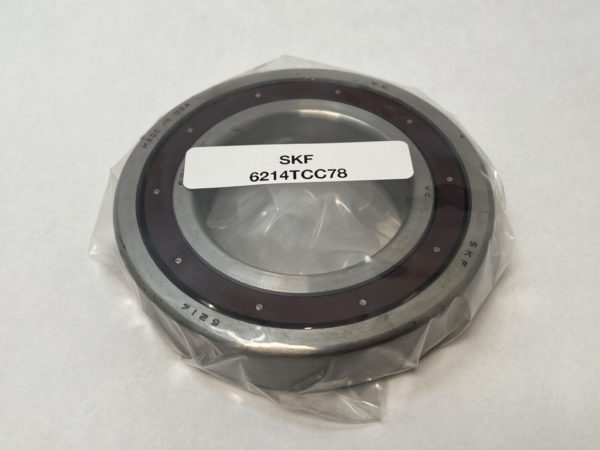
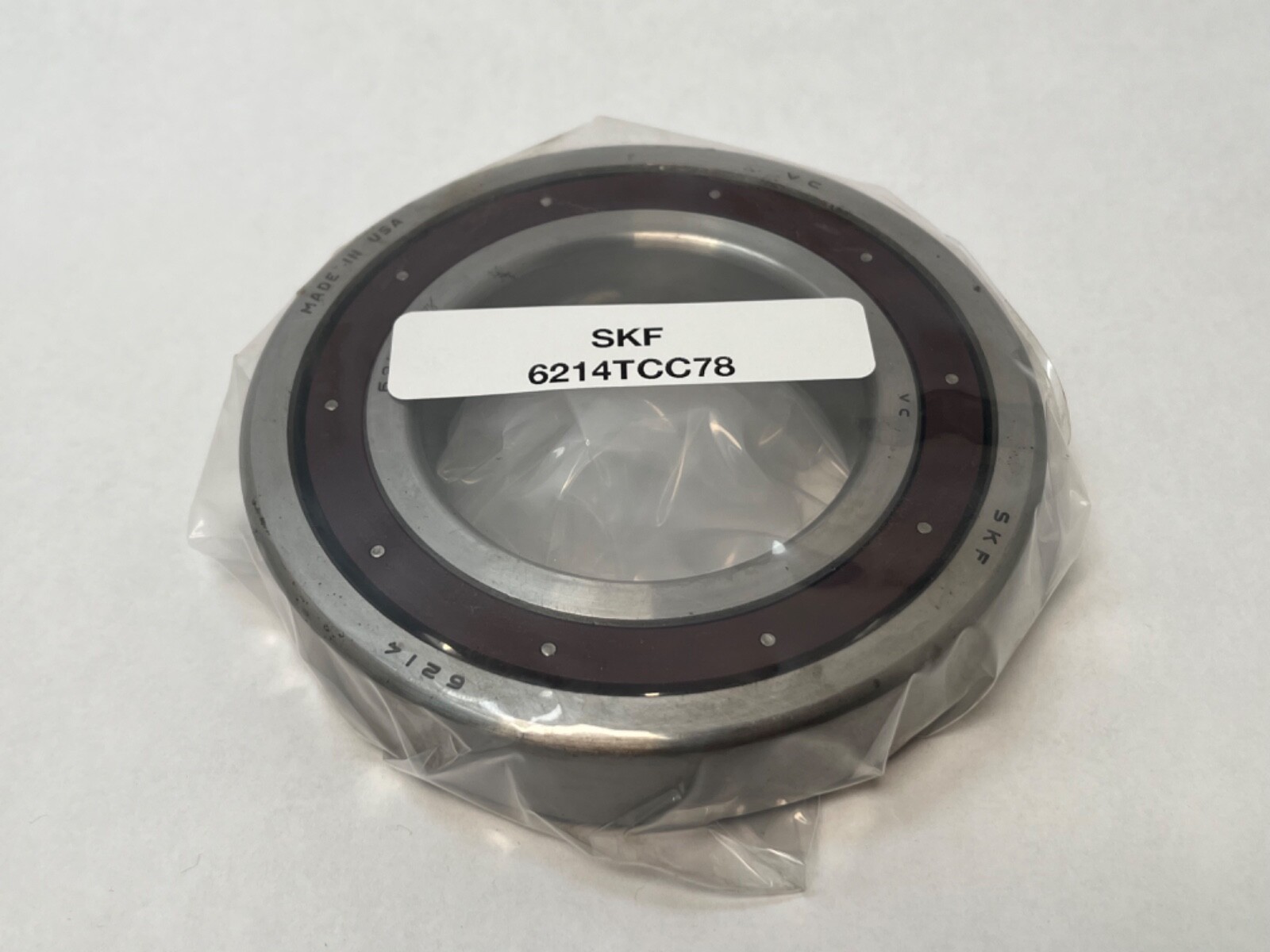
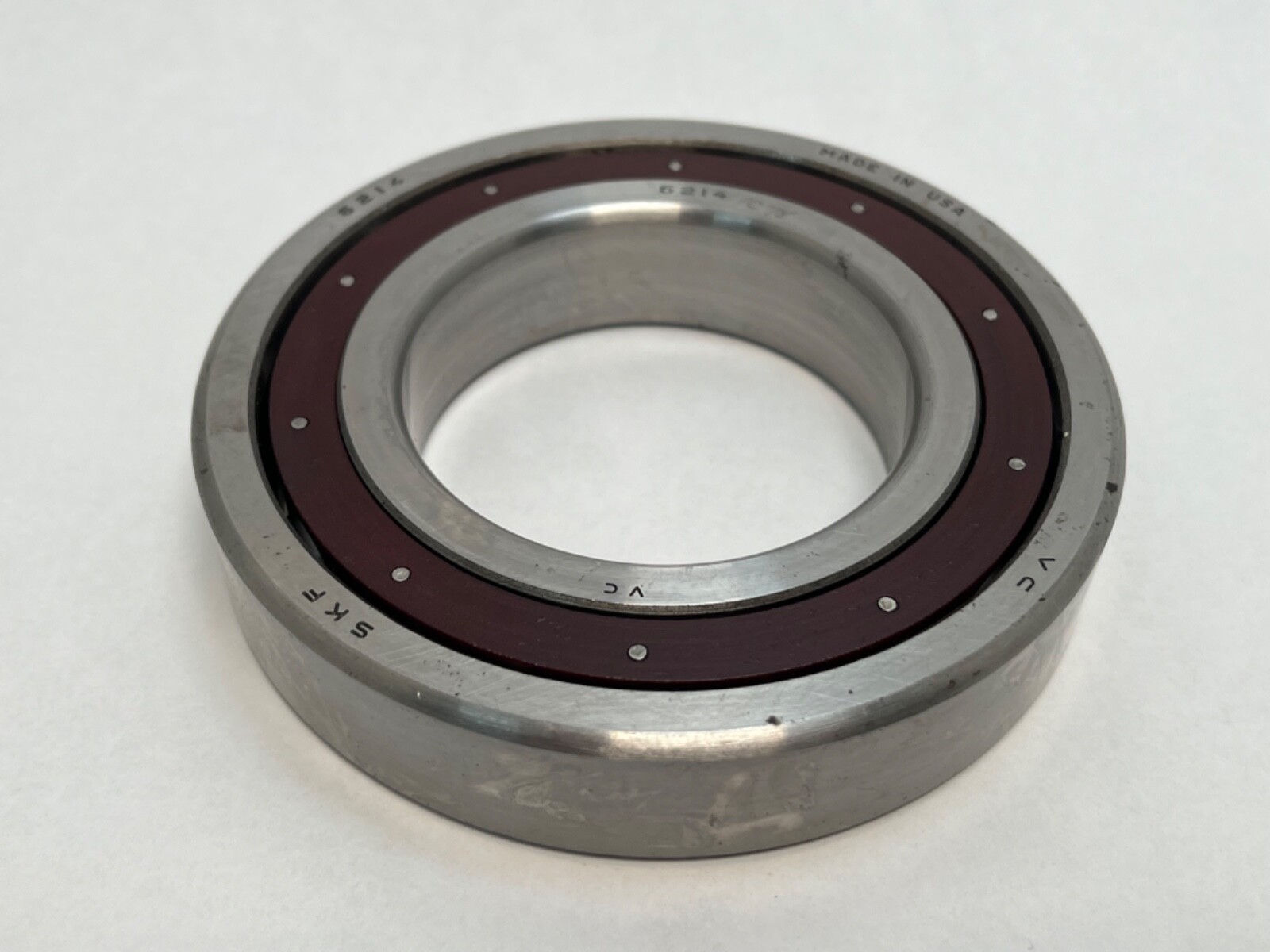
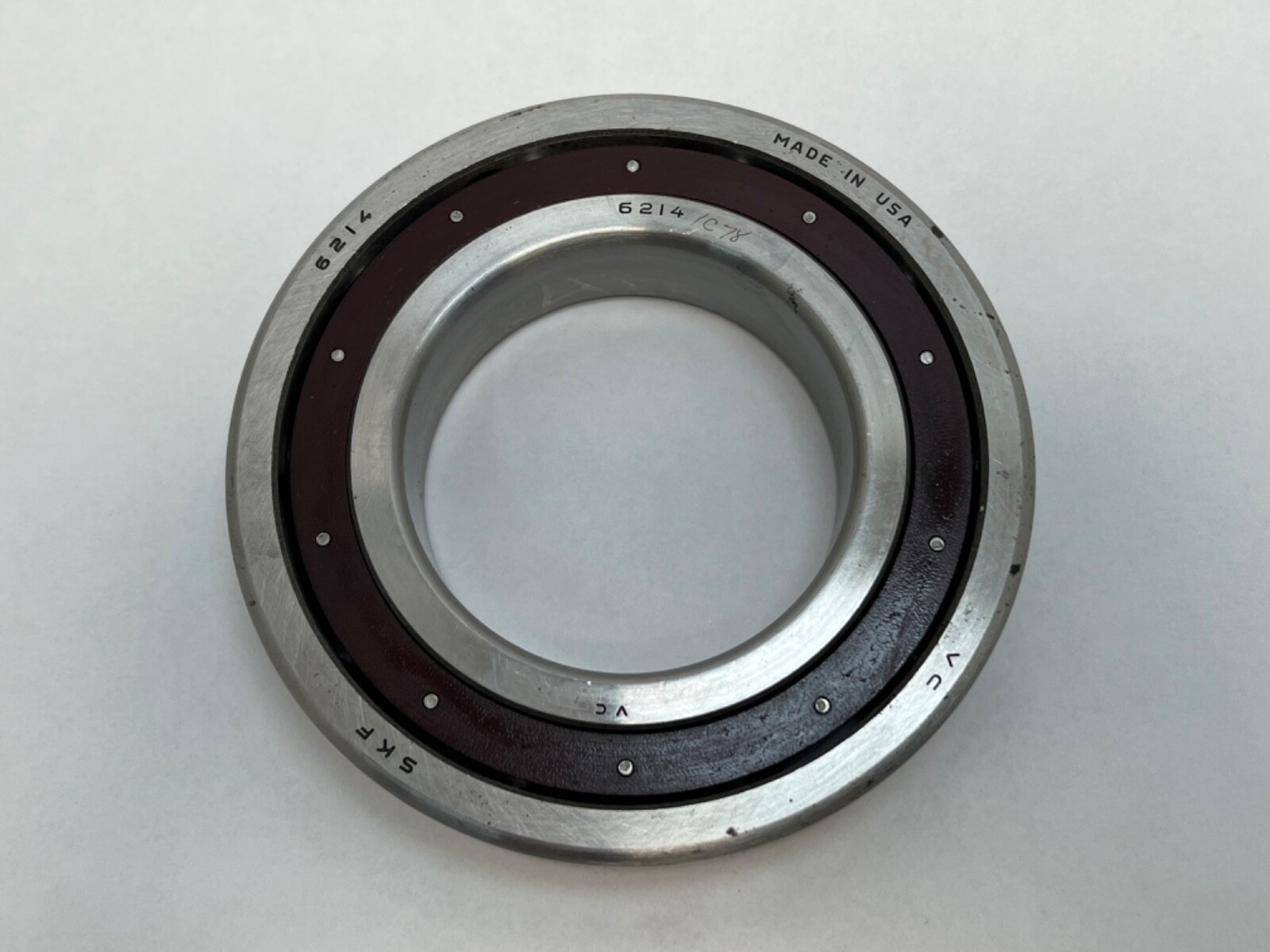
SKF6214TCC78Precision Deep Groove Ball Bearing, Open, Machined Phenolic Cage, ABEC 5 Class, 70 x 125 x 24 mm

Condition: New

Availability:

2 in stock

Categories: ,

Precision-class single-row deep groove ball bearing, 70 mm bore x 125 mm outside diameter x 24 mm wide, open on both sides, with a machined phenolic cage and ABEC 5 running accuracy. For machine tool spindles, grinding heads, high-speed pumps and any shaft where runout, quiet running and low cage friction matter more than raw load capacity.

List Price

$49.16

2 in stock

Availability

2 in stock

On the Shelf & Ready to Ship

Free Shipping

On all orders

Free Returns

No Risk, No Hassle

Also Available From:

Specifications

Key Specifications

MFR / BrandSKF
MPN6214TCC78
Model6214 TC C78 / M214K CR / ABEC5
Bearing TypeBall Bearing, Open
ID70 mm
OD125 mm
Width24 mm

Technical Specifications

Material52100 Chrome Steel
Series6200
ConditionNew
RelubricationYes - open bearing, lubricated by the host machine's oil, oil-mist or grease system
PreloadNone - single deep groove ball bearing, no preload or pairing code (no DB, DF, DT, L, M or H suffix)
Base Number6214
Common Misspellings6214TC C78; 6214 TC-C78; 6214 T C C78; 6214 C78 TC; 6214 tcc 78; 6214 ABEC-5; 6214-PS; M214-K; M2l4K; 62l4; skf 6214 tc/c7 8
Bore Shaft Size70 mm
Mpn Variants6214 TC/C78; 6214 TC C78; 6214TCC78; 6214-TC-C78; 6214TC/C78; 6214 TCC78; 6214-P5; 6214 P5; 6214P5; 6214 ABEC5; 6214 ABEC 5; 6214 (ISO base number); M214K; M 214 K; M214KCR; M214K CR
Manufacturer StatusObsolete. The TC/C78 legacy designation is long out of production; SKF Industries Inc. of Philadelphia has been absorbed into the SKF Group, and MRC bearing production went the same way. New old stock only.
Compatible With ReplacesFits any seat machined for a 70 x 125 x 24 mm ISO 15 single-row deep groove ball bearing. Specification-equivalent replacement requires BOTH an ABEC 5 / P5 tolerance class AND a phenolic cage; a standard 6214 fits the seats but does not replace the specification. Suitable as a replacement in obsolete machine tool spindles and grinding heads originally built with SKF Philadelphia TC/C78 or MRC M214K bearings.
Arrangement ConfigurationSingle bearing, radial mounting. Not a matched or universally ground pair.
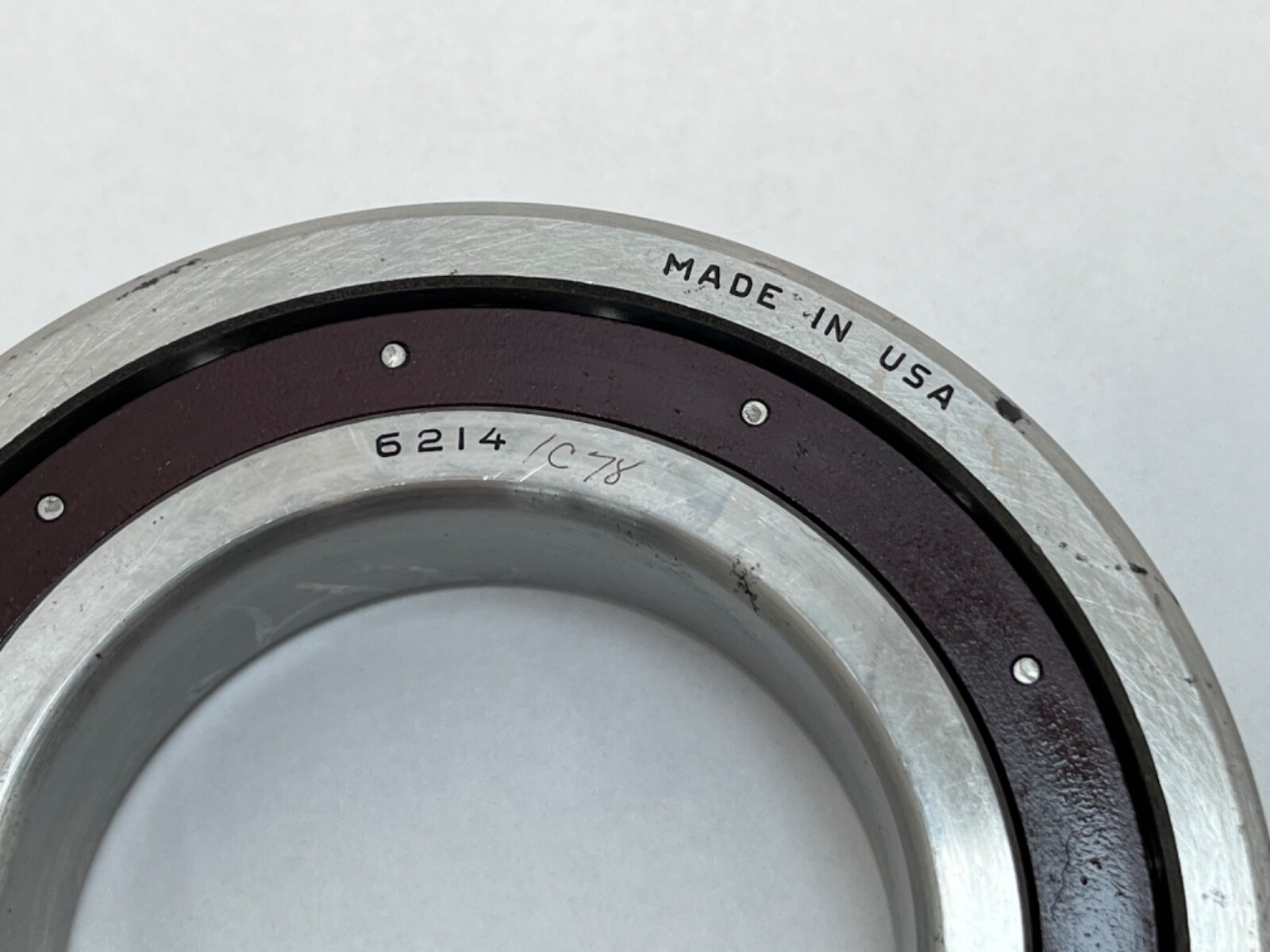
Precision ClassABEC 5 (ISO P5 equivalent), per the C78 suffix and the carton's PRECISION marking. See the description for the limits of what could be verified on this legacy suffix.
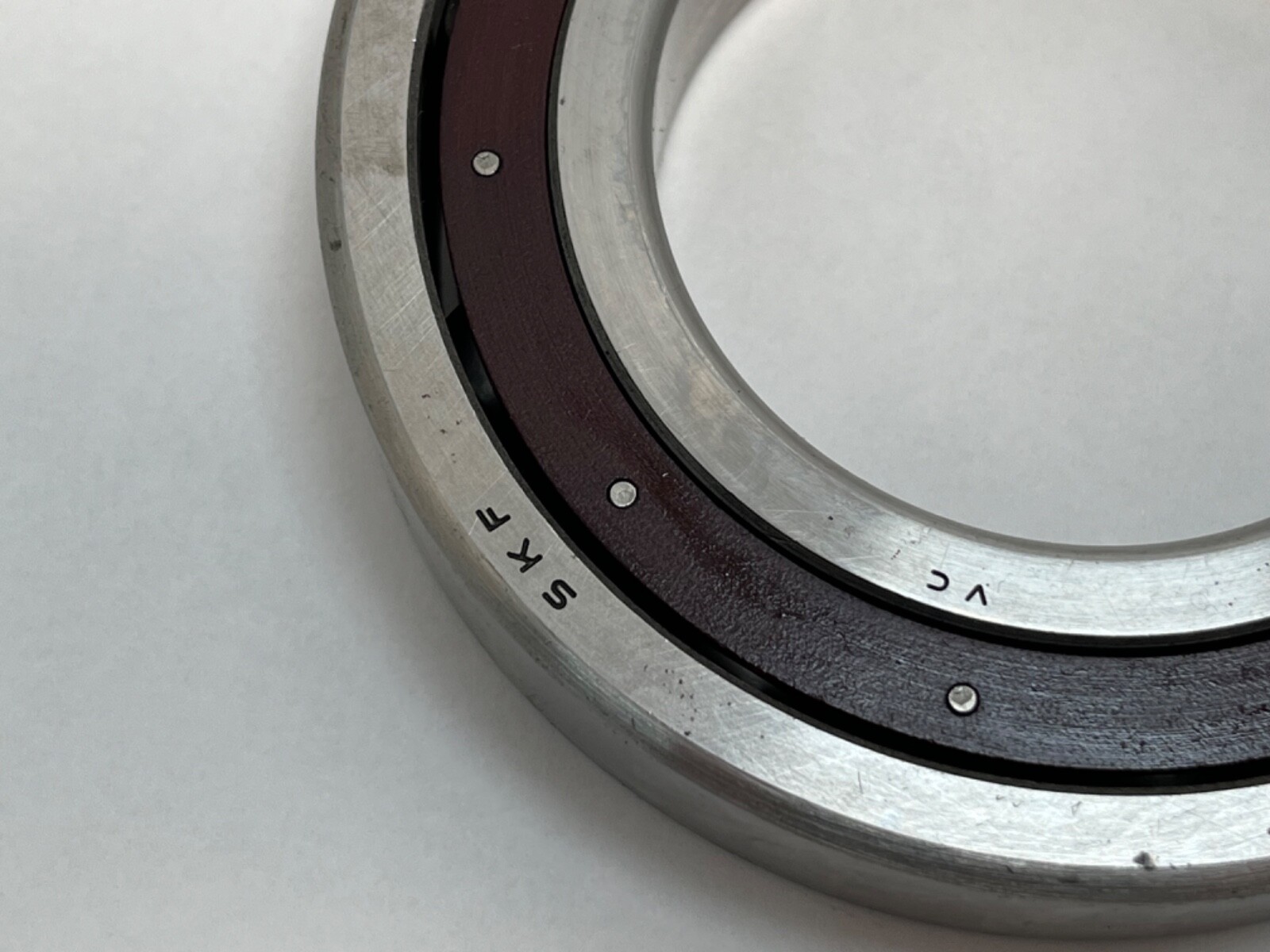
Additional AttributesCountry of origin: United States (SKF Industries Inc., Front St. & Erie Ave., Philadelphia, PA; ring marked MADE IN U.S.A.). Factory inspection date 23 August 1974, carton stamped 8/23/74 INSP 33 BF 01 (inspection code not decoded - no published key). Carton printed PRECISION. d1 approx 87.05 mm. D2 approx 111 mm. Chamfer r1,2 min 1.5 mm. Abutment: shaft shoulder da min 79 mm, da max 87 mm; housing shoulder Da max 116 mm; fillet ra max 1.5 mm. MODERN-CATALOGUE ENVELOPE REFERENCE ONLY, NOT this bearing's ratings: SKF's current Explorer-class 6214 is published at C 63.7 kN, C0 45 kN, Pu 1.9 kN, reference speed 11 000 r/min, limiting speed 5 600 r/min - this 1974 pre-Explorer phenolic-caged bearing predates that specification and its original ratings are not published, so these figures must not be used in a rating-life calculation for this part. Ball count, ball diameter, period load ratings, radial internal clearance and phenolic cage temperature limit all left blank - not published for this legacy designation.
Min Temp-30 °C
Cage TypeCaged
Dynamic Load Rating63.7 kN / 14320 lbf
Static Load Rating45 kN / 10116 lbf
Precision RatingABEC 5 / P5
Rolling ElementsBall
Max Temp120 °C
Item WeightApprox 1.14 kg / 2.5 lb (SKF published mass for the 6214 envelope)
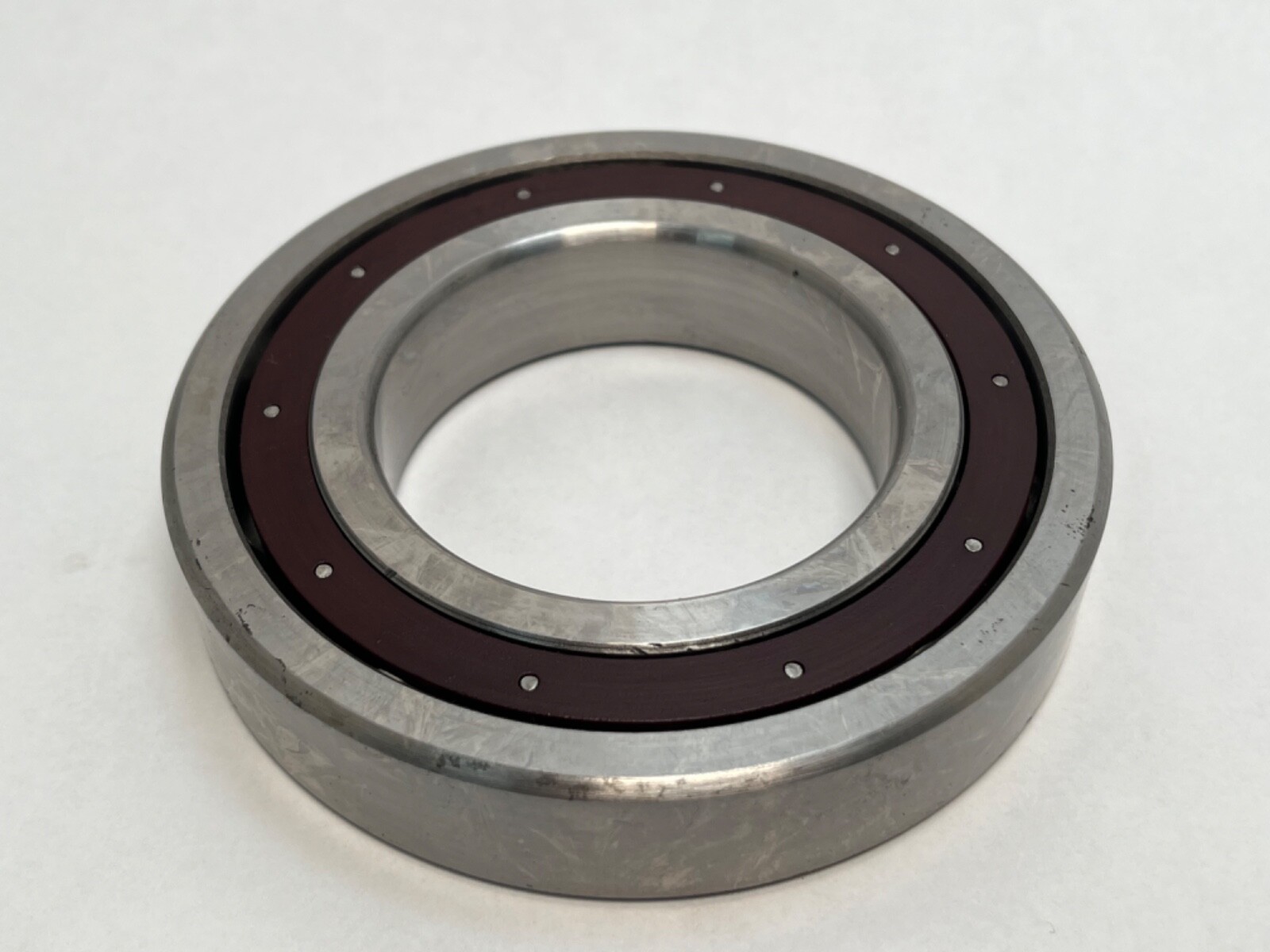
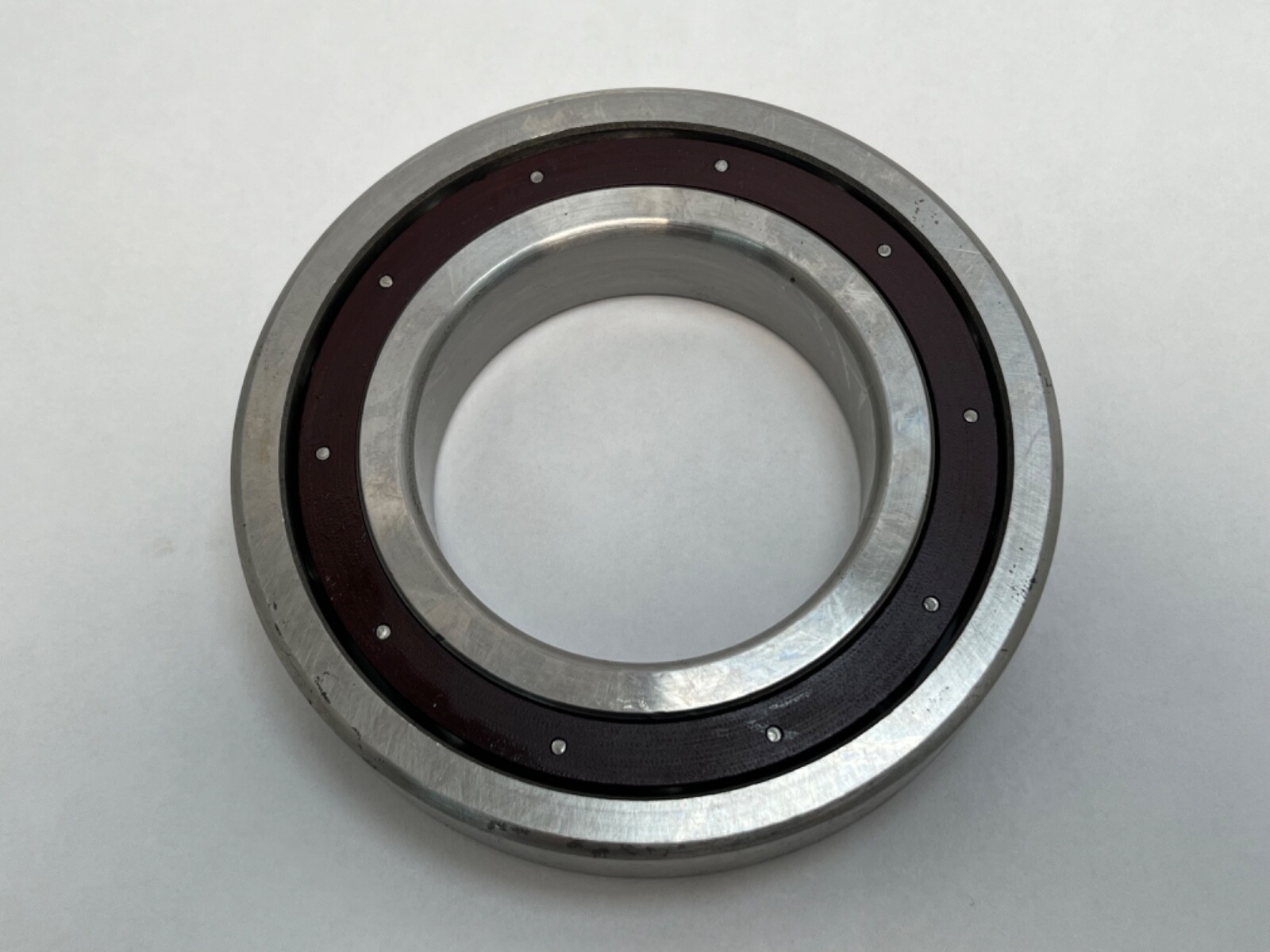
Cage MaterialPhenolic laminate (fabric-reinforced phenolic resin, machined). PHOTO-CONFIRMED from the characteristic brown-bronze riveted cage - not inferred from the suffix alone.
Limiting Speed7000 rpm
Number Of Rows1
Bore TypeStraight
Snap Ring IncludedNo - no N or NR suffix, plain outer ring with no snap ring groove
Harmonization Code8482.10.5008 (ball bearings, other, over 30 mm outside diameter - verify against current HTSUS before export filing)
Design UnitsMetric
Bearing MaterialThrough-hardened bearing steel rings and balls; phenolic laminate cage
Internal ClearanceCN
Part Number6214 TC/C78

Cross-References

Cross Reference 1SKF 6214 TC/C78 - open, phenolic cage, ABEC 5 (this part, per the carton)
Cross Reference 2SKF 6214-P5 - the precision-class designation carried in Central Surplus's catalogue for this bearing
Cross Reference 3MRC M214K - MRC-scheme number for this bearing. MRC bearing production was absorbed into SKF.
Cross Reference 4MRC M214K CR - as supplied in the source record. NOTE: CR denotes a phenolic cage riding the OUTER ring land in the Timken/Fafnir scheme, which conflicts with SKF's inner-ring-guided TC. Retained for exposure; the carton marking is the authority.
Cross Reference 6Timken / Fafnir 6214 CR - open 6214 with a phenolic cage; closest cage-and-envelope match from another maker
Cross Reference 7NSK 6214 P5 - open 6214 at ABEC 5 tolerance class (verify cage type, which is usually pressed steel or brass rather than phenolic)
Cross Reference 8NTN / Koyo / NACHI 6214 P5 - open 6214 at ABEC 5 tolerance class (verify cage type)
Cross Reference 9Central Surplus SKU B-AQ5B1#70AQ4N - Koyo 6310 C2 FY P5, open ABEC 5 precision deep groove ball bearing, 50x110x27 mm, machined brass cage. Different size, same precision-spindle buyer.
Seller Part Number: B-AH6B2#OXHSM7

Product Description

What this part is

A precision single-row deep groove ball bearing in the metric 62 series, 70 mm bore × 125 mm outside diameter × 24 mm width, open on both sides, fitted with a machined phenolic cage and held to ABEC 5 running accuracy. This is not a general-purpose 6214. A standard 6214 has a pressed steel cage and ordinary ISO tolerances; this one was built to a precision specification for spindle and high-speed duty, and the carton is printed PRECISION to say so. If a plain 6214 would have done, nobody would have paid for this part number.

Decoding the designation

6 — bearing type, single-row deep groove ball bearing.
2 — diameter series 2, the light-medium cross-section (the width-series 0 digit is not printed for the 62 series).
14 — bore size code. Multiply by 5 for the bore in millimetres: 14 × 5 = 70 mm.
TC — the cage code. This is a legacy SKF Industries (USA) suffix, and it denotes a machined phenolic cage guided on the inner ring land. We have confirmed the cage material directly: the photographs show the characteristic brown-bronze riveted laminate cage, seated over the inner ring shoulder.
C78 — a legacy SKF Industries combination suffix covering running accuracy. Reference sources consistently give C78 as P5 / ABEC 5 running accuracy on both the inner and the outer ring, and the carton’s PRECISION marking supports that reading.
No closure suffix — open on both sides, with no grease charge. Precision spindle bearings are almost always supplied open so that the machine’s own oil, oil-mist or grease system can do the lubricating.

How far we can honestly decode C78

The precision claim is solid: C78 is given as ABEC 5 across multiple independent references, ABEC 5 corresponds to the P5 tolerance class in the ISO scheme, the carton says PRECISION, and Central Surplus’s own catalogue number for this part carries the 6214-P5 designation. What we could not do is find C78 defined on a document published by SKF. SKF’s current designation system uses C1 to C5 for radial internal clearance and P5 or P6 for tolerance class; C78 belongs to the older Philadelphia numbering that SKF no longer publishes. So we cannot confirm whether C78 specifies only running accuracy, or whether it also carries a non-standard radial internal clearance. Treat the ABEC 5 precision rating as well supported and any clearance implication as unverified. If your application depends on a specific mounted clearance or preload, measure this bearing before you build it in rather than trusting a fifty-year-old suffix. That is the honest answer, and we would rather give it than invent a number.

Why the phenolic cage is the reason to buy this bearing:
A phenolic cage — cotton or linen fabric laminated with phenolic resin, then machined — is a deliberate high-speed, high-accuracy choice, and it is the single most valuable spec on this listing. It is far lighter than brass and much stiffer and better damped than pressed steel, so cage-induced vibration and centrifugal cage stress both drop at speed. The material is slightly porous and absorbs oil, giving it a degree of self-lubrication that keeps ball-to-cage friction and noise low. This is why phenolic cages are standard on machine tool spindle bearings and grinder heads and why a rebuilder will specifically hunt for one.

The trade-offs are real and worth stating. Phenolic is temperature-sensitive in a way steel and brass are not, so this is not a bearing for a hot process application, live steam, or anything running near the limit of its lubricant. It is also less tolerant of aggressive synthetic lubricants and of water than a metal cage. And phenolic is more fragile in handling: a knock that a steel cage would shrug off can chip a phenolic one. If your duty is hot, wet, or shock-loaded, a standard 6214 with a pressed steel cage, or a 6214 M with a brass cage, is the correct part instead.

What ABEC 5 actually buys you

ABEC 5 (P5) tightens the tolerances on bore, outside diameter, width, and — the part that matters — on radial and axial runout of the assembled bearing, relative to the ABEC 1 / Normal class. The payoff is not load capacity, which is unchanged; it is positional accuracy and quiet running. On a machine tool spindle that means a part finish you can hold, on a grinding head it means less chatter, and on a high-speed shaft it means less dynamic imbalance from the bearing itself. It only pays off if the rest of the assembly deserves it: mounting a P5 bearing in a bored-out housing with a worn shaft throws the accuracy away entirely. Precision bearings amplify the quality of the seats they sit in, in both directions.

Published dimensional and mounting data

The 70 × 125 × 24 mm envelope and the abutment geometry are fixed by ISO 15 and by SKF’s published data for the 6214, and they apply to this bearing directly.

Bore d — 70 mm; outside diameter D — 125 mm; width B — 24 mm
d₁ ≈ 87.05 mm; D₂ ≈ 111 mm
Chamfer r₁,₂ min. — 1.5 mm
Abutment dimensions — shaft shoulder dₐ min. 79 mm, dₐ max. 87 mm; housing shoulder Dₐ max. 116 mm; fillet rₐ max. 1.5 mm
Mass — approximately 1.14 kg (2.5 lb)

A necessary caveat on load ratings

SKF’s current catalogue gives the 6214 a basic dynamic load rating C of 63.7 kN, a basic static load rating C₀ of 45 kN, a fatigue load limit Pₐ of 1.9 kN, a reference speed of 11 000 r/min and a limiting speed of 5 600 r/min. Those figures are published for today’s SKF Explorer-class 6214 with a pressed steel cage. This bearing was inspected in August 1974 and predates the Explorer performance class by decades, so its original ratings were almost certainly lower — Explorer gains come from cleaner steel and improved internal geometry that a 1974 bearing does not have. SKF does not publish the 1974 ratings and we have not been able to obtain them. We are giving you the modern figures as an envelope reference only. Do not use them in a rating-life calculation for this bearing. If your design is load-critical, size it on a current-production 6214 and buy a current-production bearing; this part is for the buyer who needs the phenolic cage and the ABEC 5 accuracy in an obsolete spindle.

Age, storage and what we recommend

The carton is stamped 8/23/74. Fifty-plus years in a warehouse is well outside any manufacturer’s storage guidance — SKF’s own advice is a maximum of about ten years for open bearings in good conditions and less as humidity and temperature rise. The good news is that this is an open bearing with no grease charge and no rubber seals, so there is no grease to have separated and no elastomer to have hardened; the only thing that ages is the preservative oil and the exposed steel. The photographs show light surface staining and faint oxidation spotting on the outer ring face and side lands, with clean-looking raceways and an intact cage. Our recommendation is straightforward: wash out the old preservative in a suitable solvent, inspect the raceways and balls under good light, check that the cage is uncracked, then relubricate with the oil or grease your spindle calls for before fitting. Sold as-is on that basis and priced accordingly.

Quantity and configuration

Each unit sold is one bearing, in its own original SKF Industries carton. Two pieces are available. This is a single bearing, not a matched or preloaded pair — the designation carries no DB, DF, DT or preload code, and deep groove ball bearings are not universally ground for pairing the way angular contact bearings are. If your spindle uses two, order two, and note that with only two on the shelf there is no third if you damage one during fitting.

Fitting notes

Press only on the ring being mounted — inner ring for the shaft, outer ring for the housing — and never through the balls, which on a phenolic-caged precision bearing is a fast way to ruin an irreplaceable part. Heat mounting is possible but keep the temperature modest and controlled, because the phenolic cage, not the steel, sets the ceiling. Work clean: an ABEC 5 bearing is pointless if you introduce grit during assembly. Check the shaft and housing seats against the abutment figures above and against the fits your spindle drawing specifies, and measure the mounted clearance rather than assuming what C78 gives you.

Interchange guidance

Two levels of interchange apply here, and confusing them is the main risk. Dimensionally, 70 × 125 × 24 mm is the ISO 15 standard 6214 envelope, so any 6214 from any maker will physically fit the same seats. By specification, very few of them are equivalent: a standard 6214 gives you neither the phenolic cage nor the ABEC 5 accuracy, and dropping one into a precision spindle to save money is a false economy. Look for a P5 or ABEC 5 tolerance class and a phenolic cage code together — for example a Timken or Fafnir 6214 carrying the phenolic cage code CR, or another maker’s 6214 P5 with a phenolic retainer.

On the MRC connection: this listing also carries the designation M214K, which is the MRC-scheme number for this bearing. That is a deliberate cross-reference, not an error — MRC’s bearing production was absorbed into SKF, so MRC and SKF Philadelphia numbers routinely describe the same hardware. One inconsistency is worth flagging honestly: the M214K CR reading that came with this record uses CR, which in the Timken and Fafnir scheme means a phenolic cage riding on the outer ring land, whereas SKF’s TC denotes phenolic guided on the inner ring land. Our photographs are consistent with inner-ring guidance, matching the TC on the carton. Both designations are retained here because both appear in the trade, but the carton marking is the authority on this bearing.

If you are rebuilding a precision spindle, we also stock a Koyo 6310 C2 FY P5 — another open ABEC 5 precision deep groove ball bearing, 50 × 110 × 27 mm with a machined brass cage — under SKU B-AQ5B1#70AQ4N.

You May Also Like

Deep Groove Ball Bearing - Straight, 70 mm ID, 125 mm OD, 24 mm Width, Open, Without Snap Ring
6214TCC78

$43.40

1 in stock

Add to cart

Need help finding the right part?

Our team can locate, cross-reference, and source all parts.

News

Excess MRO Inventory Depreciating on Your Shelf

The dead stock on your shop floor is not an

MRO Parts Fulfillment. What Fast Really Means

A shipping cutoff banner measures a vendor’s dock. It tells

Additional Resources

Need help finding the right part?

Our team can locate, cross-reference, and source all parts.

Get In Touch
Need help finding the right part?

Our team can locate, cross-reference, and source all parts.

Get In Touch

Sort

Brand

Price

MPN

Categories