
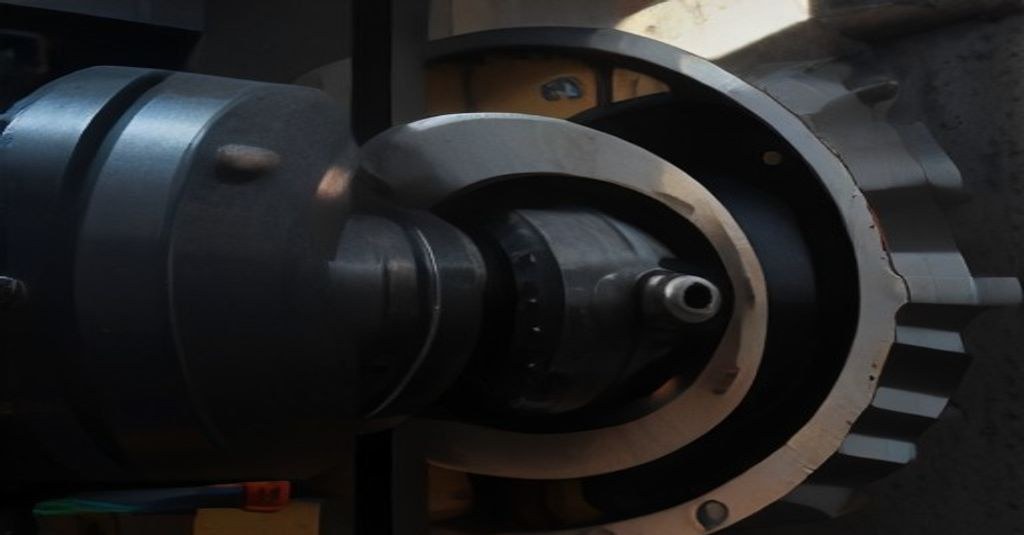
Electric motor bearings are the components that support the rotor shaft, letting it spin freely while keeping it precisely aligned inside the motor housing. They carry radial and axial loads, reduce friction between moving and stationary parts, and absorb some of the vibration generated during operation. Without them, a motor shaft would wear against its housing almost immediately.
Bearing failure is one of the most common reasons electric motors go down unexpectedly. A worn or damaged bearing can lead to shaft misalignment, winding damage, and eventually a full motor failure if it isn’t caught early. Understanding how motor bearings work, how to spot trouble, and how to source the right replacement quickly can save a maintenance team hours of downtime.
Not every electric motor uses the same bearing design. The right type depends on motor size, load, speed, and application.
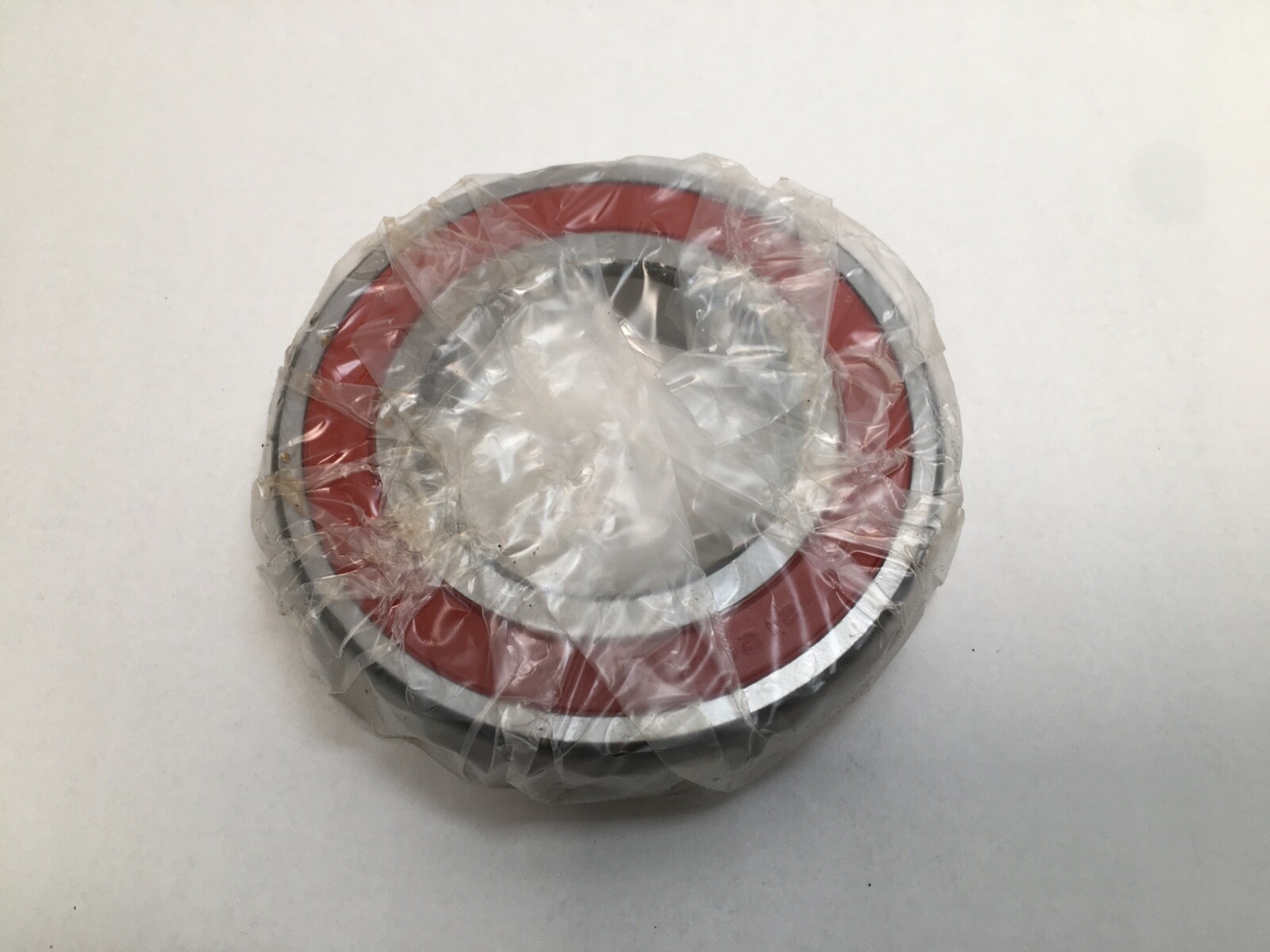
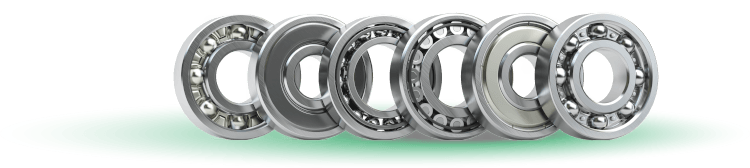
Deep groove ball bearings are the most common bearing used in general-purpose electric motors, including fractional and integral horsepower motors found in fans, pumps, and conveyors. They handle moderate radial and axial loads, run quietly at higher speeds, and are inexpensive to replace, which is why they show up in the vast majority of small and mid-sized motors.
Roller bearings, including cylindrical and tapered roller designs, are used where motors face heavier radial loads or higher shock loading, such as in industrial drives, large pumps, and heavy-duty fans. The line contact of the rollers (versus the point contact of balls) lets them carry more load, though they typically can’t handle as much axial thrust as a ball bearing.
Sleeve bearings, also called journal bearings, use a simple cylindrical sleeve and a film of oil or grease instead of rolling elements. They’re common in older or specialty motors, HVAC blower motors, and some smaller appliance motors where quiet operation and low cost matter more than heavy load capacity. They’re less common in new industrial motor designs but still show up often in maintenance and repair work.
Catching a failing bearing early is almost always cheaper than waiting for it to take down the motor. Watch for these signs:
Any one of these on its own may be minor, but two or more together usually mean it’s time to inspect or replace the bearing before it fails completely.
Bearings rarely fail just from normal use. Most premature failures trace back to a specific, identifiable cause.
Variable frequency drives can induce stray voltage on a motor shaft, which discharges through the bearing and pits the races in a washboard pattern known as fluting. Once fluting starts, it tends to get worse quickly, producing noise and vibration. Shaft grounding rings and insulated bearings are common ways to prevent this kind of damage in VFD-driven motors.
Dirt, moisture, and debris entering a bearing housing will accelerate wear regardless of bearing quality. Misalignment between the motor shaft and the driven equipment adds uneven loading that shortens bearing life even when lubrication and sealing are otherwise fine. Both causes are preventable with proper sealing, clean handling during installation, and careful shaft alignment.
When a nameplate is worn, a part number is missing, or the original bearing is long discontinued, replacement comes down to matching specs.
The three core dimensions of any bearing are bore diameter (inner), outside diameter, and width. All three need to match the original, or the bearing simply won’t fit or won’t hold properly in the housing. These measurements can be taken directly from the old bearing or the shaft and housing if the original part is missing.
Bearings come sealed, shielded, or open. Sealed bearings keep grease in and contaminants out, which matters in dirty or wet environments. Shielded bearings offer some protection but allow re-greasing. Matching the seal type to the original, or upgrading it based on the operating environment, affects both lubrication intervals and bearing life.
Precision class, often labeled ABEC in North America, indicates dimensional tolerance and runout. Standard industrial motors typically use a baseline precision class, while high-speed or precision equipment may call for a tighter tolerance. Replacing a bearing with a lower precision class than the original can introduce vibration and shorten service life.
Most electric motor bearings use a lithium-complex or polyurea-based grease designed to hold up under the heat and speed typical of motor operation. The right grease depends on operating temperature, speed, and the bearing manufacturer’s recommendation, which is usually printed on the motor’s lubrication nameplate when available.
Relubrication intervals vary widely based on motor size, speed, and duty cycle, ranging from a few months in continuous heavy-duty service to several years in light-duty applications. Sealed bearings are generally lubricated for life and aren’t designed to be re-greased.
How long electric motor bearings last depends heavily on these lubrication practices along with load, alignment, and contamination control. A well-lubricated, properly aligned bearing in a clean environment will far outlast one that’s under-greased, over-greased, or exposed to contamination.
One of the hardest parts of replacing a motor bearing is when the original part number is discontinued, the nameplate is unreadable, or the motor itself is an older or imported model with no obvious equivalent in current catalogs. Bearing manufacturers like SKF, NSK, Timken, and NTN each use their own part numbering systems, and interchange charts exist to map equivalent bearings across brands based on matching dimensions and design.

Cross-referencing isn’t always straightforward, since small differences in seal type, internal clearance, or precision class can make two bearings with similar numbers not quite interchangeable. This is exactly the kind of sourcing problem maintenance teams run into when a motor is older, imported, or no longer supported by its original manufacturer.
Once you know what you’re looking for, speed and price matter. Central Surplus ships same-day on orders placed before 6:00pm Eastern, and aims to price below typical distributors. For common bearing types like deep groove ball bearings, roller bearings, and sleeve bearings, that means getting the right part moving the same day a problem is diagnosed.
For obsolete or hard-to-find bearings, Central Surplus offers cross-reference and interchange sourcing to help match a discontinued part number, or dimensions alone, to an available equivalent. Maintenance teams working through a full bill of materials can also send a parts list for a quote rather than sourcing bearings one part number at a time. And for facilities sitting on surplus motor bearing inventory, Central Surplus buys that stock rather than letting it sit unused.
Whether you have a clear part number, worn-off nameplate dimensions, or a bearing that’s been out of production for years, the fastest path forward is getting those details in front of someone who can cross-reference them. Contact Central Surplus with your part number or specs for a quick cross-reference and same-day shipping quote.
Our team can locate, cross-reference, and source all parts.
Our team can locate, cross-reference, and source all parts.