
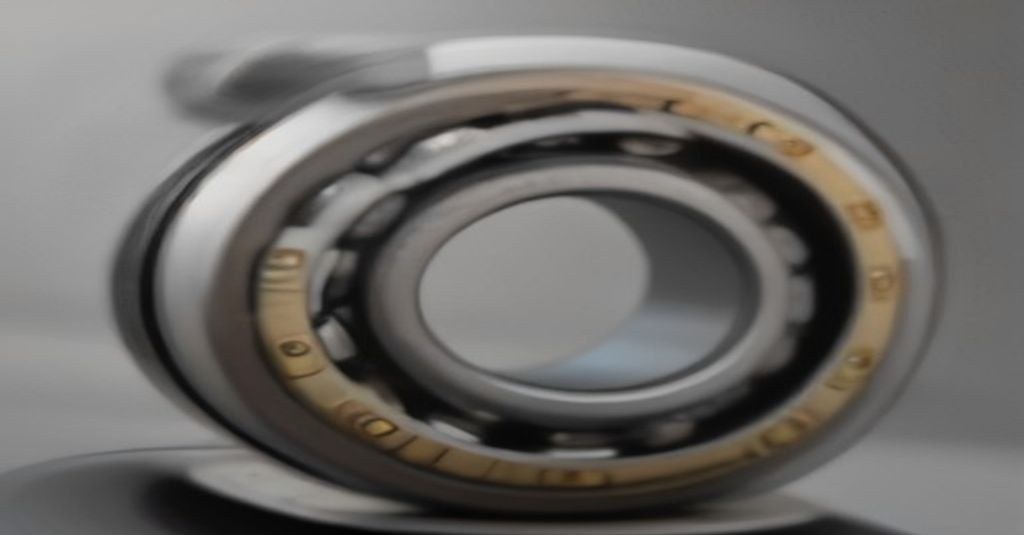
Spherical roller bearings are a type of rolling-element bearing built to handle heavy radial loads along with moderate axial loads in both directions, all while tolerating shaft misalignment that would destroy most other bearing types. The defining feature is the spherical outer raceway, paired with two rows of barrel-shaped rollers that ride between the inner and outer rings. Because the outer raceway is spherical, the inner ring, rollers, and cage can tilt relative to the outer ring’s center line without binding or generating excess heat.
This self-aligning capability is what separates spherical roller bearings from straight cylindrical or tapered roller bearings. On a shaft that’s slightly bent, a housing that’s not perfectly bored, or a machine frame that flexes under load, spherical roller bearings keep running smoothly where other bearing types would fail early. That’s why they show up so often in heavy equipment, where perfect alignment is the exception, not the rule.
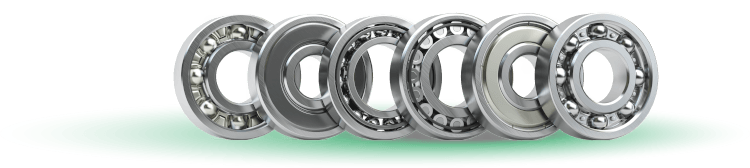
The double-row standard configuration is the baseline design most people picture when they hear “spherical roller bearing.” Two rows of rollers sit side by side under a common spherical outer raceway, giving the bearing high radial capacity and the ability to carry axial loads from either direction. This is the version most commonly stocked and specified for general industrial machinery.
Sealed or shielded versions add a layer of protection against dirt, moisture, and process contamination. In applications like conveyors, mixers, or outdoor equipment where grease purging isn’t practical or frequent relubrication isn’t realistic, sealed bearings help keep contaminants out and grease in, extending service life without constant maintenance attention.
Tapered bore spherical roller bearings use a tapered inner ring bore instead of a straight bore, mounted onto a shaft using an adapter sleeve or withdrawal sleeve. This makes mounting and dismounting significantly easier on plain cylindrical shafts, which is common in pillow block housings and applications where bearings need to be swapped without machining a stepped shaft. It also allows for a precise, adjustable fit that can help manage internal clearance after mounting.
Spherical roller bearings are made in a wide range of bore and outside diameter sizes, from compact bearings used in smaller gearboxes and pumps up to large-bore bearings designed for mill equipment, crushers, and heavy fans. Like most bearings, they’re specified by bore diameter, outside diameter, width, and dynamic/static load ratings, which tell you how much radial and axial load the bearing can handle over its expected life or under a momentary peak load.
Radial load capacity is generally the strong suit of this bearing type, which is why it’s so often chosen for heavy-duty radial applications. Axial capacity is more moderate and depends on the specific design, so it’s worth checking the rated axial load against your application rather than assuming all spherical roller bearings handle thrust loads the same way.
Internal clearance class is one of the most commonly overlooked specs when ordering a spherical roller bearing. Standard clearance works for many applications, but many spherical roller bearings are ordered in C3 clearance, which provides a bit more internal play than standard to account for interference fits, shaft expansion, and heat generated during operation. C4 clearance goes a step further and is typically used in higher-temperature or heavier-load conditions where even more operating clearance is needed to prevent the bearing from binding as components expand. Choosing the wrong clearance class can lead to premature failure even if every other spec on the bearing matches, so it’s worth confirming clearance class against the original part number or the equipment manufacturer’s recommendation.
Because of their load capacity and tolerance for misalignment, spherical roller bearings are a common choice across heavy industrial equipment. Typical applications include:
In most of these cases, the equipment is large, loads are high, and perfect shaft alignment isn’t guaranteed over the life of the machine. That combination is exactly what spherical roller bearings are designed to handle.
One of the most common problems MRO buyers run into with spherical roller bearings isn’t finding a new one — it’s finding the exact one a piece of equipment was built with, especially when that part number has been discontinued or superseded by the original manufacturer. Equipment doesn’t stop running just because a bearing number gets phased out.

This is where cross-reference sourcing matters. At Central Surplus, we work through interchange data across major bearing brands, including SKF, NSK, Timken, and NTN, to match an obsolete or hard-to-find part number to a current equivalent, or to source the original number directly through our surplus inventory channels. If you have an old part number stamped on a bearing, a tag from the original equipment, or even a partial number, that’s usually enough to start a cross-reference.
We treat this part of the business as consultative rather than transactional. If a part number doesn’t come back with an obvious match, we’ll ask questions about bore size, configuration, and application to narrow down the right interchange instead of guessing.
Spherical roller bearing pricing varies based on a handful of factors: bore size and overall dimensions, whether the bearing is sealed or open, tapered bore versus straight bore, clearance class, and brand. Larger bearings and specialty configurations naturally cost more than common sizes in standard configurations.
Central Surplus also sources inventory differently from many distributors. Because we buy surplus industrial inventory directly, including bearings pulled from plant decommissions and equipment overhauls, we aim to offer competitive pricing compared with typical distributors on the same part numbers or verified equivalents. For buyers managing tight maintenance budgets or stocking up ahead of a planned shutdown, that pricing difference adds up quickly across multiple SKUs.
If you’re sourcing more than a single bearing, request a quote with your full list of part numbers or a bill of materials rather than pricing items one at a time. It’s faster for you and makes it easier for us to quote the whole job together.
Downtime on equipment running spherical roller bearings is expensive, which is why speed matters as much as price. Orders placed before 6:00pm Eastern ship the same day, so a bearing failure doesn’t have to turn into a multi-day wait for a replacement part.
If you’re ordering for a scheduled maintenance project, a shutdown, or restocking a parts crib, send over your bill of materials and we’ll put together a quote across the full list. This saves time compared to requesting quotes line by line and makes it easier to plan purchasing around a full job rather than one part at a time.
If your plant is decommissioning equipment or sitting on excess spherical roller bearing stock that will never get used, Central Surplus buys surplus industrial inventory, including bearings. Rather than letting unused stock sit on a shelf or get scrapped, it’s worth finding out what that inventory is actually worth.
Are spherical roller bearings better than spherical bushings/bearings for all applications?
Not necessarily. Spherical plain bearings (bushings) and spherical roller bearings solve different problems. Spherical roller bearings are rolling-element bearings designed for rotating applications with heavy loads and misalignment, while spherical plain bearings are often used in oscillating or articulating joints with lower speed requirements. The right choice depends on the application, not a general ranking of one over the other.
How much load can a spherical roller bearing handle?
Load capacity depends entirely on the specific bearing’s size, design, and clearance class. Every spherical roller bearing has published dynamic and static load ratings specific to that part number, so the right way to check capacity is to look up the rating for the exact bearing, or the equivalent, rather than relying on a general rule of thumb.
Can I replace a sealed SRB with an open one, or vice versa?
Sometimes, but it depends on the original application and environment. If the original design called for a sealed bearing to keep out contamination, switching to an open bearing could shorten service life even if the dimensions match. When in doubt, cross-reference the original configuration rather than just the bore and OD.
Whether you’ve got a part number in hand, an obsolete number that needs cross-referencing, or a full bill of materials to quote, Central Surplus can help you get the right spherical roller bearing without the typical distributor markup or wait. Search your part number, send us a cross-reference request, or request a quote — orders placed before 6:00pm Eastern ship the same day, nationwide.
Our team can locate, cross-reference, and source all parts.
Our team can locate, cross-reference, and source all parts.