Product Description
What this part is
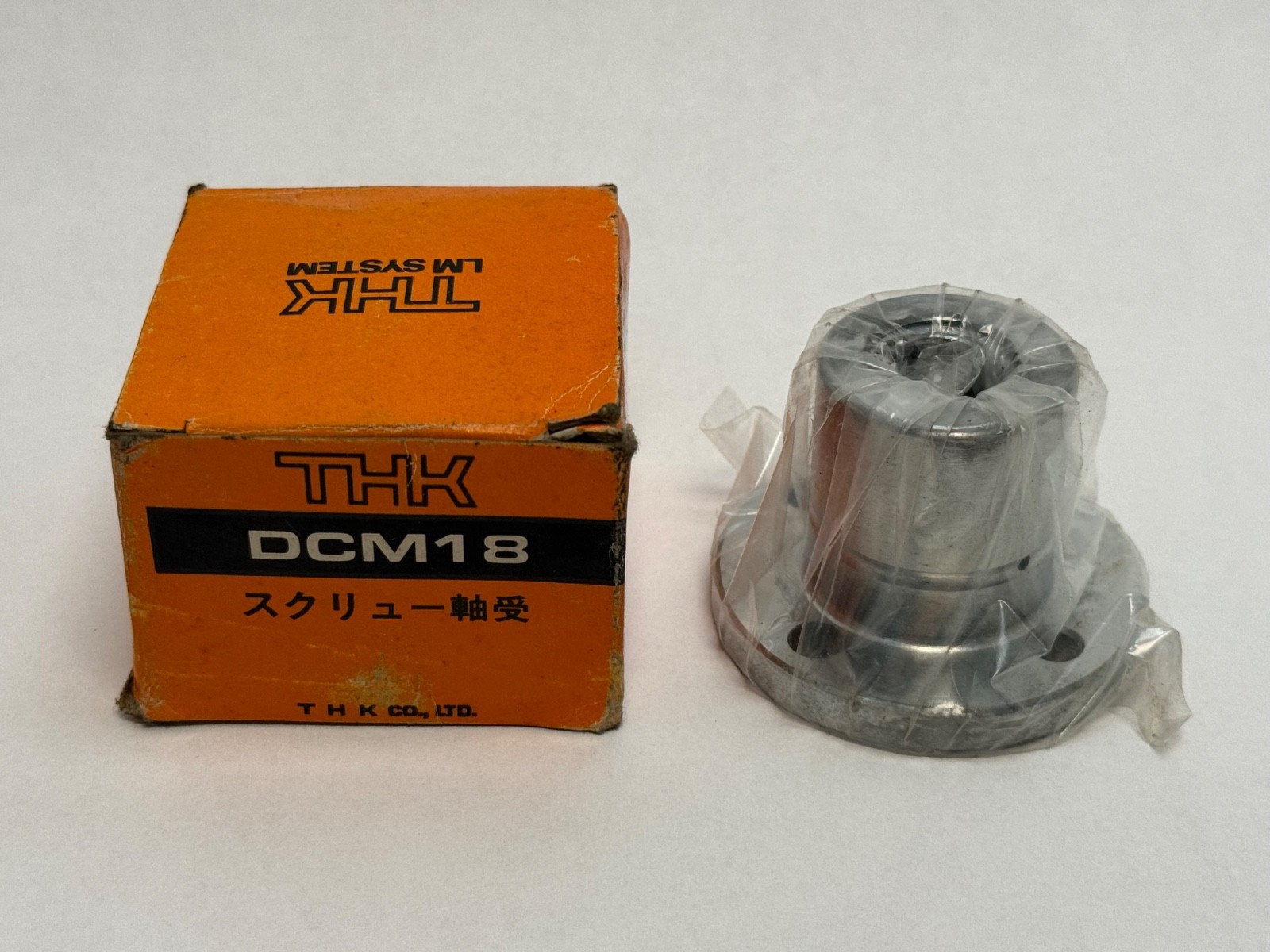
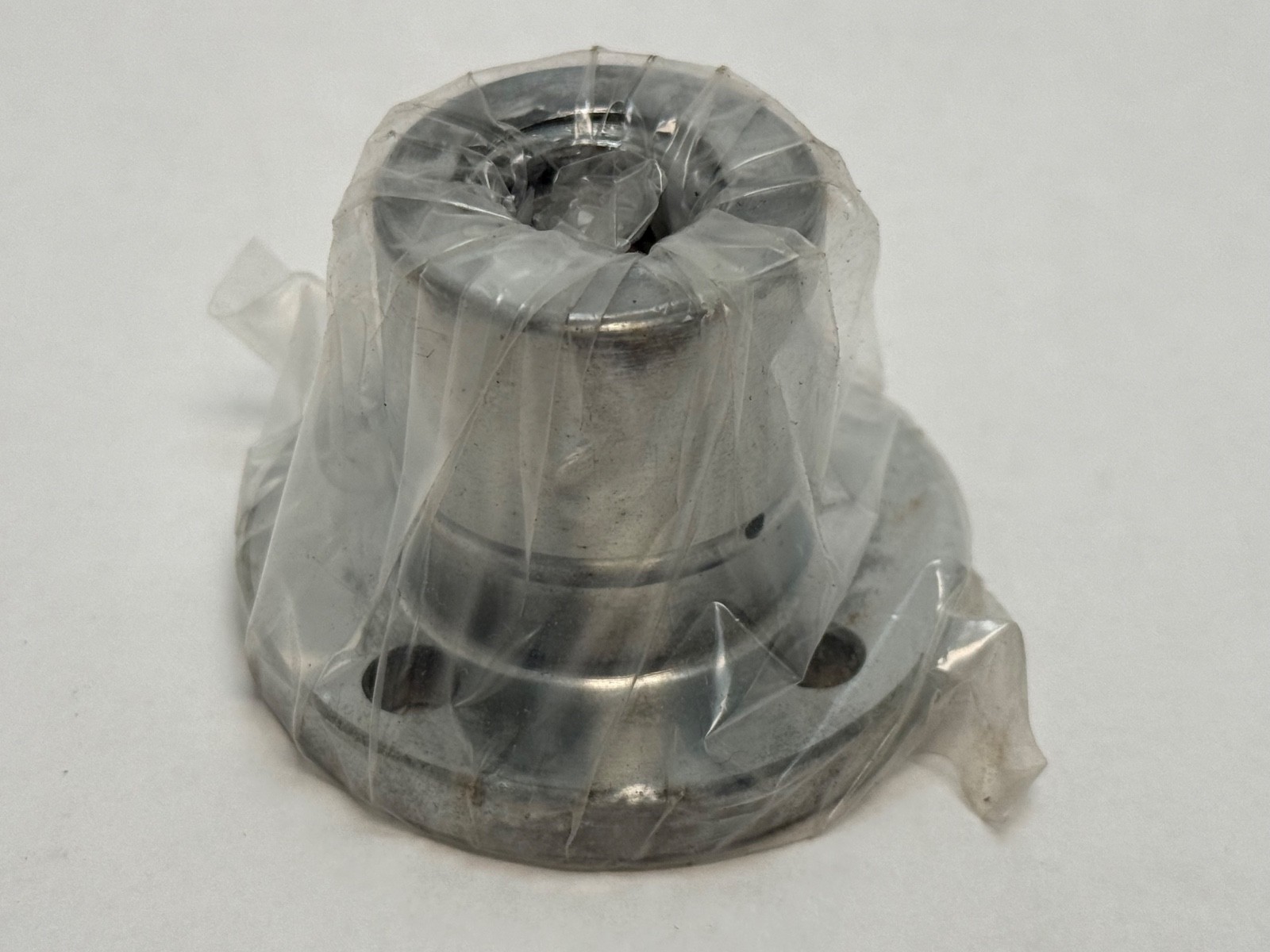
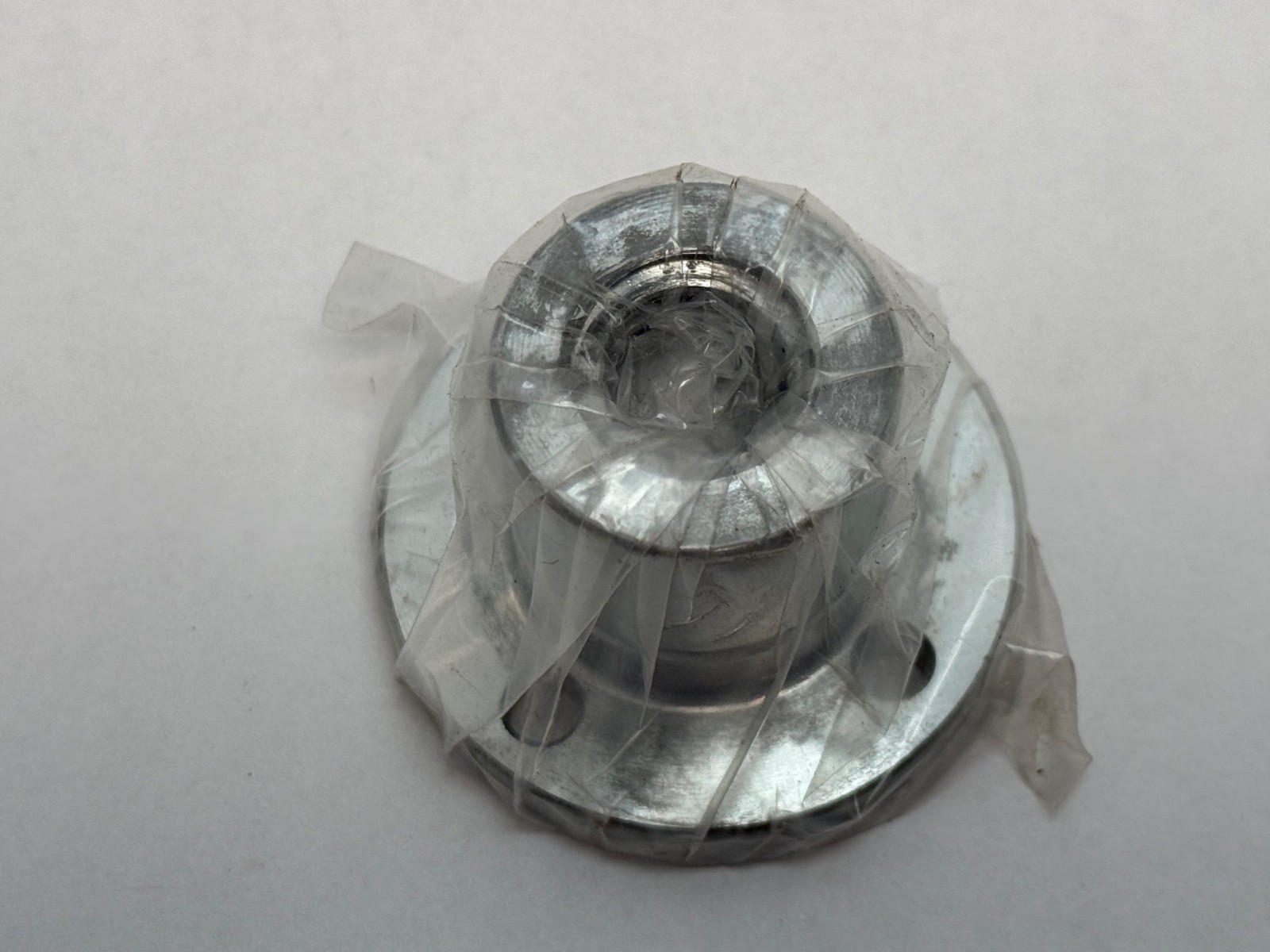
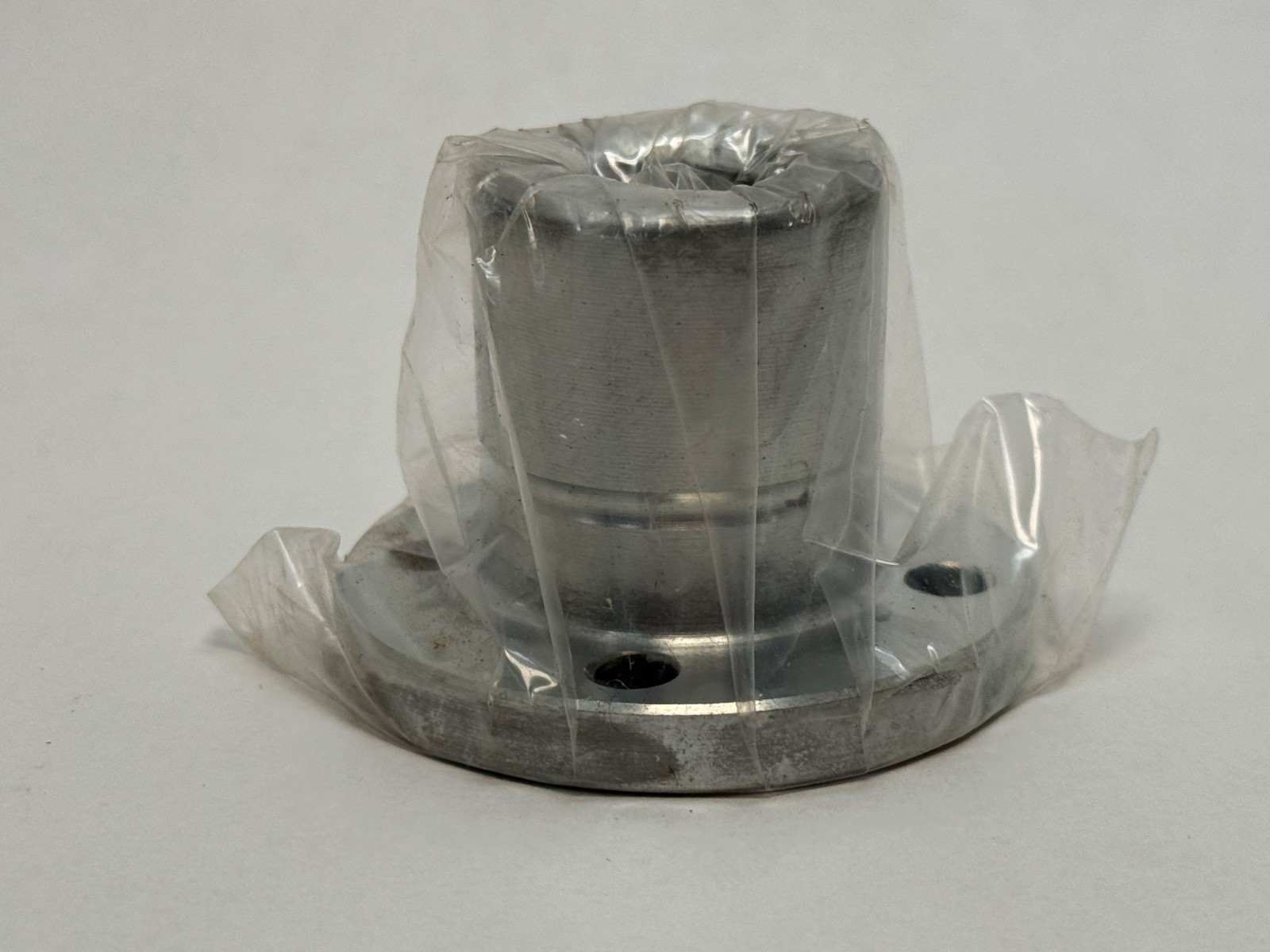
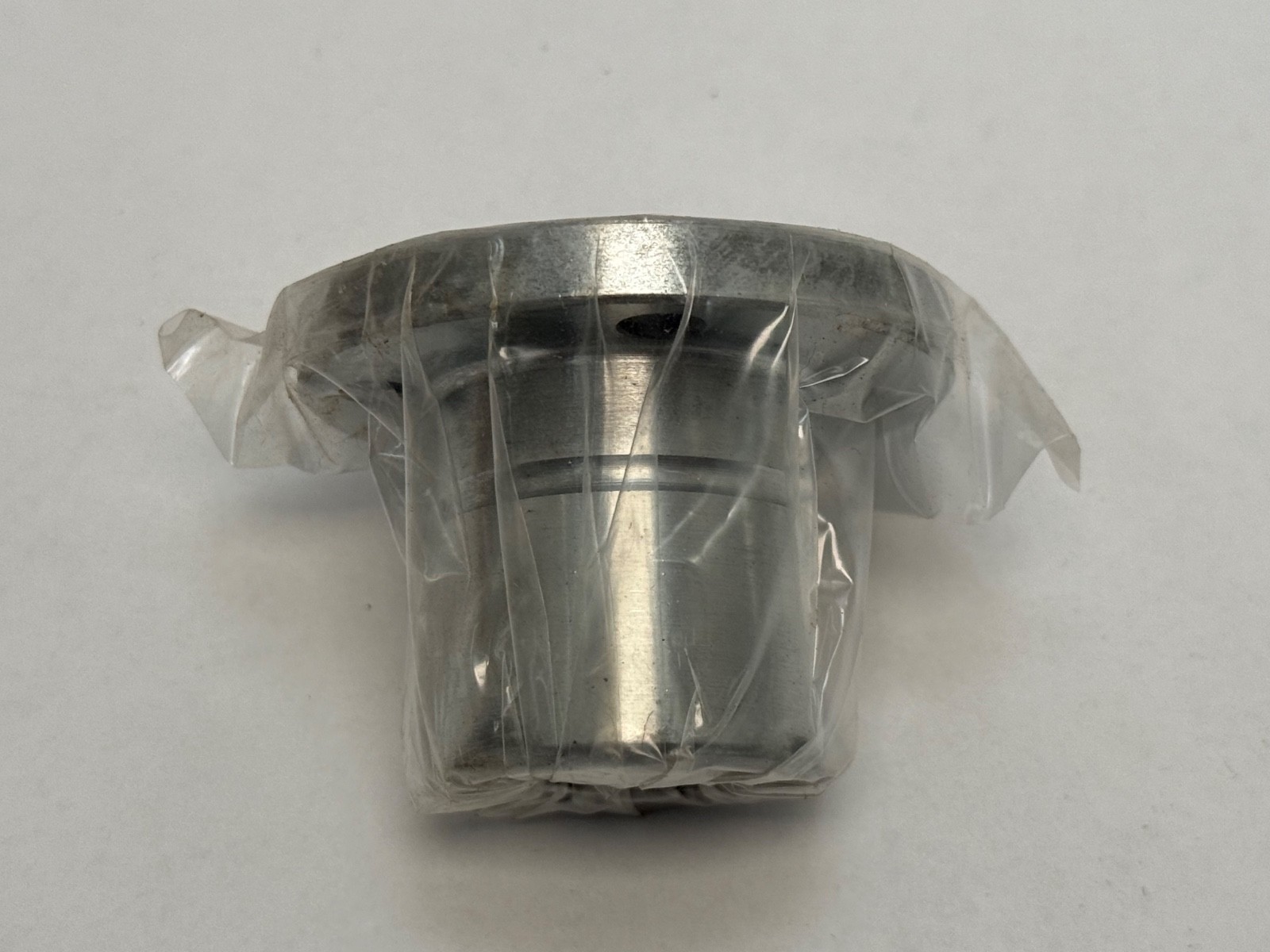
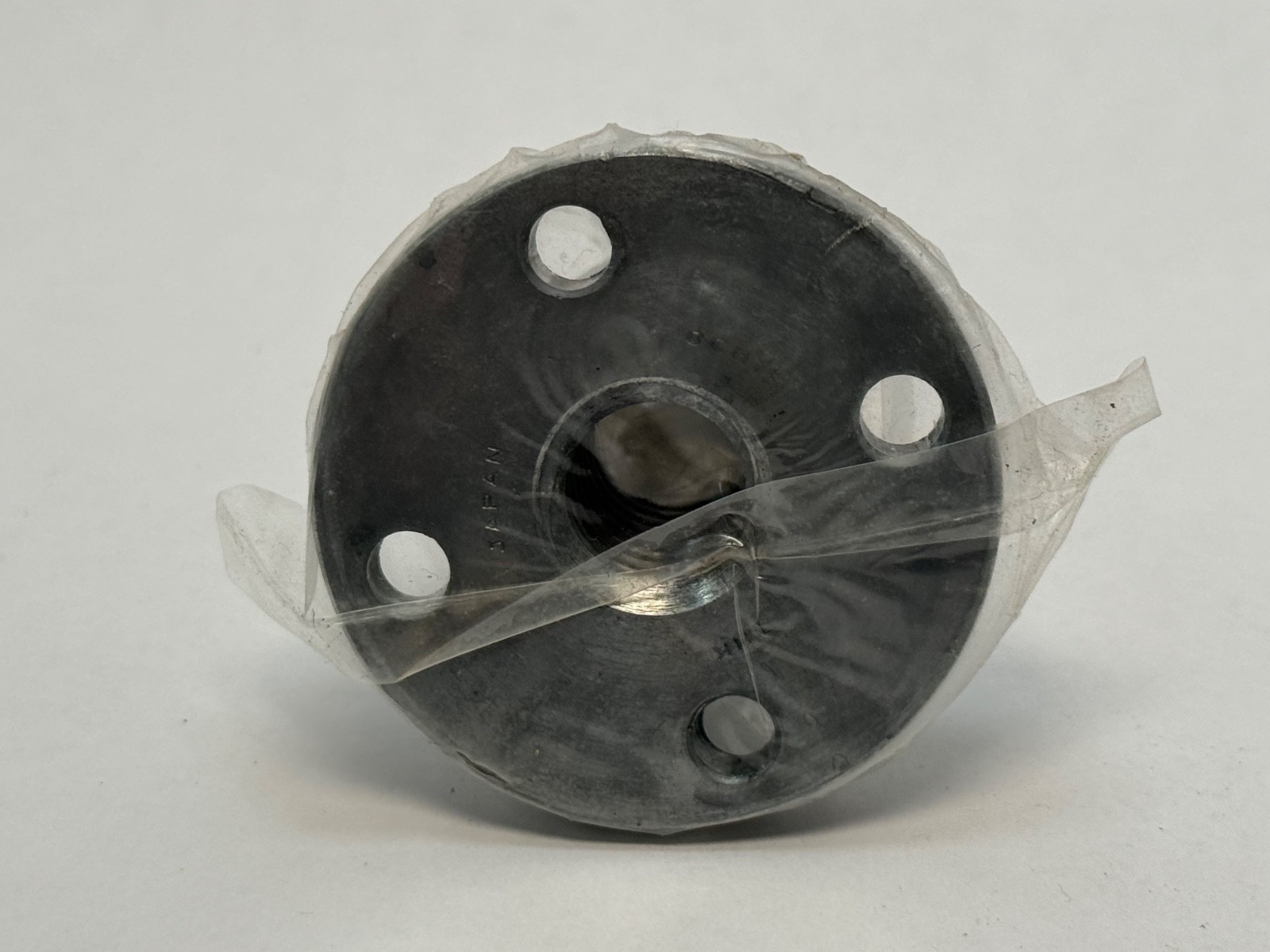
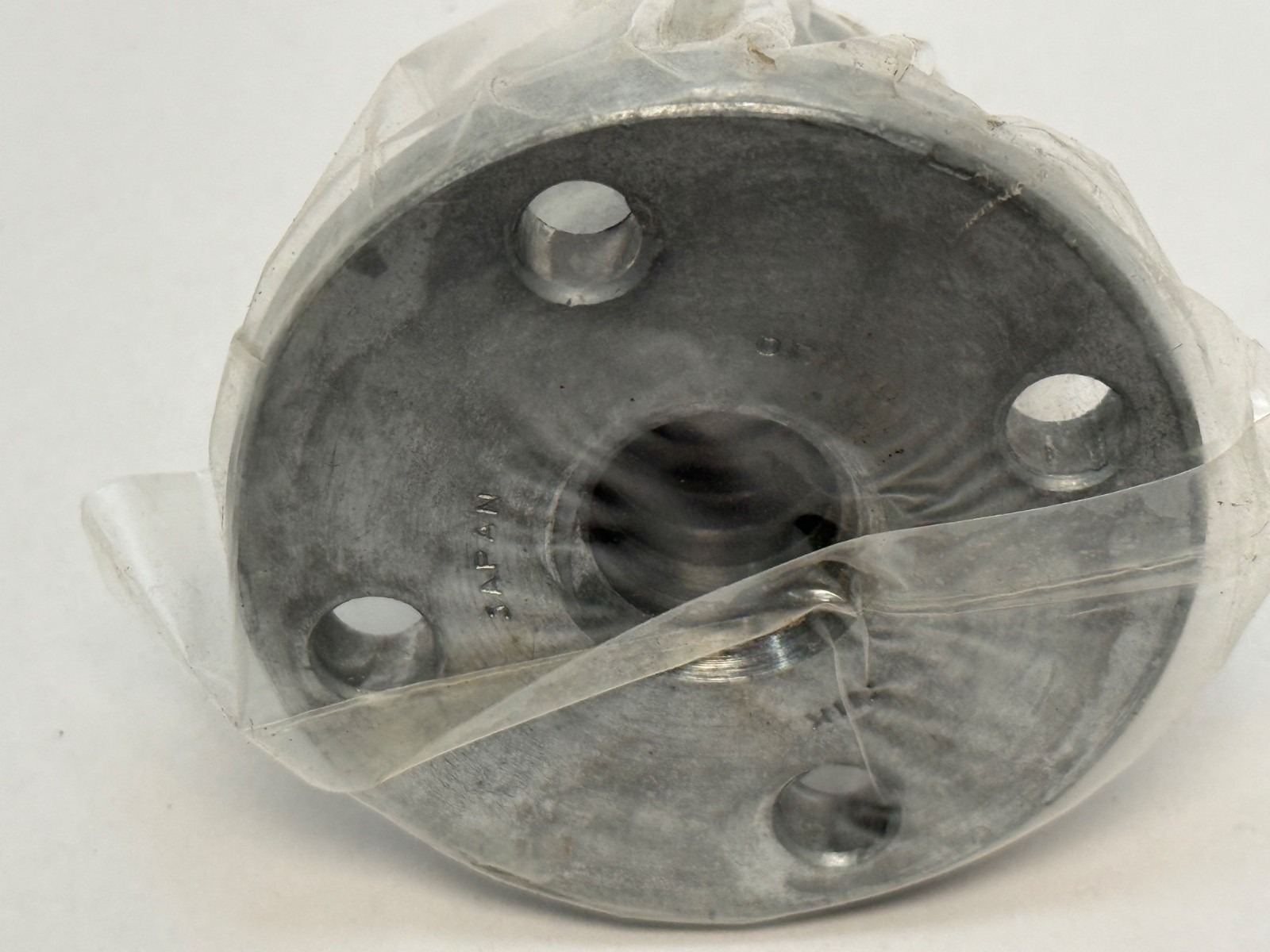
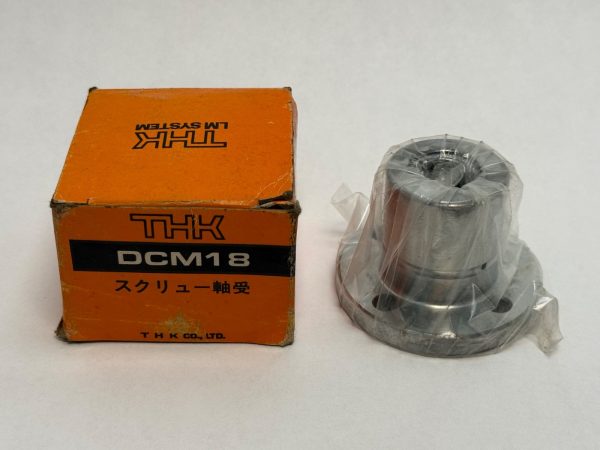
This is a THK Lead Screw Nut — a flanged, sliding-contact nut for a trapezoidal (30°) lead screw. It is die-cast from a special zinc alloy formed directly around a precision male-screw core, which is how THK gets an accurate thread form without cutting one. It runs on a THK CS-series lead screw shaft and converts rotation of that shaft into linear travel of the nut.
There are no balls inside it. The thread flanks slide.
Correcting the source data
Our previous description for this record described the part as being “designed for use with ball screws” and as a precision component for “smooth and precise rotary motion.” Both statements were wrong and have been removed.
The DCM series is not a ball screw nut and not a ball nut. It is a sliding-contact lead screw nut. It contains no ball complement, no return circuits and no recirculation path, and it will not mate with a ball screw shaft of any diameter. It also does not produce rotary motion — it produces linear motion from an input rotation. If you arrived here looking for a ball nut, this is not the part; see the interchange section below for where to go instead.
Decoding the designation
DCM — THK die-cast lead screw nut, flanged, special zinc alloy.
18 — the 18 mm mating screw shaft diameter. This is not the nut outer diameter, which is 32 mm. Confusing the two is the most common mistake on this part number.
Sliding contact versus a ball nut, and why it matters:
The choice between a sliding lead screw nut and a ball nut is a real engineering trade, not a quality ranking, and it is worth being clear about both sides.
What a sliding lead screw nut gives you: it is inexpensive, it runs quietly, it is self-damping because the sliding friction absorbs vibration, and at the shallow 4°33′ lead angle of the CS18 shaft it is not back-drivable. That last point is the big one. A non-back-drivable nut will hold its position under load with the motor unpowered and no brake fitted, which removes a whole subsystem from a vertical or clamping application.
What it costs you: efficiency is far lower than a ball screw’s, because you are sliding metal on metal rather than rolling balls, so more of your motor torque turns into heat. The nut is a wearing consumable and will need replacing over the life of the machine — that is expected, not a defect. And it cannot be preloaded to remove backlash the way a double or preloaded ball nut can; the backlash you have is the backlash you live with, or you take it up in software or with an anti-backlash spring arrangement.
So: anyone shopping for a high-efficiency, zero-backlash, high-duty-cycle positioning screw will be disappointed by this part. Anyone who wants a cheap, quiet, self-locking positioning nut for a manual stage, an adjuster, a jack, a clamp or a low-duty axis is in exactly the right place.
Published dimensions and ratings
Nut outer diameter D: 32 mm (tolerance 0 / −0.062)
Nut length L: 40 mm
Flange diameter D₁: 56 mm
Flange thickness H: 7 mm
Mounting: 4 bolt holes of 6.6 mm on a 42 mm PCD
Corner radius r: 1.5 mm; F: 2 mm
Oil hole d: 10.5 mm
Thread: right-hand, trapezoidal 30°, 1 thread groove
Material: die-cast special zinc alloy
Mass: 230 g
Service temperature: 5–60 °C
Dynamic permissible thrust of the mating CS18 shaft F: 8,730 N
Static permissible load of the flange P: 42,000 N
Read the 8,730 N figure carefully. That is the dynamic permissible thrust of the mating CS18 shaft, published as shaft data — it is not the nut’s own load capacity and should not be quoted as such. The 42,000 N figure is the static permissible load of the flange, which is a structural limit on the mounting face, again not a running load rating for the thread. THK does not publish a separate dynamic rating for the nut thread itself; sliding nut life is governed by wear under PV conditions rather than by a fatigue rating.
Mating shaft and accuracy
The nut runs on THK CS-series lead screw shafts. For the CS18: 18 mm outer diameter, 16 mm effective diameter, 13.5 mm minor diameter, 4 mm lead, 4°33′ lead angle. Nut and shaft are sold separately — this listing is the nut only.
Positioning accuracy of the assembly is set by the shaft grade you choose, not by the nut: rolled (T), cut (K) or ground (G), in ascending order of lead accuracy and cost. If your accuracy requirement is loose, a rolled shaft is the sensible pairing and keeps the whole axis cheap.
Lubrication and installation notes
The 10.5 mm oil hole is there for a reason. A sliding nut depends on maintained lubricant film between the thread flanks; run one dry and it wears fast and noisily. Set up a lubrication interval and actually keep to it.
Bolt the flange to a face square to the screw axis. A cocked flange side-loads the thread and concentrates wear on one flank.
Right-hand thread only. Confirm your required direction of travel for a given motor rotation before committing the design.
Keep operating temperature within 5–60 °C. Zinc alloy loses strength as it warms and the lubricant thins.
Expect some backlash from new, and design the machine so that backlash sits somewhere harmless — approach a critical position from one direction only where you can.
Interchange guidance
Written as DCM18, DCM-18 and DCM 18. Related THK parts that are not interchangeable with this one:
Other DCM sizes — same family and same construction, but matched to a different shaft diameter and lead. A DCM nut only fits the CS shaft of its own size.
THK BNK and BLK series — these are genuinely different technology: recirculating ball screws, rolling contact, higher efficiency, back-drivable. If you actually need a ball nut, this is the family to look at, and no DCM part will substitute.
Condition on this unit is new, open box, new old stock, made in Japan.




 store
store