
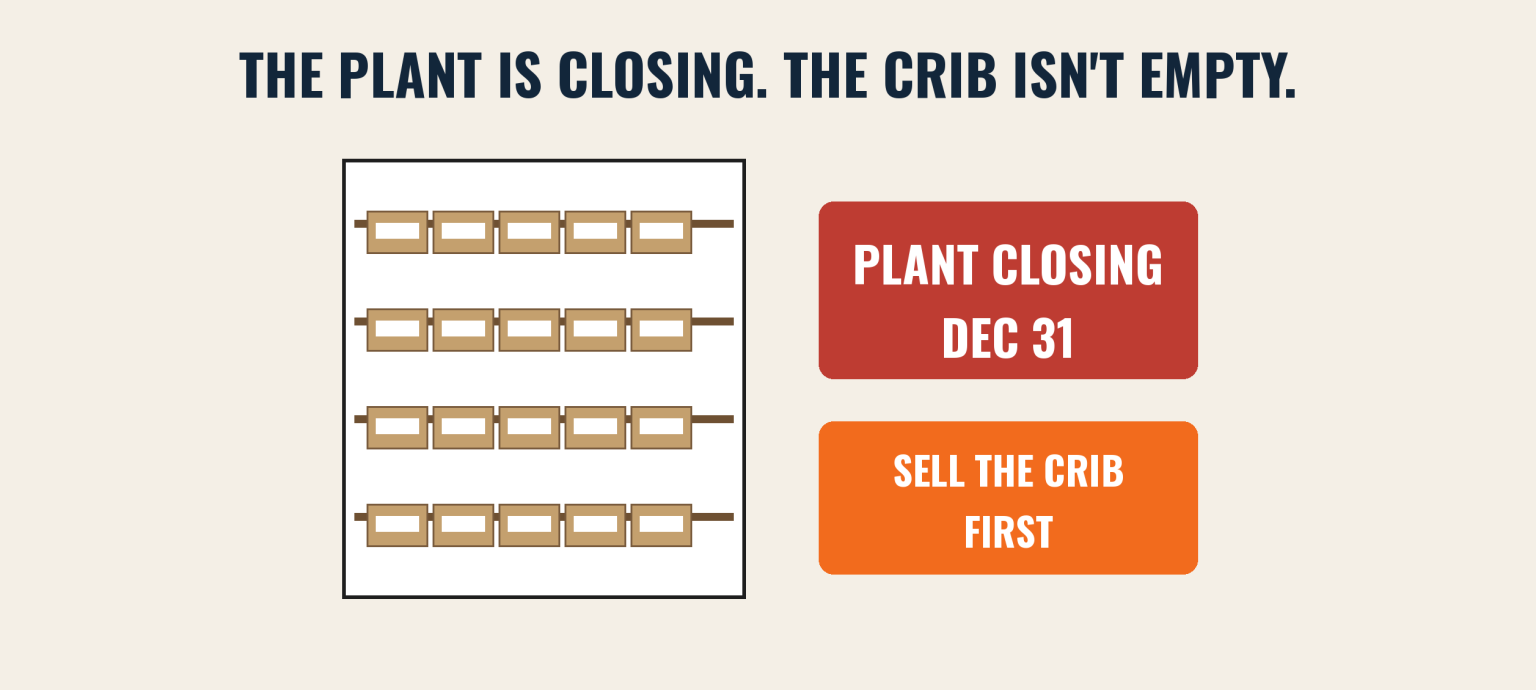
When a plant closes, the bearings are the easiest thing in the building to sell and the first thing to get thrown in a scrap bin.
What to do with surplus bearings from a plant closure, before the auctioneer lots them by the pallet.
The closure date is set. The machines have a buyer, or an auction date. The building has a broker.
And somewhere in the back, there’s a crib full of boxed bearings nobody has a plan for.
That crib is usually worth more per square foot than anything else on the floor. It also gets the least attention. Here’s how to handle surplus bearings from a plant closure so they leave as merchandise, not scrap.
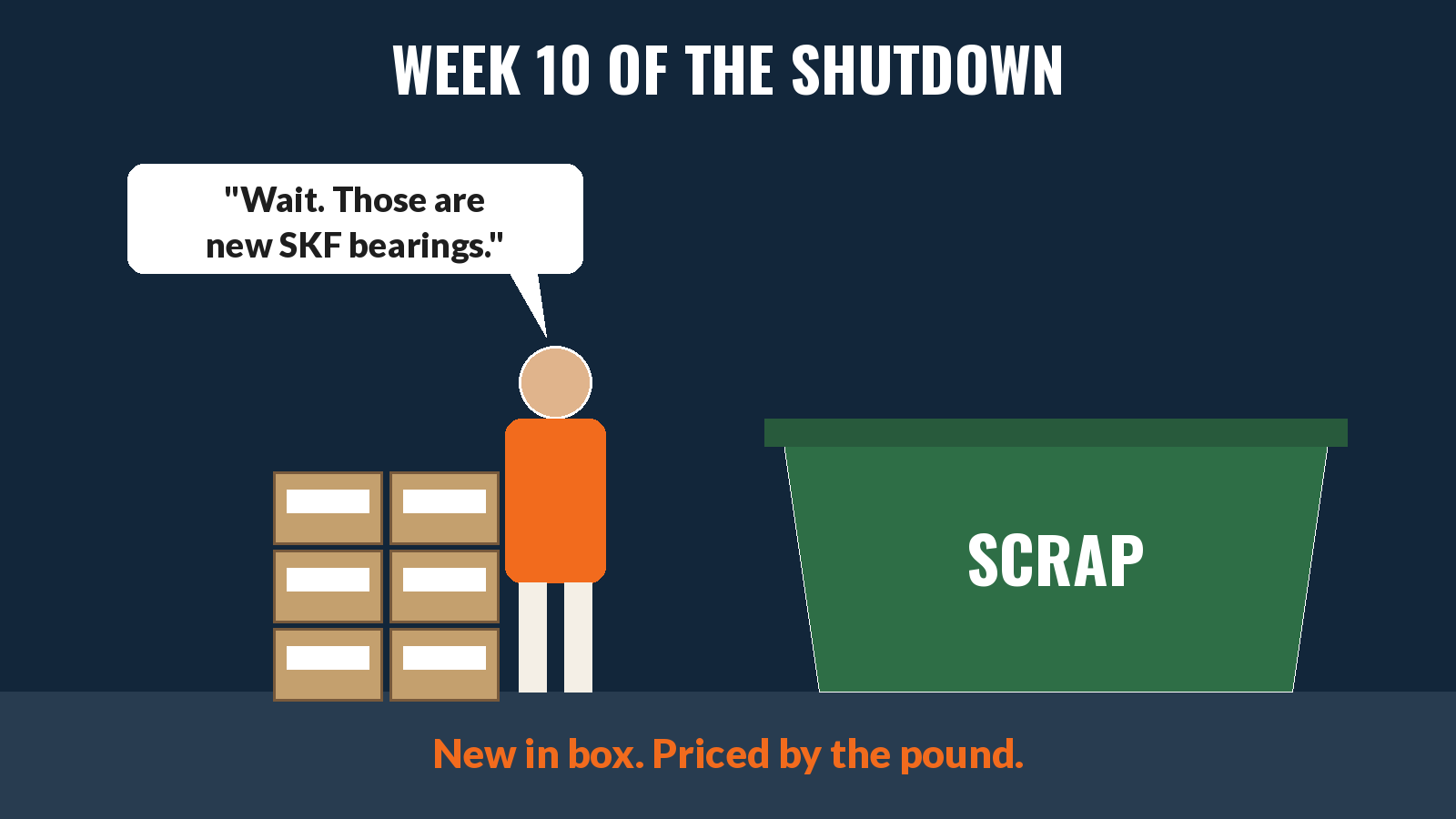
Shutdowns run on a checklist, and bearings rarely make it on.
None of that is anyone’s fault. Closures are hard, and the crib is one more job at the worst possible time.
That’s exactly why it should be the easiest job on the list.
(We’ve walked closing plants where the crib was the last room anyone opened. By then the dumpster was already on site.)
It also isn’t only bearings. The same crib usually holds pillow block bearings and flange units, belts and sheaves, motor starters, spare drives and a drawer of PCBs somebody swore they’d need one day. All of it sells better together than apart.
Here’s the honest version.
Every month the doors stay open costs money: utilities, insurance, security, the people keeping the lights on. Every month the bearings sit, their buyer pool shrinks a little as other plants standardize or retire the same equipment.
Waiting doesn’t help the price. It just adds to the bill.
And the closing team has better things to do than answer emails about a single 6205 for the next eighteen months. One buyer, one conversation, done.
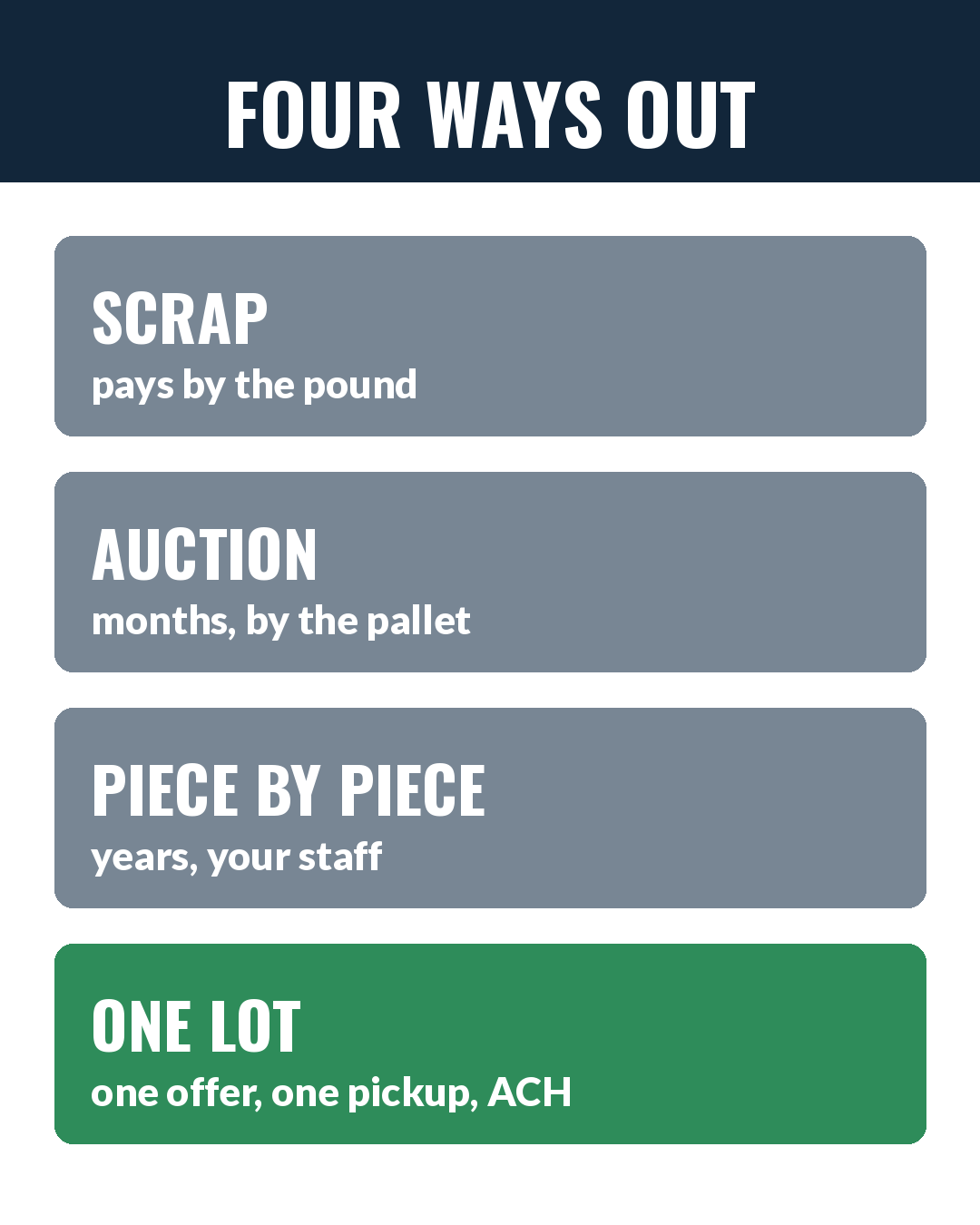
Smart money sells surplus bearings from a plant closure in one lot, gets the highest bulk price and gets paid in a week.
The person who clears the crib before closing day tends to be remembered well. One less thing on the list, cash on the books instead of a scrap ticket.
For the bigger picture, see what happens to the storeroom when a manufacturing plant closes, and why it pays to sell surplus bearings before the grease gets old. If you’re comparing options, our breakdown of scrap vs. auction vs. selling excess MRO inventory runs the math.

Who buys surplus bearings from a plant closure?
Surplus buyers and surplus wholesalers that purchase whole lots of new and boxed industrial bearings and MRO parts from closing plants.
Should bearings go in the equipment auction?
No. Auctions sell by the pallet. A dedicated surplus buyer prices the crib as a whole.
Do I need an inventory list?
No. It helps, but photos work. Big lot for sale? A good surplus buyer will meet you at your wareshouse.
How fast can a crib be cleared?
Days to weeks, depending on size. Usually well before closing day.
Take the emotion out of it. The plant is closing either way. The bearings shouldn’t leave in a scrap bin. And if you sell now, you’re not paying to store them one more month.
Ready to sell industrial MRO parts? Make it easy. → Sell Your Parts


Our team can locate, cross-reference, and source all parts.
Our team can locate, cross-reference, and source all parts.