
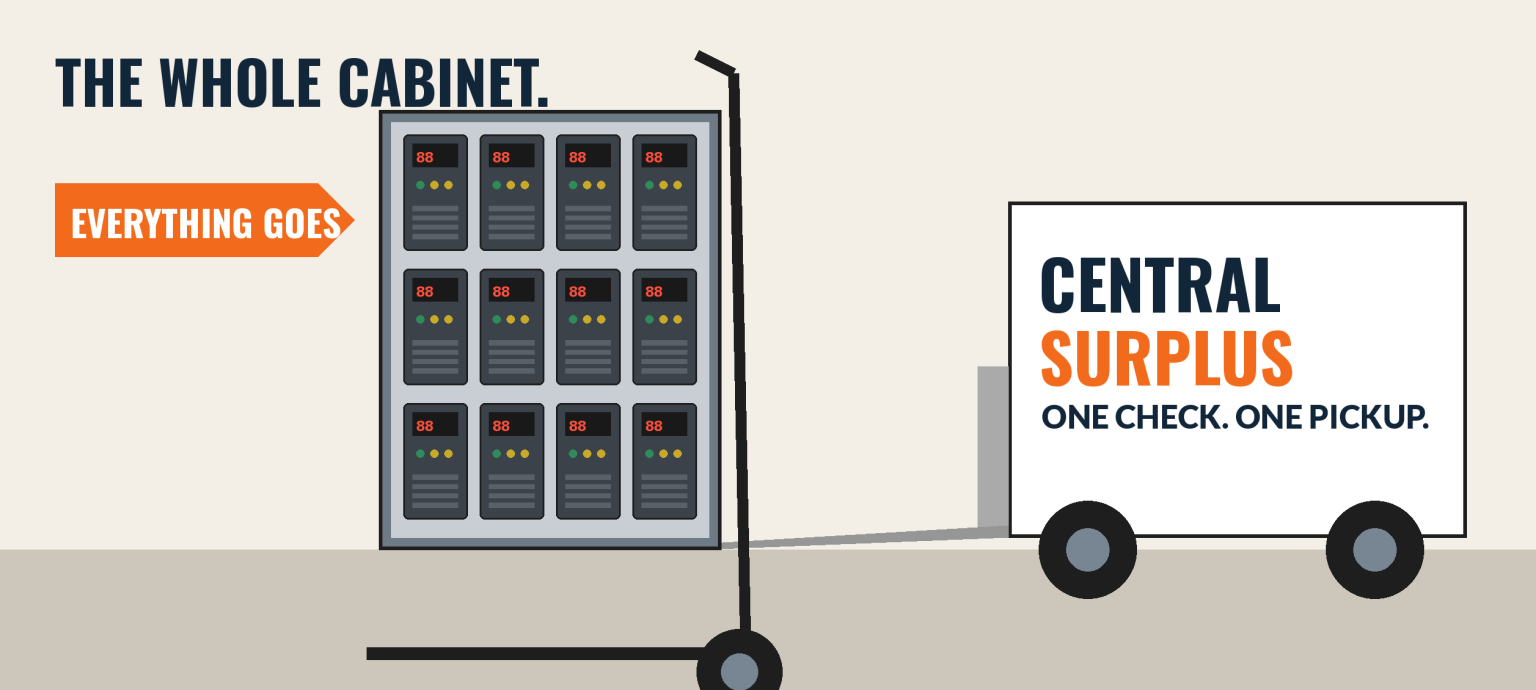
Rockwell’s own product page for the Kinetix 6000 is down to one line that matters: discontinued and no longer available for sale. Per a machine builder’s service bulletin, that cutoff landed in December 2023, a year after the Kinetix 2000 went the same way. Somewhere in your plant there is a cabinet of spare 2094 modules, a few Ultra 3000s, a stack of Yaskawa amps and a shoebox of PCBs nobody has opened since the line was rebuilt.
So who actually buys that stuff, in bulk, for real money? Fewer people than the internet suggests. Before you sell surplus servo drives to anyone, know who’s on the other end of the deal. Here’s the honest lineup.
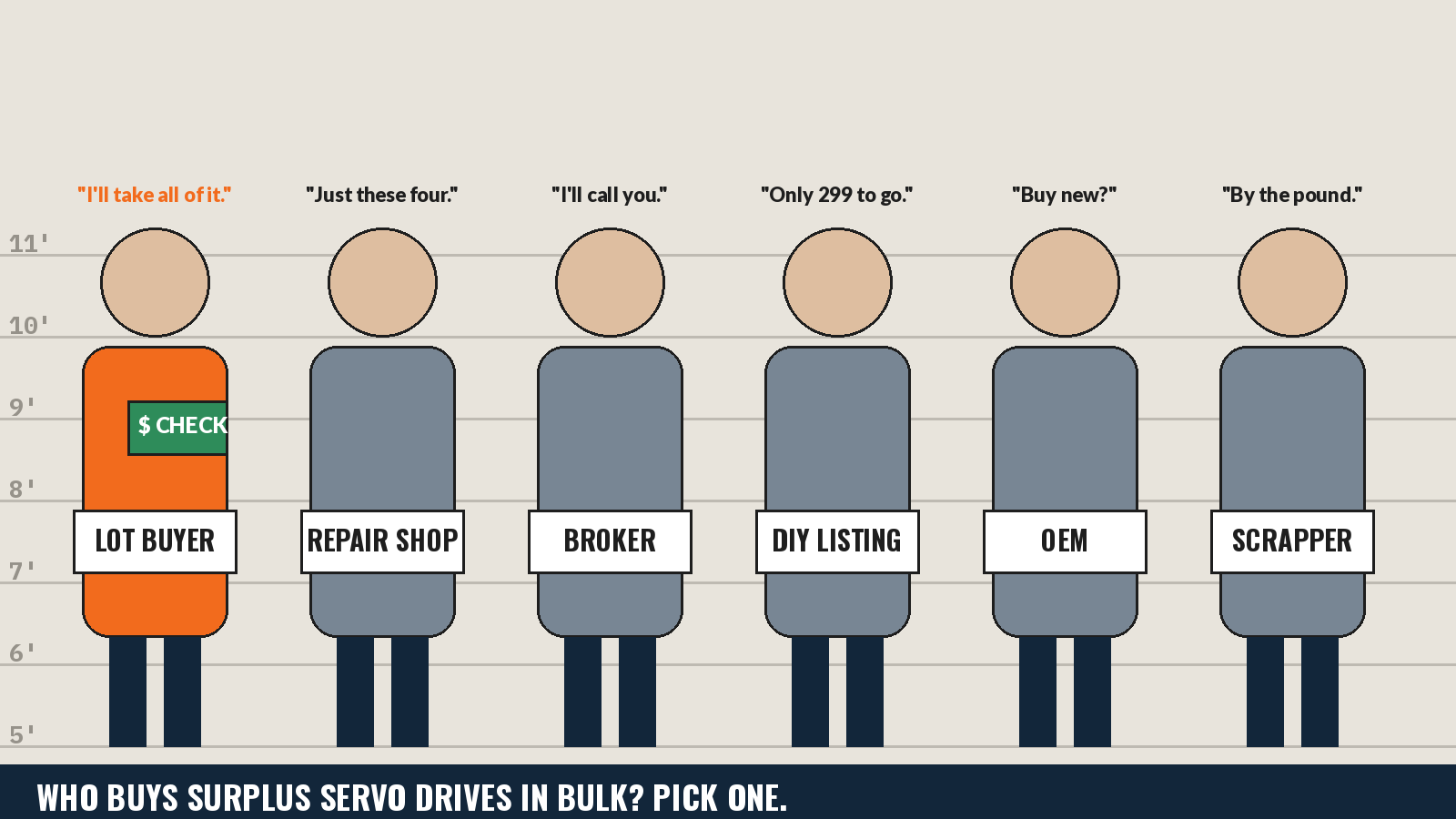
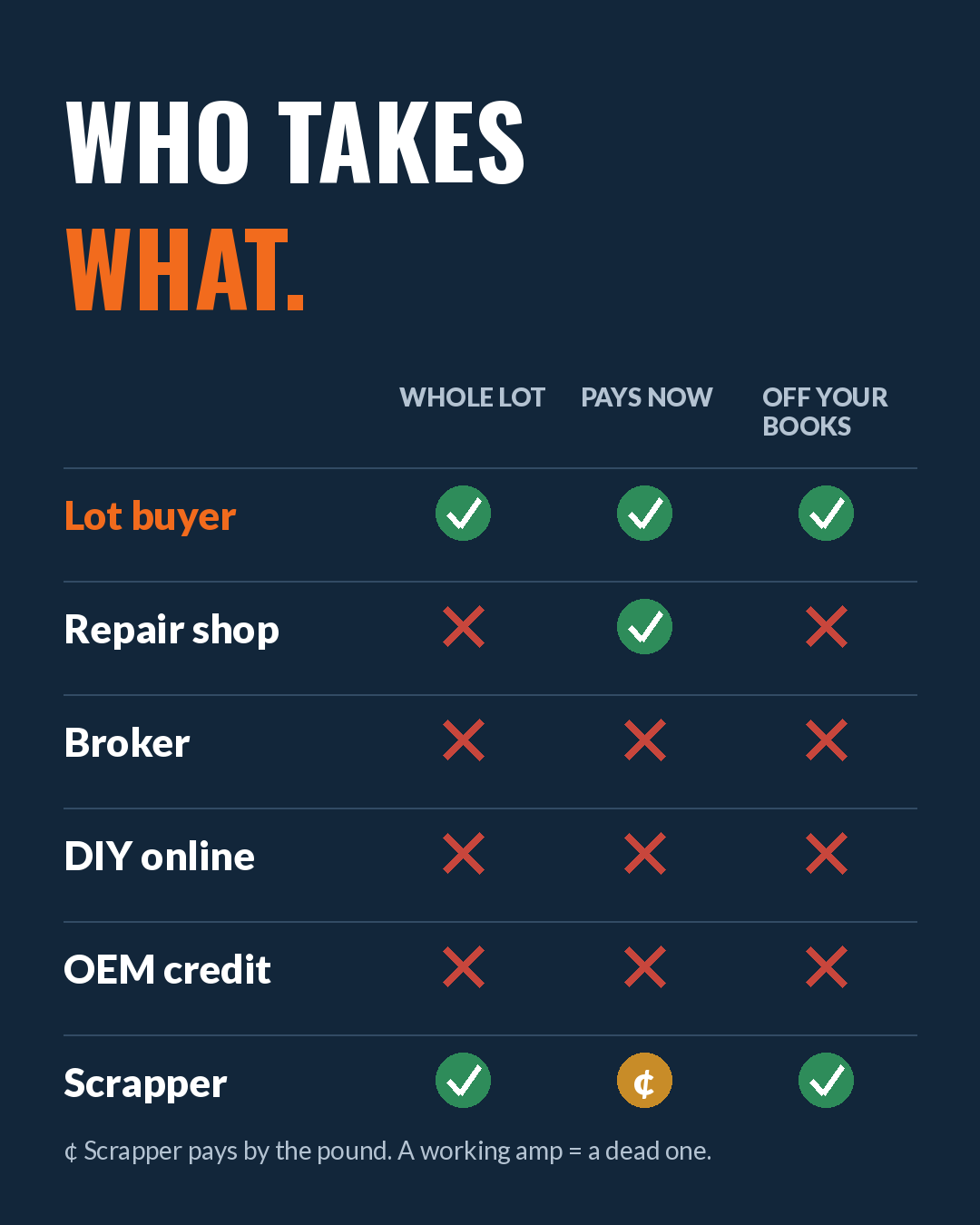
If you want to sell surplus servo drives, amplifiers and circuit boards as one batch, your realistic buyers are surplus lot buyers, repair houses, and brokers. OEMs and scrap recyclers will sometimes take them too. They just won’t pay you for them in any way you’d call a sale.
A lot buyer takes the whole cabinet: the Kinetix modules, the orphan Indramat amp, the boards in anti-static bags and the ones out of them. One offer, one pickup, one check. They price the batch on what moves, accept that some of it won’t, and carry that risk themselves. That’s the trade. You give up squeezing the last dollar from your two best part numbers; you get the entire shelf cleared in a week instead of eighteen months. No other way to sell surplus servo drives ends the problem that cleanly.
This is what Central Surplus does. Drives, amps and industrial automation parts are the core of what we buy; becuase they are the most diffult to sell one-by-one for a distributor or industrial plant.
Repair shops buy cores. They want specific models they already rebuild, and they’ll pay a core price, not a resale price. Great if your stock happens to line up with their bench. Most plant surplus doesn’t, so expect them to cherry-pick a handful and politely pass on the rest.
A broker will list your parts and try to find a buyer, then take a cut. It is a commsioned sale, taking years. Nothing leaves your building until something sells. Which means the cabinet, the insurance on it and the annual count of it all stay yours for as long as the broker needs. That’s not a buyer. That’s a waiting room with a commission. Do you still want to sit on the parts and wait years?
Possible, one listing at a time. Somebody has to photograph each drive, research the firmware revision, answer the “will this work with my 1756 rack” emails, pack it, and handle the return when it doesn’t. For three parts, fine. For three hundred, you’ve hired a part-time employee to run a store you never wanted. If you have a reslling expert on your team with expereince, go for it.
The OEM’s interest in your old drives is selling you new ones. Trade-in credit, when it exists, is a migration discount with your spares as the excuse. Useful if you’re already buying Kinetix 5700s. Not an exit. And don’t forget: when you send dead-stock back to the MFR, if they accept it, you pay 50% of its value.
They’ll weigh it. That’s the whole conversation. A working servo amplifier and a fried one fetch the same price per pound, and neither number will cover the forklift time.
Here’s what nobody writes on the bin label: drives and PCBs don’t age gracefully on a shelf. Electrolytic capacitors dry out, connectors oxidize, and the buyer pool shrinks every time another plant finishes its migration to the next platform. Electromechanical goes obsolete fast; this isn’t a market where you wait for a better price. The best offer you’ll get on a cabinet of legacy servo gear is usually the one available right now.
Meanwhile, holding it costs you something every month, whether anyone looks at it or not. Floor space you’re paying for. Property tax on inventory carried at book value. Insurance. Two people counting it every year at physical inventory and arguing about whether the green-tagged ones still count. Keep it another year and you’ve paid for it twice, once when you bought it and again to babysit it.
To sell surplus servo drives in bulk, you don’t need a spreadsheet with serials, revisions and test reports. A lot buyer would rather see the shelf than read about it.
That’s enough for an offer. If the lot also includes PLCs, our piece on selling surplus PLCs covers that side; for Fanuc amps and boards specifically, see selling surplus Fanuc boards and servo amplifiers. And if the drives are only one corner of a storeroom you’d rather clear entirely, we’ll buy the whole room in one lot.
When you sell surplus servo drives in one lot, the list of things you stop doing is longer than the list of things you do. No listings. No emails from strangers asking about firmware. No returns. One call, one offer, one pickup, and the check clears.
The cabinet is gone, the floor is yours again, and nobody counts those drives at year-end, including the tax man. Whether some of it sits on our shelf for three years is our problem now, not yours.

If your goal is to sell surplus servo drives, amplifiers and PCBs in bulk and actually be done with them, you want a buyer who writes one check for the whole cabinet and takes on the risk of what doesn’t move. Brokers, OEM credit and DIY listings all leave the inventory on your books. The scrapper leaves you nothing.
The cabinet isn’t getting more valuable. The buyers aren’t getting more numerous. Send the photos.
Ready to sell industrial MRO parts? Make it easy. → Sell Your Parts
Our team can locate, cross-reference, and source all parts.
Our team can locate, cross-reference, and source all parts.