
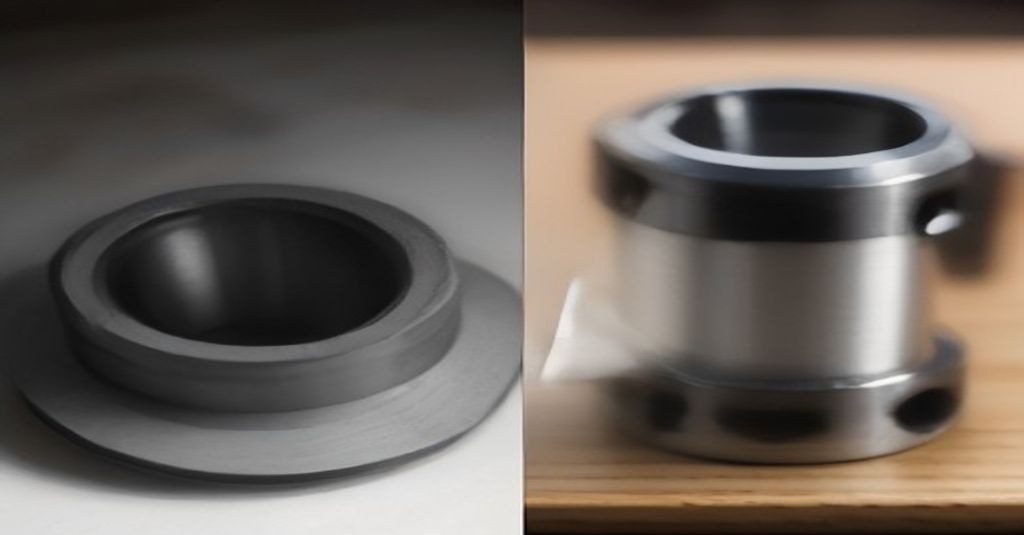
When people compare bushing vs bearings, the bushing is usually the simpler of the two. A bushing, sometimes called a plain bearing or sleeve bearing, is a cylindrical component that allows a shaft or pin to rotate or slide inside a housing. There are no balls, rollers, or cages involved. Instead, the bushing relies on a smooth sliding contact surface between the shaft and the bushing material itself.
Many bushings are made from materials like bronze, nylon, or PTFE-impregnated composites that are self-lubricating, meaning they can operate for long stretches without added grease or oil. This makes them a low-cost, low-maintenance option in power transmission and general machinery components where loads and speeds are moderate.
Because a bushing has so few parts, it’s mechanically simple to manufacture, stock, and replace. That simplicity is part of why bushings remain common across a wide range of industrial equipment, even as bearing technology has advanced.
A bearing is designed to reduce friction between moving parts using rolling elements rather than sliding contact. Instead of a shaft sliding directly against a sleeve, it rolls across balls or rollers held in place by a cage, with inner and outer races guiding the motion.
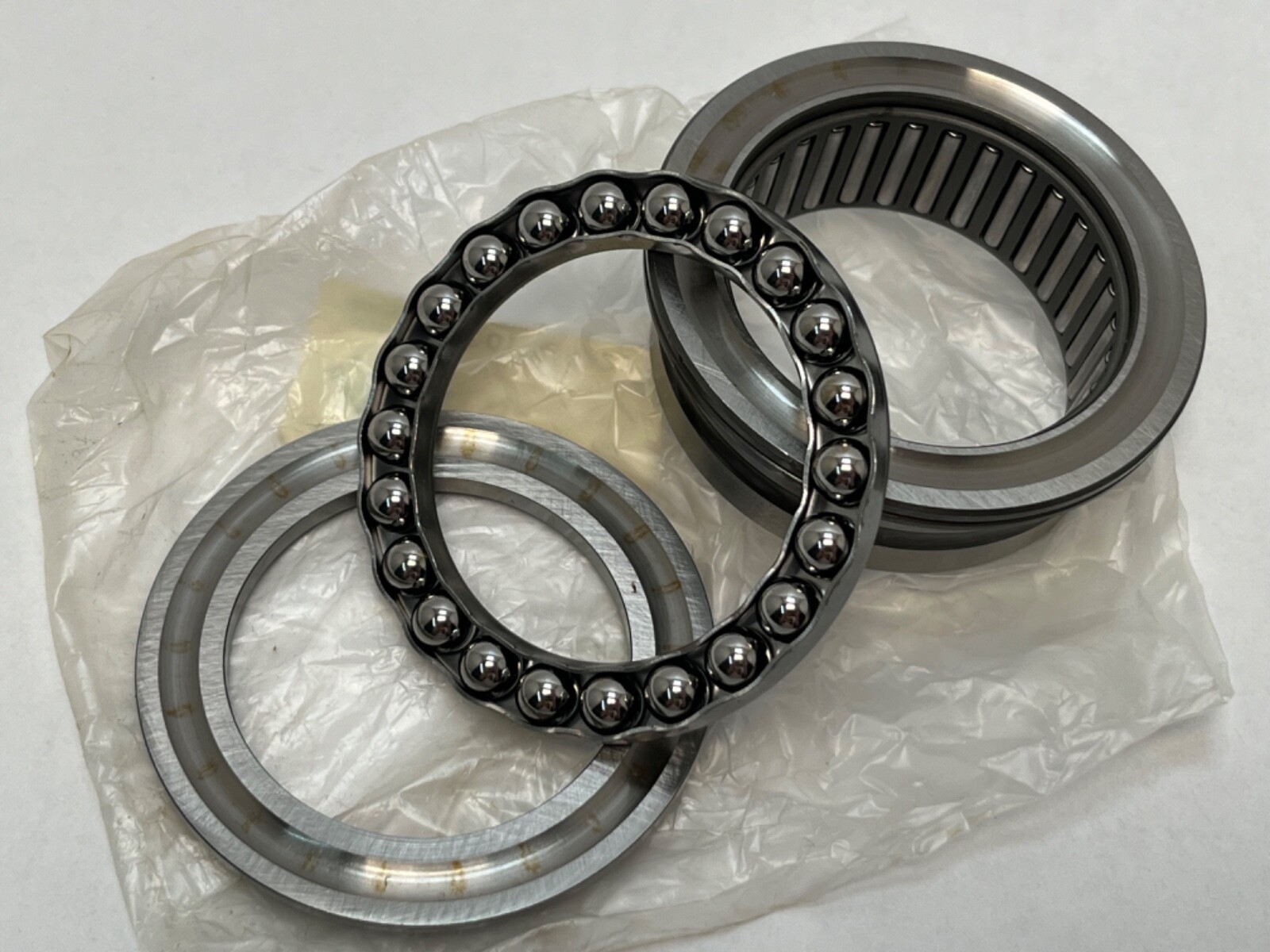
This rolling action generally produces less friction than a sliding bushing under the same load, which is why bearings are the default choice in applications demanding higher speeds, tighter tolerances, or longer service life. Central Surplus carries a wide range of bearings covering the types used across industrial equipment, from motors to pumps to conveyors.
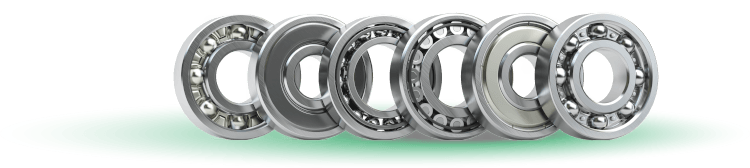
Ball bearings use spherical balls as the rolling element. They handle radial and, depending on design, some axial loads, and are common in electric motors, fans, and general-purpose machinery where speed matters more than extreme load capacity.
Roller bearings use cylindrical, tapered, or spherical rollers instead of balls. The larger contact area lets them handle heavier radial loads than comparable ball bearings, which is why they show up often in heavy equipment, gearboxes, and power transmission assemblies.
The core distinction in the bushing vs bearings comparison comes down to motion type. A bushing relies on sliding contact between two surfaces. A bearing relies on rolling contact through balls or rollers. That single difference drives most of the practical differences buyers care about.
Bushings have fewer parts: typically just the sleeve itself. Bearings have more components, including races, rolling elements, a cage, and often seals or shields. More parts mean more precision in manufacturing but also more capability under demanding conditions.
Sliding contact in a bushing tends to generate more friction and heat than rolling contact in a bearing, especially at higher speeds. Bushings can also be quieter in some applications since there’s no rolling element noise, while certain bearing types can produce audible operation if worn or under-lubricated.
Precision requirements differ too. Bearings are manufactured to tighter tolerances because the rolling elements must fit precisely against the races to perform correctly. Bushings have more tolerance for variation, which is part of why they’re often less expensive to produce and replace.
Bushings generally work well at lower to moderate speeds and are often chosen for applications where load is steady rather than highly variable. Because the contact surface is sliding rather than rolling, excessive speed can increase friction and heat beyond what the bushing material can handle.
Bearings, particularly ball and roller types, are typically better suited to higher-speed operation since rolling friction is lower than sliding friction. This is a major reason electric motors and high-RPM machinery lean toward bearings rather than bushings.
Lubrication needs differ as well. Many bushings are self-lubricating by design, using impregnated materials that reduce or eliminate the need for added grease. Bearings, on the other hand, usually require grease or oil lubrication and benefit from periodic maintenance and monitoring, especially in continuous-duty industrial settings. Sealed or shielded bearings reduce how often lubrication needs to be checked, but they still aren’t maintenance-free in the way some self-lubricating bushings can be.
Bushings are generally the lower-cost option, both in upfront price and in day-to-day maintenance. Their simple construction means fewer failure points and often a longer shelf life in storage, which matters for maintenance teams managing spare parts inventory.
Bearings cost more on average because of their tighter manufacturing tolerances and additional components, but they earn that cost back in applications where speed, precision, or load demands exceed what a bushing can reliably handle. A bearing that’s properly lubricated and not overloaded can run for a long service life in demanding conditions.
Maintenance routines differ too. Bushings mostly need periodic inspection for wear and, in non-self-lubricating designs, occasional lubrication. Bearings benefit from routine lubrication schedules, vibration or noise monitoring, and attention to seal condition, since contamination is one of the most common causes of premature bearing failure.
Choosing between a bushing and a bearing really comes down to matching the component to the demands of the application: speed, load, precision, and budget all play a role.
Electric motors and similar rotating machinery typically rely on bearings because of the combination of speed and precision needed for smooth, efficient operation. Where loads are modest and speeds are low, some machinery components may still use bushings for simplicity and cost savings.
In power transmission components, gearboxes, and hydraulic or pneumatic systems, the choice often depends on the specific motion involved. Rotating shafts under load frequently use bearings, while pivot points, linkages, and lower-speed sliding joints often use bushings. Central Surplus carries both bearings and bushings alongside hydraulics and pneumatics components, so cross-referencing the exact application helps confirm which part fits.
A common question is what is the difference between a wheel bushing and a bearing. A wheel bearing supports the rotating motion of a wheel hub and is designed to handle both radial and axial loads at speed, which is why most wheel hubs use bearings rather than bushings. A bushing in this context is more often found in suspension components, where it absorbs vibration and allows controlled movement at a pivot point rather than supporting high-speed rotation.
Once you’ve decided whether your application calls for a bushing or a bearing, the next step is finding the exact part number, especially if the original part is old, obsolete, or missing a readable label. Central Surplus offers cross-reference and interchange sourcing specifically for this situation, helping match hard-to-find or discontinued part numbers to a current equivalent.
For maintenance teams managing multiple machines or a full bill of materials, Central Surplus can also quote multiple parts together, so you can source several bushings, bearings, or related power transmission components in one order instead of piecing it together part by part.
And because downtime is often the real cost driver, not just the part price, Central Surplus ships same-day for orders placed before 6:00pm Eastern. Whether the fix calls for a simple bushing or a precision bearing, getting the right part into your hands fast matters as much as getting the right part at all.
Generally, no. Because bushings have a simple sleeve design with no internal rolling elements, they tend to be straightforward to remove and install compared to more complex bearing assemblies, though proper fit and alignment still matter.
A bushing supports a rotating or sliding shaft within a housing to reduce friction and wear. A coupling is a different type of component entirely: it connects two separate shafts together so they rotate as one, transmitting torque between them rather than supporting rotation within a single housing.
Bushings generally have lower speed and load limits than bearings, can generate more friction and heat under sliding contact, and may wear faster in high-speed or heavy-load applications where a bearing’s rolling contact would hold up better.
Whether your equipment calls for a bushing or a bearing, Central Surplus makes it straightforward to find, cross-reference, and order the correct part. Use the cross-reference tools to match obsolete or hard-to-find part numbers, ask for a quote on multi-part orders, and count on same-day shipping for orders placed before 6:00pm Eastern. Get your machinery back up and running without the wait.
Our team can locate, cross-reference, and source all parts.
Our team can locate, cross-reference, and source all parts.