
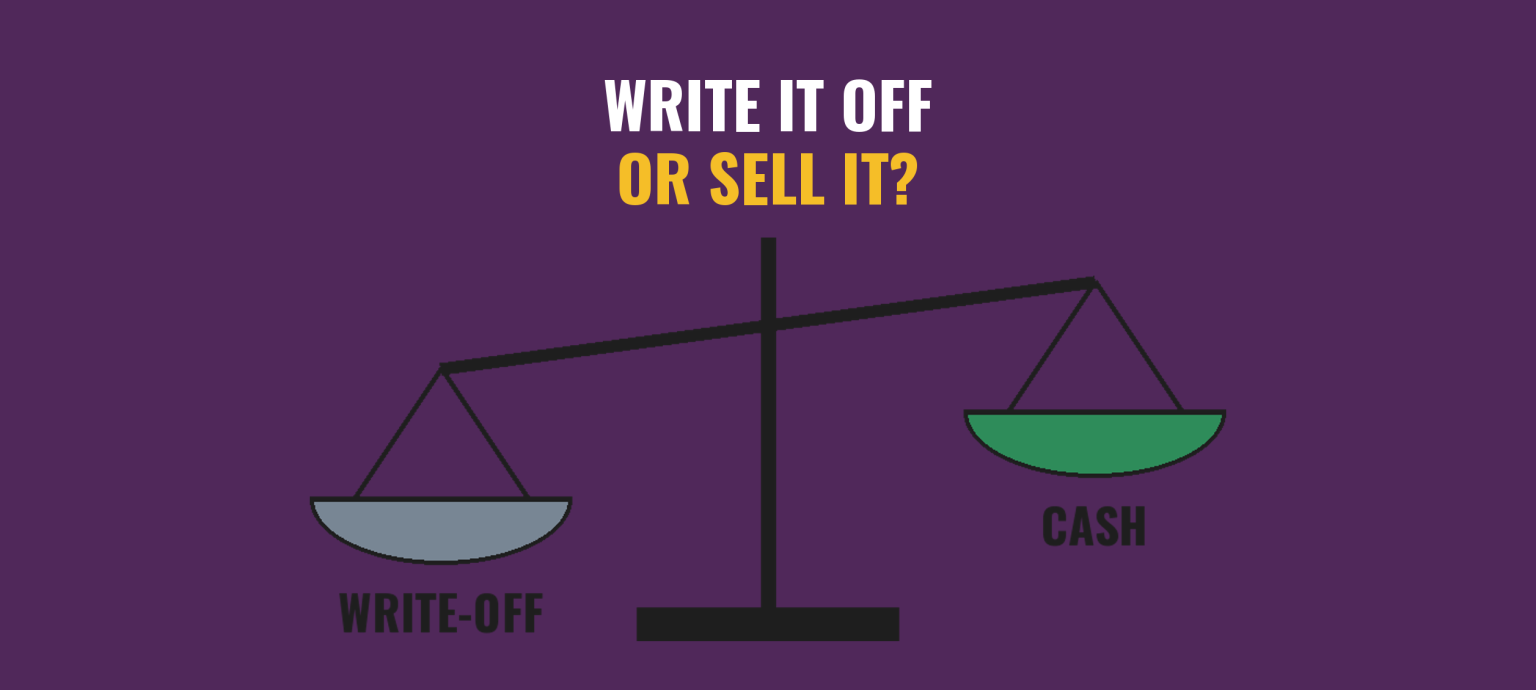
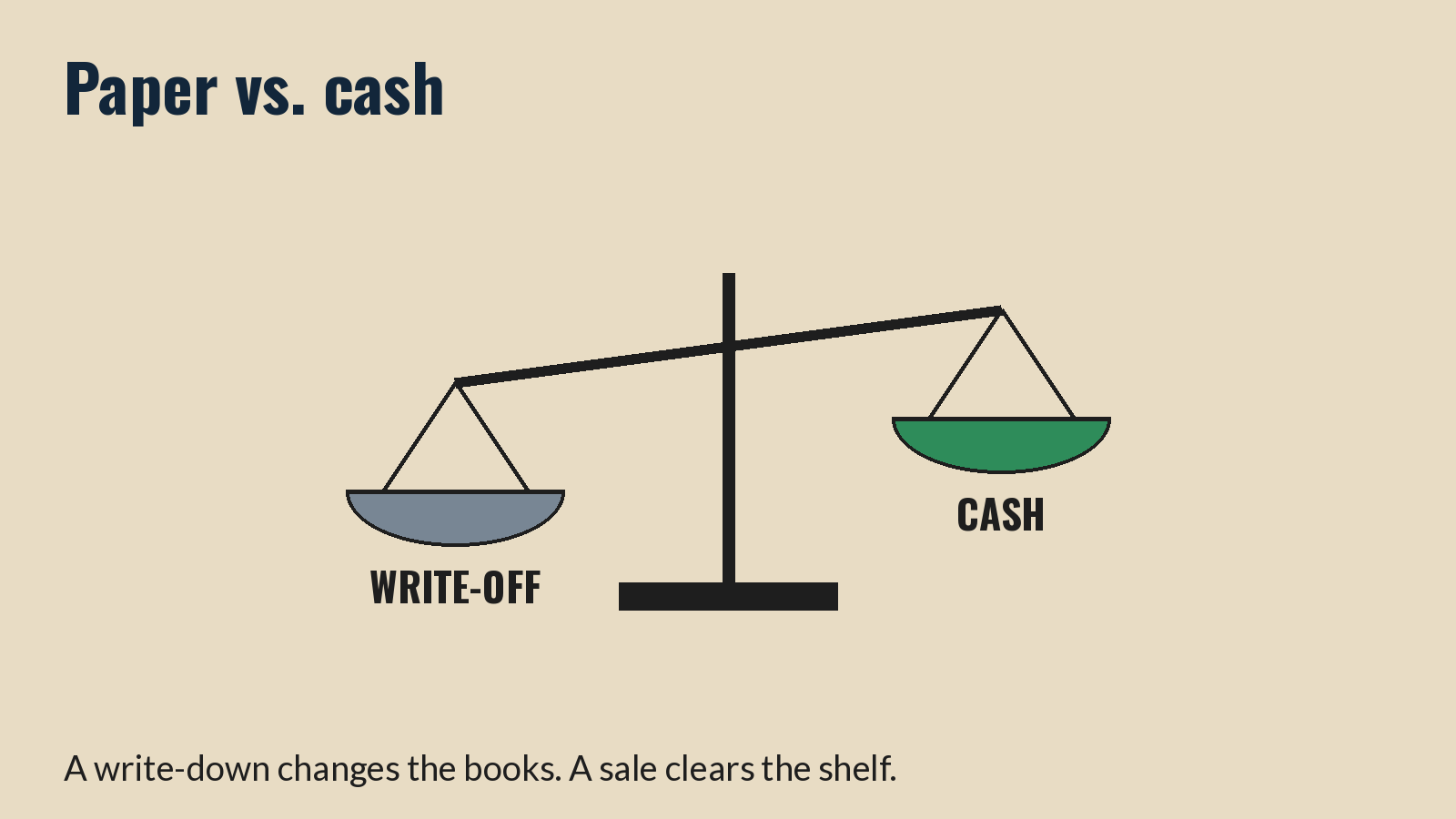
Sell obsolete parts instead of writing it off and keeping it on the shelf. A write-down on paper doesn’t free the space, doesn’t stop the insurance and, for tax purposes, often isn’t allowed unless the stock is actually sold, scrapped or offered at a reduced price.
That last part surprises people. Finance teams write down dead stock all the time on the books. The tax side works differently, and the rule has been around since 1979.
Quick note: this is general information, not tax advice. Talk to your CPA about your situation. However, selling > writing-off (scrapping or consignment)
In Thor Power Tool Co. v. Commissioner, the Supreme Court upheld IRS rules that don’t let a company deduct a write-down of excess inventory just because it isn’t selling. The company kept the parts, wrote them down, and lost.
The practical takeaway most accountants give: if obsolete MRO inventory is still sitting in the building at full book value, the tax benefit usually comes when it leaves the building. Sell it, scrap it, or prove you offered it at a lower price. “We think it’s worth less” doesn’t count.
Even after a book write-down, the stock still costs money every month:
A write-down fixes the balance sheet. It doesn’t fix any of the above.
Most plants decide what to do with obsolete MRO inventory in December (which is why a good surplus buyer pays fast), during the count, when everyone’s busy. Starting earlier gives finance a clean number before year-end, and selling before the books close means the sale lands in the year you want it.
It also keeps the decision from sliding. Stock that survives one more count usually survives five more. So you pay for it over and over via holding costs. We wrote about that pattern in five straight answers on selling excess industrial inventory.
Scrapping gets the stock out and supports the tax treatment, but the scrap yard pays by the pound, not by what the parts are. A pallet of sealed PLCs and drives goes for the price of mixed metal.
Selling to a surplus buyer gets the stock out too, and it puts cash against the write-down. For new, unused parts in original packaging, especially automation, PCBs, bearings and power transmission, that difference is usually large.
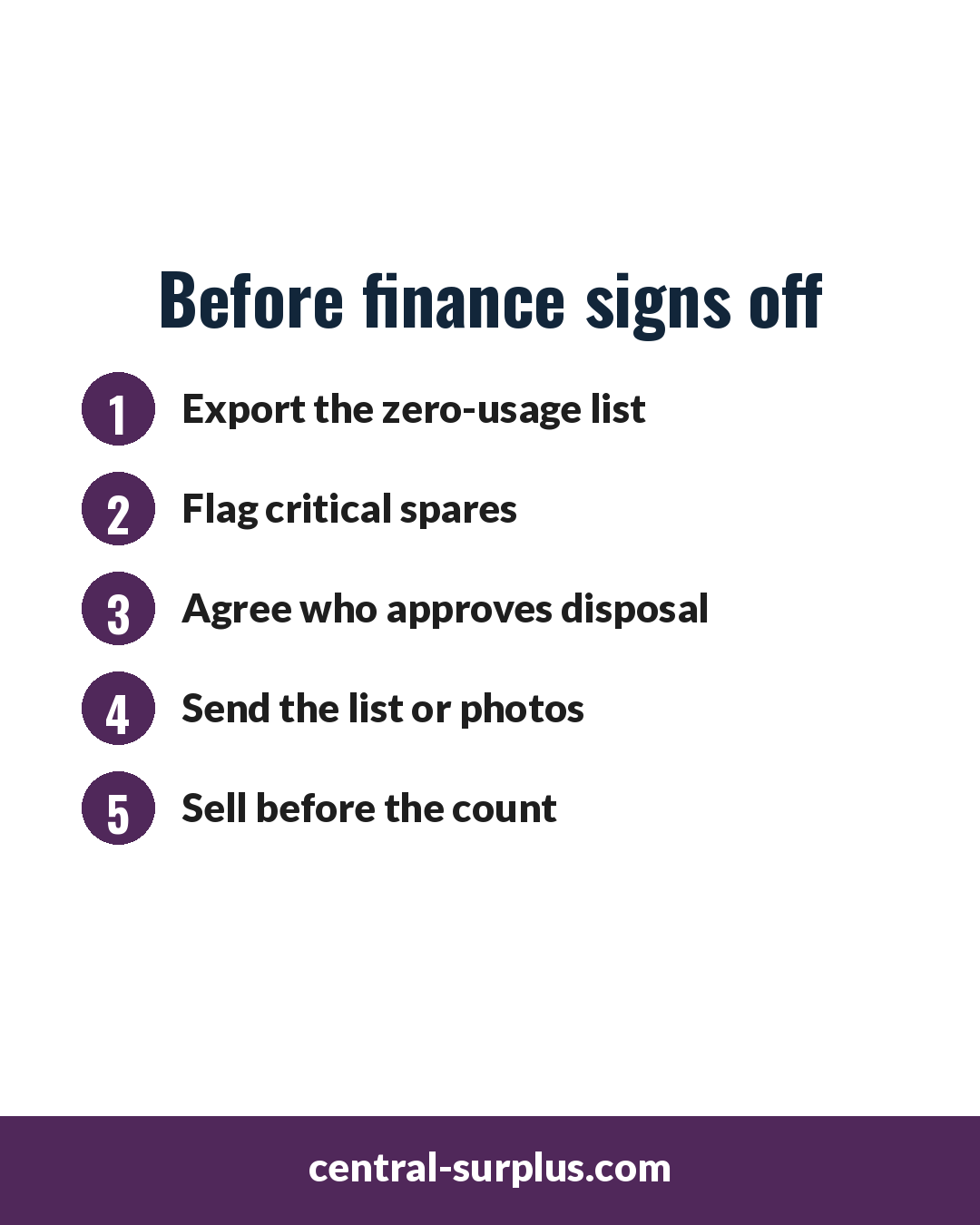
It’s short. Send a spreadsheet with manufacturer, part number and quantity, or shelf photos if there’s no list. Central Surplus sends an estimate within 24 hours, pays inbound shipping and pays by ACH within a week of accepting the final offer. No minimum lot size.
For finance, it’s one transaction with one payment and clean paperwork for the auditors. For the storeroom, it’s empty racks. For whoever pushed the decision, it’s a win in front of the CFO.
If the whole storeroom is the problem, not just a few aisles, look at selling the entire MRO storeroom in one lot. Our comparison of scrap, auction, consign or sell runs the math on the alternatives.

A write-down without a disposal is an accounting entry. Selling it turns the stock into cash, clears the space and gives your CPA a transaction to point to. Ask your accountant how it applies to you, then make the call before the count, not after.
Finance usually wants three things before signing off on a sale: what’s going, roughly what it was carried at, and confirmation that nothing critical is on the list.
If there’s no list at all, photos of the shelves work for an estimate. Don’t let the lack of a perfect spreadsheet keep obsolete MRO inventory on the books for another year.
Don’t sort it into “maybe valuable” and “probably junk” piles. That’s the buyer’s job, and the sorting is usually where the project dies. Don’t try to sell it one part at a time unless you have a reselling system and someone whose job it is. And don’t wait for prices to “come back.” Parts for retired equipment don’t get more useful.
For book purposes, often yes. For tax purposes, the Supreme Court’s 1979 Thor Power Tool decision upheld IRS rules limiting write-downs of excess inventory that a company keeps and doesn’t sell. Ask your CPA how it applies to you.
Scrap pays by weight. Selling new, unused parts to a surplus buyer usually returns far more, especially for automation parts, PCBs and bearings.
Before the year-end count is ideal. It gives finance a clean number and lets the sale land in the year you want.
Central Surplus pays by ACH within one week of accepting the final offer.
Ready to sell industrial MRO parts? Make it easy. Sell Your Parts



Our team can locate, cross-reference, and source all parts.
Our team can locate, cross-reference, and source all parts.