
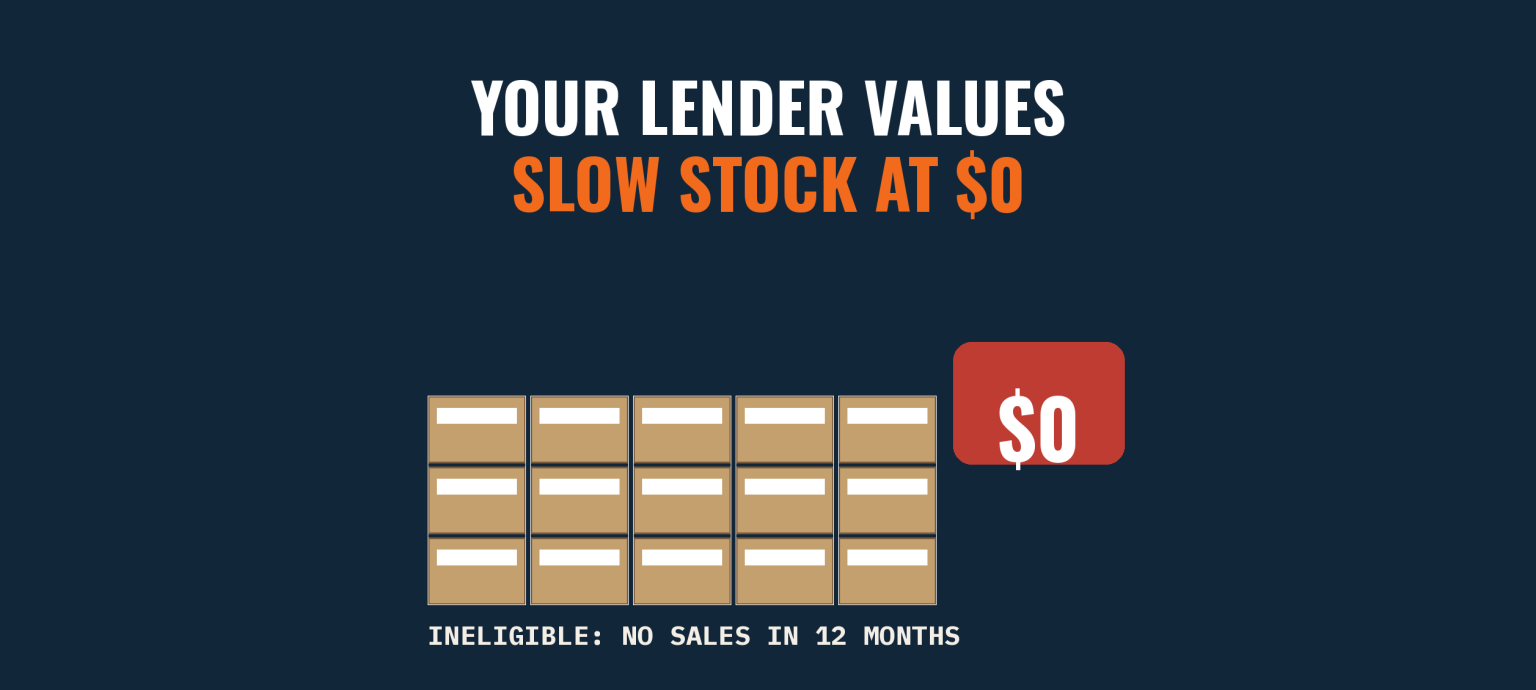
If your inventory is financed with an asset-based loan, slow-moving stock usually counts for nothing in your borrowing base. Lenders lend against eligible inventory, and parts that stop turning become ineligible. Selling that stock to a surplus buyer turns inventory your lender already values at zero into cash you can use to pay down the line.
That’s the part most owners miss. They think of slow stock as an asset waiting for the right buyer. Their bank has already decided it isn’t. This applies to distributors, OEMs, manufacturers and any company carrying industrial inventory on a revolver.
This is general information, not legal or financial advice. Your credit agreement is what counts, so read it with your lender or advisor.
An asset-based loan (ABL) is usually a revolving line of credit secured by receivables and inventory. The amount you can draw, the borrowing base, is a percentage of eligible collateral. The OCC’s handbook on asset-based lending puts it plainly: “Loan advances are limited to a percentage of eligible collateral” (OCC).
Inventory isn’t valued at what you paid. Lenders hire appraisers to estimate its net orderly liquidation value (NOLV): roughly what it would bring in a liquidation sale, after costs. Then they lend a percentage of that. U.S. Bank describes inventory liquidation values for borrowing bases as typically in the 50–75% range (U.S. Bank).
So before anything goes wrong, the bank is already assuming a liquidation.
Not all inventory is eligible. ABF Journal: “Since neither slow-moving nor obsolete inventory is quickly salable, it is deemed non-lendable and ineligible” (ABF Journal). Some credit agreements set a hard line, excluding inventory “held by Borrower more than 12 months without being sold” (Law Insider sample clauses).
Some agreements also test inventory turnover directly, with covenants like “not less than three (3) times on a rolling twelve month basis” (Law Insider). Not every loan has one. Every ABL has a borrowing base.
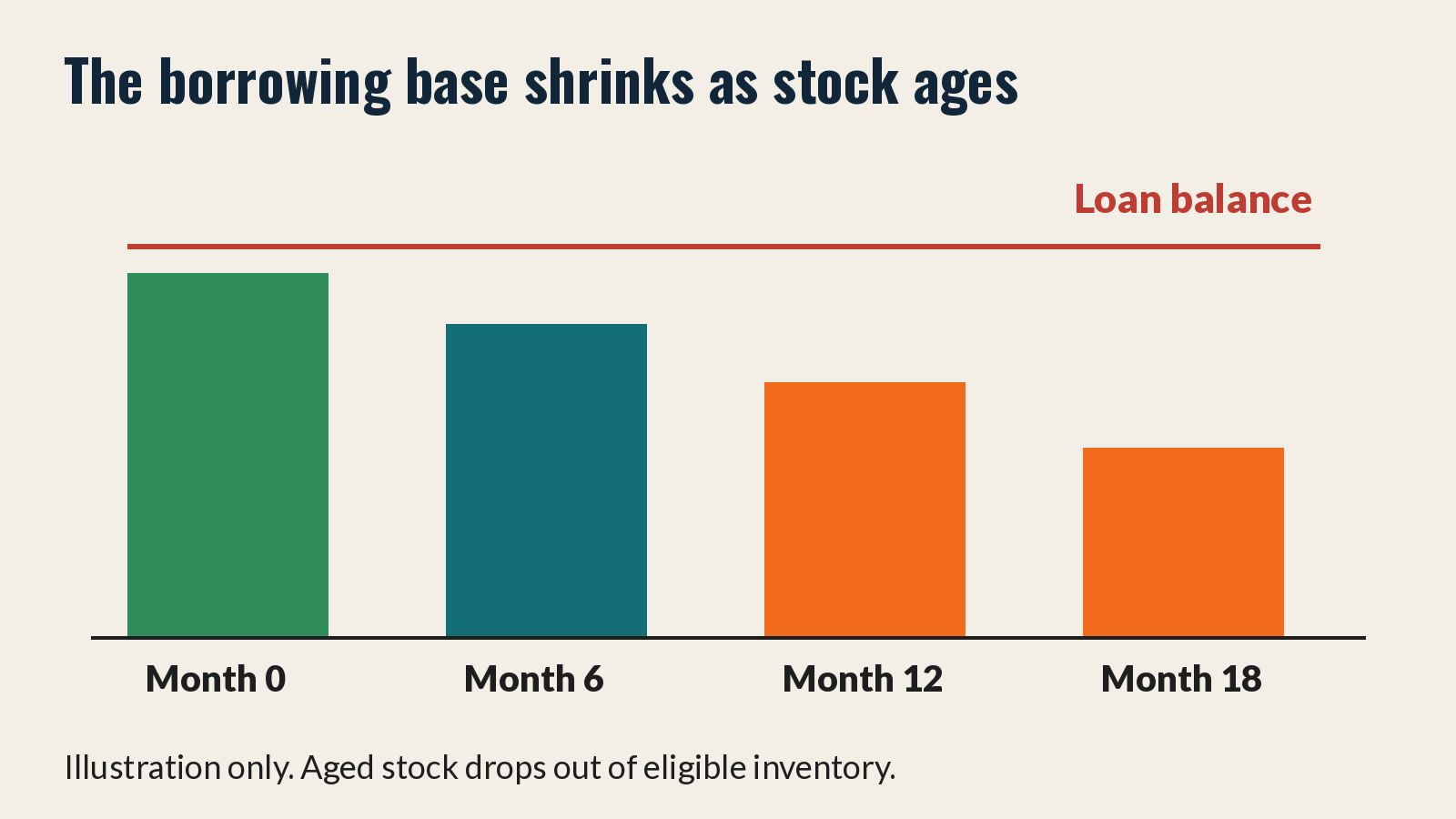
Here’s what that means in practice: as stock ages, it falls out of the base. Your availability shrinks even though the parts are still on the shelf, still insured, still counted and still taxed. You’re paying to carry inventory your lender gives you zero credit for.
If the loan balance is higher than the shrinking base supports, you’re in an over-advance and you have to pay it down. The OCC notes that lenders “more readily seize collateral if the borrowing base declines.” That’s when the conversation shifts from your plan to theirs.
The lender’s plan usually means liquidators and auctions. Liquidation firms will even “advance capital to pay off or down lenders” in exchange for the right to sell the collateral (Gordon Brothers). At that point you’re not choosing the buyer, the price or the timeline.
When slow stock has to become cash, you have three realistic paths.
Auction. Months from listing to final payout, commissions off the top, and pallets sold by the lot to whoever shows up. You also manage the sale: lotting, photos, buyer pickups.
Consignment. Not an option here. Consignment pays when parts sell, which can mean years, and your lender needs cash now. Under the OCC’s guidance, consigned goods are generally ineligible as collateral too, so moving stock to a consignment program doesn’t help the base either.
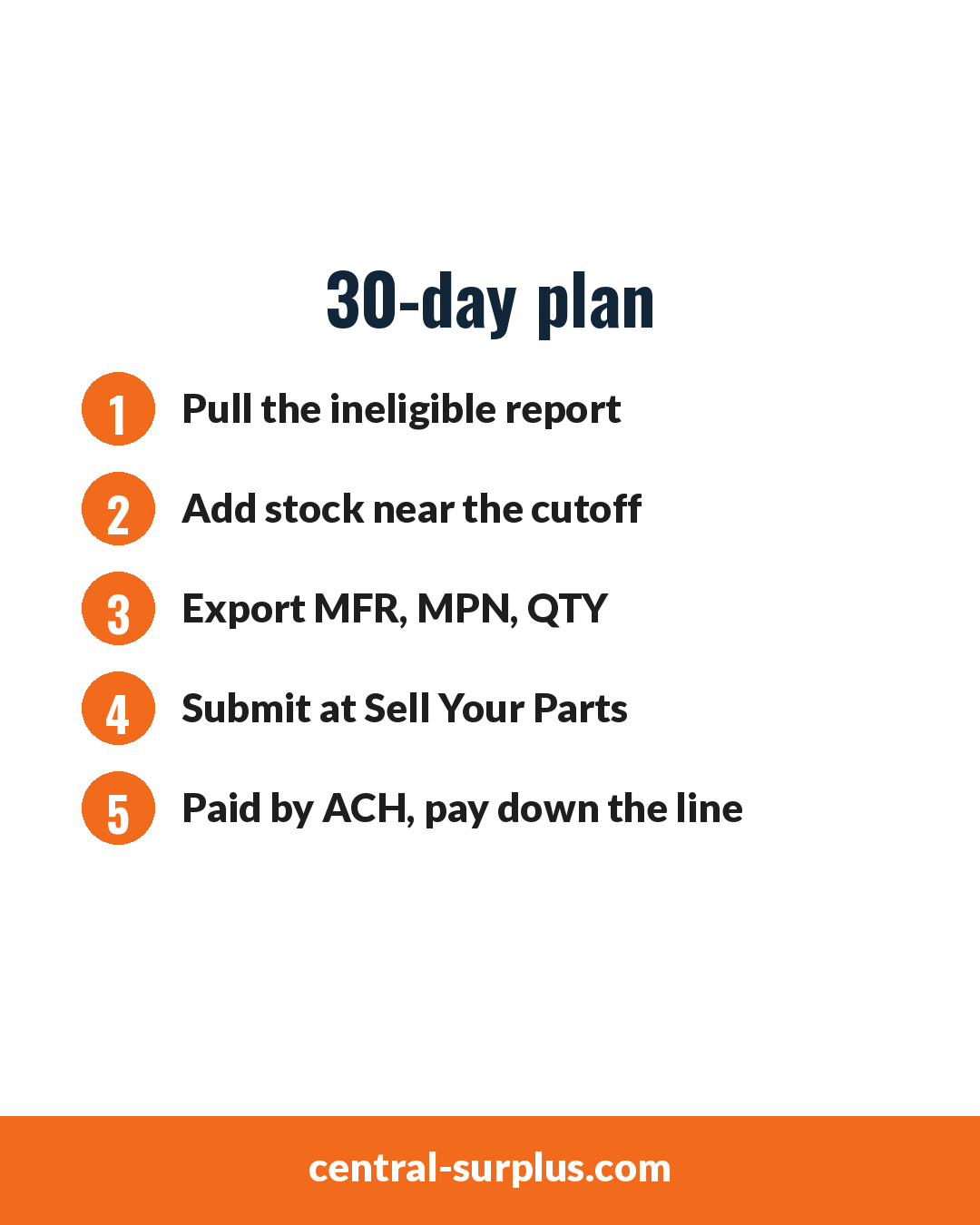
A surplus buyer. One buyer for the whole lot, one payment. A good surplus buyer prices fast and pays fast. Many don’t. Central Surplus pays by ACH within a week of accepting the final offer, sends an estimate within 24 hours of getting your list or photos, pays inbound shipping and has no minimum lot size.
For a borrower watching availability, speed is the whole point. Cash in a week can pay down the line before the next borrowing base certificate, not after the next field exam.

Under asset-based lending, waiting feels free. It isn’t. Every month, ineligible stock costs storage, insurance, count labor and, in some states, inventory tax, and it does nothing for your availability. Carry it into January and you pay another year of all of it. Selling turns dead collateral into cash, clears space for stock your lender will actually lend against and keeps you in charge of the sale.
For more on the alternatives, see consignment vs. cash and the main ways to sell surplus MRO inventory, ranked. If the whole warehouse is the problem, look at selling the entire lot.
Usually not. Lenders generally treat slow-moving and obsolete inventory as ineligible, and some agreements exclude stock held more than 12 months without a sale.
They use net orderly liquidation value (NOLV), an appraiser’s estimate of what the inventory would bring in a liquidation sale, and lend a percentage of that.
You’re in an over-advance and typically have to pay down the line. Lenders may tighten monitoring or move toward liquidating collateral.
Usually not. Consignment pays only as parts sell, and consigned goods are generally ineligible collateral, so it doesn’t produce cash or help the borrowing base.
Central Surplus pays by ACH within one week of accepting the final offer, after an estimate within 24 hours.
Ready to sell industrial MRO parts? Make it easy. Sell Your Parts


Our team can locate, cross-reference, and source all parts.
Our team can locate, cross-reference, and source all parts.