
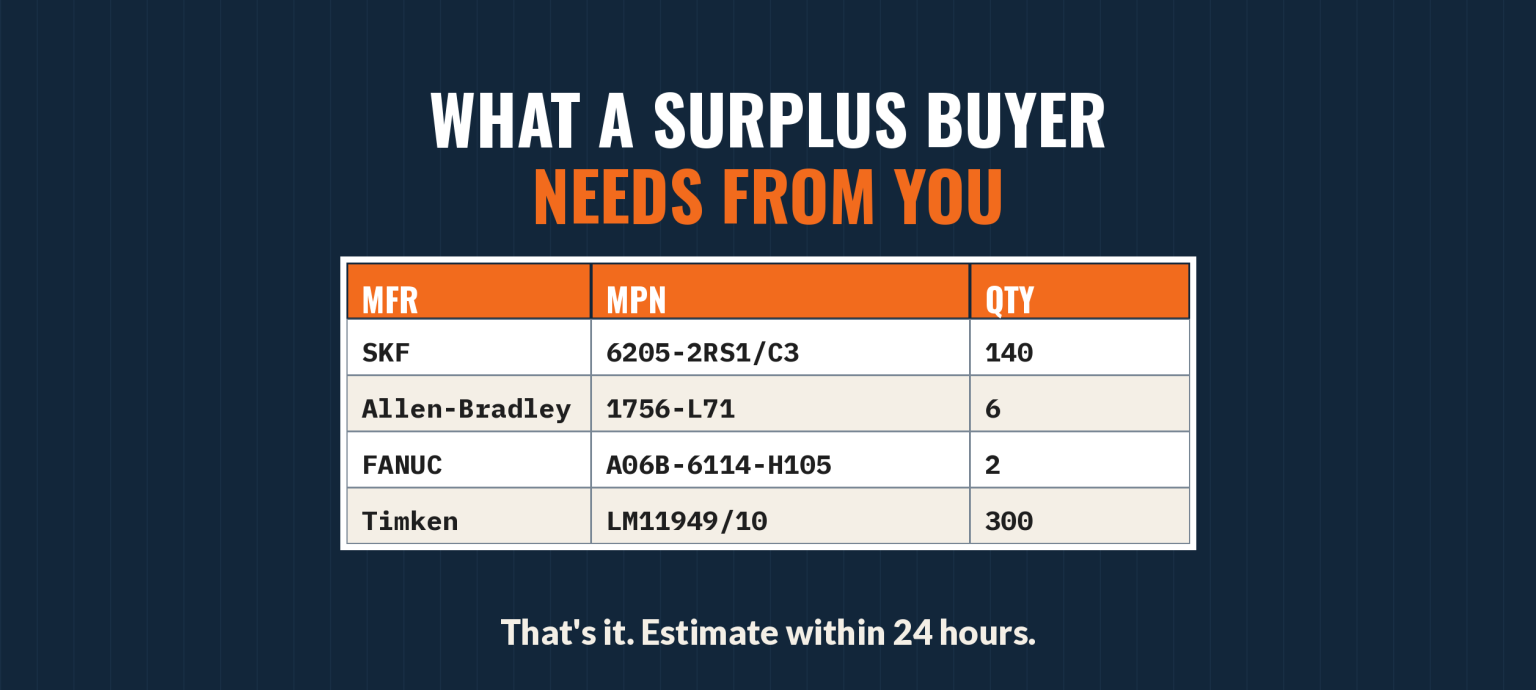
Very little. A good surplus buyer needs three columns, manufacturer, part number and quantity, to put a number on your lot within 24 hours. No spreadsheet? Photos of the shelves and one wide shot of the whole lot are enough to start.
That’s the whole answer. Most plants still sit on surplus for another year because someone decided the list had to be perfect first. It doesn’t. Here’s what actually matters, and what you can skip.
MFR, MPN, QTY. That’s the format a surplus buyer prices fastest, because every part gets looked up the same way: what it is, who made it, how many are sitting there.
Most plants already have this sitting in the ERP, CMMS, WMS or just a spreadsheet. An export of the storeroom’s slow movers, with nothing cleaned up, usually works as is. Extra columns don’t hurt; missing ones just slow things down a little.
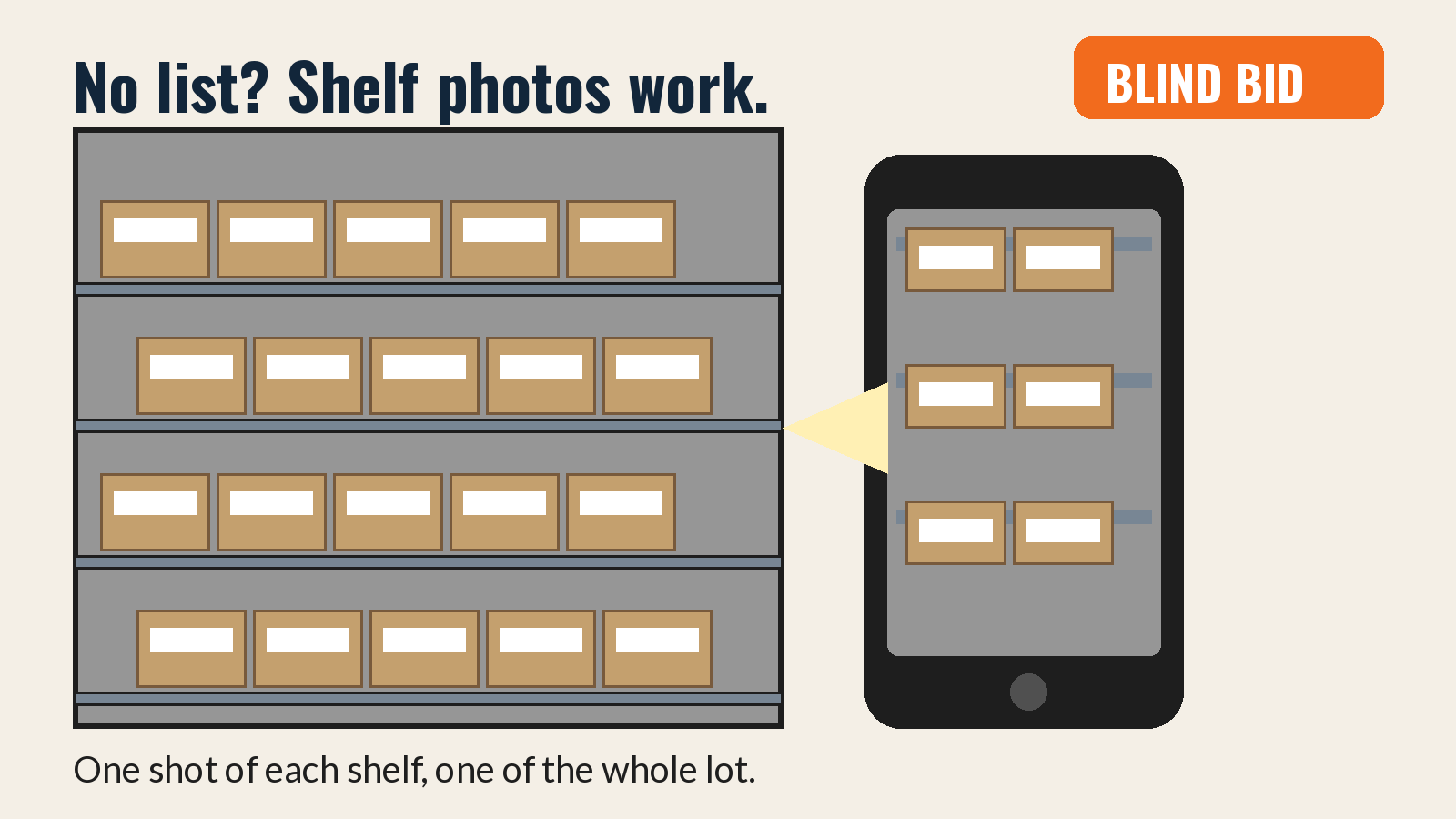
Plenty of surplus never made it into a system. Old cribs, closed lines, the mezzanine nobody inventoried after the last merger. For that, Central Surplus runs a Blind Bid: no list required.
Walk the aisles with a phone. One photo of each shelf with the labels readable, then one shot of the full lot so the scale is obvious. That’s enough for an estimate. If you can pull part numbers on the high-dollar stuff (PLCs, drives and servo amplifiers, plus PCBs and boards in their static bags), do it. If not, just do what you can.
This is where most sellers lose months, and most surplus buyers require
Meanwhile, every month spent polishing a spreadsheet is another month of rack space, insurance, labor on the annual count and taxes on parts nobody is going to install. The list doesn’t get better with age. Neither does the stock.
An estimate is only as good as what it’s built on. A few small things keep the final number from surprising anyone:
None of this is homework. It’s about ten minutes of attention that saves a back-and-forth later.
The sequence is short:
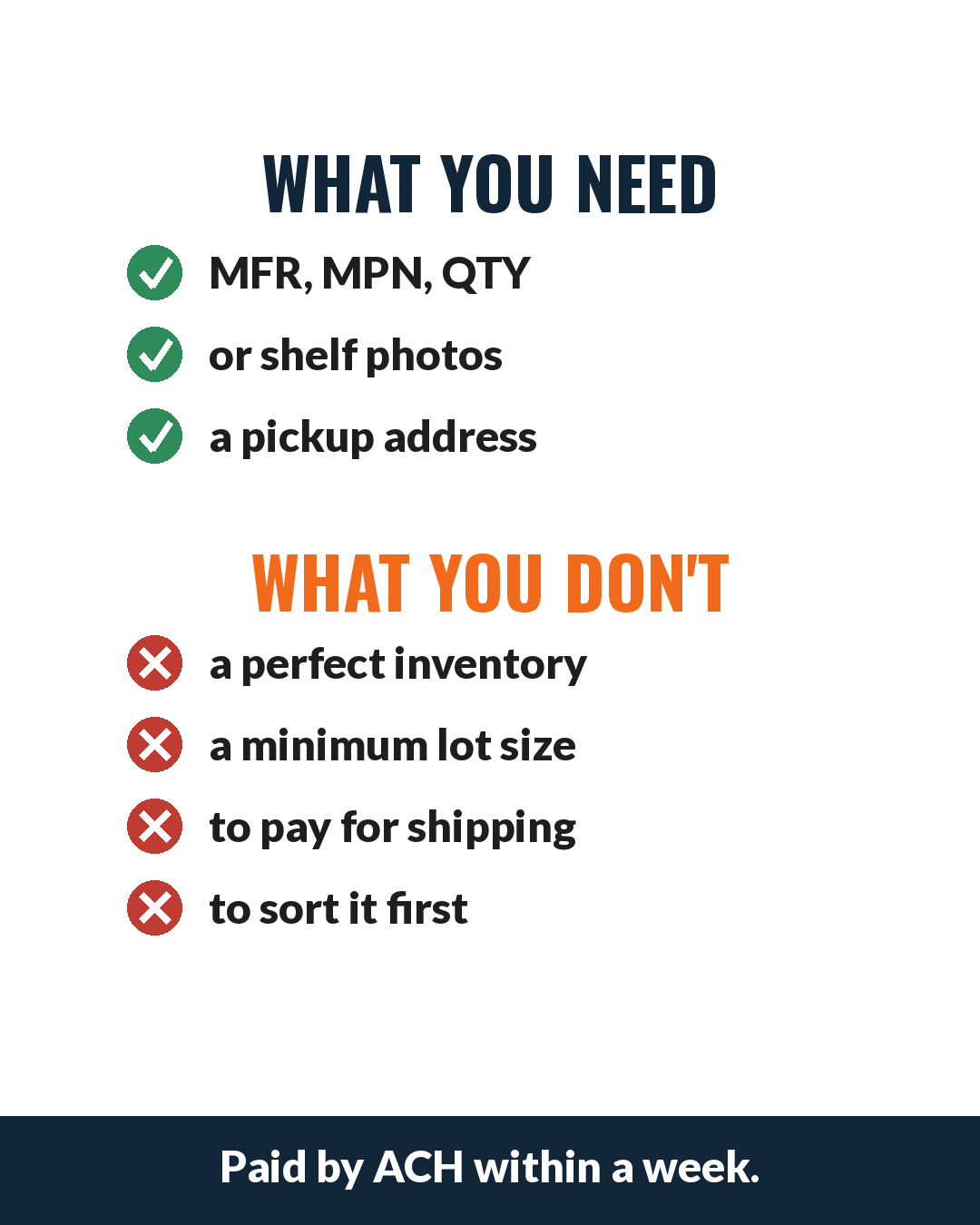
That last step is where buyers differ most. Some large surplus buyers take months to pay. Brokers and consignment programs pay as parts sell, which can mean years. We covered that trade-off in consignment vs. cash and in the main ways to sell surplus MRO inventory, ranked.
Finance and procurement will ask two questions: who is this buyer, and is the money real.
Central Surplus has been buying surplus for 16 years: 2,000+ lots from 750+ sellers. References are available on request, so your team can call another plant that’s already done it. The payment is one ACH transfer, which is the easiest thing in the world for accounts receivable to match.
One thing to know going in: once parts are received, they aren’t returned. That’s industry standard, and it’s why the estimate and the final offer happen before anything is final.
But what we learned from working with dozens of surplus wholesalers aquiring excess stock is that they all pay slowly, so we flipped the scirpt and pay within 1 week.
That helps with trying to write of year-end inventory.
Storing it till January 2027 means you pay another year of taxes. Same goes for consignment.
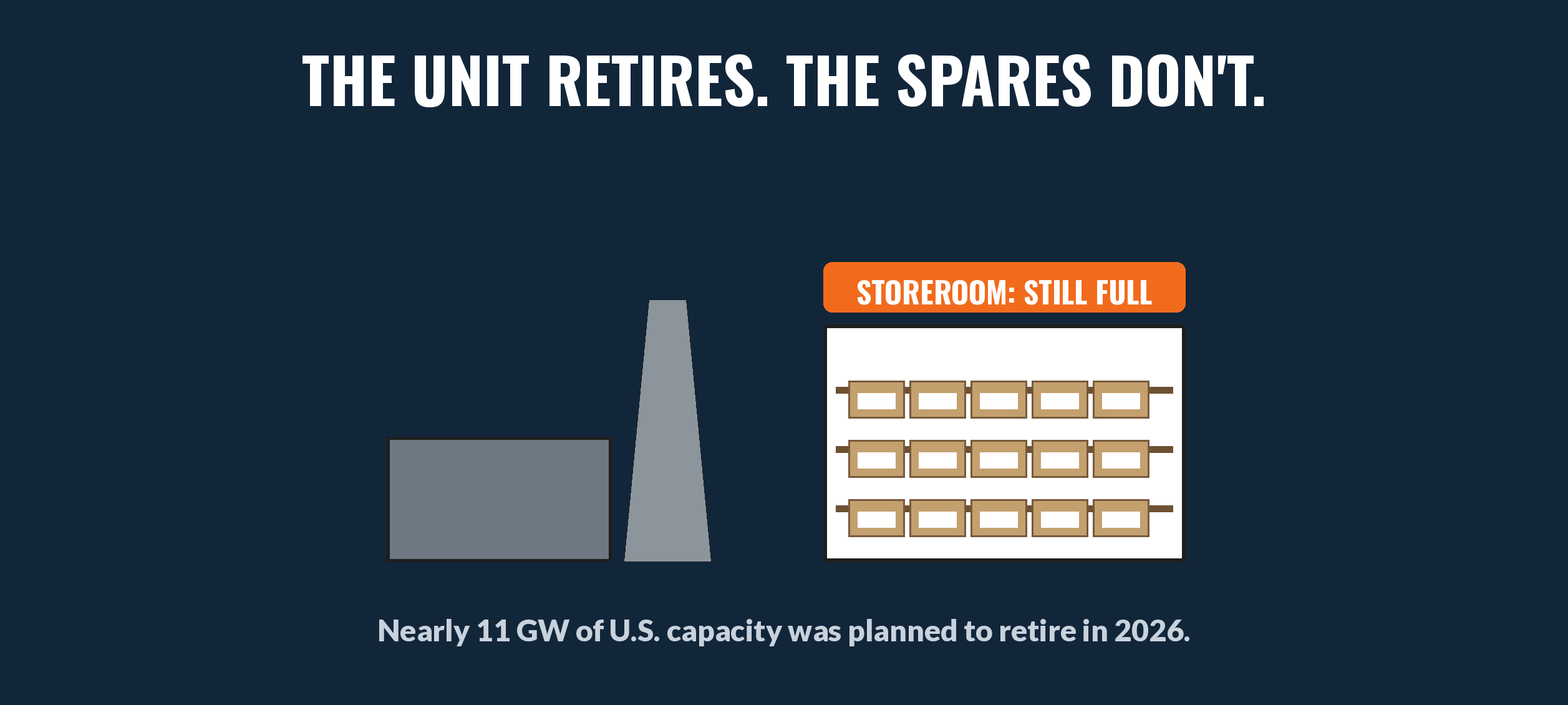
The plants with the most surplus usually have the least time to deal with it. Asset-intensive operations like power generation, process plants and post-merger sites end up with whole rooms of new, unused MRO spares. A 2026 Sphera survey found more than 80% of respondents carry $5–50 million in excess, obsolete or rarely used MRO inventory.
If that’s your site, skip the line-by-line approach entirely and look at selling the entire storeroom in one transaction. One buyer, one pickup, one payment. The surplus buyer handles the sorting, the listing and the waiting. You handle the empty racks.

No. A spreadsheet with manufacturer, part number and quantity is ideal, but Central Surplus’s Blind Bid works from shelf photos and one photo of the full lot.
No. Central Surplus buys lots of any size, from a few boxes to multiple truckloads, and bigger lots are welcome.
Central Surplus pays inbound shipping, with prepaid labels for smaller lots or a scheduled freight pickup for larger ones.
Sellers are paid by ACH within one week of accepting the final offer.
Yes. Central Surplus has bought 2,000+ lots from 750+ sellers over 16 years, and references are available on request.
Ready to sell industrial MRO parts? Make it easy. Sell Your Parts



Our team can locate, cross-reference, and source all parts.
Our team can locate, cross-reference, and source all parts.