
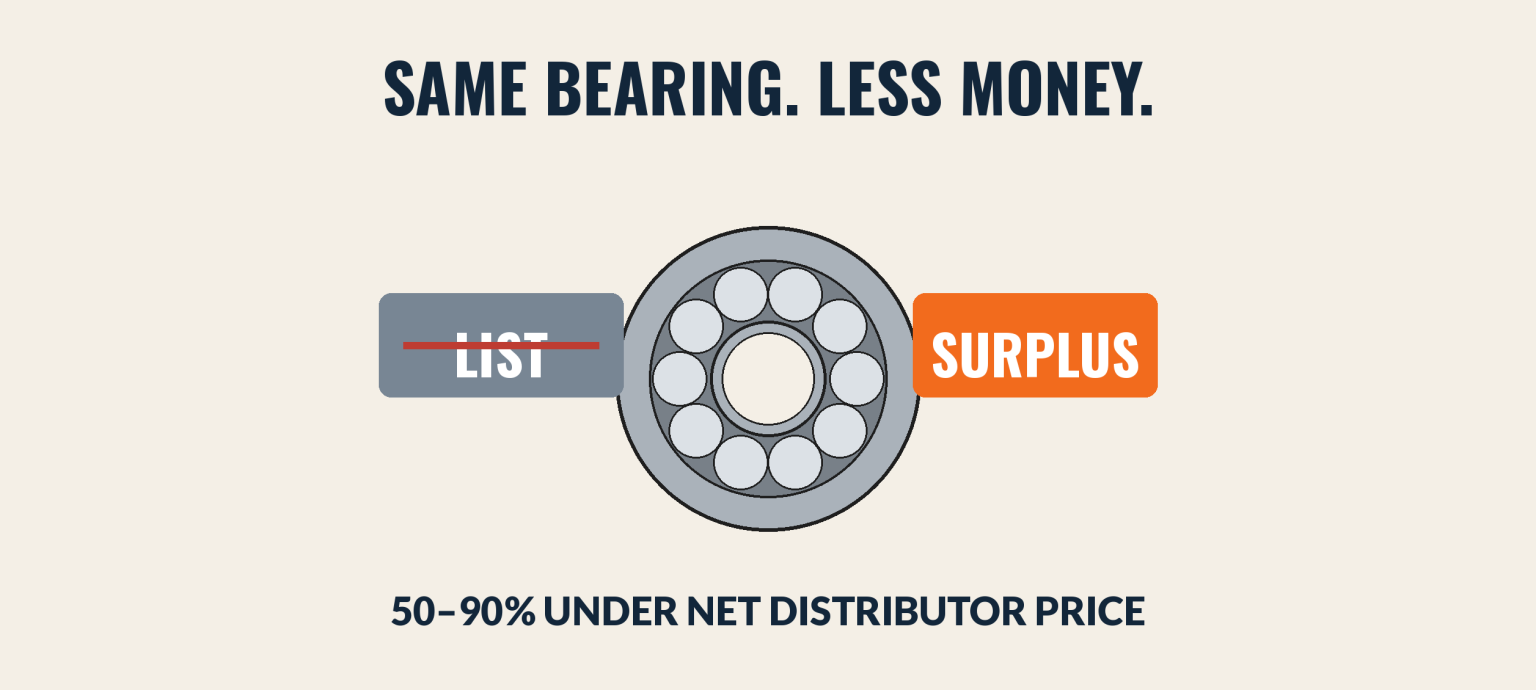
Short answer: the cheapest place to buy bearings that are new and genuine SKF, FAG, NSK or Timken is usually a surplus seller, not a distributor. Surplus stock comes out of plant storerooms where the bearings were already bought, boxed and never used. That’s why Central Surplus prices run 50 to 90% under net distributor price, or usually 200% lower than web prices you see online, on stock sitting on our own shelf.
Cheap is easy to find online. Cheap, genuine, the right full model number and shipping today is the harder combination. Here’s how the pricing actually works, and where the traps are.
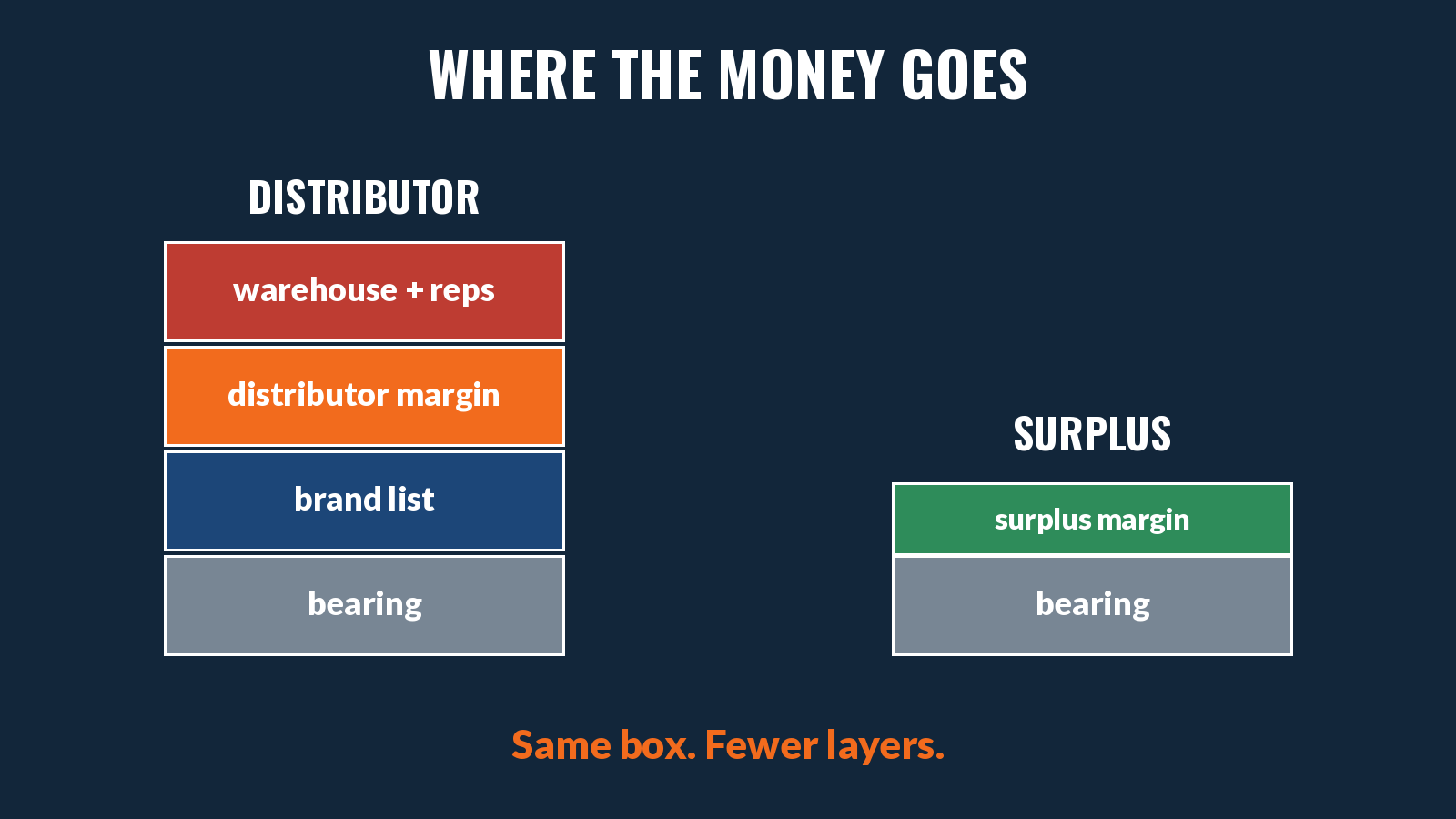
A distributor’s price covers more than the bearing. It carries the brand’s list, the distributor’s margin, warehousing, sales reps and the cost of holding a full catalog for customers who might call. That’s the deal you’re paying for, and sometimes it’s worth it: engineering support, contract pricing.
When you just need a 6205-2RS C3 or a 22216 spherical today, most of that isn’t doing anything for you. List prices are all over the internet. The bearing is the same either way.
Plants overbuy. They stock for equipment that later gets replaced, standardize after a merger, or just order a case when they needed two. Years later, finance wants the floor space back and the storeroom gets sold in one lot.
That stock is still new, still in the original box, still SKF bearings, FAG bearings, NSK bearings and Timken bearings with the same part numbers. It just didn’t go through the distributor chain a second time. The price reflects what the lot cost, not what the catalog says.
That’s the whole reason surplus is the cheapest place to buy bearings for most standard sizes: you skip the markup, not the quality.
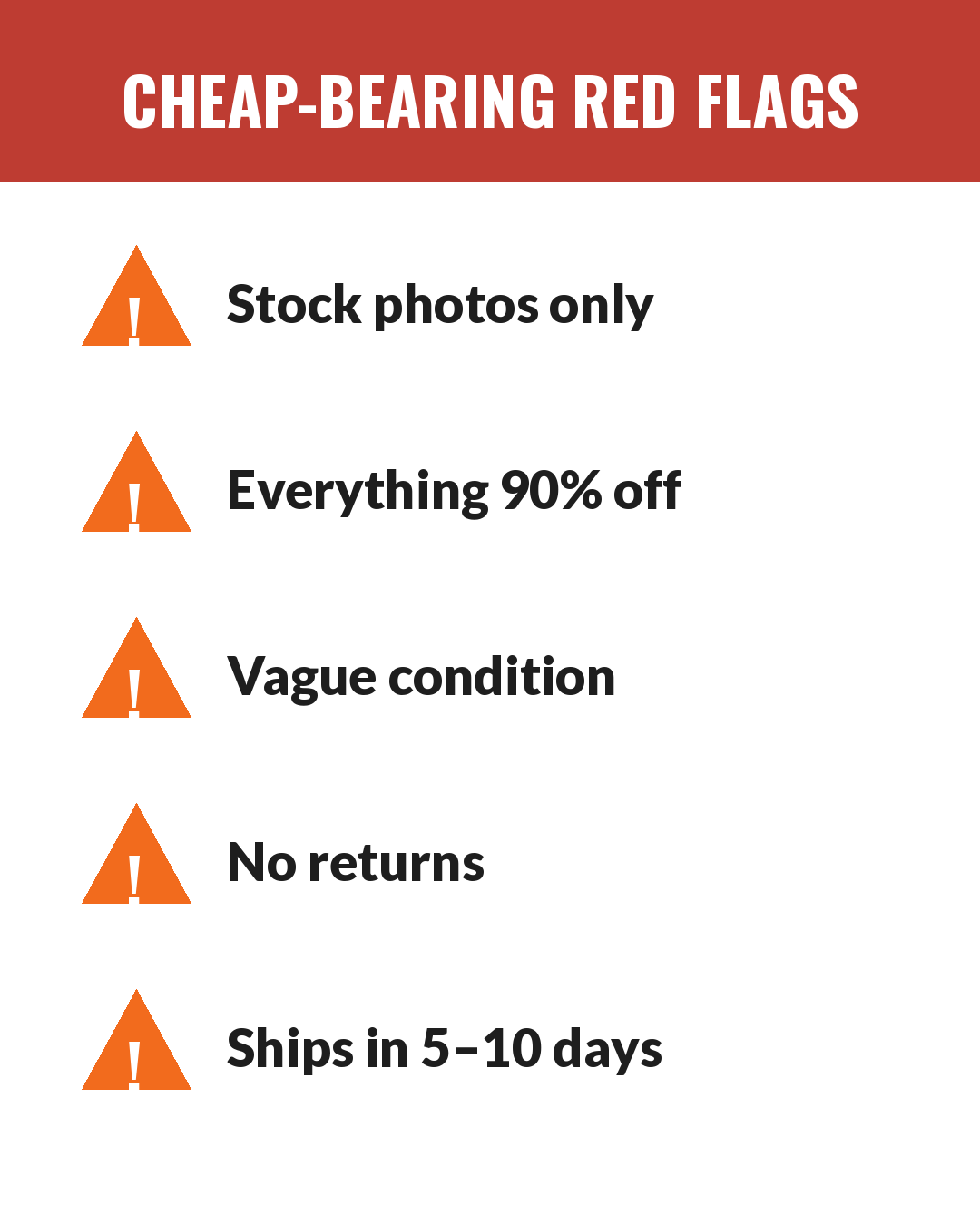
Low prices attract bad sellers too. Major manufacturers, including SKF, publish warnings about counterfeit bearings sold through unofficial channels. Signs to watch:
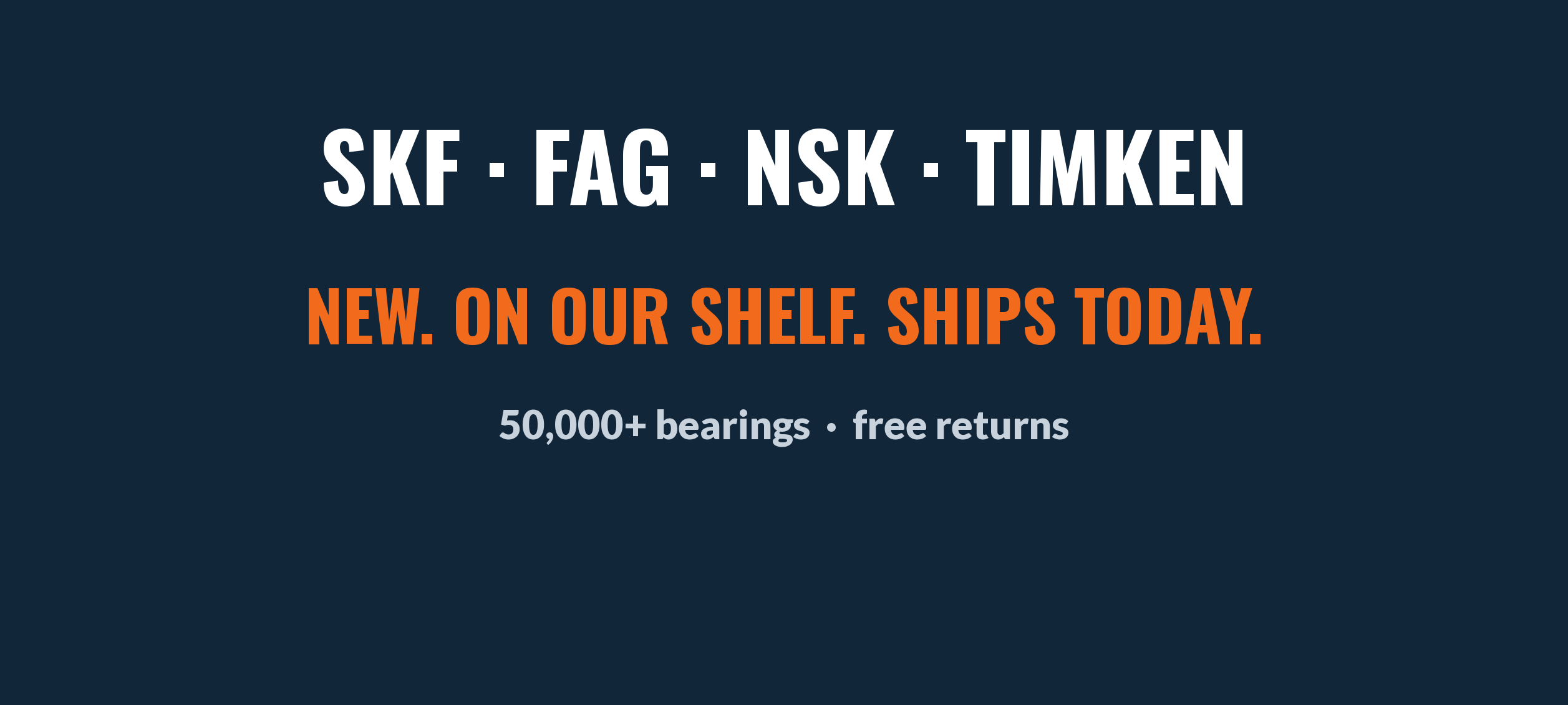
A bearing that saves $30 and shows up next Thursday is not the cheapest place to buy bearings. It’s the most expensive one, because the line waited a week for it. Price only counts when the part is on the shelf, the right model number, and moving today.
That’s also why stocking a spare matters. If a machine runs two of the same bearing, the second one is usually close behind the first. Buying two at surplus prices often costs less than one at list, and the next breakdown becomes a ten-minute swap instead of an emergency order.
Next-day air exists for a reason, but it’s a lot cheaper when the part was already sitting on your shelf.
Discount bearings show up across the board, but some categories run deepest in surplus:
If the number you need is discontinued, read how to replace a discontinued bearing. If you’re ordering by part number under time pressure, see how to buy bearings by part number and get them today.
What is the cheapest place to buy bearings that are genuine?
Surplus sellers with their own stock, real photos and stated condition. They sell new bearings from plant storerooms below distributor price.
Are surplus bearings new?
Surplus bearings are typically new and unused. Grease ages, so sealed bearings sitting for many years deserve a look, but when stored properly they are great.
Is SKF cheaper than Timken or NSK?
It depends on the size and the seller far more than the brand. Compare same size, same suffix meaning, across brands.
Can I get volume pricing?
Quantity on hand is listed on each part. For larger orders, see our page for bearing distributors.
Same bearing, less money, ships today. Make it easy. Shop bearings in stock →


Our team can locate, cross-reference, and source all parts.
Our team can locate, cross-reference, and source all parts.