Tapered, Cylindrical, and Spherical Roller Bearings: How the Three Main Roller Types Differ
Bearings, Resources
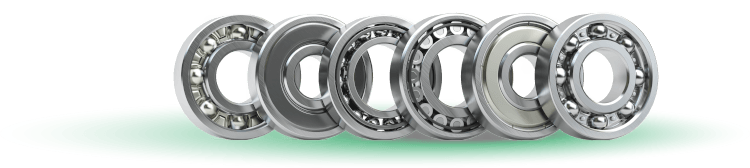
Tapered, cylindrical, and spherical roller bearings all solve the same basic problem, carrying more load than a ball bearing can handle, but picking whichever one happens to be in stock instead of whichever one matches your load direction is how a bearing rated for years fails in months. When an application exceeds the capabilities of a deep groove ball bearing, the next step is to select the appropriate roller bearing type. Tapered, cylindrical, and spherical roller bearings use line contact to support heavier loads than ball bearings, but they are not interchangeable. Each is designed for a specific combination of load direction, misalignment tolerance, and speed.
This guide compares all three types to help you select the most suitable bearing for your application.
Tapered Roller Bearings
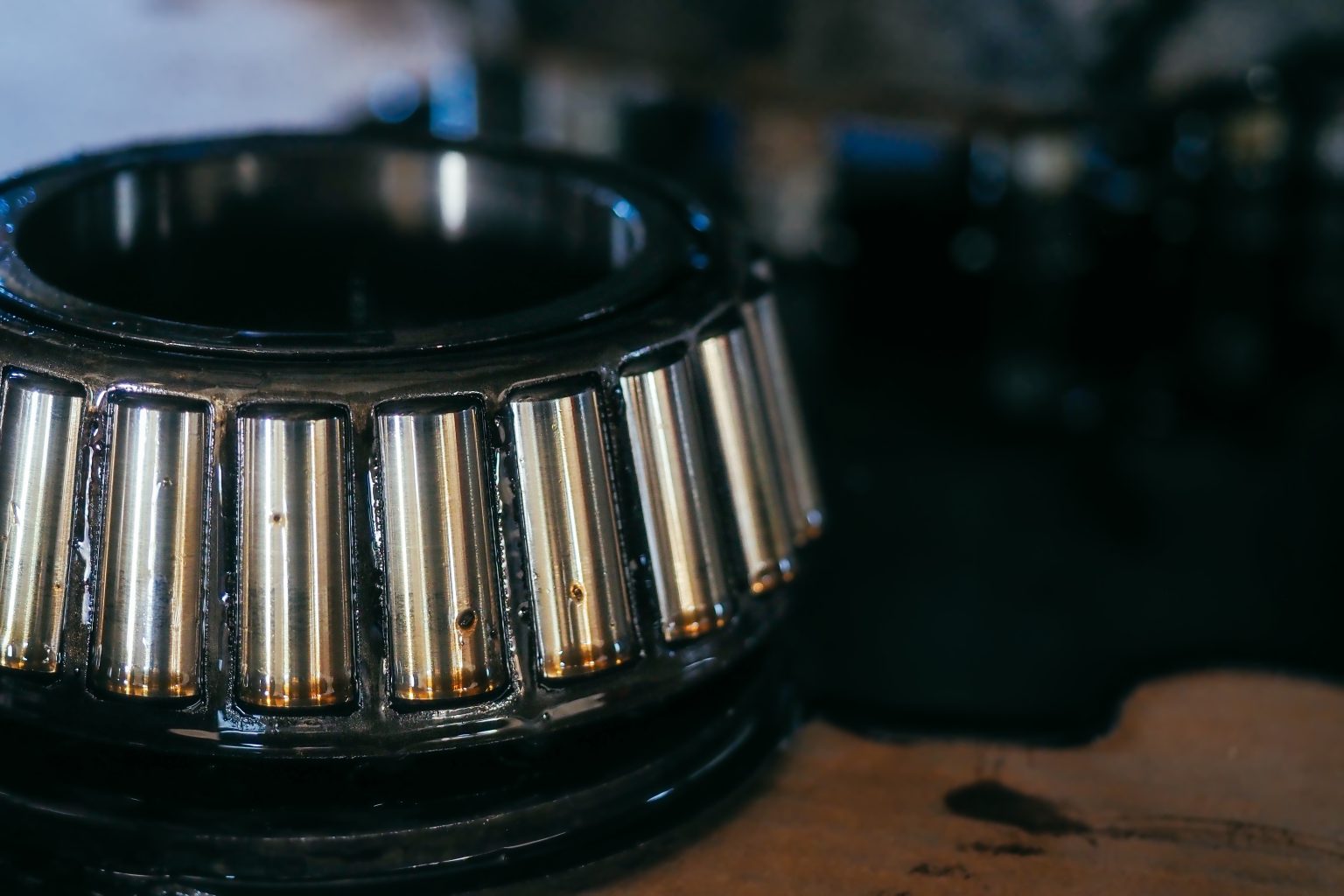
Tapered roller bearings use cone-shaped rolling elements positioned between an inner cone and outer cup. The taper angle enables them to support combined radial and axial loads simultaneously, which straight cylindrical rollers cannot achieve in pure line contact.
However, tapered roller bearings require precise installation. Correct preload or clearance setting is essential for optimal performance. Excess preload reduces bearing life by increasing friction and heat, while insufficient preload causes shaft play, vibration and uneven load distribution. Proper preload during installation is as important as selecting the correct bearing.
Load type: combined radial and axial (thrust)
Misalignment tolerance: very low, requires accurate alignment (typically under 2 to 4 arcminutes)
Speed range: moderate to high, depending on size and lubrication
Typical applications: wheel hubs, gearbox shafts, drive axles, any application with combined loading from helical gears or angled forces
Cylindrical Roller Bearings
Cylindrical roller bearings use straight, cylinder-shaped rollers that maintain line contact along the entire raceway. This design provides high radial load capacity and low friction, but offers minimal axial load capacity.
The straight roller design allows cylindrical roller bearings to operate efficiently at higher speeds than tapered or spherical bearings of similar size. Additionally, separable types (such as NU or N designs) accommodate axial movement of the shaft due to thermal expansion, making them ideal floating bearings. They are typically the preferred choice when the load is purely radial and high speed is required.
Misalignment tolerance: low, similar to tapered roller typically under 2 to 4 arcminutes)
Speed range: high, among the fastest-rated of the roller bearing types
Typical applications: electric motors, large gearboxes, machine tool spindles, high-speed shafts with pure radial loading
Spherical Roller Bearings
Spherical roller bearings use barrel-shaped rollers that run against a spherical outer raceway. This geometry allows the bearing to self-align (typically up to 1.5° to 2.5°), compensating for shaft or housing misalignment that causes edge loading and premature failure in tapered or cylindrical roller bearings.
Spherical roller bearings support heavy radial and moderate axial loads while accommodating misalignment from thermal expansion, structural deflection, or imprecise mounting. Their maximum speed rating is lower than that of cylindrical roller bearings of comparable size.
Load type: heavy radial, moderate axial, in a bearing that also self-aligns
Misalignment tolerance: high, -up to 1.5° to 2.5° depending on the series- this is the bearing’s defining advantage
Speed range: moderate, lower than cylindrical roller bearings
Typical applications: conveyor systems, paper mill rolls, mining equipment, large pumps, anywhere misalignment is expected rather than exceptional
Side-by-Side Comparison
Tapered Roller
Cylindrical Roller
Spherical Roller
Radial load capacity
High
Very high
High
Axial load capacity
High (combined)
Minimal
Moderate
Misalignment tolerance
Low
Low
High (self-aligning)
Max speed
Moderate to high
Highest of the three
Moderate
Installation precision needed
High (preload critical)
Moderate
Lower (self-aligns)
Best fit
Wheel hubs, gearbox shafts
Motors, high-speed spindles
Conveyors, misaligned shafts
How to Decide
Begin by considering load direction. For applications with combined radial and axial loads in a fixed, predictable direction where accurate alignment during installation is assured, a tapered roller bearing is recommended.
If the load is purely radial and high speed is a priority, a cylindrical roller bearing is preferable, especially in motor and spindle applications where additional speed capacity and thermal float is important. Choose a flanged style (NJ/NUP) if light, location-only axial thrust is present.
If misalignment is expected due to equipment size, thermal expansion, or structural flex, a spherical roller bearing addresses challenges that the other types cannot. Choose this bearing whenever self-alignment under heavy radial loading is required.
Central Surplus Roller Bearing Inventory We stock tapered, cylindrical, and spherical roller bearings from Timken, SKF, FAG, NTN, and other major manufacturers in both metric and inch bore sizes. Contact our team with your part number or load, speed, and alignment requirements.