
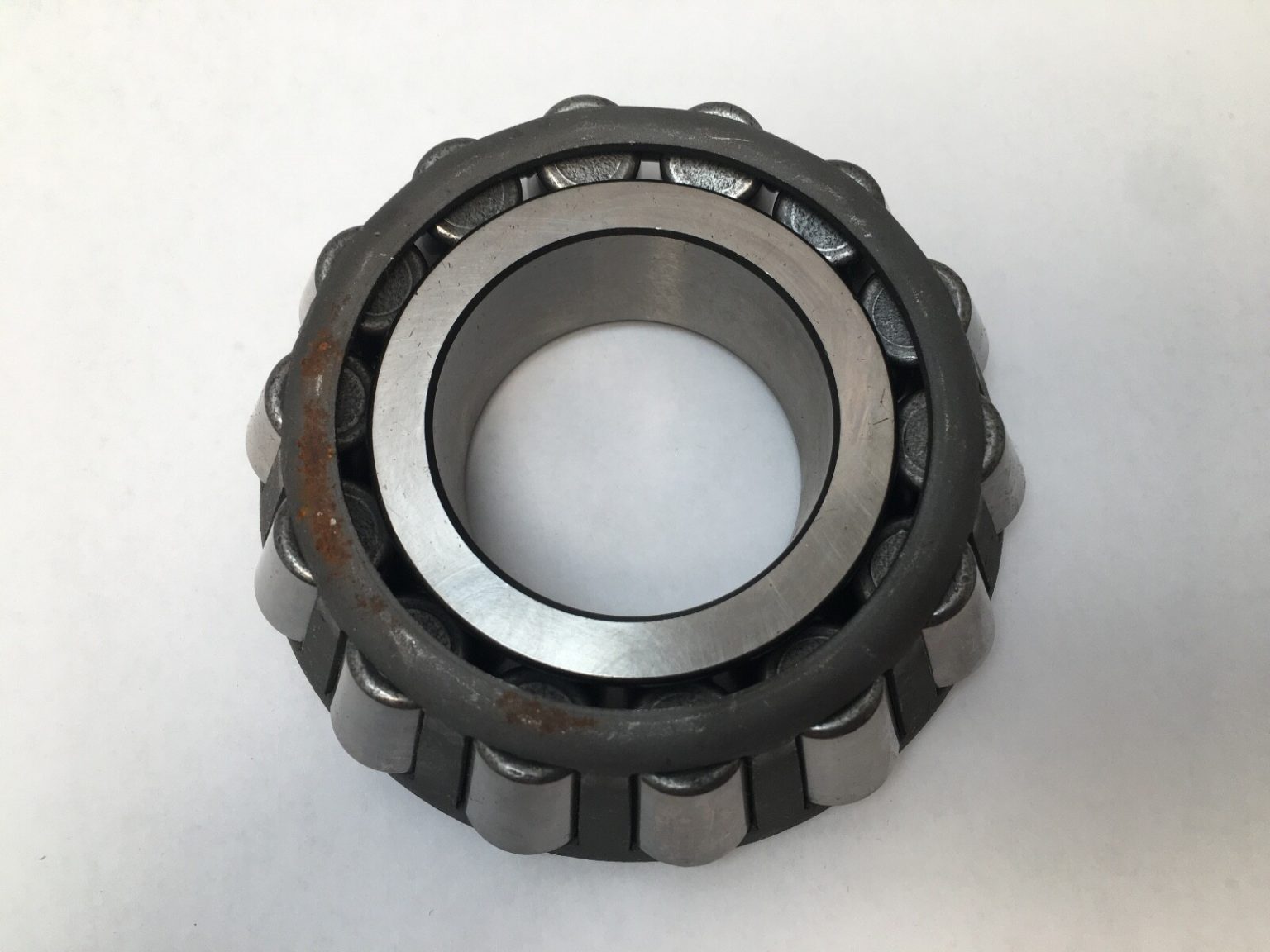
Thrust bearings are components designed to support axial loads—force that runs parallel to the shaft rather than perpendicular to it. Where a standard bearing is built to handle force pushing down or sideways against a rotating shaft, a thrust bearing is built to handle force pushing along the length of that shaft. This matters anywhere a machine has a rotating element that also experiences push or pull along its axis, like a gearbox output shaft, a pump, or a vertical motor holding up its own rotor weight.
Without a properly rated thrust bearing in that position, axial force gets transferred into components that were never designed to absorb it, leading to premature wear, heat buildup, and eventually failure.
Thrust bearings are also commonly called axial bearings. Both terms describe the same function: managing force along the axis of rotation. You’ll see “axial bearing” used more often in European technical documentation and OEM manuals, while “thrust bearing” is the more common term in U.S. industrial and MRO contexts. If you’re cross-referencing a part number and see “axial” in a spec sheet, it’s very likely describing a thrust bearing.
The simplest way to tell these apart is by the direction of the load they’re built to carry. Radial bearings are designed primarily for loads perpendicular to the shaft—the weight of a rotating assembly, belt tension, or gear mesh forces pushing sideways. Thrust bearings are designed for loads running parallel to the shaft, like the downward force in a vertical pump or the axial push generated by helical gears.
Many bearings are built to handle some combination of both, but when axial load is a significant or primary factor, a dedicated thrust bearing (or a bearing specifically rated for combined loads) is the right call. Using a radial bearing in a position that generates meaningful axial load is a common cause of early failure—the bearing simply wasn’t designed to distribute that kind of force across its rolling elements.
If your equipment has a known axial load spec from the OEM manual or a replaced part’s nameplate, that’s the starting point for confirming whether you need a thrust bearing, a radial bearing, or a combined-load design.
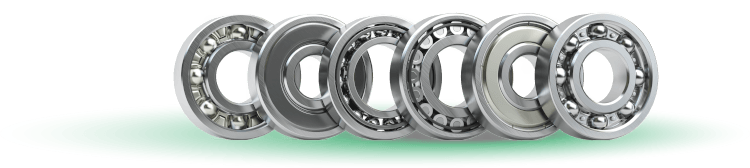
Ball thrust bearings use ball-shaped rolling elements arranged between two washers. They’re well suited to lower-load, higher-speed applications where smooth rotation matters more than maximum load capacity. You’ll typically find them in lighter machinery and applications with moderate axial force.
These use cylindrical rollers instead of balls, which increases the contact area and allows for much higher axial load capacity. The tradeoff is generally lower speed tolerance compared to ball thrust bearings. They’re a common choice in heavier industrial equipment where axial loads are substantial but rotational speeds are moderate.
Spherical roller thrust bearings are built to handle both heavy axial loads and some degree of misalignment between the shaft and housing. The spherical raceway design allows the bearing to self-align, which makes it a strong fit for applications where perfect shaft alignment isn’t guaranteed or where housing deflection is a factor.
Tapered roller thrust bearings use conical rollers arranged so their axes converge at a single point, which allows them to manage heavy combined loads—significant axial force along with some radial load. They’re a common choice in applications where both load types are present and a single bearing needs to manage the combination.
Start with how much axial force the application generates and whether there’s any meaningful radial load alongside it. A bearing rated for pure axial load won’t hold up well if it’s also absorbing significant radial force it wasn’t designed for.
Thrust bearings generally generate more heat than radial bearings at comparable speeds, since the rolling elements are managing force differently across the raceway. Higher-speed applications typically call for ball thrust bearings or designs specifically rated for speed, while heavier, slower applications can tolerate roller designs with higher load capacity but lower speed limits. This heat buildup is one of the real downsides of thrust bearings compared to radial-only designs, and it’s worth checking the speed rating carefully rather than assuming a higher-capacity bearing is automatically the better choice.
If the application has any shaft deflection, housing movement, or imperfect alignment, a self-aligning design like a spherical roller thrust bearing is worth considering. Standard ball or cylindrical designs are less forgiving of misalignment and can wear unevenly if the shaft isn’t running true.
Thrust bearings vary in profile and overall footprint. Roller designs generally require more axial space than ball designs for a comparable load rating, so the available envelope in the housing or assembly often narrows down the options before load capacity even becomes the deciding factor.
Thrust bearings show up wherever rotating equipment experiences axial force: gearboxes, pumps, electric motors, and general power transmission assemblies across manufacturing and industrial plants. Anywhere a vertical shaft is supporting weight, or a gear design pushes force along the shaft axis, there’s likely a thrust bearing doing the work behind the scenes. This is consistent with the kind of equipment MRO teams maintain day to day—motors, gearboxes, pumps, and the power transmission components connecting them.
One of the most common problems MRO buyers run into isn’t choosing the right type of thrust bearing—it’s finding the exact one a piece of older equipment needs. Part numbers get discontinued, manufacturers change naming conventions, and OEM documentation doesn’t always keep up.
Central Surplus helps buyers work through this by cross-referencing part numbers across manufacturers to identify an equivalent or interchange bearing that fits the application, even when the original number is no longer in production. If you have a nameplate number, an old part tag, or even a partial spec, that’s usually enough to start narrowing down a match.
For procurement teams working through a full bill of materials rather than a single part, Central Surplus supports bulk and BOM pricing on thrust bearings and related power transmission components, at pricing below typical distributor rates. That matters whether you’re stocking a spare parts inventory or filling an order for a plant-wide maintenance cycle.

Orders placed before 6:00pm Eastern ship the same day, which counts when a bearing failure is holding up production. Central Surplus focuses on that combination of speed and pricing for industrial buyers nationwide.
If your facility has excess thrust bearings or other industrial inventory sitting unused—from an overstock, a decommissioned line, or a changed spec—Central Surplus also buys surplus industrial inventory, including bearings and power transmission components. It’s a way to turn tied-up inventory into working capital instead of letting it sit on a shelf.
Choosing the right thrust bearing comes down to understanding the load, speed, alignment, and space requirements of the application, then matching that to the right type—ball, cylindrical roller, spherical roller, or tapered roller. But knowing the right type is only half the job when the part you need is hard to find or no longer in production.
Central Surplus combines that technical grounding with a fast path to purchase: broad in-stock bearing catalog coverage, cross-reference help for obsolete or hard-to-find numbers, bulk and BOM pricing for procurement teams, and same-day shipping on orders placed before 6:00pm Eastern. Search the catalog for your part number, or reach out for help finding the right cross-reference.

Our team can locate, cross-reference, and source all parts.
Our team can locate, cross-reference, and source all parts.