

Obsolescence used to be a paperwork problem. In 2026 it’s an operational risk — and allocation just made it worse. Obsolete PLC parts can cut both ways.
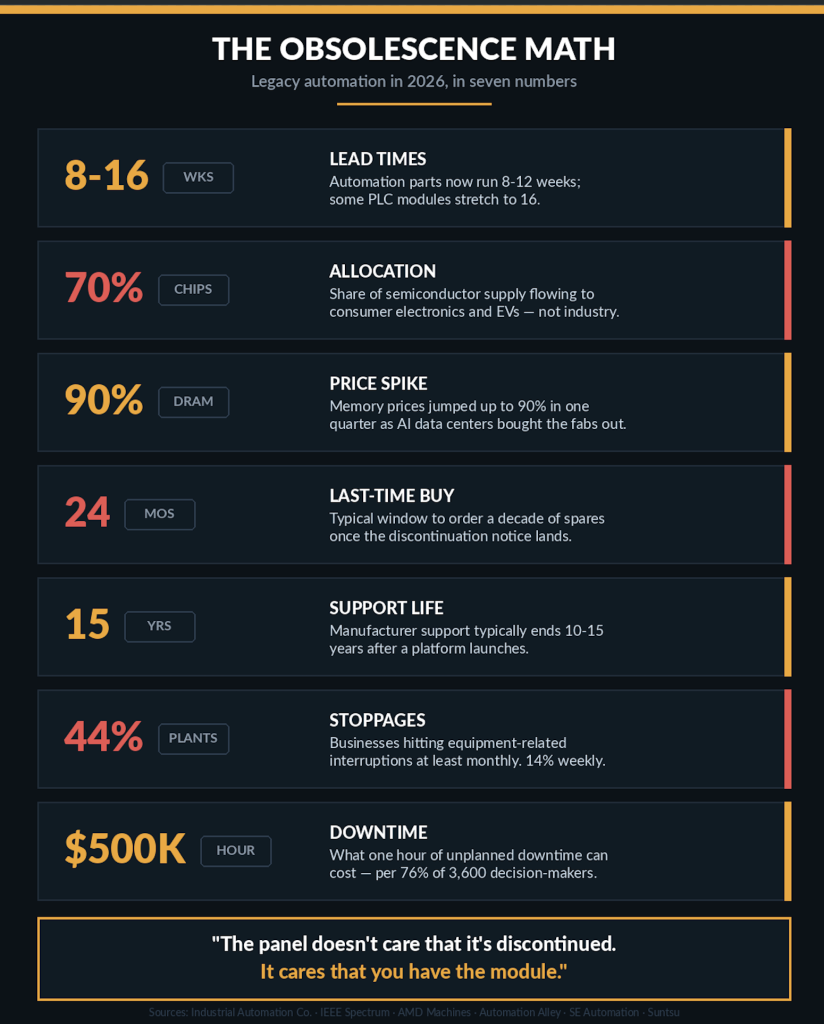
Lead times on automation parts are now running 8 to 12 weeks, with some specialized PLC modules stretching to 16 and beyond.
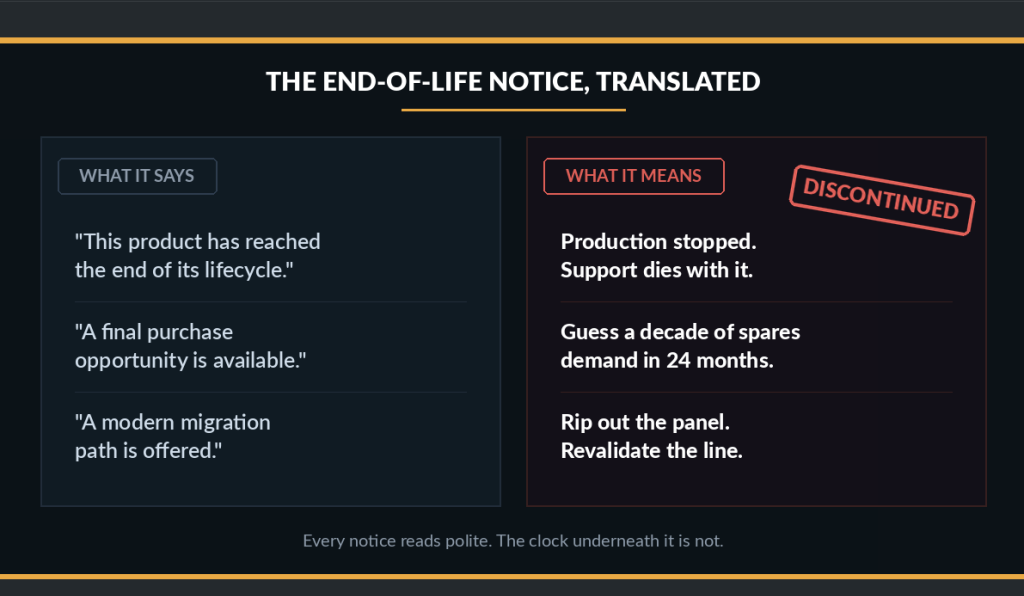
That’s for parts still in production. For everything else, the manufacturer sent a polite letter, gave you a deadline, and moved on.
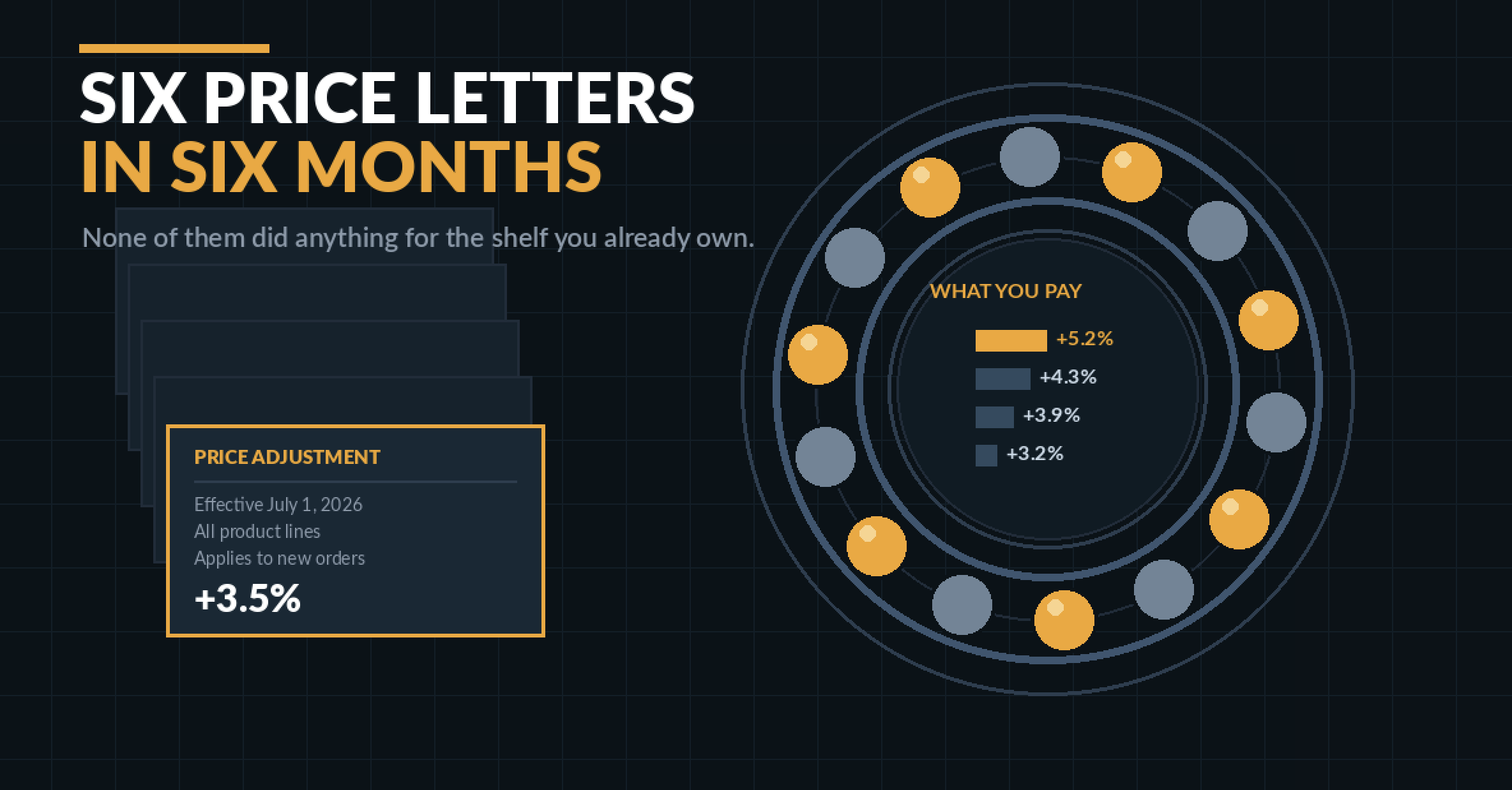
The letters are coming faster now. Siemens, Eaton, and ABB all pushed through price increases this spring, citing the same commodity pressures squeezing every panel shop in the country.
Here’s the deeper squeeze: roughly 70% of semiconductor allocation is flowing to consumer electronics and EVs. Industrial automation gets the leftovers.
And the memory chips inside your legacy controllers? DRAM prices jumped 80 to 90% in a single quarter while AI data centers bought out the fabs.
So the new part is on allocation, and the old part doesn’t exist. Sourcing obsolete PLC parts just became a core competency, not a fire drill.
That’s the real story.
Every end-of-life notice reads the same way. Here’s the translation:
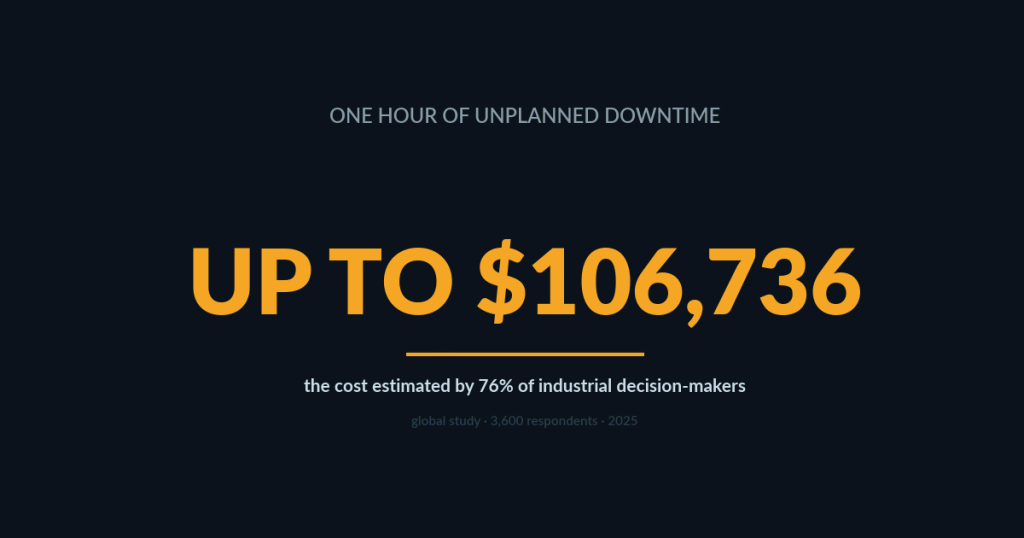
The stakes aren’t abstract. In a global study of 3,600 industrial decision-makers, 76% put the cost of a single hour of unplanned downtime at up to $500,000.
And 44% of businesses hit equipment-related stoppages at least monthly. Fourteen percent take one every week.
You’ve seen how this ends. A $900 module you can’t find idles a line that bills six figures an hour, and suddenly the whole plant knows the part number.
The market for obsolete PLC parts didn’t emerge because anyone wanted it. It emerged because the math demanded it — and in 2026, the math is getting louder.
Smart operators aren’t waiting for the letter. Here’s the playbook:
One more thing: this goes beyond controllers. Drives, HMIs, servo motors, sensors, power supplies — the whole legacy stack ages together, and the same sourcing playbook covers all of it.
Most of American manufacturing runs on equipment the OEM would rather you replace. It runs anyway.
Across food plants, mills, utilities, and machine shops, paid-off lines keep producing while new capacity gets built. The PLC-5 in the corner panel has outlasted three plant managers and at least two “digital transformation” initiatives.
The operators doing this well treat obsolete PLC parts as a supply chain to manage, not an embarrassment to hide.
The panel doesn’t care that it’s discontinued. It cares about where you can find that module.
You don’t need every part in production. You need a plan for the ones that aren’t. That could be you — the plant that shrugs when the notice lands, because the spares were sorted months ago.
Audit the floor before the next letter does it for you.
What to watch: memory allocation through year-end — suppliers are warning of 10 to 20% monthly price increases on the chips that legacy automation depends on.



Our team can locate, cross-reference, and source all parts.
Our team can locate, cross-reference, and source all parts.