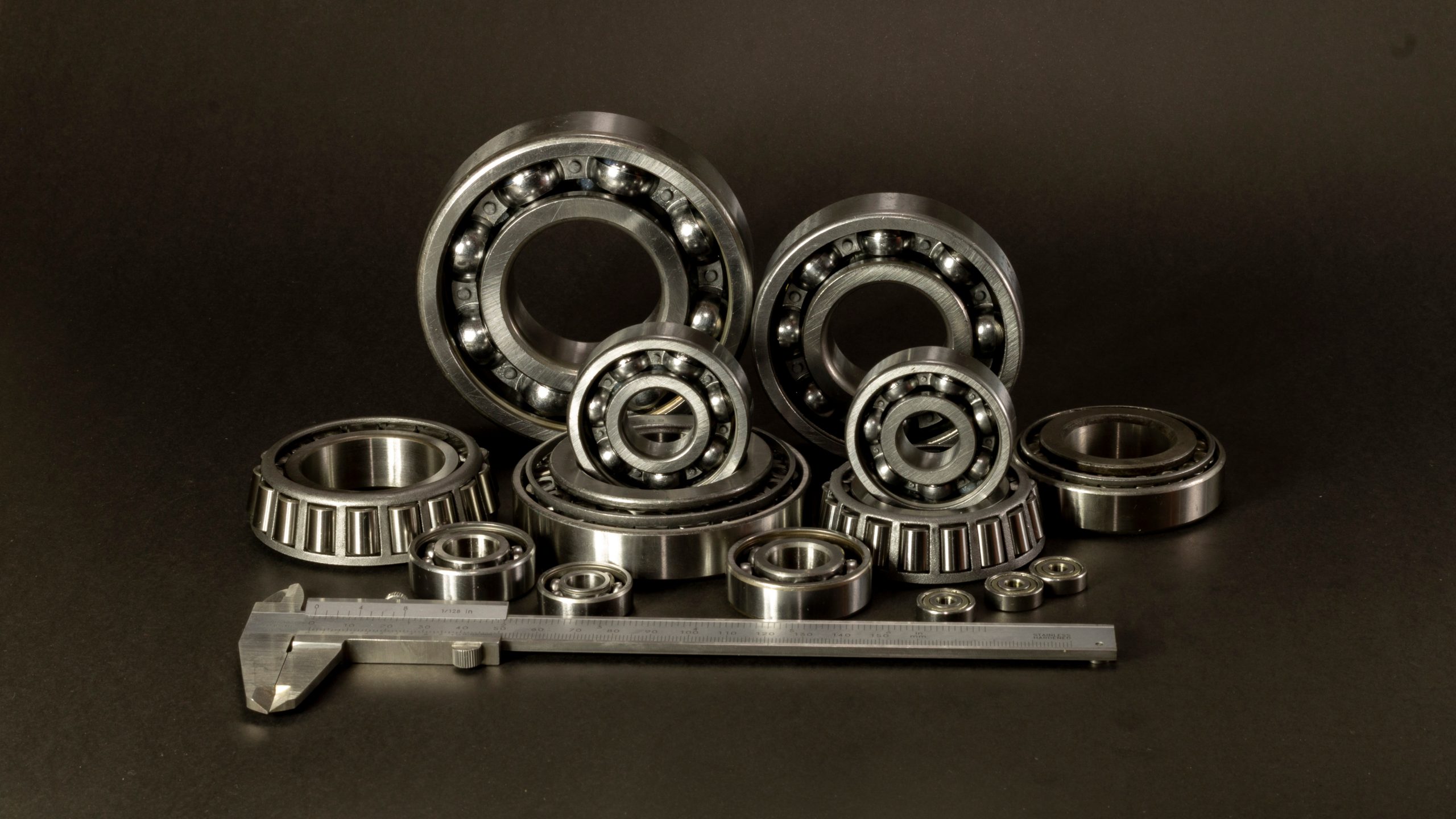
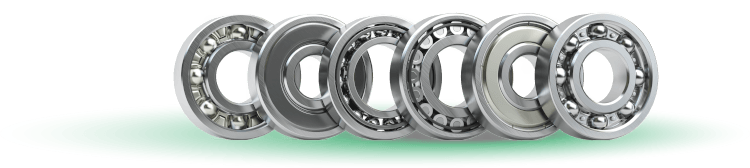
Both ball bearings and roller bearings serve the same fundamental purpose: reducing friction, supporting loads, and ensuring smooth operation of shafts and assemblies. The primary difference between Ball Bearings vs. Roller Bearings lies in their operating mechanisms.
Selecting the appropriate bearing type is a common decision in industrial maintenance and equipment design. The correct choice extends bearing life, reduces downtime, and ensures reliable equipment performance. An incorrect choice can lead to premature failure.
Below is a clear overview of how each bearing type functions, its advantages, and guidance on selecting the right option for your application.
Understanding this distinction is essential when comparing bearing types.
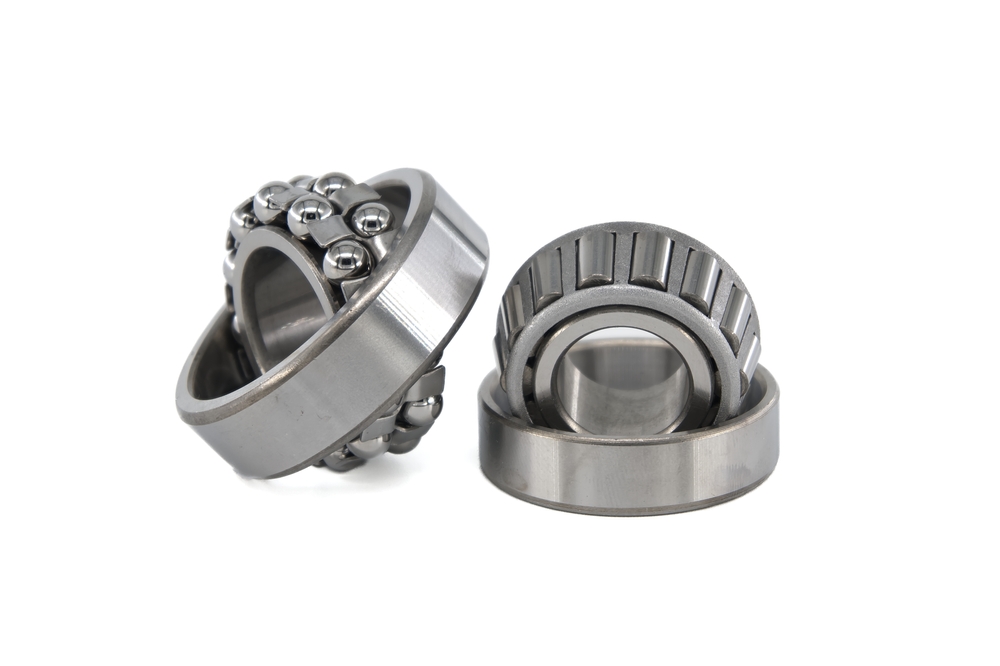
Ball bearings use spherical rolling elements that make point contact with the raceway. This design results in low friction and high-speed capability but provides a relatively small contact area for load distribution.
Roller bearings use cylindrical, tapered, spherical, or needle-shaped rolling elements that make line contact with the raceway. This larger contact area increases radial load capacity but also results in higher friction and lower speed limits.
The optimal bearing choice depends on your application’s specific requirements.
| The Short Version Ball bearings: lower friction, higher speeds, lighter loads. Roller bearings: higher load capacity, better for heavy radial loads and shock, lower maximum speed. |
Ball bearings are the most widely used bearing type due to their versatility, compact design, and broad range of sizes and configurations. For most light-to-moderate-duty applications, deep-groove ball bearings are preferred.
The deep groove ball bearing is the most common type in industrial applications. Their deep raceway accommodates both radial and moderate axial loads in either direction. They operate quietly, require minimal maintenance when properly sealed or lubricated, and are available in standardized sizes from all major manufacturers. If you do not have specific application requirements pushing you toward another type, a deep groove ball bearing is usually the right call.
Angular contact ball bearings are designed for applications with simultaneous radial and axial loads in a consistent direction. The contact angle, typically 15, 25, or 40 degrees, determines the balance between radial and axial load capacity.
60° is the highest contact angle on an angular bearing, usually called a spindle bearing. At a 60° angle, the bearing’s internal geometry is tilted so steeply that it behaves almost like a thrust bearing.
These bearings are commonly used in spindle assemblies, gearboxes, and pumps where combined loading is required. For applications with reversing thrust loads, angular contact bearings are often installed in pairs or sets like triplex and quad.
For heavy loads, roller bearings are preferred. Their line contact with the raceway distributes load over a larger surface area, resulting in significantly higher load ratings for a given bore size compared to ball bearings.
Cylindrical roller bearings support high radial loads at moderate to high speeds. Their rollers make full-length line contact with the inner and outer rings, making them ideal for applications with heavy radial loads and minimal axial loading.
They are standard in large motors, gearboxes, and machine tool spindles where radial loads predominate.
Tapered roller bearings accommodate combined radial and axial loads. The cone angle of the rolling elements enables efficient handling of both axial and radial forces, making them the standard choice for wheel hubs, gearbox shafts, and drive axles.
These bearings require precise preload during installation. Excessive preload reduces service life, while insufficient preload allows excess shaft play. Proper installation is essential.
Spherical roller bearings are designed for heavy loads in applications where perfect shaft alignment cannot be guaranteed. The barrel-shaped rollers and spherical outer raceway enable self-alignment by several degrees, preventing edge loading that could damage standard cylindrical or tapered roller bearings.
They are commonly used in heavy industrial equipment such as paper mill rolls, mining conveyors, and large pumps, where misalignment from thermal expansion or structural deflection is expected.
Needle roller bearings use small-diameter rollers to provide high load capacity in a compact cross-section. They are used where radial space is limited, but significant load-carrying capacity is required.
They are commonly found in planetary gear sets, connecting rod assemblies, cam followers, industrial robotics & automation and agricultural equipment.
Ball bearings can operate at much higher speeds than roller bearings of the same bore size due to their point contact geometry. Less contact area results in lower friction and reduced heat generation at high speeds.
Manufacturers publish rated speed limits for bearings, which are influenced by bearing material, bore size (larger bearings may operate at lower speeds), lubrication type (grease or oil), and operating temperature.
Bearing load ratings are published as:
For a given bore size, roller bearings generally have higher C and C0 ratings than ball bearings. When comparing bearings of the same bore size for heavy-duty applications, review the dynamic load rating; the roller bearing will almost always be rated higher.
If a ball bearing is failing before its expected service interval, compare its load rating to your actual operating conditions. The bearing may be overloaded beyond its intended application.
Selecting between ball and roller bearings depends on three primary considerations:
For most general-purpose, light-to-moderate applications at moderate speeds, deep groove ball bearings are typically the best option. For heavy radial loads, combined loading, shock exposure, or large equipment, roller bearings are recommended. Sure, the bearing part number you’re replacing will tell you exactly what was spec’d for that application. Match it. If the original bearing was failing prematurely, that’s a separate investigation into load conditions, lubrication, or mounting.
Central Surplus offers ball bearings and roller bearings from Timken, SKF, FAG, NTN, NSK, Dodge, INA, and other leading manufacturers. You can search by part number, browse by type, or contact our team for assistance with sourcing.
If you need to cross-reference a part number to find an equivalent from another manufacturer, our team can assist you.
Our team can locate, cross-reference, and source all parts.