

A shipping cutoff banner measures a vendor’s dock. It tells you nothing about whether your order clears it.
Surplus parts in MRO fulfillment are only fast if it ships blind, at reseller pricing, on a part you can actually cross-reference.
Average component lead times stretched from 16.7 weeks in February 2026 to 20.6 weeks, with 11 of 15 tracked categories sitting above the 12-week target.
That gap is the entire reason the surplus channel exists.
So every surplus site now runs the same banner. Order by 3pm. Ships today.
Ships today to whom, at what price, with whose name on the packing slip?
Is it actually in stock? Better check, it’s usually dropped shipped from another vendor where the original vendor you are purchasing from has to check in with.
Lots of moving parts.
“Same day” is a warehouse metric. MRO parts fulfillment is a channel question. The distance between the two is where distributors, or any buyer, gets burned.
Wholesale distribution margins are ≈30%. The web price can be 200% + over the net published distributor price.
Know the current distributor cost before you buy. Agents already know the cost.
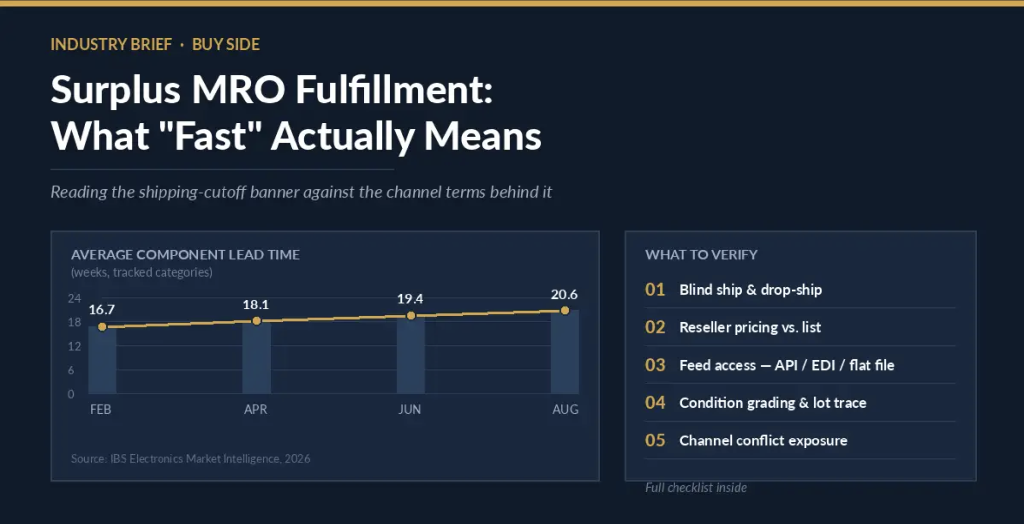
Every real conversation about surplus MRO parts fulfillment comes down to these eight. Each has a market answer and a specific thing to verify before you quote.
Some established surplus houses will drop-ship, and the larger ones support true blind shipping — no vendor branding, no pricing in the box, your name on the paperwork. Smaller liquidators often can’t, because blind shipping requires a packing-slip system, not a policy. Sure they can email you a PS – watch put for manual errors. Vetting a drop-ship vendor means asking what they actually ship and at what cost before the first order, not after the first complaint. Verify with a test order to your own dock. Look at the box, the label, and the insert.
Vendors, word to the wise: under promise and over deliver.
Surplus is already priced off list — that’s the product — so a separate reseller tier is less common than in franchised distribution, and where it exists it’s volume-based rather than a published multiplier. Expect the discount to live in the acquisition, not in a discount schedule. Verify by pricing the same part number twice: once cold off the site, once with your account attached. If the number doesn’t move, that’s your answer, and it may still be the best number on the market.
Either way, surplus houses typically offer cost minus.
Flat file is the realistic answer across most of the surplus channel; API access exists at the larger operations, and true EDI is rare because surplus SKUs are one-off by nature. A part with a quantity of three doesn’t justify an 850/855 integration. Expect a CSV on a schedule. Verify the refresh interval — a feed that updates weekly on single-unit stock is a promise you’ll break to your own customer.
Surplus houses’ SKUs are very dynamic – SKUs don’t repeat often.
Single-unit orders are normal in surplus, which is the channel’s structural advantage over a factory that wants a reel or a pallet. The threshold that actually bites is on the sourcing side: most surplus operations buy in bulk lots, so what they hold is whatever the last plant closure produced. Verify whether the vendor will source to order or only sell what’s on the shelf. Those are two very different businesses wearing the same website.
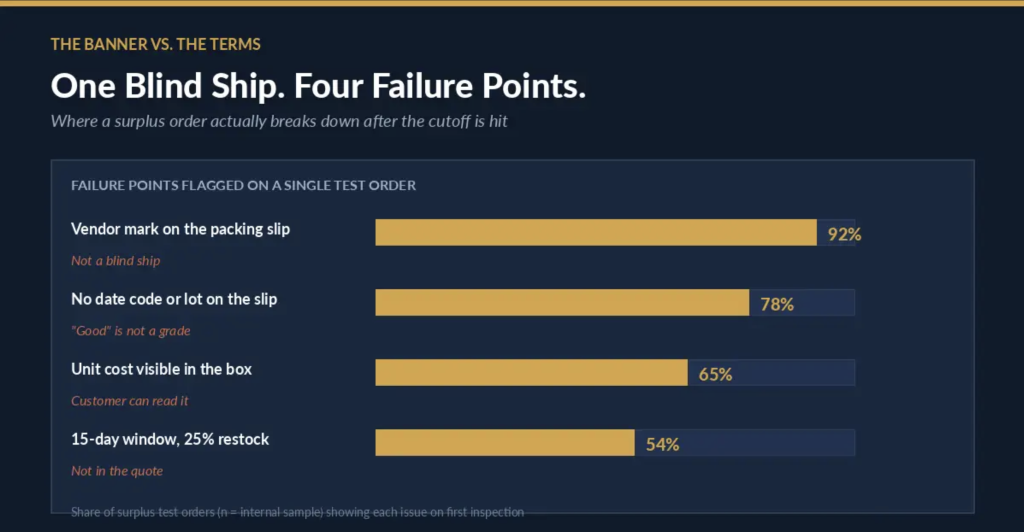
Surplus stock generally carries a vendor warranty rather than a manufacturer warranty — commonly 30 to 365 days depending on the house and the category — with DOA handled as a replacement or credit. Manufacturer warranty typically does not transfer through a non-authorized channel. That is the actual trade, and it is priced in. Verify the term in writing before you quote it downstream, because your customer will ask and “the vendor covers it” is not a term.
Some MFRs do extend warranty to downstream customers. Sometimes you get lucky.
Serious surplus operations grade at minimum new-in-box, new-no-box, new-old-stock (surplus), and used/tested or refurbished, and hold the lot back to the acquisition it came from. This matters more every year: 621,909 components went end-of-life in 2025, and 52% of those events shipped with no product change notification at all. Verify date codes and firmware revision on anything with a processor in it. New-in-box from 2014 can be still new. It is not still current.
Returns in surplus MRO fulfillment carry a restocking fee and a shorter window than franchised distribution — often 15 to 30 days — because a returned surplus unit re-enters a market of one. Those parts are usually scrapped. Wrong-part returns are usually accepted; buyer’s-remorse returns on obsolete stock frequently are not. But the B2B world is becoming very much like B2C, so that’s changing rapidly. Verify the window and the fee before you build them into a quote to your end user.
Most surplus houses sell to anyone who calls (yes, even the house that says “distributors only”) which means the answer is usually yes — they will sell to your customer, at the same price, from the same site. Nobody in the channel enjoys saying that out loud. Very few admit it. 38% of channel managers already rank channel conflict as their top concern, and 44% expect it to get worse. Verify whether the vendor does deal registration or any account protection. If they don’t, the protection is your cross-reference work and your service, not their policy.
Sometimes when purchasing a lot from the inventory owner, they ask to not sell in their market. This usually means moving the parts overseas.
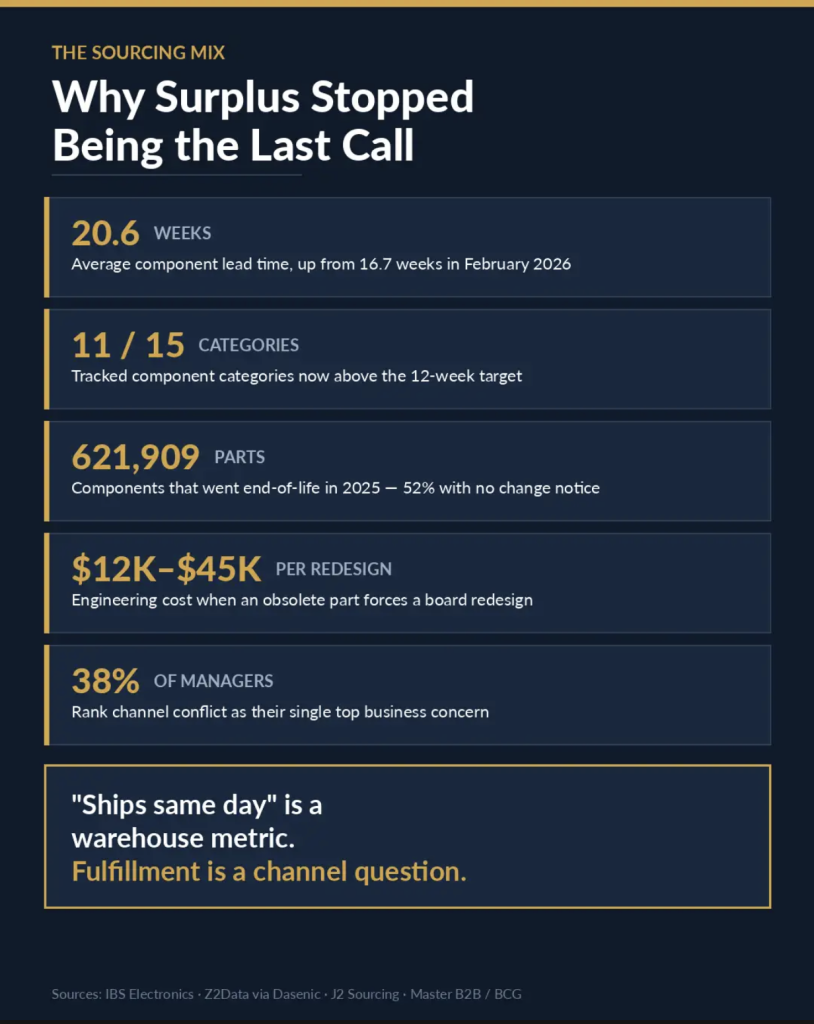
The macro picture is not getting easier. Lead times are extending, obsolescence is structural rather than occasional, and franchised allocation increasingly favors whoever signed the longest contract. Surplus stopped being the last resort and became a parallel channel. Who woulda thought?
Two camps form from here.
One treats surplus as an emergency phone call and gets whatever the emergency price is.
The other qualifies three or four sources the same way they’d qualify any line — blind capability, feed quality, grading discipline, return terms — and quotes from them on a normal Tuesday.
The second camp is buying the same parts at better numbers with less drama. There is your opening.
Don’t sleep on this. The qualification work takes a week and pays for a decade.
What to watch: category-level lead time data on power semiconductors and drives, EOL notice volume heading into 2027, and how many surplus operations publish a real feed instead of a search box.
The vendors that solve surplus MRO fulfillment at the data layer are going to take a lot of share from the ones still answering the phone.
Make sure to select a industrial parts vendor who supports fast fulfillment.
#samedayshipping #fastfulfillment #MROdistributors #shipssameday #industrialpartsvendor

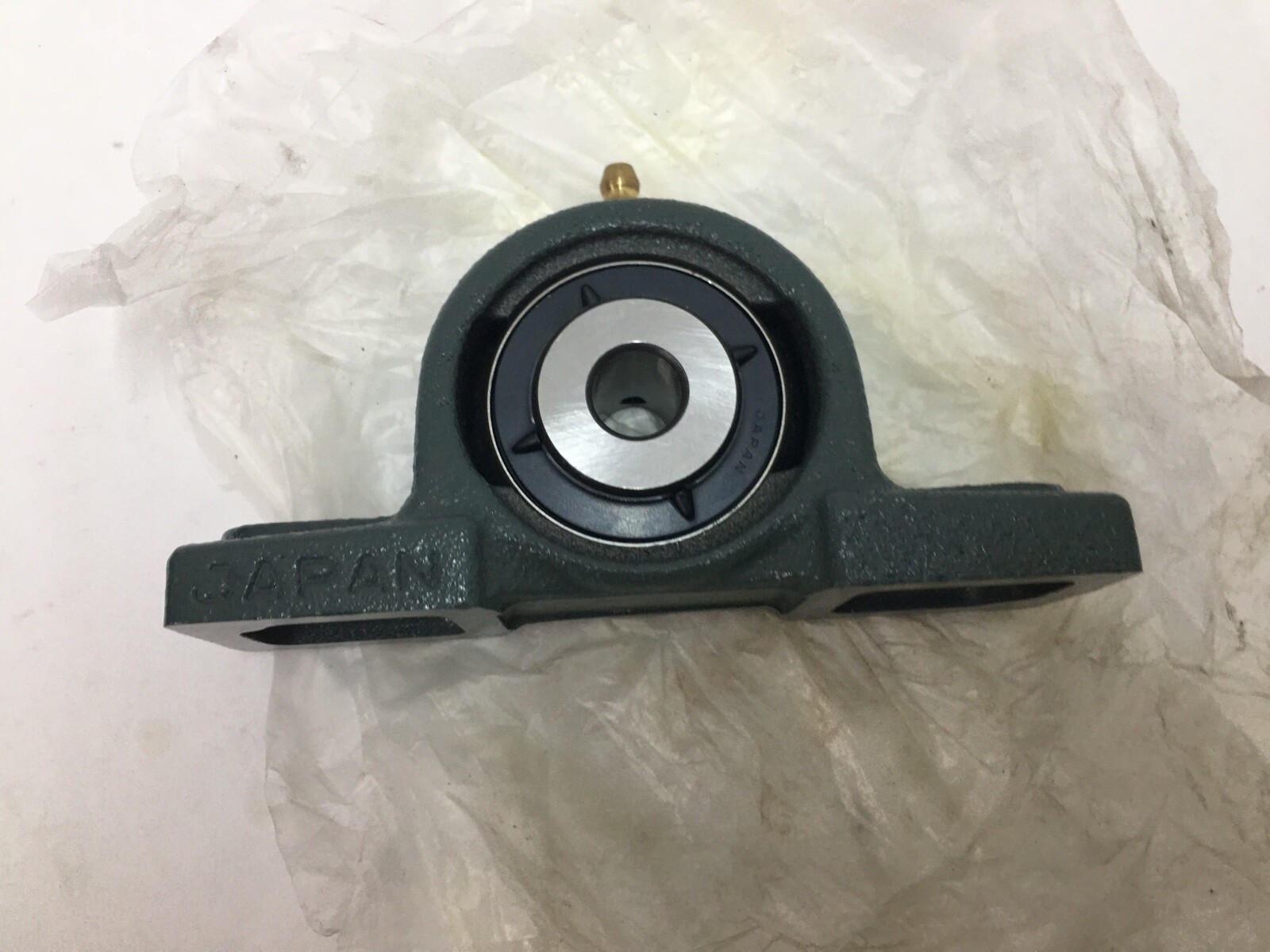
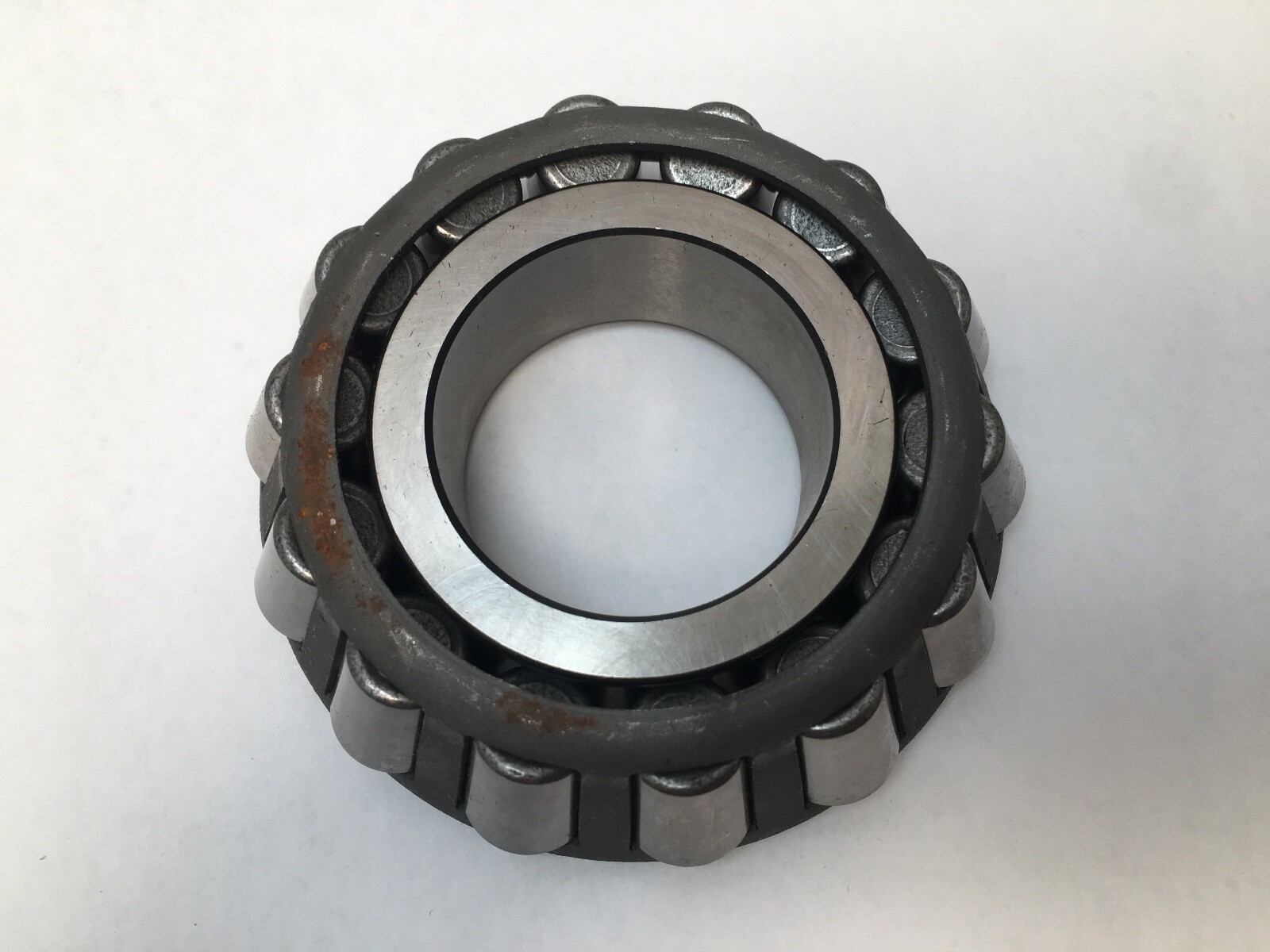

Our team can locate, cross-reference, and source all parts.
Our team can locate, cross-reference, and source all parts.