
The dead stock on your shop floor is not an asset waiting for the right work order. It is a shrinking pool of buyers, and the pool gets smaller every quarter. Smart money knows this, it’s just more difficult to track.
Excess MRO inventory does not sit still. It rots quietly, on your square footage, on your books
Widen the window and it gets worse. Somewhere between 30 and 50 percent of parts have not moved in 24 months.
When we visit warehouses to purchase excess stock, the percentages are far higher. On a recent visit, we purchased dead stock that was in the warehouse for over 20 years.
They paid for that inventory multiple times over, and the CFO called the next day after the wire hit to express gratitude for helping the books.
None of it was bought by accident. Every one of those part numbers was justified by somebody with a badge and a good reason.
The catch you ask? The reason expired and the part didn’t leave.
Excess MRO inventory is the only line in the plant that gets more expensive the longer you succeed at not needing it.
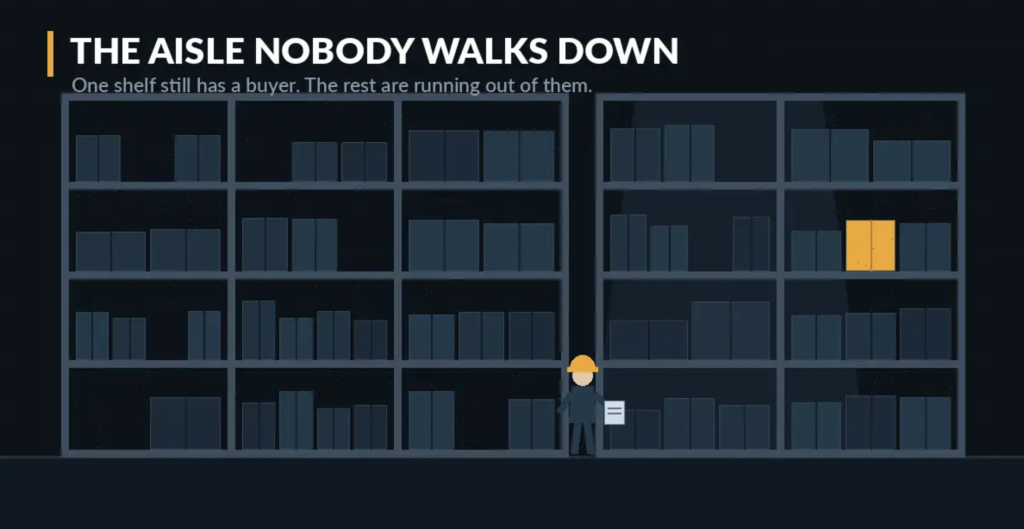
Ask three departments who owns the aisle nobody walks down and you get three answers.
We worked with this industrial manufacturing company and they were reluctant to part ways with the inventory because they thought they would need the MRO spares often, but they rarely come back to us to purchase their inventory back. But they do often come back to us to free up space and working capital.
Now the part that stings.
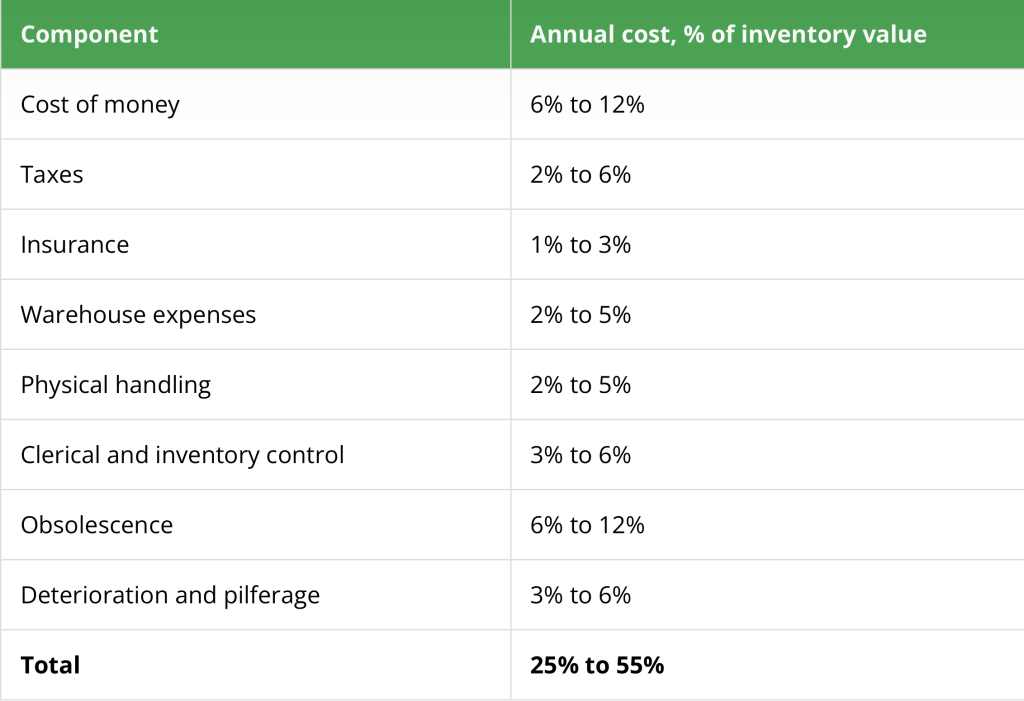
Source: https://reliamag.com/guides/mro-spare-parts-inventory-statistics
Your dead stock will never be the part you need. Different vintage, different asset, different failure mode.
The drive you’re holding was specified for a line that got rebuilt. The bearing set matches a spindle you retired. We have walked many plants where the surplus rack and the stockout list share exactly zero part numbers — it is closer to a rule than a coincidence.
So the material is worthless to you specifically. It is worth something only to a buyer who runs the asset you walked away from.
And that buyer population shrinks with every platform revision, every spec change, every OEM that discontinues a family, even when a MFR announces a new product family. Nobody wants to admit the deadstock buy was theirs. Good news; you don’t have to, you can admit it to a scale ticket instead.
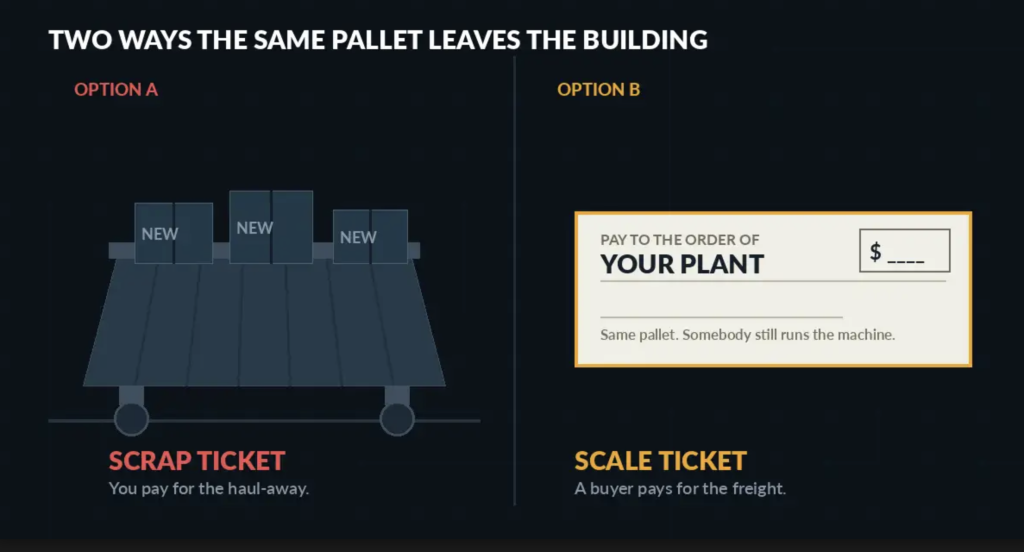
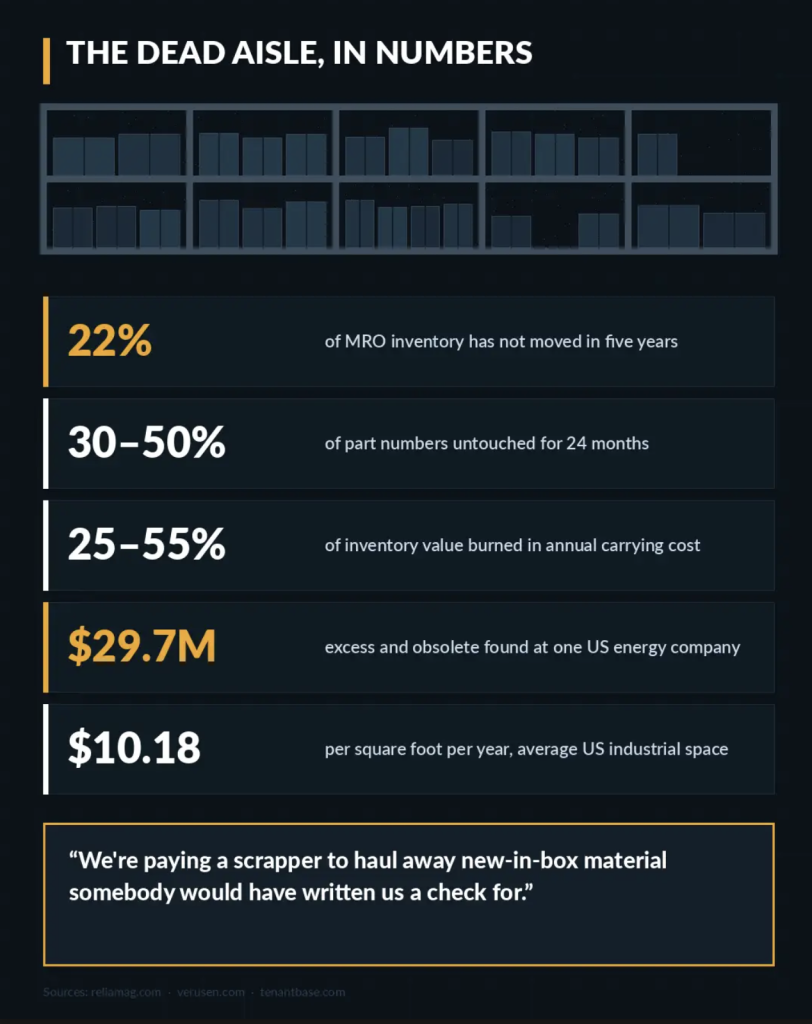
Somebody is running the machine you decommissioned. They need the part. They are not getting it from the OEM. They are most likely overseas.
That is the whole market. It is not complicated and it is not sentimental.
You must remove your emotions from the process.
Two camps are forming. One is consolidating storerooms into spreadsheets, tagging everything slow-moving as a write-off, and calling the scrapper because it closes the file fastest.
The other is treating the crib as a two-sided position: keep what stops a line, monetize what supports a plant they no longer run.
The second camp gets paid. The first camp pays to dispose.
Now you can see the opening.
The operators who take the dead aisle seriously this year turn a depreciating pile into working capital while it still has a buyer. That is a good problem to have and a solvable one. Don’t sleep on this.
What to watch: plant consolidations and line rebuilds through the back half of the year, OEM end-of-life notices on drives and controls that shrink the buyer pool on specific families, and how many storeroom cleanups this fall end at a scrap yard instead of a surplus buyer.
The material leaving your building this quarter is worth more to somebody than the material leaving it next year. And if you sell now, you’re not paying for another year of storage. That’s the real deal.
Ready to sell industrial MRO parts? Make it easy. Sell Your Parts



Our team can locate, cross-reference, and source all parts.
Our team can locate, cross-reference, and source all parts.