When the original bearing is discontinued, not available or has a lengthy lead time, there is no need to panic. This scenario is common for maintenance teams and purchasing managers. Bearing cross-referencing enables you to resolve these issues efficiently. You just need to know how to use a bearing cross-reference to find substitutes and interchanges. By understanding part numbers and identifying equivalents, you avoid delays and maintain productivity.
This guide explains bearing numbering systems, cross-referencing between major manufacturers and MPNs and the criteria for safe substitution.
A bearing cross-reference is the process of identifying a bearing from one manufacturer that is dimensionally and functionally equivalent to a bearing from another manufacturer.
It’s the same part, from a different brand. The brands can match the exact specifications.
Nomenclature has somewhat standardized throughout the years; some older bearings with different model numbers can be interchanged with new variants.
Most major bearing manufacturers adhere to ISO dimensional standards.
For example, Timken 2MM209WICR-DUL and SKF 7209CD/P4ADGA bearings are direct technical interchanges, even though their part numbers vastly differ.
A cross-reference guide or tool links equivalent part numbers, allowing you to find matches without searching multiple manufacturer catalogs.
Understanding bearing part numbers is essential for cross-referencing. Most manufacturers use a standard structure based on international standards, adding their own prefixes and suffixes, with the base model number.
A standard bearing number encodes three things:
1. Bearing type (ball, roller, thrust, etc.)
2. Dimension series or base model number (a code for the relationship between inner diameter (bore), outer diameter, and width) IDxODxWidth
3. Prefixes & Suffixes (cage material, sealing, internal clearance, precision class, and more)
Example: the number 6205-2RS breaks down as:
How to Read Bore Size From a Bearing Number
| Bore Code | Bore Size |
|---|---|
| 04 | 20mm |
| 05 | 25mm |
| 06 | 30mm |
| 07 | 35mm |
| 08 | 40mm |
| 10 | 50mm |
| 12 | 60mm |
For small bearings (bore under 20mm), the codes 00, 01, 02, and 03 correspond to 10mm, 12mm, 15mm, and 17mm, respectively. Bearings with a bore of 500mm or larger use the actual bore size directly in the number.
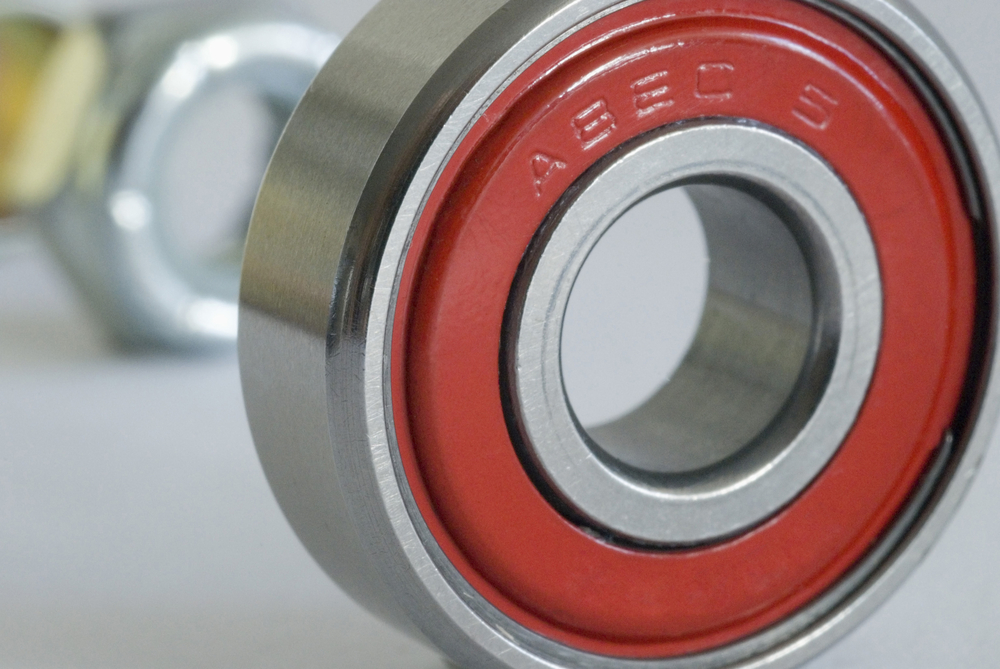
ABEC stands for Annular Bearing Engineers’ Committee. It’s a precision classification system used primarily in the United States.
ABEC classes run from 1 to 9 (1, 3, 5, 7, 9). Higher numbers mean tighter dimensional tolerances. For most industrial MRO applications, ABEC 1 or ABEC 3 is completely adequate. ABEC 7 and 9 are reserved for precision machine tools, aerospace, and high-speed spindles.
When cross-referencing, ensure the replacement bearing matches the original precision class. Using a lower-precision bearing in a high-precision application can cause issues. Using a higher-precision bearing in a standard application is generally acceptable but may increase costs.
The international equivalent of ABEC is the ISO tolerance class system (P0 through P2). ABEC 1 corresponds roughly to ISO P0. ABEC 7 corresponds roughly to ISO P4.
Substitution is safe when the replacement bearing matches the original on all of the following:
If all criteria match, the bearing can be directly interchanged, regardless of brand.
| When to Be Cautious: Do not substitute based on part number similarity alone. A 6205 looks similar to a 6305 but has different outer diameters. Always verify bore, OD, width and all other technical specs before using a cross-reference. For high-speed, high-temperature, or safety-critical applications, consult the equipment OEM or a bearing specialist. |
The most efficient way to cross-reference is to use a dedicated bearing interchange tool or consult a distributor with cross-reference expertise. Central Surplus offers both options.
If you are cross-referencing manually, familiarize yourself with common manufacturer suffixes:
| Condition | Common Suffix Examples | Notes |
| Both sides sealed | 2RS (SKF), 2RSH (SKF), LLB / LLU (NTN), 2RD (Koyo), VV (NSK) | Rubber seal, not interchangeable with shields |
| Both sides shielded | ZZ (generic, eg; Timken), 2Z (SKF), FF (MRC) | Metal shield, less effective seal than rubber |
| C3 internal clearance | C3 (most brands) | Slightly larger gap, used for higher-temp & high vibration apps |
| C2 internal clearance | C2 (most brands) | Tighter gap, for press-fit or precision apps |
| Snap ring groove | N or NR (most brands) | Groove in the outer ring for the external snap ring |
When in doubt, match by dimension first, then confirm compatibility of all nomenclatures (prefixes and suffixes) for your application.
Some bearings are difficult to cross-reference. Older American-made bearings, such as NDH, MRC, and Fafnir, may use proprietary numbering that does not correspond to current model numbers. Specialty bearings for specific OEM equipment may also have unique internal geometry not reflected in the basic number, such as SKU to MPN cross-referencing.
In these situations, sourcing by dimension is most effective. Bore, outer diameter, and width may be marked on bearings. You can use calipers to get the exact dimensions. With these measurements, a distributor with cross-reference expertise can often identify suitable alternatives, even if the original part number is unavailable.
Central Surplus specializes in this type of sourcing. If you have a part number or dimensions, please contact us, and we will assist you in finding a suitable match.
Need Help Cross-Referencing a Bearing? Contact Central Surplus.
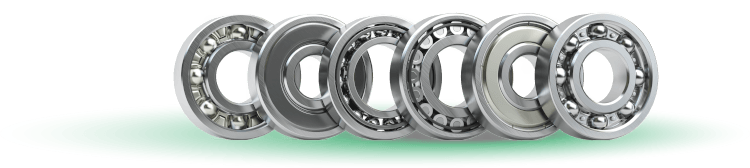
Our team can locate, cross-reference, and source all parts.
Our team can locate, cross-reference, and source all parts.