
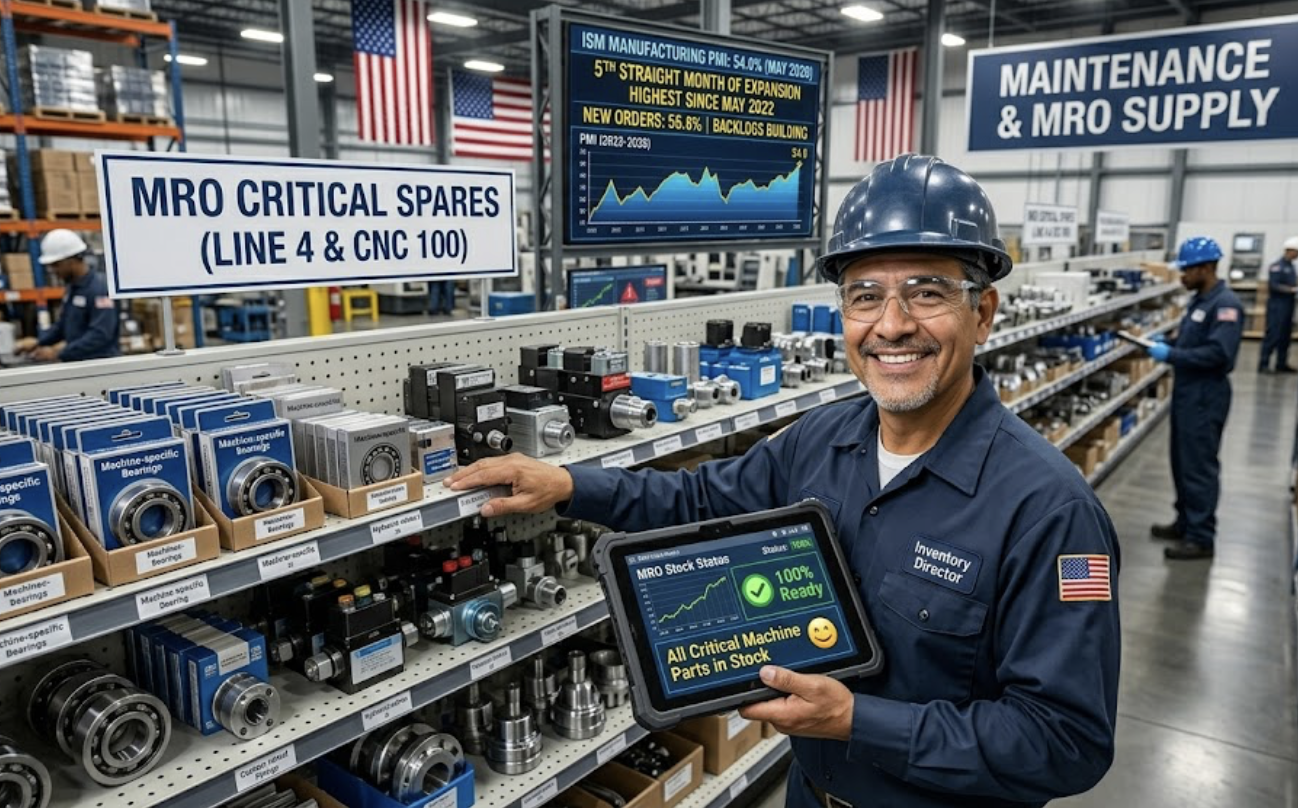
The ISM Manufacturing PMI (Manufacturing Purchasing Managers’ Index) hit 54.0% in May 2026 — its highest reading since May 2022 and the fifth straight month of expansion. That’s not a blip. That’s a trend.
New orders came in at 56.8%, backlogs are building, and four of the six largest manufacturing sectors are reporting growth. The factories are running. The question is whether your MRO supply chain is keeping pace.
When machines run harder, they break more. And the teams that aren’t ready will be scrambling for parts while the winners keep lines moving.
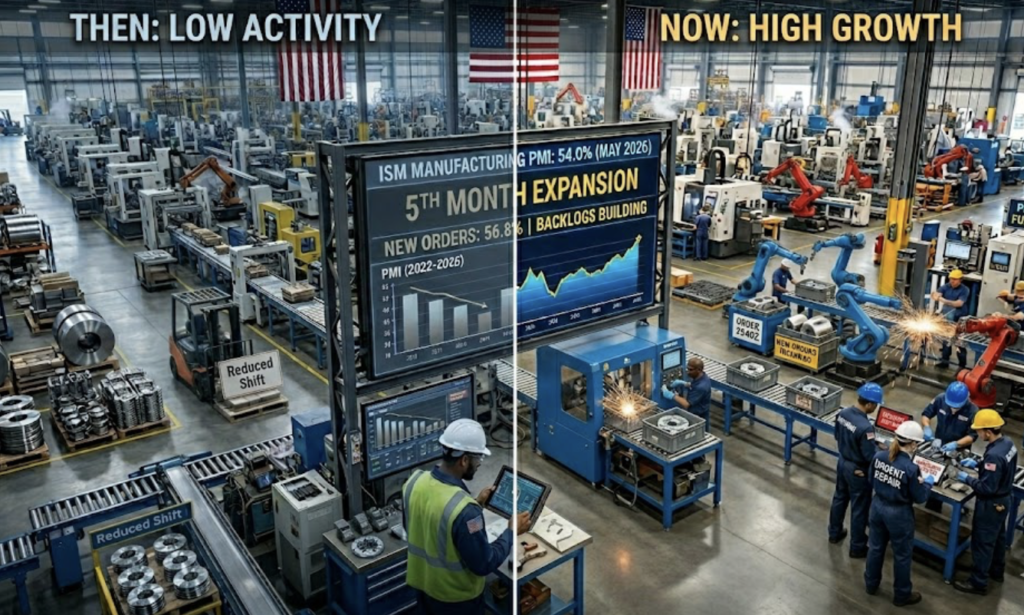
A PMI above 50 means expansion. At 54, it means the floor is busy, the orders are stacking up, and maintenance teams are about to get a lot less sleep.
Bottom line: this isn’t a demand echo from tariff front-loading. It’s a structural production recovery, and every new shift is another maintenance event waiting to happen.
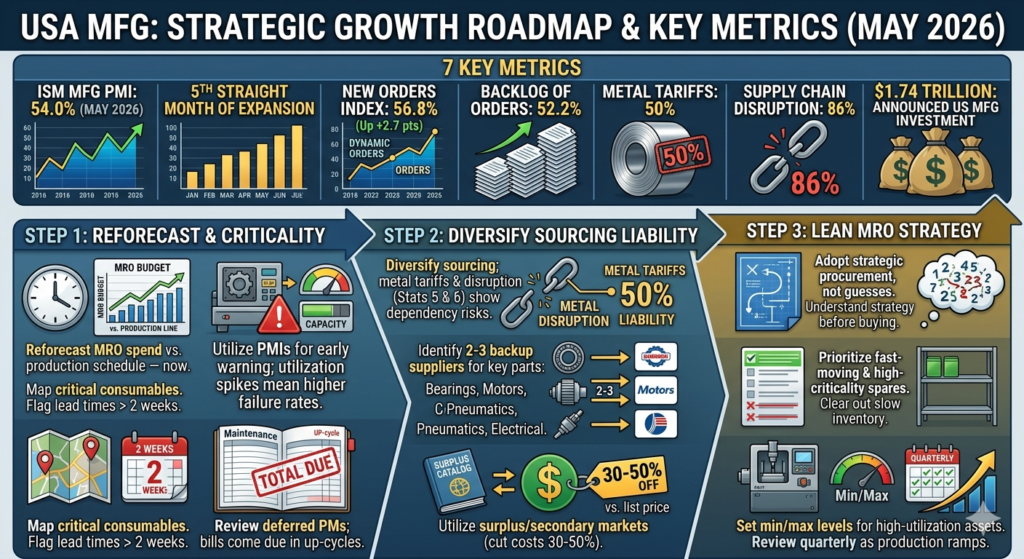
A PMI at 54 means your equipment is running closer to capacity; failure rates don’t stay flat when utilization spikes
Map your top critical consumables and flag anything with a lead time over 2 weeks
Talk to ops about any equipment that’s been running deferred PMs — those bills come due in an up-cycle
With metal tariffs at 50% and 86% of supply chains already reporting disruption, single-source dependency is a liability
Identify 2-3 backup suppliers for your top categories, especially bearings, motors, pneumatics, and electrical components
Surplus and secondary-market sourcing can cut costs 30–50% vs. list price on many industrial parts — especially useful when new equipment lead times stretch
Understand your MRO procurement strategy before you start buying; reactive purchasing in an up-cycle is how margins disappear
Prioritize fast-moving consumables and high-criticality spare parts; let the rest stay off the shelf
Set min/max levels for anything tied to your highest-utilization assets — and review them quarterly as production ramps
PMI don’t lie — and at 54, it’s saying run your procurement like your floor depends on it.
Five straight months of expansion, $1.74T in new US facilities, and 69% (probably less once the dust settles) of manufacturers bringing production home. The parts demand is here and coming. The distributors who’ve already stress-tested their supply chains will capture it. The ones who haven’t will be explaining lead times to ops managers at the worst possible moment.
What to watch: The ISM June Manufacturing PMI drops July 1. If New Orders hold above 55, this cycle has legs — start positioning inventory accordingly.


Our team can locate, cross-reference, and source all parts.
Our team can locate, cross-reference, and source all parts.