
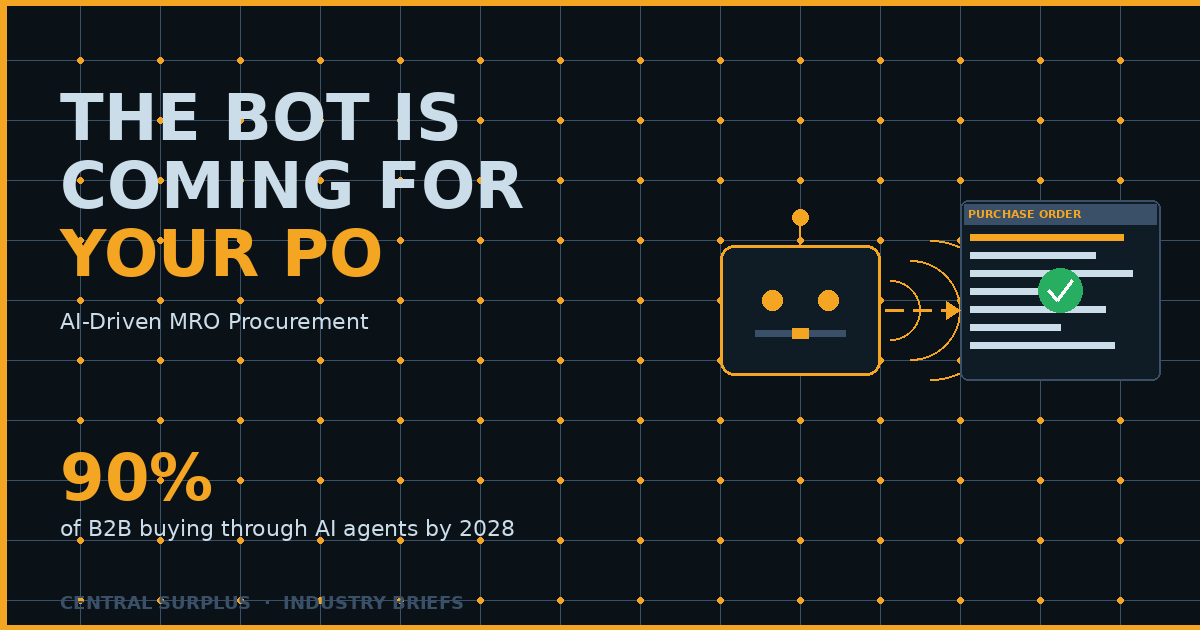
Agentic AI procurement is running live in enterprise software. Most MRO teams are still running on spreadsheets and gut feel.
By 2028, 90% of B2B buying will flow through AI agents — not browsers, not sales reps, not PunchOut catalogs. That’s agentic AI procurement: autonomous systems making buying decisions inside enterprise software, with humans reviewing exceptions.
That’s $15 trillion in B2B spend. The migration has already started.
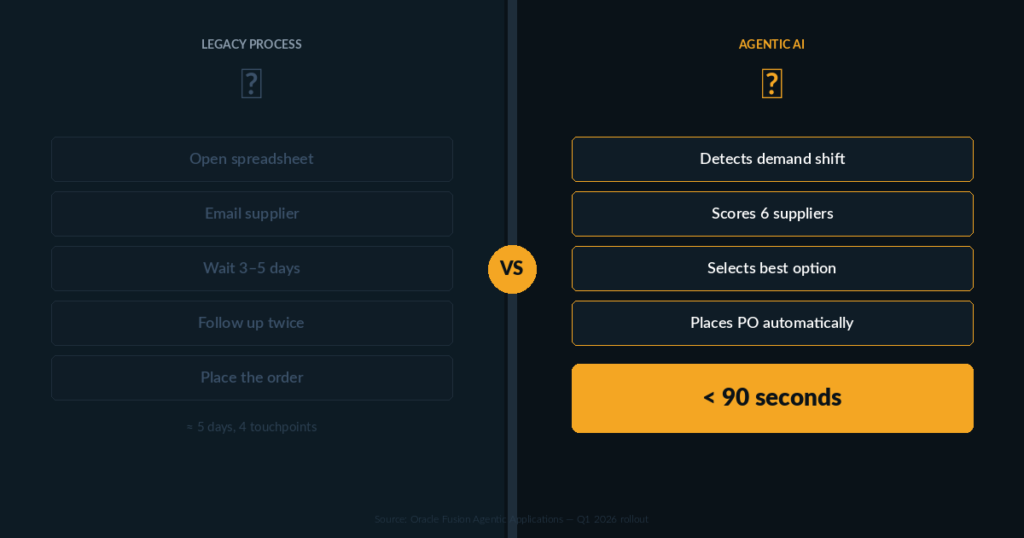
In March, Oracle launched 22 agentic AI applications embedded directly into its supply chain and procurement platform — covering purchase coordination, supplier selection, and order management. Not pilots. Production rollouts.
Grainger is targeting 80% digital sales. Fastenal now runs more than 60% of revenue through digital channels, with smart vending machines going deeper into customer facilities every quarter.
The distributors doing this at scale aren’t experimenting anymore. They’re separating.
Here’s the part nobody wants to explain to the CFO.
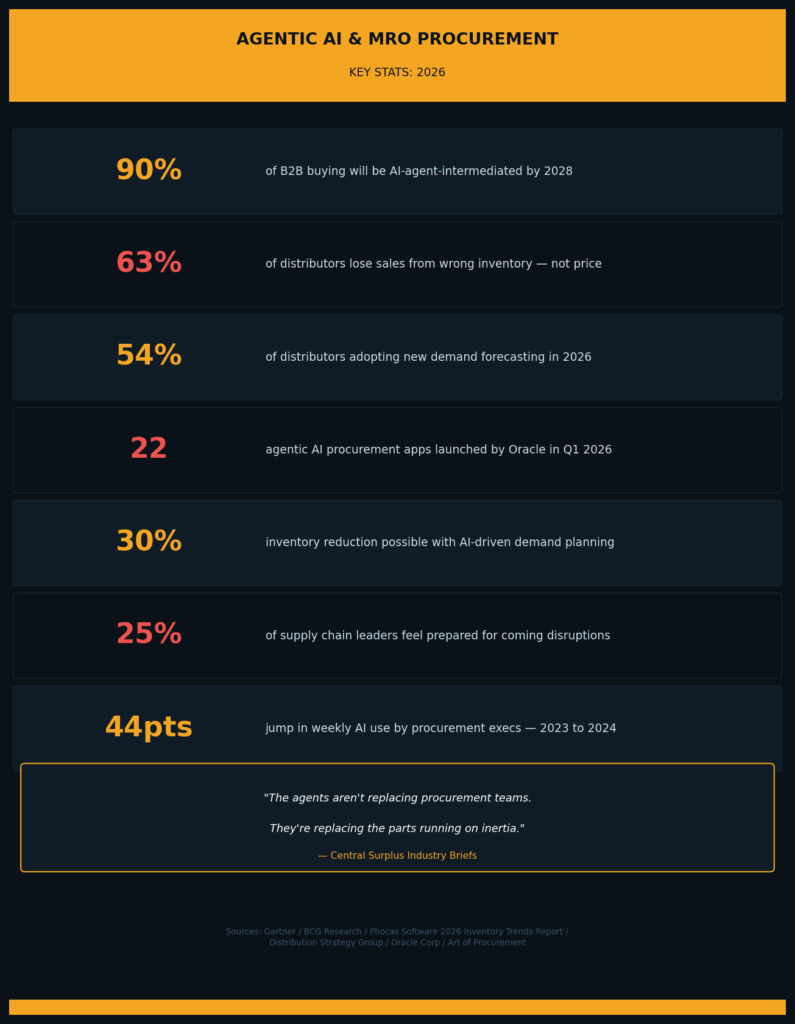
The gap between distributors who’ve built AI into their operations and those who haven’t is widening faster than most people realize.
Agentic AI procurement — systems that don’t just surface recommendations but actually execute — is the step that makes that gap structural.
The window to get ahead of this is still open, espcially in industrials. Here’s how operators are moving:
MRO is still a traditional industry 25 years behind technology. You have time. Eventually all companies will operate as agentic organizations. {https://www.mckinsey.com/capabilities/people-and-organizational-performance/our-insights/the-agentic-organization-contours-of-the-next-paradigm-for-the-ai-era}
Take this time to get ahead of your competitiors.
The agents aren’t replacing procurement teams. They’re replacing the parts of procurement teams that run on inertia.
That’s actually good news — if you’re paying attention.
The operators who get ahead of this close the 63% fulfillment gap that’s been bleeding revenue for years. They run leaner and take market share from the ones still running on gut feel.
What to watch: Oracle’s customer adoption figures for its Fusion Agentic Applications — early enterprise deployments will signal how fast agentic AI procurement moves from rollout to standard.

Our team can locate, cross-reference, and source all parts.
Our team can locate, cross-reference, and source all parts.