
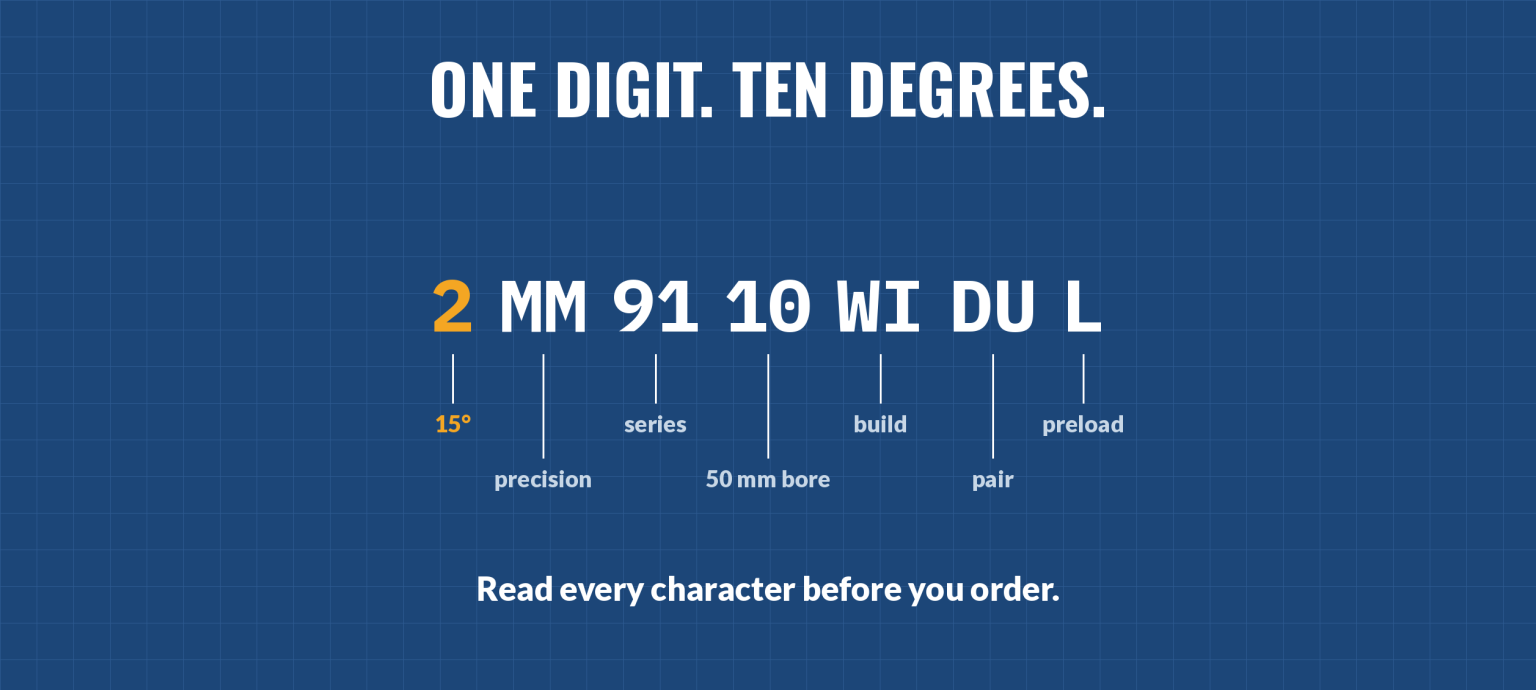
The difference between a 2MM and a 3MM is one digit and ten degrees. Get it wrong and the spindle tells you fast.
How to read a Timken or Fafnir super precision bearings part numbers, digit by digit, and pick the right replacement.
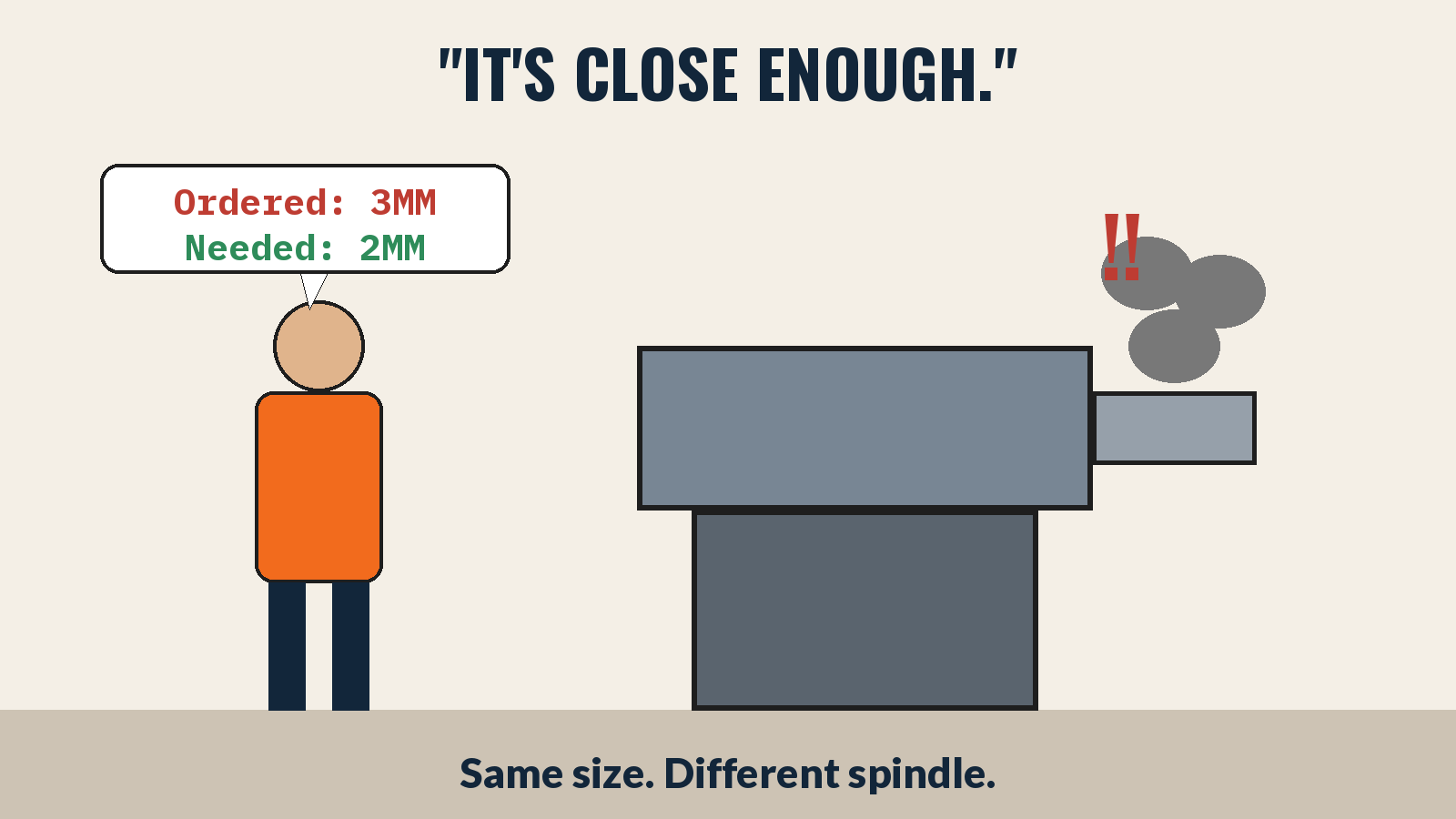
A spindle comes in for rebuild. The old bearings say 2MM9110WI DUL. The quote sheet says 3MM9110WI DUL, because it was “close enough” and in stock.
It isn’t close enough.
Fafnir super precision bearings pack contact angle, precision class, series, bore, construction and preload into one string. Every character changes how the spindle runs. Here’s how to read it.
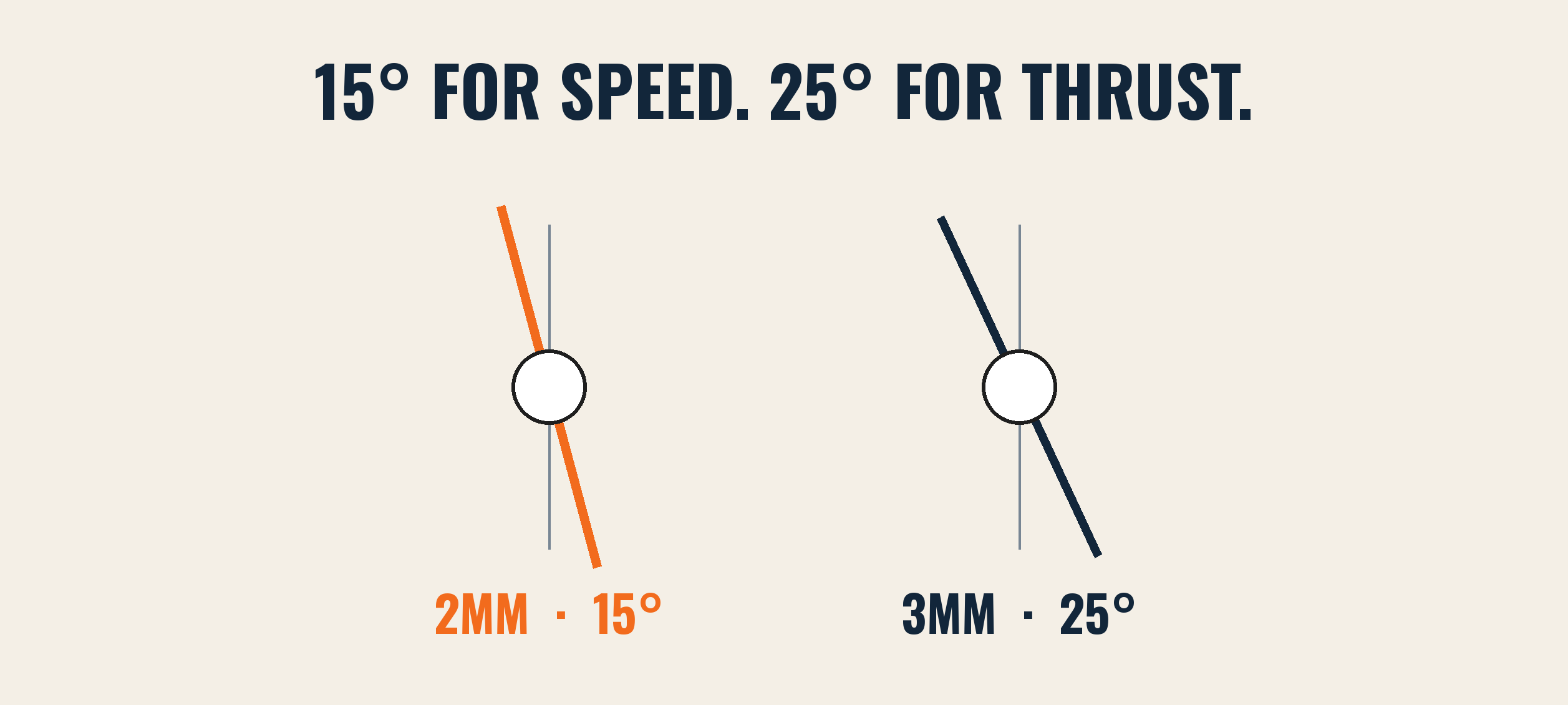
Start at the front of the number.
That split comes straight from the Timken Fafnir machine tool catalog: most types come in 15° (the 2 prefix) or 25° (the 3 prefix).
“They’re the same size, it’ll fit” is what the parts counter tells you. “You just changed the spindle’s stiffness, heat and speed limit” is what the machine tells you three weeks later.
Match the angle. Every time.
The letters after the digit set the tolerance class:
Going up a class is usually fine. Going down a class on a precision spindle is how a rebuild comes back.
The series number sets the cross-section, from thinnest to heaviest:
The last two digits are the bore code. From 04 up, multiply by five: 2MM207 is a 35 mm bore, 2MM9110 is 50 mm. Below 04 the codes are fixed: 00 is 10 mm, 01 is 12, 02 is 15, 03 is 17.
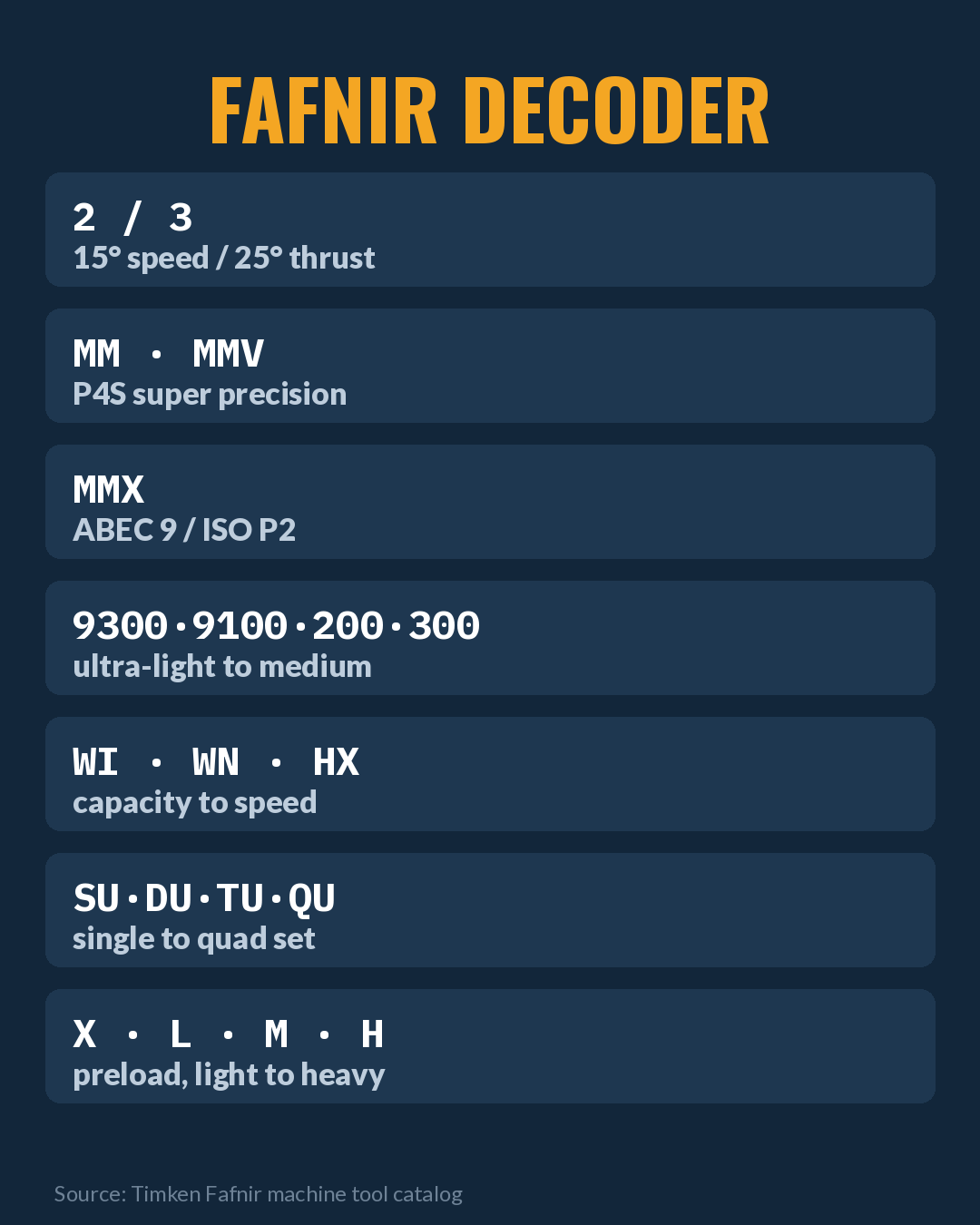
The back half of the number is where most wrong orders start.
Put it together: 2MM9110WI CR DUL is a 15°, super precision, extra-light series, 50 mm bore, standard WI construction, duplex pair, light preload.
One more trap: the old Fafnir number on the box and the current Timken number in the catalog don’t always print the same way. Spaces move, cage codes get added, letters get dropped. A 2MM9110WIDUL on a dusty box and a 2MM9110WI CR DUL on a quote can be the same family or not. Read it character by character, not at a glance.
Change one letter and you have a different bearing. That’s why the full model number matters more than the size.
A lot of the Fafnir numbers maintenance teams still need aren’t sitting on a distributor shelf. Lead times on precision bearings can stretch for weeks. The spindle doesn’t wait.
That’s where surplus comes in. Plants overbuy spindle spares, retire machines, and the bearings stay new in the box. Entire crates of angular sets sit in warehouses for years.
Who else has a 2MM duplex pair on the shelf today, and ships it today? Find your part.
What is the difference between Fafnir 2MM and 3MM bearings?
2MM bearings have a 15° contact angle for higher speed. 3MM bearings have a 25° contact angle for more axial stiffness and thrust capacity.
What does DUL mean on a Fafnir bearing?
DU is a universal duplex pair. L is light preload. DUM is medium preload, DUH heavy.
Can I replace a 2MM with a 3MM?
Not without changing how the spindle behaves. Match the contact angle to the original.
Are new old stock Fafnir super precision bearings safe to use?
New old stock is new and unused. Check the box, the seals and the grease age, especially on sealed bearings that sat for years.
What other brands interchange with Fafnir?
Most brands like SKF, NSK, NTN, FAG and of course Timken. The 9100 series lines up with ISO 7000-series bearings from other makers. See our bearing cross reference chart before swapping brands.
Fafnir super precision bearings reward the buyer who reads every character.
Need the part now? Make it easy. → Find Your Part


Our team can locate, cross-reference, and source all parts.
Our team can locate, cross-reference, and source all parts.