Both servo motors and stepper motors take electrical signals and turn them into precise, controlled movement. You’ll find them at the heart of everything from robotics labs to CNC shops. But while they might look similar on the surface, they are not simple swap-in replacements for one another. Choosing a motor just because it’s familiar or fits the budget, without thinking through what your application really needs, can lead to headaches and expensive mistakes down the line.
In this guide, I’ll walk you through how each motor works, where each one shines, and how to decide which is the right fit, whether you’re building something new or replacing an old part. Central Surplus carries both types from top manufacturers, so you’ll have options no matter which direction you go.
A stepper motor moves in small, precise jumps called steps. Every time you send it an electrical pulse, the motor turns just a little, usually 1.8 degrees at a time, for a standard 2-phase motor, which adds up to 200 steps for a full spin. If you need even smoother motion, microstepping drivers can break those steps down even further.
Most of the time, stepper motors run in what’s called open-loop mode. That means the controller tells the motor to move and just trusts that it did, but then there’s no way to check if the step actually happened. For some jobs, this works just fine. But if you push the motor too hard, speed things up too quickly, or something gets jammed, the motor might miss a step, and you won’t know until something goes wrong later on. Stepper motors are literally counting.
Steppers are strongest when moving slowly, as they deliver their best torque at low speeds. But as you bump up speed, they lose some of that muscle. That’s why they’re a great fit for jobs that need careful, precise positioning at moderate speeds, but not for situations where you need both speed and strength at the same time.
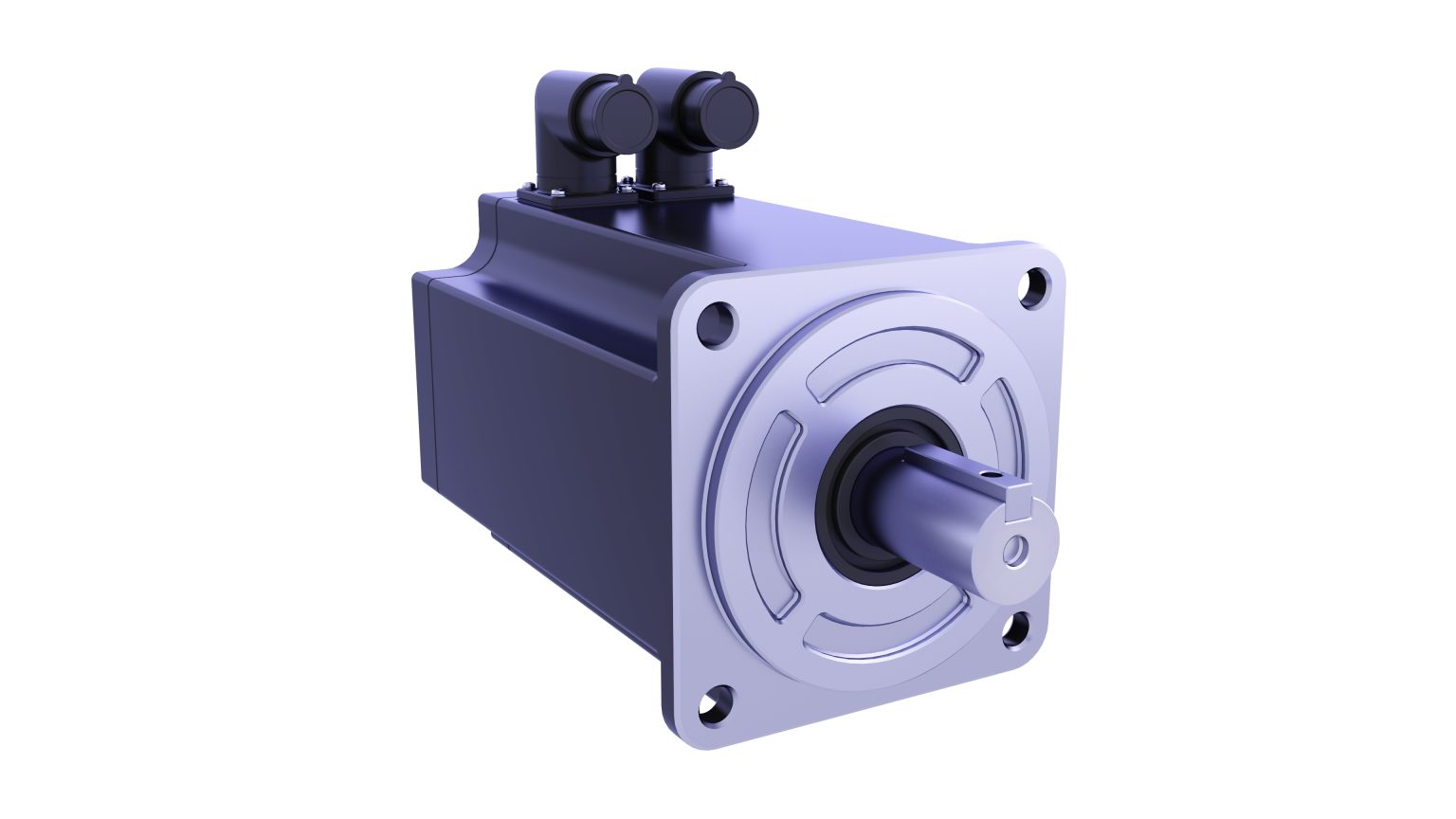
A servo motor pairs a motor with an integrated encoder that continuously reports the actual shaft position back to the drive, often thousands of times per second. The drive compares the commanded position to the actual position and corrects the output in real time. This is closed-loop control, the same principle covered in our VFD vs. servo drive comparison, applied here specifically to motor selection rather than drive selection.
Because a servo is always checking and correcting its position, it can handle sudden bumps or changes in load without losing its place. It also keeps its torque up even as speeds climb, which is why servos are the go-to for high-speed, high-precision, or heavy-duty jobs where you can’t afford mistakes.
The catch with servos is that they’re more expensive and a bit more complicated to set up. You’ll need a matching drive, extra wiring for feedback, and some careful tuning to get everything working smoothly. Steppers, on the other hand, are simpler to wire and get running.
| Characteristic | Stepper Motor | Servo Motor |
| Control method | Open loop (typically) | Closed loop with encoder feedback |
| Position verification | None. Assumes commanded steps occurred. | Continuous. Drive corrects for any deviation. |
| Torque at low speed | High, Maximum at zero speed (holding torque); drops off sharply as RPM increases | High, Constant rated torque from zero speed up to maximum rated RPM |
| Torque at high speed | Drops off significantly | Maintained across a wide speed range |
| Risk of lost position | Yes, under overload or excess speed | Very low, drive detects and corrects |
| Cost | Lower | Higher, includes encoder and matched drive |
| Wiring complexity | Simple | More complex, requires feedback cabling |
| Commissioning | Minimal tuning required | Requires control loop tuning |
| Best fit | Lower-speed, well-defined, moderate-precision positioning | High-speed, high-precision, variable or dynamic load applications |
| Energy Efficiency & Heat | Consumes full power continuously; generates heat even at rest | Draws current proportional to actual load; runs cool when holding position |
Stepper motors have come a long way. Some newer systems add an encoder to the stepper, so the drive can detect if a step was missed and correct it, much like a servo does. Instead of just hoping everything went as planned, you get a bit more peace of mind.
It’s important to know that a closed-loop stepper isn’t the same thing as a servo. The motor itself still behaves like a stepper, with the same strengths and limits, low-speed torque advantages and high-speed falloff limits What you gain is the ability to catch missed steps and, in many cases, quieter operation at certain speeds. If you need more reliability than a basic stepper but can’t justify the cost or complexity of a full servo setup, closed-loop steppers offer a solid compromise.
If your speed, torque, and accuracy needs fit easily within what a stepper can do, and a missed step now and then isn’t a big deal, a stepper is the straightforward, budget-friendly pick. But if you’re pushing the limits on speed, need strong torque at high speeds, or can’t afford any mistakes in positioning, a servo is the way to go.
If you’re swapping out an old motor, stick with the same type unless you have a clear reason to switch. If the original design called for a servo, there was probably a good reason. Trying to save money by switching to a stepper can lead to lost position or stalled moves when the system is under load.
At Central Surplus, you’ll find servo motors, stepper motors, and matching drives from trusted names like Fanuc, Allen-Bradley, and Yaskawa. If you have a part number or know your torque, speed, and positioning needs, just reach out, and we’ll help you find the right fit.
Take a look at our motor inventory, or get in touch if you’d like some help finding exactly what you need.
Our team can locate, cross-reference, and source all parts.
Our team can locate, cross-reference, and source all parts.