A linear actuator converts rotational or fluid energy into straight-line mechanical motion. This fundamental function powers a wide range of industrial equipment, including automated assembly lines, robotic arms, and valve controls. If you are sourcing a linear actuator for the first time or replacing an existing unit, this linear actuator guide outlines the main types, key specifications, and how to select the right actuator for your application.
A linear actuator is a device that produces motion in a straight line. Unlike motors, which rotate, or pumps, which move fluid, a linear actuator pushes or pulls along a single axis.
Input energy may be electric, pneumatic, or hydraulic. Each type offers distinct advantages and is suited to specific conditions. The output is consistent: controlled linear force and displacement.
Linear actuators are used wherever precise positioning, clamping, pushing, pulling, lifting, or extending is required along a straight path.
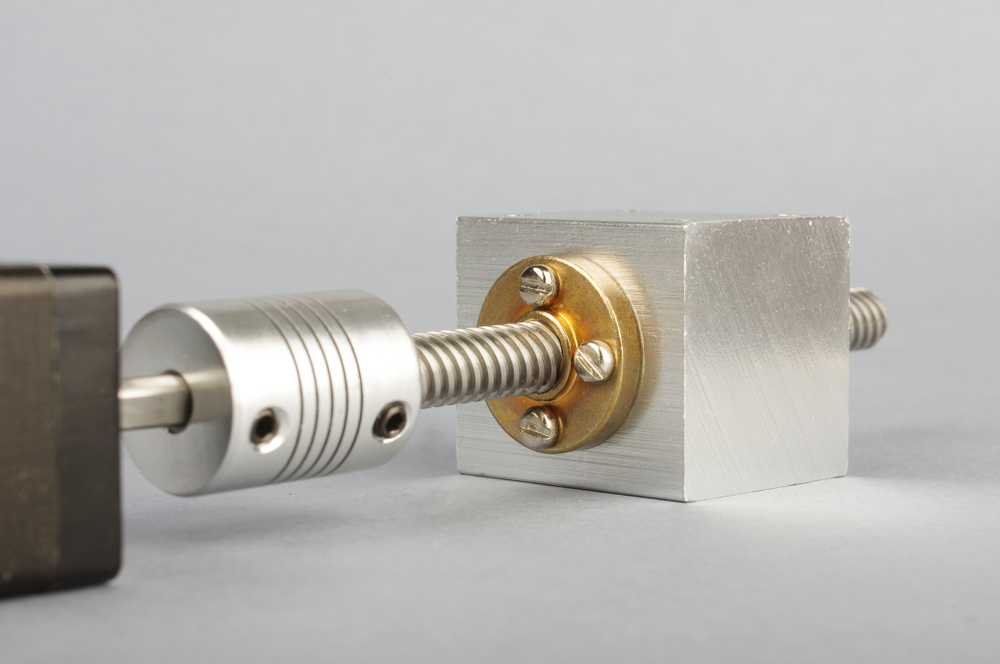
Electric linear actuators use a motor to drive a lead screw, ball screw, or roller screw, converting rotational motion into linear motion. Motors may be DC, AC, or stepper/servo, depending on the required precision.
Key advantages:
Limitations:
Pneumatic actuators use compressed air to drive a piston within a cylinder. They are the simplest and least expensive type of linear actuator and offer high reliability in suitable environments.
Key advantages:
Limitations:
Hydraulic actuators use pressurized fluid to generate force. They deliver the highest force output per unit size among actuator types and are the standard choice for heavy industrial and mobile equipment.
Key advantages:
Limitations:
Comparison at a glance:
| Type | Best For | Watch Out For |
| Electric | Precision positioning, clean environments, programmable motion | Heat buildup in high duty cycle; higher cost |
| Pneumatic | High-speed simple push/pull, hazardous locations, low cost | No mid-stroke positioning; air supply required |
| Hydraulic | Maximum force output, shock loads, heavy equipment | Fluid leaks, system complexity, not for clean environments |
Selecting the wrong actuator for an application can be costly. Before ordering, confirm the following specifications.
Calculate the load the actuator must move or hold (static load capacity). Consider worst-case conditions, including friction, gravity on inclined loads, and dynamic forces during acceleration.
Always include a safety margin. A typical guideline is to select an actuator rated for at least 25-30% more force than the calculated requirement.
Stroke length is the total distance the actuator extends. Measure the precise distance between fully retracted and fully extended positions, accounting for any mounting hardware that affects the effective stroke.
An engineer might have enough physical space for a 12-inch stroke, but they forget that the actuator body itself is 18 inches long when fully retracted. You must account for the total footprint/retracted length of the actuator body, not just the stroke distance.
Oversizing the stroke wastes resources, while undersizing can cause interference or incomplete motion. Measure requirements carefully before selection.
Determine the required actuator speed, typically measured in mm/s or in/s. Speed depends on cycle-time requirements and available drive force.
For electric actuators, higher speed generally results in lower available force at a given motor or pressure rating.
For pneumatic and hydraulic actuators, speed and force are independent. Force is strictly governed by pressure and piston area (F=P×A). You can increase the speed of a hydraulic cylinder by pumping more gallons per minute (GPM) into it without losing force.
Duty cycle is the percentage of time the actuator operates. For example, a pneumatic actuator on a packaging line running at 60 cycles per minute has a much higher duty cycle than a gate valve that operates twice daily.
Duty Cycle is explicitly a ratio of On-Time to Total Cycle Time over a specific period (usually 10 to 30 minutes).
The Formula: Duty Cycle (%)=Time On/Time Off+Time On×100
If an electric actuator runs for 2 minutes and rests for 8 minutes, its duty cycle is 20%. If a reader interprets your text as “it operates during my shift,” they will burn out an electric motor.
For electric actuators, high duty cycles generate heat. Ensure the actuator’s thermal rating matches your operating conditions.
Consider temperature range, moisture, dust, debris, chemical exposure, and whether the environment is hazardous. These factors influence the selection of actuator type and the appropriate IP (ingress protection) rating.
Linear actuators can be mounted in-line, side-mounted, or clevis-mounted for applications requiring slight angular movement. Select the mounting style that best fits your application’s mechanical constraints.
For applications utilizing pivoting or clevis mounts, force calculations must account for changing angular vectors and potential side-loading throughout the full range of motion. Failing to factor in these shifting mechanics can result in insufficient linear force at critical stroke angles or premature actuator failure due to rod bending.
Linear actuators are the backbone of modern automation, providing controlled movement across a wide range of rugged industrial environments:
When sourcing a linear actuator, the part number or model designation provides most of the necessary information. For replacement units, cross-referencing to an equivalent from another manufacturer is often possible if the original is unavailable.
Central Surplus stocks linear motion components, including actuators, rails, and guides from leading manufacturers. Search by part number or contact us with your force, stroke, and application specifications, and we will help identify the appropriate unit.
Browse Linear Motion Components at Central Surplus
Our team can locate, cross-reference, and source all parts.
Our team can locate, cross-reference, and source all parts.