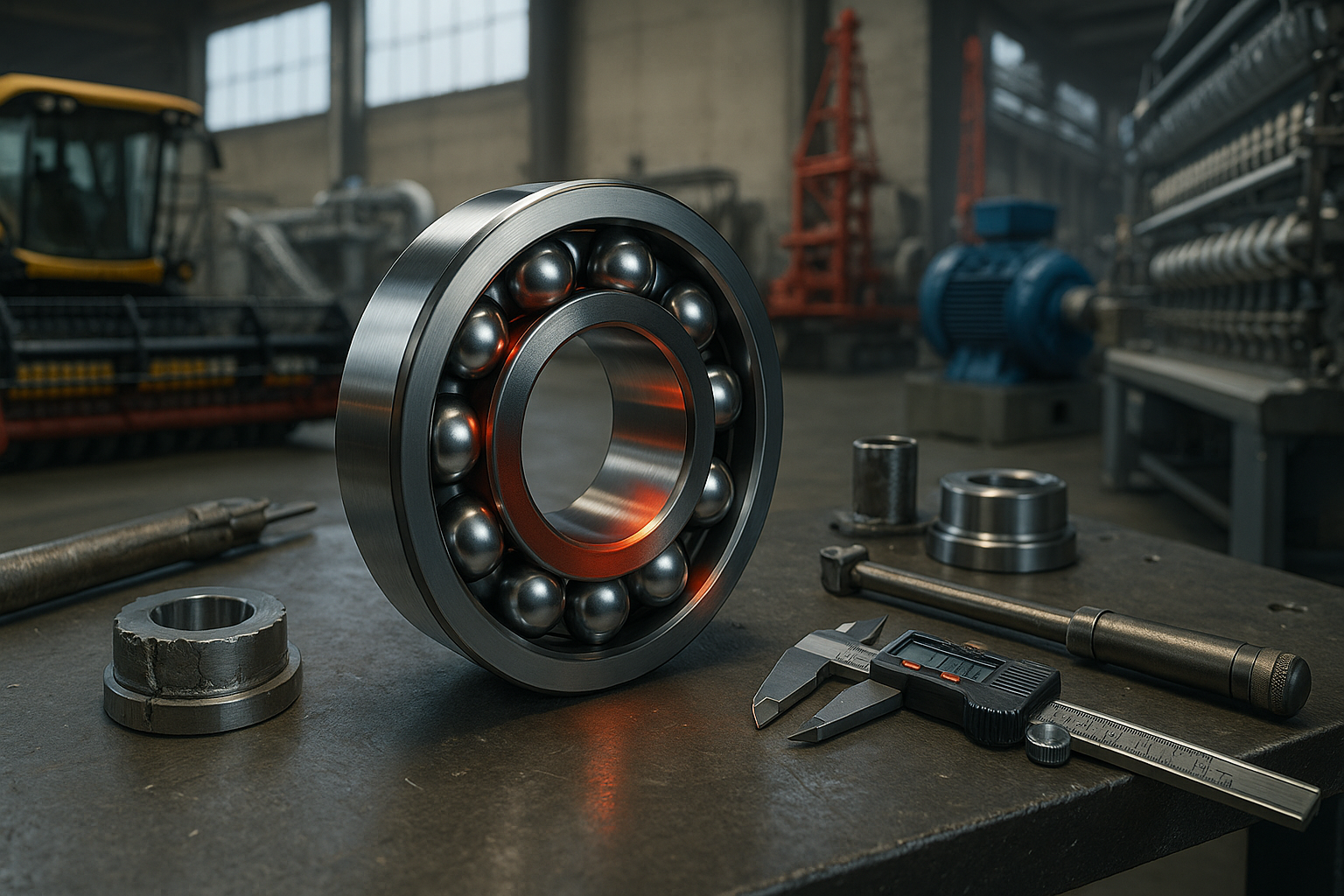
Every second your equipment runs smoothly, an industrial bearing is silently doing its job. Whether you’re operating a food processing line, textile machinery, oil rig, or agricultural conveyor system, bearings are the backbone of your operation’s motion and efficiency.
But not all bearings are created equal – and for high-load, high-demand applications, choosing the right part can mean the difference between consistent output and costly downtime.
This guide breaks down:
We’ll also cover types of bearings, typical applications, and best practices that maximize both performance and ROI.
By the end, you’ll not only understand the “what” and “why” behind industrial bearings – you’ll know exactly how to order the right product, from a trustworthy distributor who delivers quality, speed, and reliability.
Let’s start by understanding how industrial bearings differ from those you might find in consumer goods.

It’s easy to assume all bearings function roughly the same way – but in reality, industrial and consumer bearings are engineered for entirely different worlds.
Here are six key differences that every maintenance technician, engineer, and purchasing agent should understand:
1. Load Capacity
Industrial bearings (like a cylindrical roller bearing) are designed to handle thousands of pounds in dynamic or static loads, operating seamlessly in high-force environments like presses, conveyors, or large motors. Consumer bearings, on the other hand, are only meant to support lighter loads – often in the range of a few hundred to a few thousand pounds.
Industrial applications demand tight tolerances – sometimes as precise as ±0.0001” – to ensure minimal vibration and wear during long-term operation. Consumer bearings typically use standard tolerances (±0.001” to ±0.01”), which are sufficient for short-term or intermittent use.
3. Maintenance Requirements
Bearings used in industrial equipment must be regularly lubricated, inspected, and sometimes monitored using condition-based tools to ensure performance. Consumer bearings are often maintenance-free and replaced when they fail.
4. Material Quality
Expect hardened steel alloys, specialized coatings, and high-grade metallurgy in commercial-grade bearings. Consumer options use more basic materials that meet lighter-use standards, keeping replacement cost lower. Quality typically refers to 3 grades: precision, industrial, commercial.
5. Cost Range
Industrial-grade bearings vary widely in cost, from around $100 to over $50,000 depending on size, precision, and materials. Consumer bearings typically cost just a few dollars to several hundred, reflecting lower requirements for durability and performance.
6. Failure Impact
An industrial bearing failure can halt production and cost thousands per hour. In contrast, a failed consumer bearing might only cause an inconvenience or minor repair.
Check out the chart below for a more comprehensive look at how industrial and consumer bearings stack up against each other:
| Industrial Bearings | Consumer Bearings | ||
|---|---|---|---|
| APPLICATION | |||
| Primary Use | Manufacturing equipment, heavy machinery, production lines | Household appliances, electronics, automotive components | |
| Operating Environment | Harsh conditions: extreme temperatures, chemicals, dust, moisture | Controlled indoor/outdoor environments, moderate conditions | |
| Load Requirements | Heavy loads: thousands or tens of thousands of pounds, continuous operation | Lighter loads: few pounds to several thousands pounds | |
| Operational Hours | 24/7 continuous operation for years | Intermittent use, seasonal operation | |
| PERFORMANCE STANDARDS | |||
| Precision Tolerances | Extremely tight tolerances (±0.0001" or better) | Standard tolerances (±0.001" to ±0.01") | |
| Material Quality | Premium steel alloys, specialized coatings, advanced metallurgy | Standard steel, some alloys, basic materials | |
| Lifespan Expectancy | 10-30 years with proper maintenance | 1-5 years typical service life | |
| Industry Standards | ABEC-7/9, ISO 492 Class 4/2, ANSI/AFBMA standards | ABEC-1/3, basic quality standards | |
| Load Ratings | Dynamic: 10,000-500,000+ lbs | Static: 15,000-1,000,000+ lbs | Dynamic: 10-5,000 lbs | Static: 20-10,000 lbs | |
| Temperature Range | -40°F to 500°F+ (-40°C to 260°C+) | 0°F to 200°F (-18°C to 93°C) | |
| Maintenance Requirements | Scheduled lubrication, monitoring, professional service | Often cannot lubricate, some are greasable, or replace when worn | |
| Cost Range | $100 - $50,000+ per bearing | $1 - $300 per bearing | |
| Failure Impact | Production shutdown, thousands or millions in lost revenue per hour | Single device failure, minimal economic impact | |
Commercial-grade bearings come in a wide variety of types, each engineered for specific applications, load orientations, and operating conditions.
Regardless of your application, understanding the core bearing types helps ensure you’re selecting components that match your required load, speed, and environmental conditions.
Below is a visual guide to the most common bearing types, how they’re used, and where they’re typically found in various industries.
| Bearing Type | Common Applications | Common Industries |
|---|---|---|
| Angular Contact | CNC machine spindles, precision grinding machines, high-speed milling machines, lathes | Manufacturing, Agriculture, Transportation |
| Ball Bearings | Electric motors, pumps, gearboxes, fans, small conveyors | Food & Beverage, Textile, Packaging |
| Tapered Roller | Axle systems, gearboxes, heavy-duty drives, vertical mills | Agriculture, Mining, Oil & Gas |
| Cylindrical Roller | Compressors, wind turbines, paper machinery, textile equipment | Manufacturing, Energy, Paper & Pulp |
| Spherical Roller | Crushers, vibrating screens, large motors, belt conveyors, mud pumps | Quarrying, Cement, Material Handling, Drilling, Screening |
| Needle Bearings | Automotive equipment (excluding vehicle wheels), power tools, agricultural sprayers | Small Machinery, Agriculture |
| Thrust Bearings | Vertical shaft applications, crane hooks, large valves | Construction, Oil & Gas, Marine, heavy machinery |
| Mounted Units | Material handling, belt-driven systems, ventilation fans | Warehousing, Food Processing, Assembly Lines |
Each bearing type serves a specific function in controlling direction, reducing friction, and managing pressure between moving parts. Selecting the wrong one can lead to premature wear or complete failure – especially under high-stress or continuous-load environments.
When in doubt, it’s always a good idea to work with a supplier who understands both your industry and the exact load requirements with the right bearing type, even if the part number isn’t readily available.
If your operation depends on reliability, uptime, and long-term performance, your choice of supplier makes all the difference. At Central Surplus, we go beyond the catalog – offering years of experience helping engineers, plant managers, and procurement teams source the right component for the job.
Whether you’re running high-load textile machinery, food-grade processing equipment, or heavy agricultural systems, our team understands the unique challenges of your industry. From mounted units and tapered rollers to specialty bearings and hard-to-find SKUs, we carry a vast inventory of new, ready-to-ship parts from trusted brands – all at highly competitive prices.
When your equipment is on the line, you can trust us to deliver fast, accurate, and reliable support. Contact us today and let’s make your next bearing replacement one less thing to worry about.

Finding the right bearing is only half the battle. Making sure it comes from a trusted manufacturer is just as important.
At Central Surplus, we stock a wide variety of top brands known for quality, consistency, and availability. Whether you’re replacing a failed bearing or specifying parts for a new build, sourcing from these proven names helps ensure long service life, high load capacity, and application-specific reliability.
Here are 12 of the most respected brands we offer:
1. SKF
Renowned for precision engineering and innovation, SKF is a global leader in ball and roller bearing technologies for everything from textile production to energy infrastructure.
2. FAG
A division of the Schaeffler Group, FAG bearings offer superior performance in high-speed and high-load applications, particularly in machine tools and industrial motors.
3. Timken
Best known for their tapered roller bearings, these are a go-to brand for rugged applications in agriculture, power transmission, and material handling.
4. NTN
Combining high-performance with affordability, NTN products are a reliable choice for manufacturers who need durable bearings without sacrificing cost-efficiency.
5. NSK
With advanced sealing technology and corrosion-resistant options, NSK bearings are ideal for food and beverage facilities or wet environments.
6. INA
Specializing in precision linear motion and needle roller designs, they are well-suited for machinery requiring compact, high-capacity solutions.
7. Koyo
Koyo’s (JTEKT) full catalog includes ball, roller, and thrust bearings with consistent quality for industrial OEMs and aftermarket use.
8. Dodge
Particularly known for mounted units, Dodge (RBC) bearings are often found in conveyors, mixers, and packaging lines across manufacturing plants.
9. MRC
MRC, a SKF subsidiary, specializes in hybrid bearings and non-standard sizes makes them a reliable solution when dealing with unique speed or load requirements.
10. RHP
Preferred in many European-manufactured systems, they provide dependable options in self-lube and pillow block bearings. RHP is a NSK brand.
11. Fafnir
Owned by Timken, Fafnir’s sealed ball bearings are prized for long maintenance intervals and extreme environment capabilities.
12. NDH
With deep groove and radial bearing options, New Departure Hyatt is an excellent match for older systems and retrofit applications.
At Central Surplus, our inventory isn’t limited to one brand; we help you find the best fit across manufacturers, so you’re never boxed in by limited availability or high markups. And because everything we stock ships extremely quickly, you can reduce downtime while staying within budget. We can also instantly cross-reference any brand, providing you direct interchanges.

Even the best components can fail prematurely when not handled, installed, or maintained properly. And in mission-critical systems across manufacturing, food processing, or agriculture, a single bad bearing can halt production and damage equipment.
Below are the most common bearing issues we see in the field – along with practical tips on how to prevent them.
1. Contamination
Dirt, metal shavings, moisture, and even cleaning chemicals can enter bearing housings and degrade performance. Contaminants cause pitting, increased friction, and premature wear.
How to avoid it: Always use seals or shields in dusty or wet environments. Keep workspaces clean and avoid using high-pressure washers near bearing housings.
2. Improper Lubrication
Too much, too little, or the wrong type of lubricant causes overheating, scoring, and surface fatigue. Mixing incompatible greases can lead to chemical breakdowns.
How to avoid it: Follow manufacturer lubrication schedules, use only approved greases, and train staff on proper lube techniques for your bearing type.
3. Overloading
Bearings have stress load limits. Exceeding them – whether radial or axial – can flatten rolling elements, deform raceways, or shear cages.
How to avoid it: Confirm load ratings during bearing selection. If you’re unsure, work with a bearing supplier like Central Surplus to choose one that handles both steady and dynamic forces.
4. Misalignment
When shafts or housings are off-axis, bearings operate under uneven pressure, causing edge loading and wear patterns that drastically shorten service life.
How to avoid it: Use precision alignment tools during setup. Verify shaft and housing tolerances, and choose self-aligning or spherical roller bearings where misalignment is unavoidable.
5. Improper Mounting
Hammering bearings into place, using incorrect tools, or applying too much preload damages internal geometry and creates unbalanced loading.
How to avoid it: Use dedicated mounting tools or presses. Follow proper installation procedures, and avoid applying force directly to rolling elements.
6. Vibration During Storage
Idle bearings stored near vibrating equipment can develop false brinelling – small pits formed without rotation.
How to avoid it: Store bearings in vibration-free zones. Rotate them occasionally if they’ll be stored long-term.
7. Excessive Heat
High operating temperatures degrade lubrication, increase internal clearances, and lead to accelerated wear or cage failure.
How to avoid it: Monitor bearing temperatures in-process. Use thermocouples or IR sensors on critical machinery and inspect for signs of lubricant breakdown.
These problems aren’t just avoidable; they’re predictable. The best approach is proactive: match the right bearing to your application, install it carefully, and monitor it consistently.

A proactive maintenance plan isn’t just about avoiding downtime – it’s about getting the most value out of your equipment investment. When it comes to industrial bearings, applying consistent and strategic maintenance practices is the difference between running smoothly and scrambling for emergency repairs.
Here’s how leading operations teams extend the life of their bearings and maximize ROI:
1. Schedule Routine Inspections
Visual and manual checks help identify wear patterns, contamination, or misalignment before failure occurs.
Pro Tip: Incorporate bearing inspections into broader PM schedules, and train your team on what to look for – from unusual noise to excessive heat.
2. Follow Manufacturer Lubrication Guidelines
Over-lubrication is just as harmful as under-lubrication. Using the wrong grease can degrade performance quickly.
Pro Tip: Use an automatic lubrication system, ie; Single-Point Automatic Lubricator for consistency and label grease points clearly to avoid mix-ups.
3. Standardize Installation Tools & Processes
Bearings that are improperly mounted are more likely to fail prematurely. Using nonstandard tools or skipping procedures introduces misalignment and excessive stress.
Pro Tip: Equip technicians with proper fitting tools and ensure alignment checks are part of every install.
4. Track Operating Conditions
Monitor temperature, vibration, and load fluctuations to predict stress and act before damage sets in.
Pro Tip: Use IoT sensors or simple thermographic cameras on key machines to track anomalies in real time.
5. Clean Housing & Shaft Surfaces Before Installation
Debris or surface corrosion leads to poor fits and accelerated wear.
Pro Tip: Always inspect and clean mounting areas – even on new parts – before pressing bearings into place.
6. Store Bearings Properly
Poor storage leads to rust, vibration damage, or grease separation.
Pro Tip: Keep bearings in their original packaging in a clean, dry area away from vibration or magnetic fields.
7. Use Condition-Based Maintenance When Possible
Predictive analytics and sensor data let you make decisions based on real-time equipment health.
Pro Tip: For high-value assets, invest in a vibration or thermal monitoring program. You’ll reduce unplanned outages and stretch bearing life.
8. Document Maintenance History & Replacements
Knowing when and how a bearing was last serviced helps diagnose recurring issues and improves future selections.
Pro Tip: Use digital records or asset management software to keep track of part numbers, install dates, and failure notes.
Implementing these maintenance best practices protects more than just the bearing – it safeguards your production uptime, your budget, and your team’s efficiency. By taking a long-view approach to your equipment’s performance, you’re not just maintaining assets – you’re building resilience into your operation.
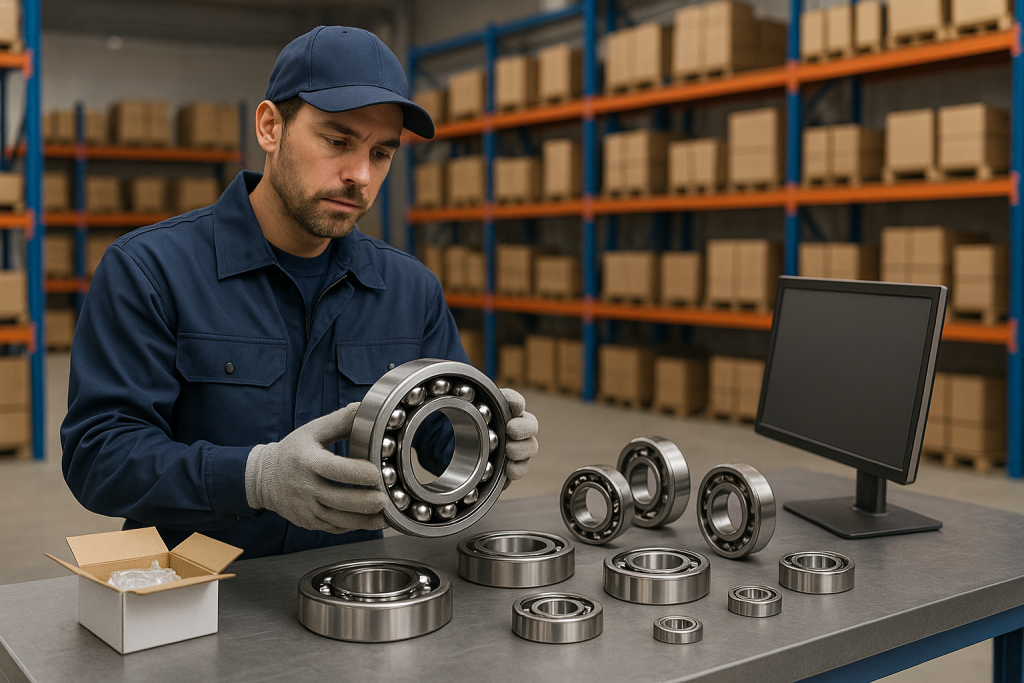
Bearings may be small parts, but they play an outsized role in the reliability of your systems. From conveyor lines in food production to high-speed shafts in textile mills, the right bearing is the difference between smooth, continuous output and unplanned, expensive downtime.
At Central Surplus, we specialize in providing the right solutions for industrial customers who can’t afford to compromise. Our extensive inventory includes thousands of hard-to-find, new parts that meet the demands of harsh environments and rigorous workloads.
We’re not just here to sell you a part – we’re here to help you understand your options, identify the best fit for your specs, and ship it out promptly. Reach out today to find the perfect solution for your needs.

Our team can locate, cross-reference, and source all parts.
Our team can locate, cross-reference, and source all parts.